
Alerts and Screeners Explained — Measured (PDF Guide)
Alerts and screeners are sold as the way to stop missing things, and nobody ever tells you how many they produce. So you set them generously, they fire far more often than you expected, and within a fortnight you are ignoring the thing you installed to stop yourself ignoring things.
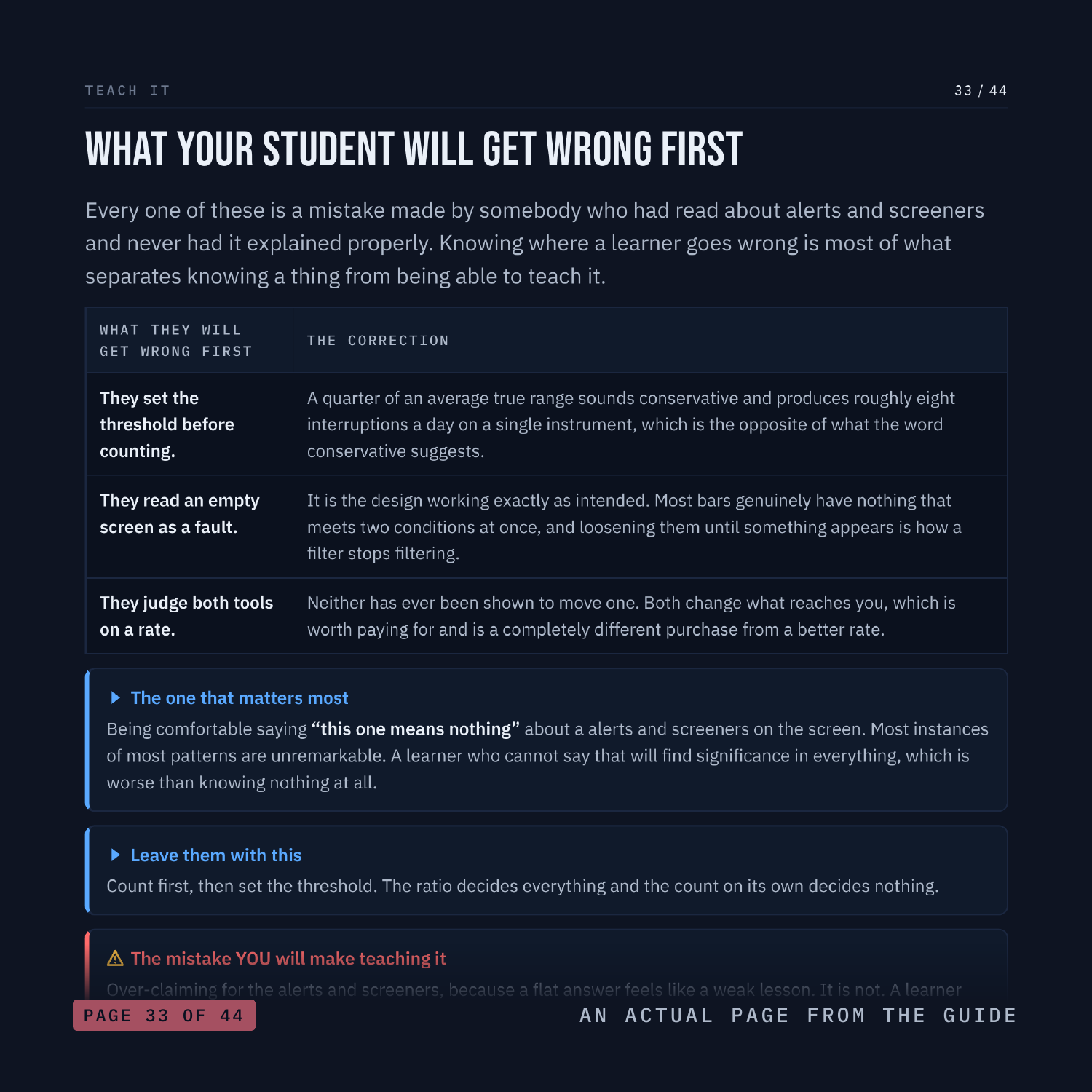
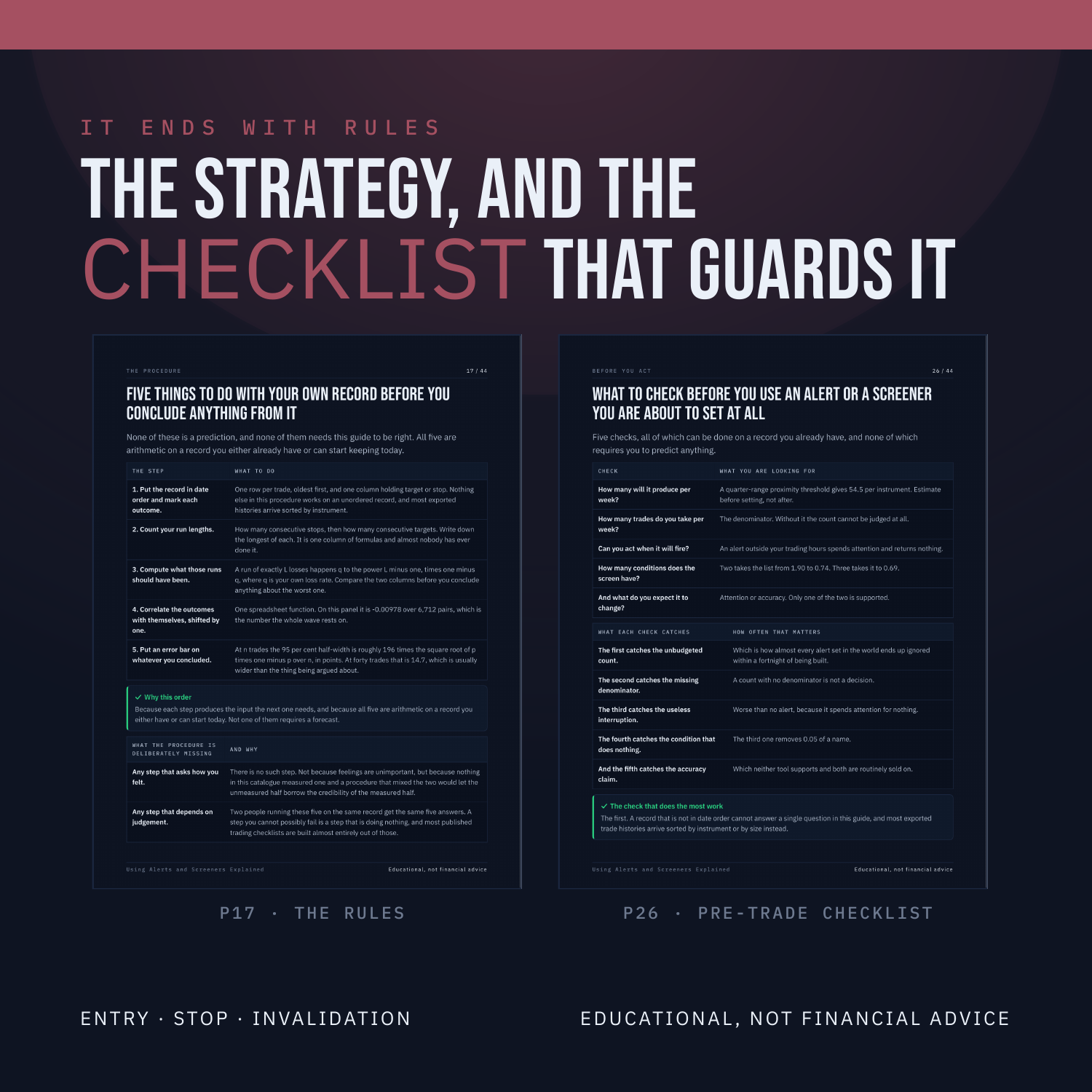
This guide counts both. How often price comes close enough to a level to fire an alert, how many alerts per week that is against how many trades the rule actually produces, and how many names a screener returns as you add conditions. Three counts, all from the same panel as every other figure in the wave. This is a 44-page PDF that teaches Alerts and Screeners from the first thing you see on the screen through to a written strategy with an entry, a stop and an explicit rule for when the trade is wrong.
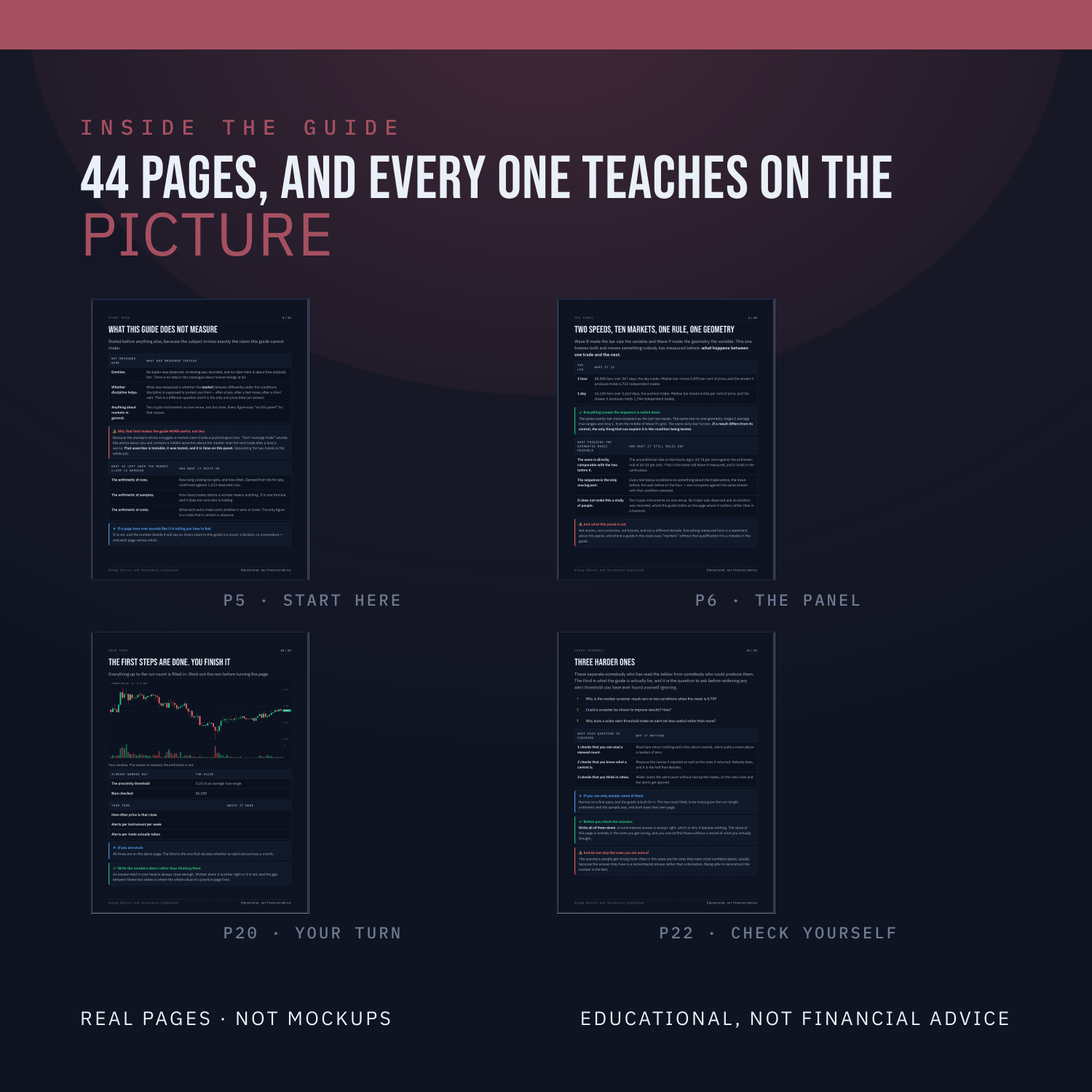
Nothing is taught underneath a chart. Every label sits on the candle, the line or the level it is describing, on real BTC, ETH, SOL and LINK charts. There are three quizzes on real charts, each followed by the same chart re-shown annotated with the reasoning, plus faded practice pages where the first steps are filled in and you finish the rest.
WHAT'S INSIDE
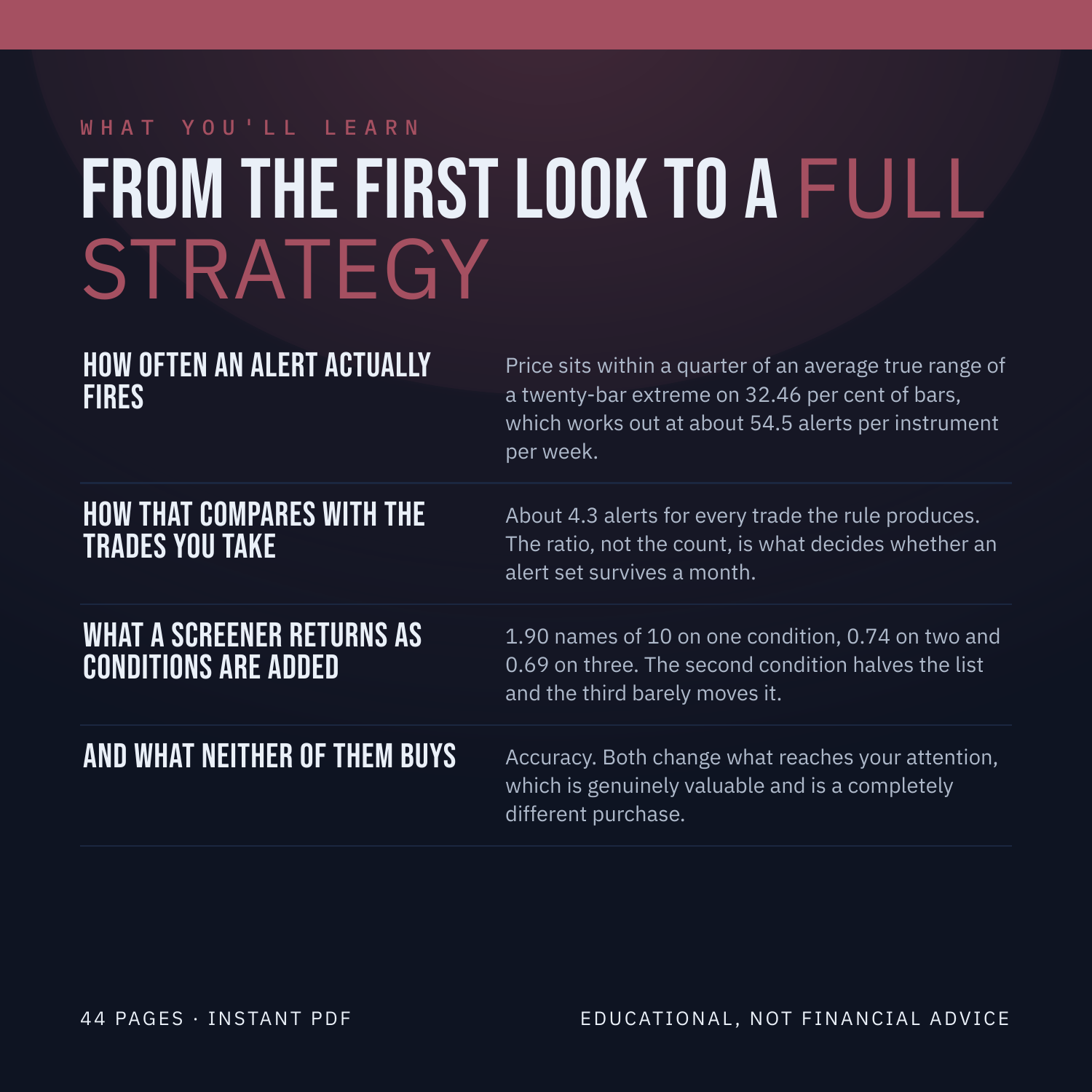
How often an alert actually fires -- Price sits within a quarter of an average true range of a twenty-bar extreme on 32.46 per cent of bars, which works out at about 54.5 alerts per instrument per week.
How that compares with the trades you take -- About 4.3 alerts for every trade the rule produces. The ratio, not the count, is what decides whether an alert set survives a month.
What a screener returns as conditions are added -- 1.90 names of 10 on one condition, 0.74 on two and 0.69 on three. The second condition halves the list and the third barely moves it.
And what neither of them buys -- Accuracy. Both change what reaches your attention, which is genuinely valuable and is a completely different purchase.
WHAT YOU'LL BE ABLE TO DO
Say how many alerts a threshold will produce before you set it.
Work out your own alert-to-trade ratio in one division.
Predict what a second and third screener condition will do.
Tell an attention claim from an accuracy claim in any tool pitch.
Set both so that they survive longer than a fortnight.
AN HONEST NOTE
Alerts and Screeners is a clue, not a crystal ball. It describes what price has already done. This guide contains no win-rates, no backtest results and no promises about what you will make, because nobody can verify those and you should not trust anyone who prints them. What it hands you instead is a set of rules you can test yourself on TradingView in an afternoon. Educational, not financial advice.
Instant download. 44 pages, PDF.