

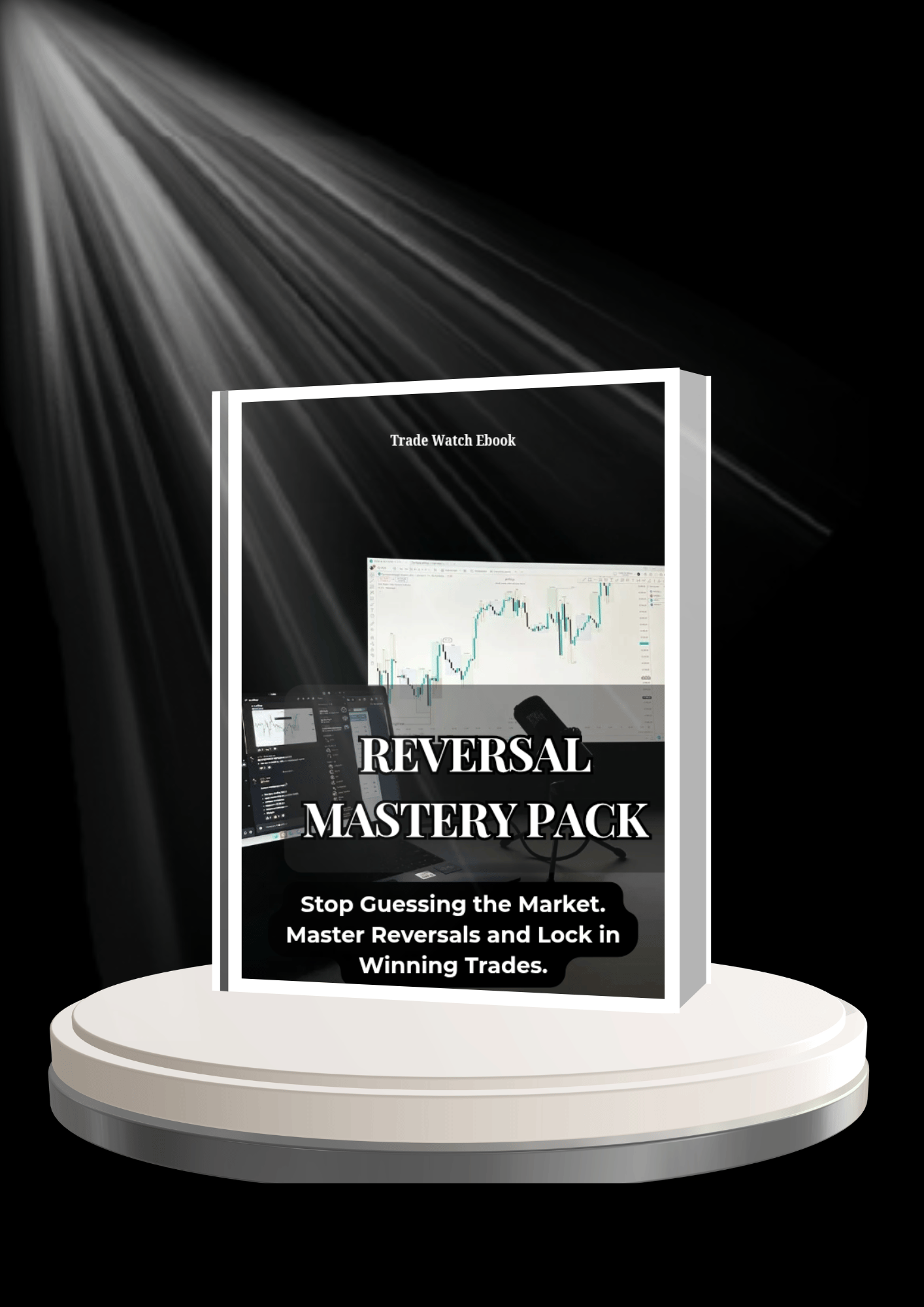
Master Market Reversals for Profitable Trading
Catch the Reversals Most Traders Miss
Using Liquidity Sweeps, CHoCH & Real Price Action Structure
🧠 THE REAL PROBLEM
Most traders don’t understand how reversals actually form.
They trade:
- random pullbacks
- weak structure
- emotional entries
Instead of:
- liquidity sweeps
- real shifts in structure (CHoCH)
- institutional zones (order blocks / supply & demand)
So they keep getting trapped before the real move.
💰 WHAT THIS GUIDE TEACHES
This guide breaks down how to actually trade reversals using:
- Liquidity sweeps (where the market takes stops before reversing)
- CHoCH (Change of Character) to confirm real directional shifts
- Supply & Demand zones to understand reaction areas
- Order Blocks where real moves originate
Inside This Guide
You’ll learn the reversal signals professional traders watch for when a market is actually ready to turn.
Not theory.
Not 20 indicators.
Just clear price action signals you can recognize immediately on the chart.
Inside you’ll learn:
• The reversal structures that appear before major market turns
• How to confirm when a reversal is real — not a trap
• Where most traders enter too early (and how to avoid it)
• How to align price action + structure for better entries
• How to hold trades longer instead of exiting too soon
Simple. Practical. Repeatable.
🟢 Who This Guide Is For
✔ Traders who get trapped trying to catch reversals
✔ Traders who enter early and get stopped out
✔ Traders who miss the move after waiting too long
✔ Traders who want structured entries—not guesses
🔴 Who This Guide Is NOT For
✖ Indicator collectors
✖ Traders looking for signals
✖ People avoiding real price action
The Bottom Line
Reversals aren’t random.
If you don’t learn how reversals actually form, you’ll keep getting caught early, stopped out, and watching the move happen without you
Stop trying to predict reversals.
Start understanding how they actually form.
Learn how to identify:
- liquidity sweeps
- real CHoCH
- high-probability entry zones
and finally stop getting trapped before the move.