

NCLEX-RN Pediatric Medication Dosage Calculation, Safe Range Verification & Weight-Based IV Guide
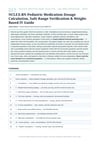
Pediatric medication dosage calculation for the Next-Gen NCLEX-RN — every topic with its exact exam scope, its clinical application, a worked calculation with a reverse-check, and a focused knowledge check with the answer explained.
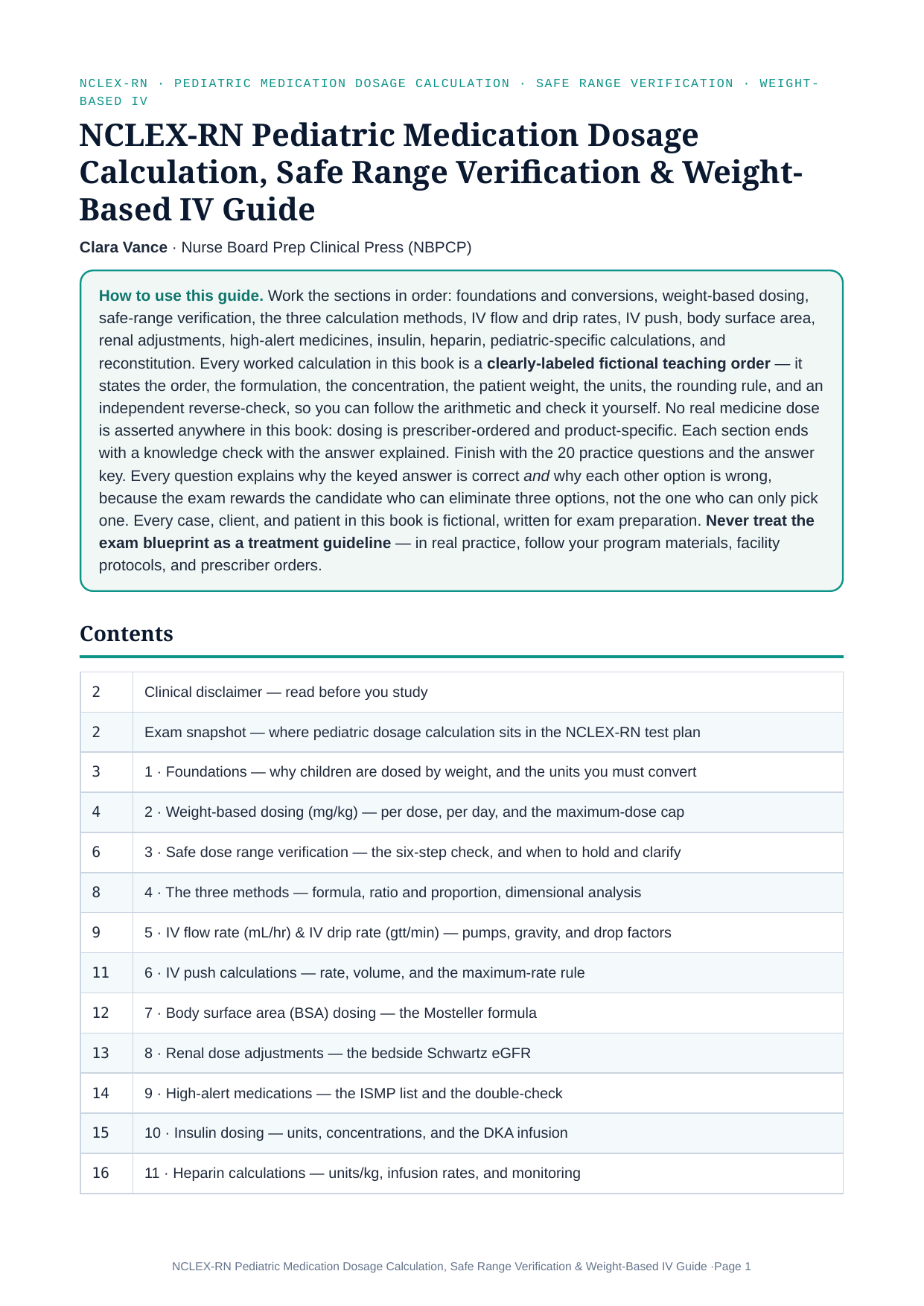
Inside:
- Foundations: why children are dosed by weight, and every conversion you must know cold (lb to kg, ounces, grams to milligrams, teaspoons to millilitres)
- Weight-based dosing (mg/kg): per dose vs. per day, divided doses, and the maximum-dose cap that overrides the calculation
- Safe dose range verification: the six-step check, the published teaching range, and exactly when to hold a dose and clarify with the prescriber
- The three methods: formula (D/H × Q), ratio and proportion, and dimensional analysis — each with worked examples and reverse-checks
- IV flow rate (mL/hr) & IV drip rate (gtt/min): pumps, gravity, drop factors (10/15/20 macrodrip, 60 microdrip), and the microdrip shortcut
- IV push calculations: volume, rate, and the maximum-rate rule
- Body surface area (BSA) dosing: the Mosteller formula with a worked example
- Renal dose adjustments: the bedside Schwartz eGFR (k = 0.413) and what a falling eGFR means for dosing
- High-alert medications: the ISMP list and the independent double-check
- Insulin dosing: units, U-100 vs. U-500, and the DKA infusion (0.1 units/kg/hr)
- Heparin calculations: units/kg, infusion rates, and aPTT / anti-Xa monitoring from the published FDA label ranges
- Pediatric-specific calculations: Holliday-Segar 4-2-1 maintenance fluids and age bands (neonate, infant, child, adolescent)
- Reconstitution calculations: powder to liquid, using the label's final concentration
- Exam application: NCJMM applied to dosing, NGN formats, a worked case with a dated cue timeline and answer-to-cue crosswalk, and the ten error traps
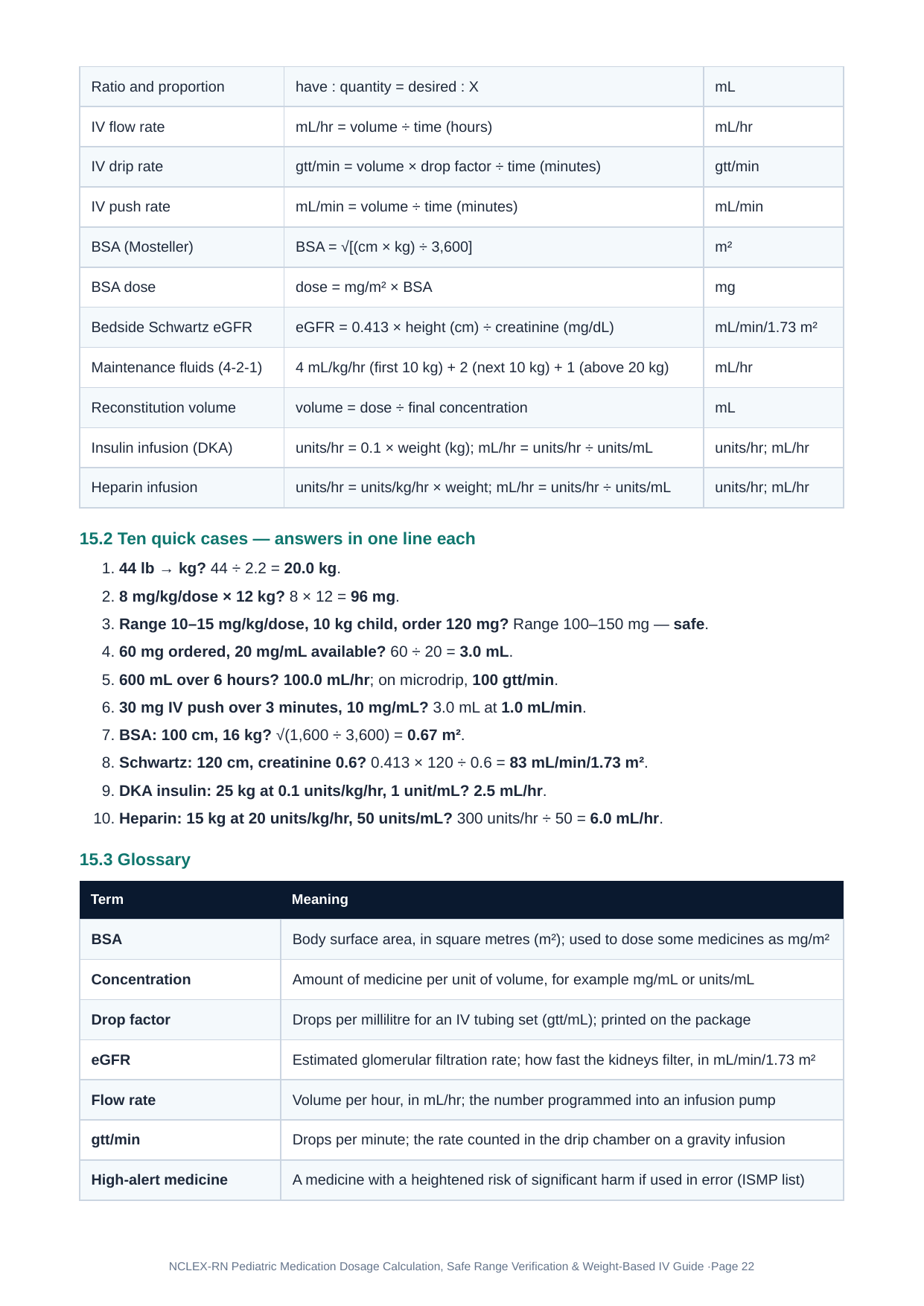
- Rapid review: every formula on one page, ten quick cases, glossary
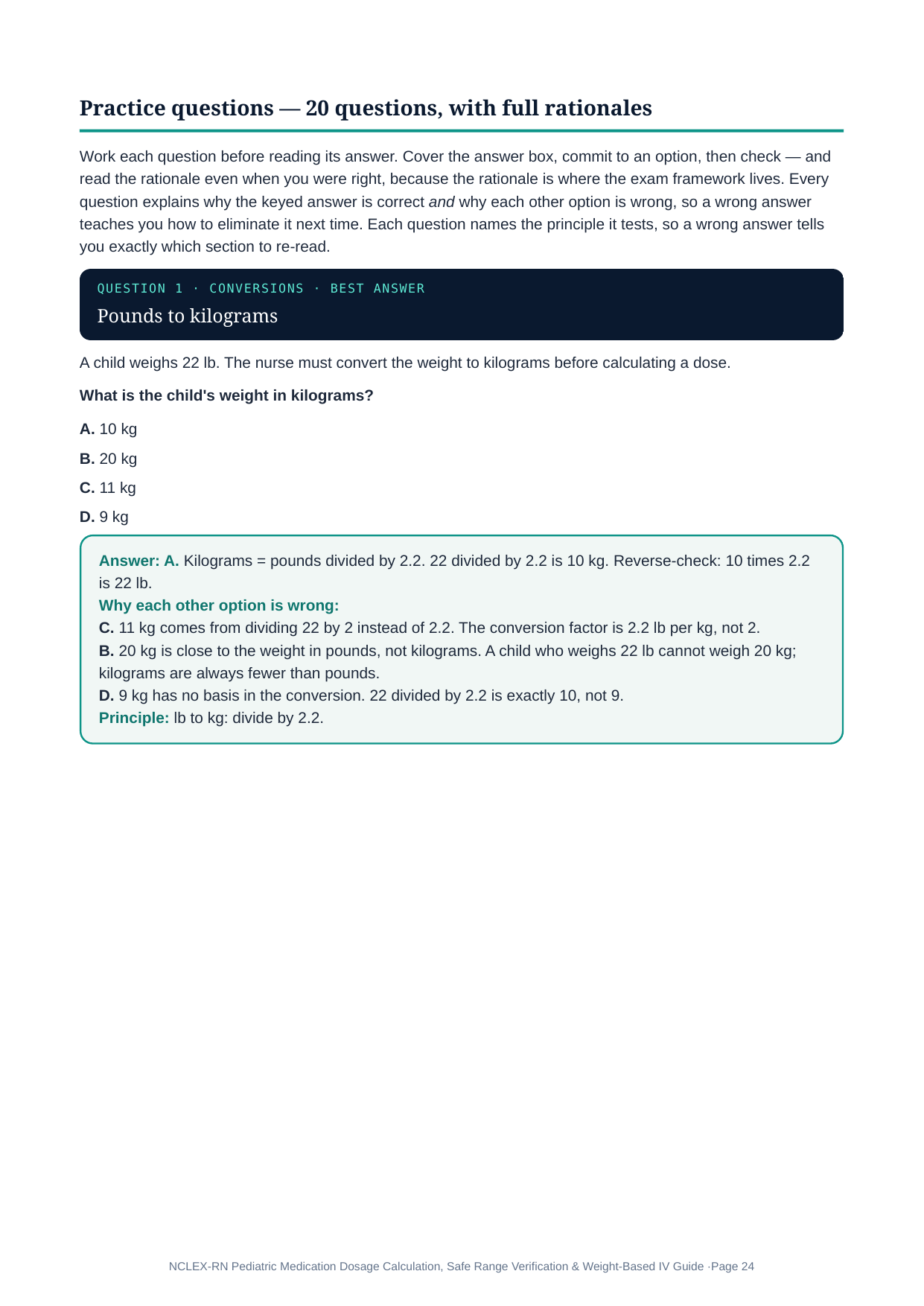
- 20 practice questions with full rationales — why the keyed answer is correct AND why each other option is wrong — plus an answer key
No real medicine doses are asserted in this book — every worked calculation uses a clearly-labeled fictional teaching order with an independent reverse-check, and published reference ranges are used only where verified. Original teaching cases written for exam practice. This guide is not affiliated with NCSBN and does not guarantee a pass. If you find an error, a corrected version will be sent free.