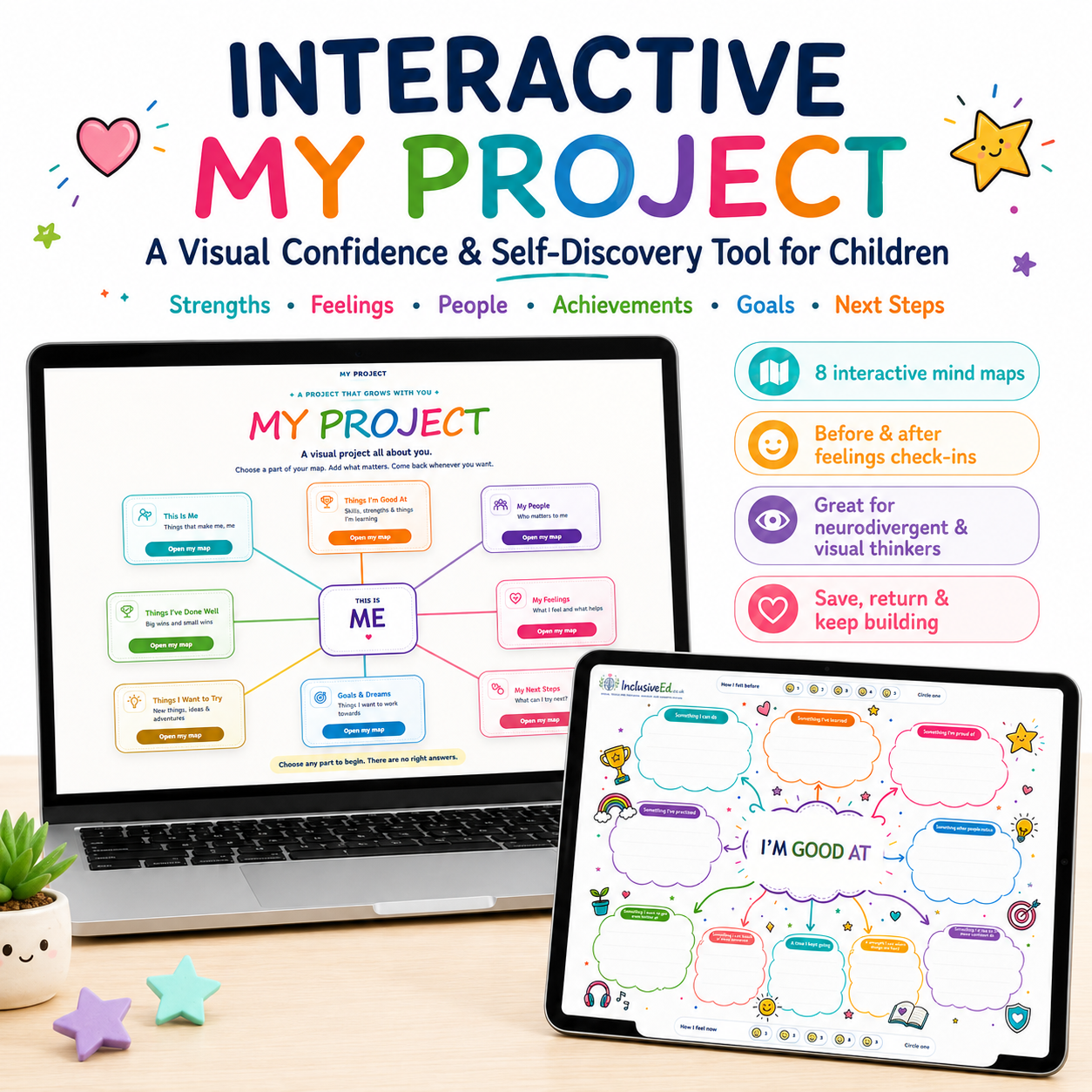
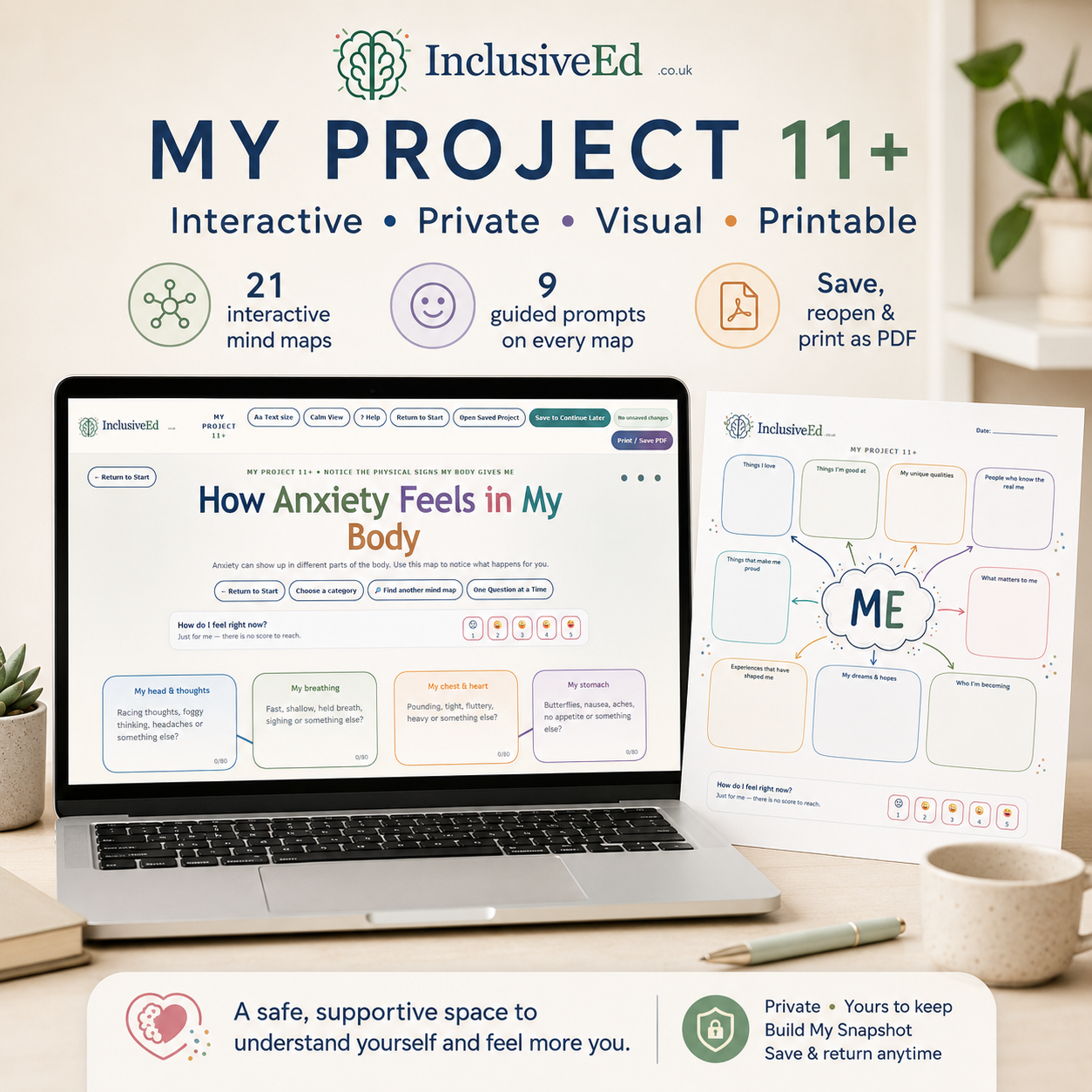
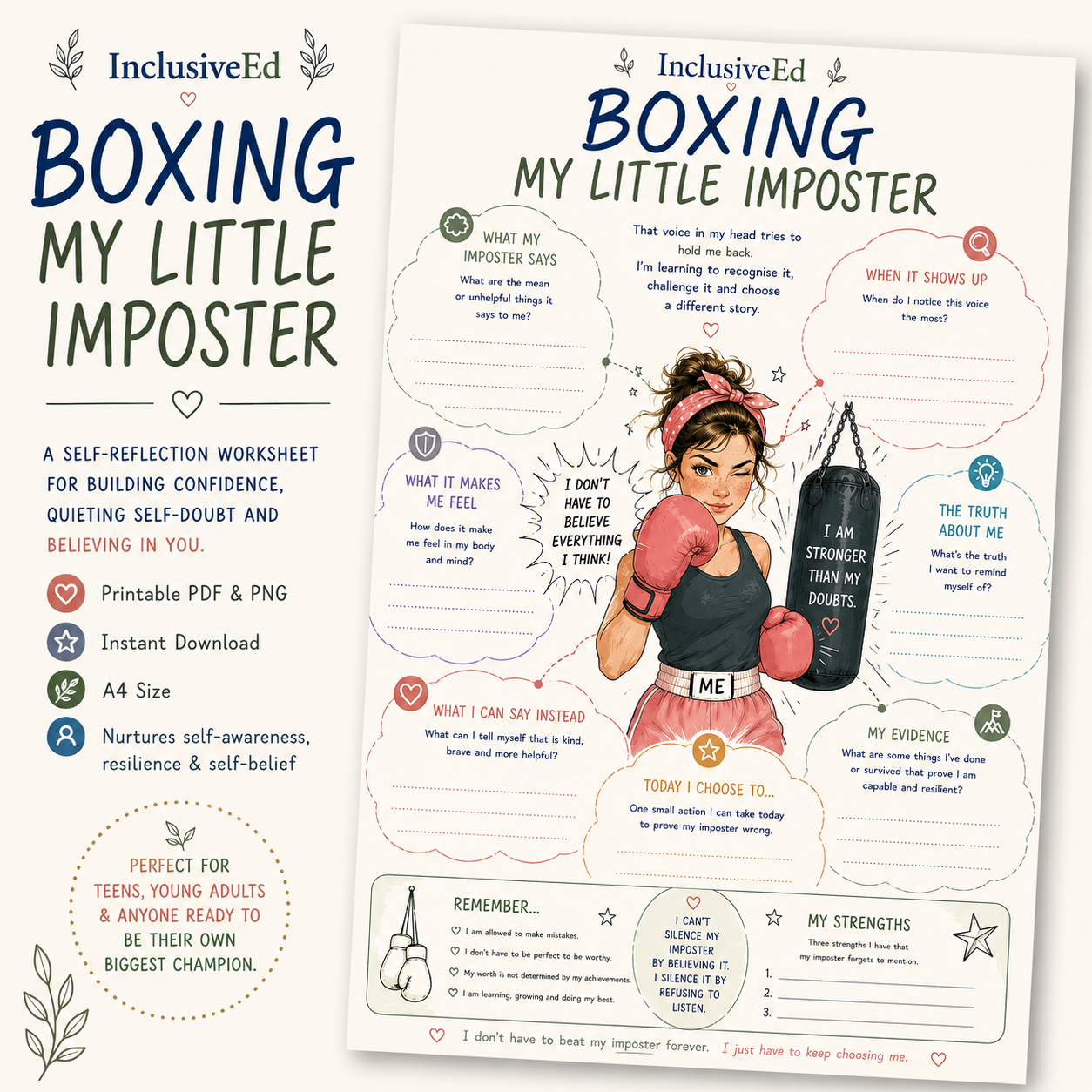
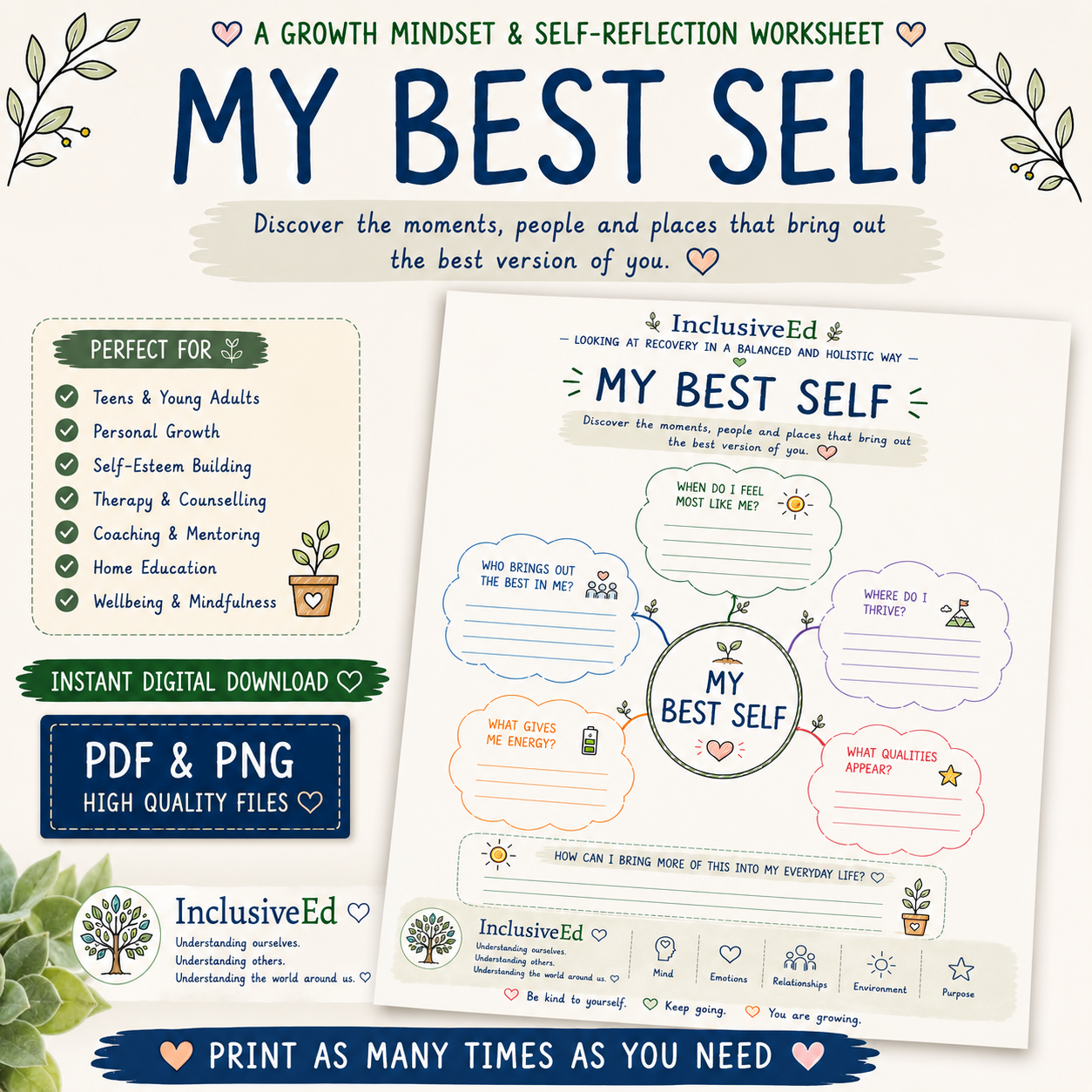
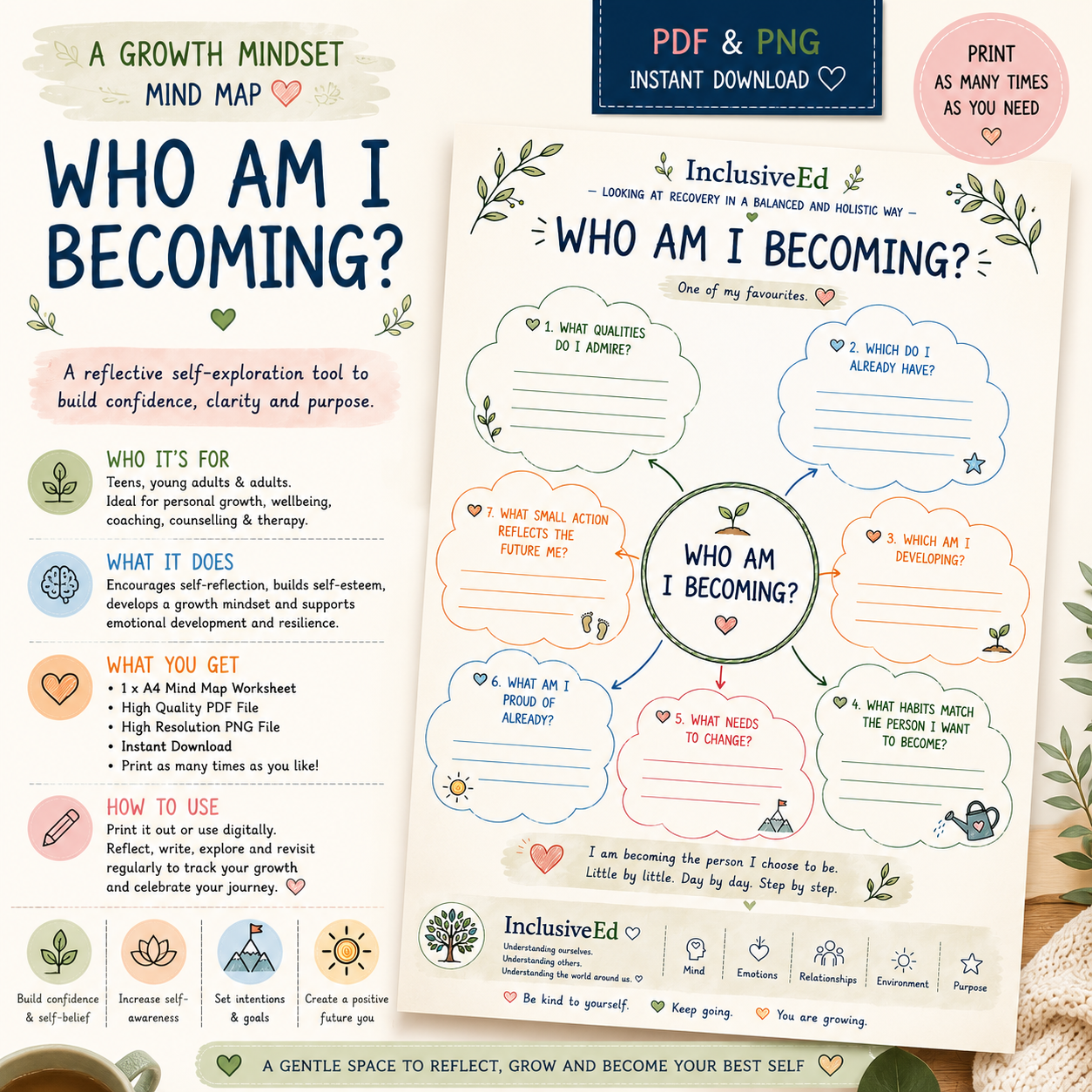
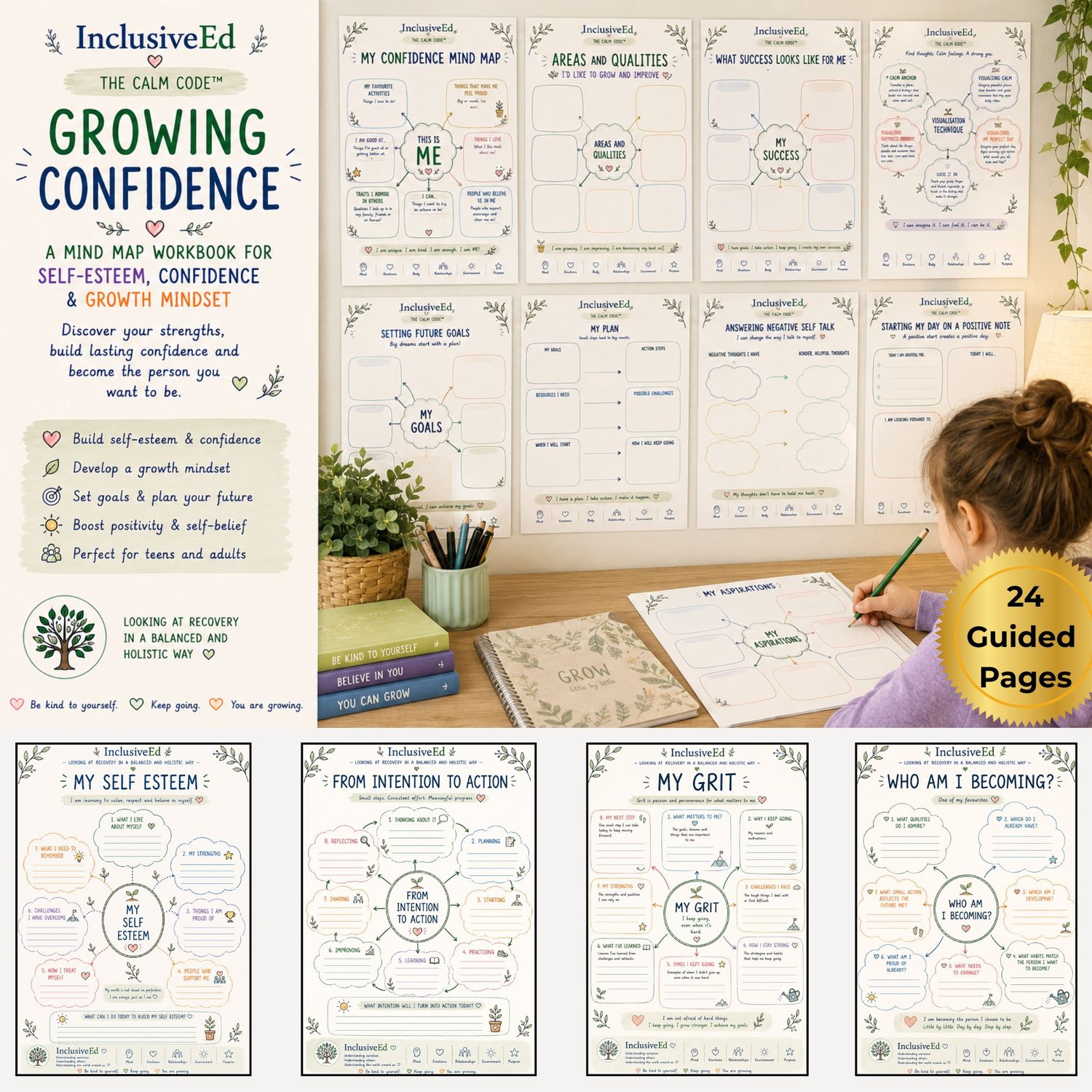
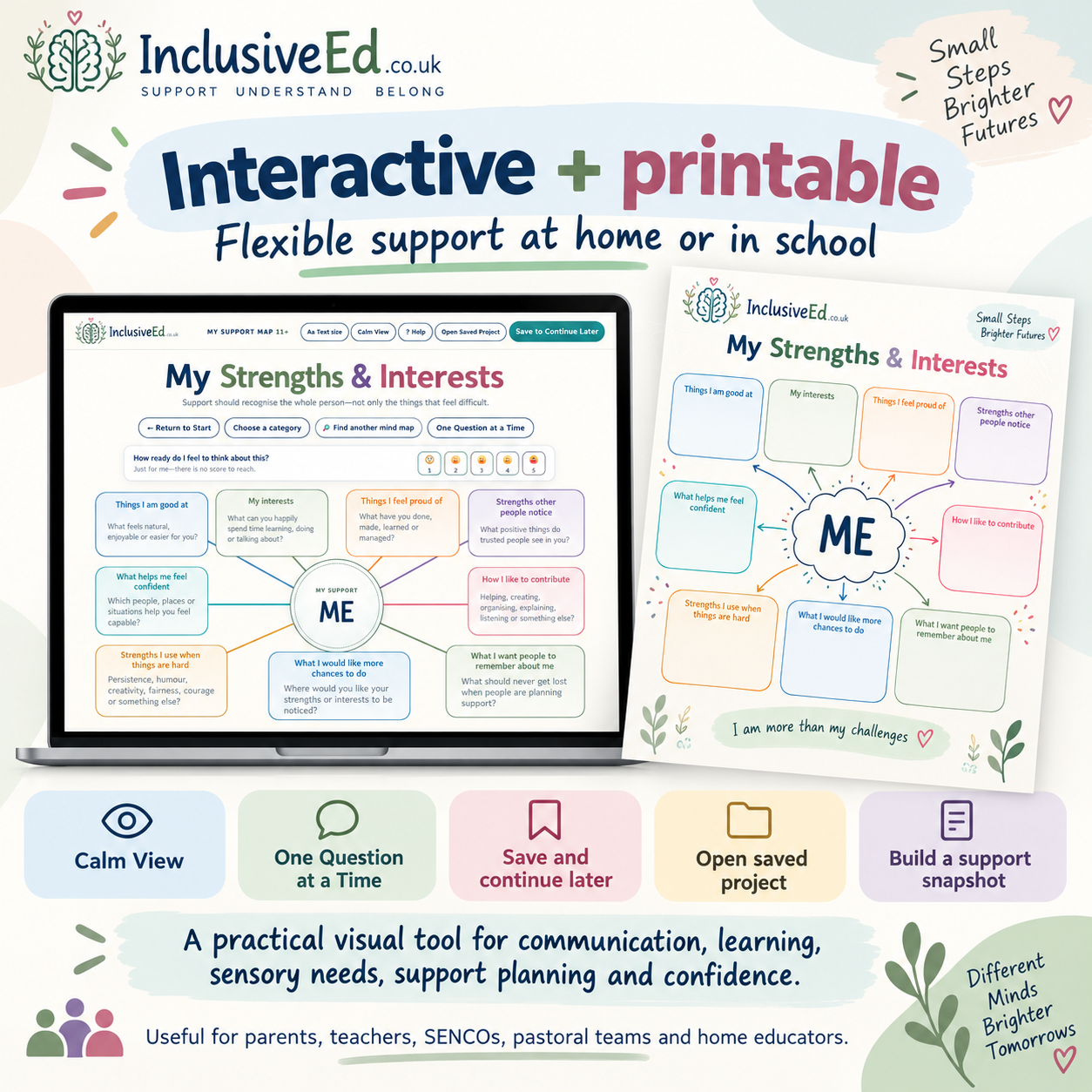
Pupil voice becomes visible. Children and young people can show what they notice, need and value through visual prompts. Their perspective gives staff a better starting point for a supportive conversation.
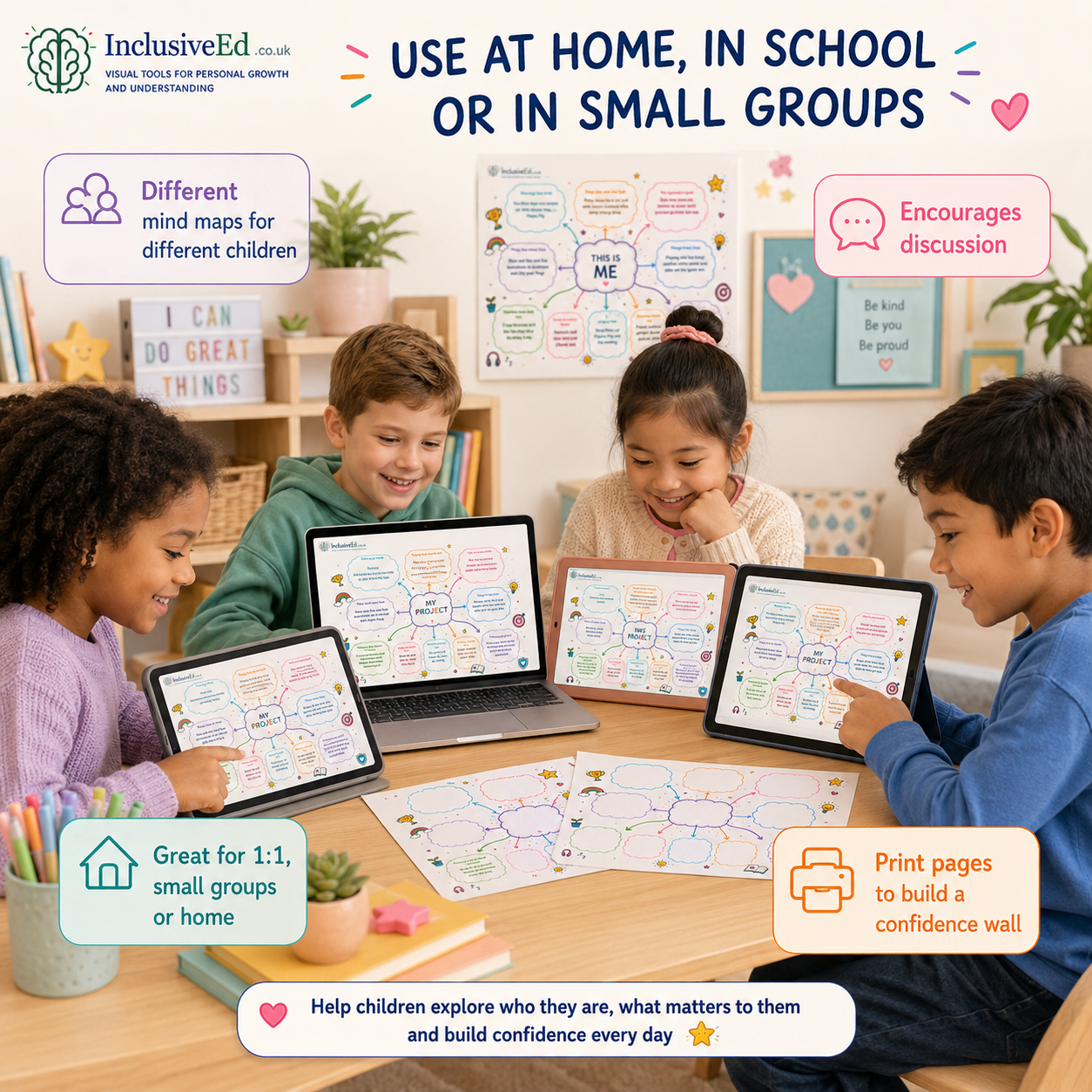
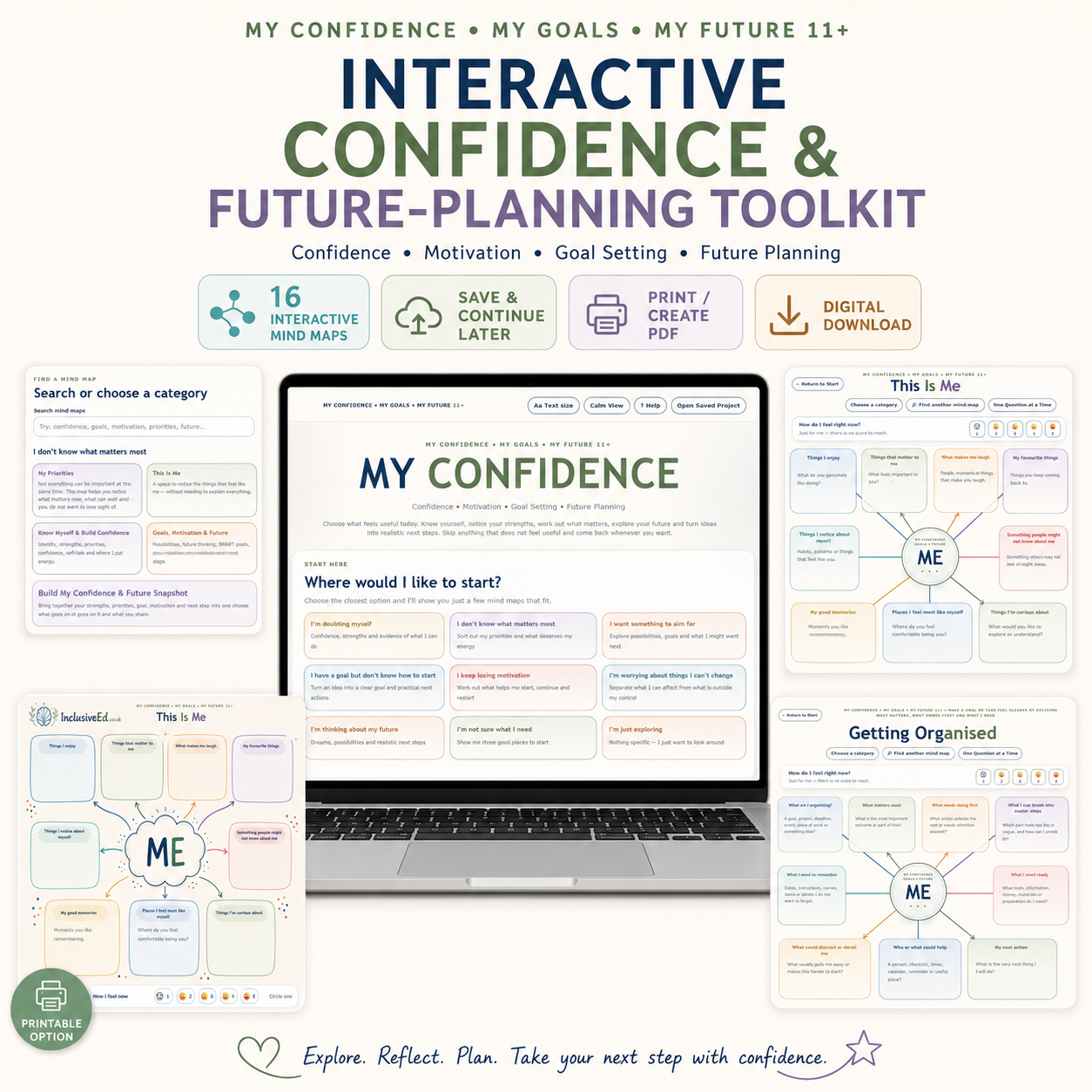
Small steps reduce the burden of a big question. A pupil can respond to one prompt at a time, organise ideas spatially and return to the map when ready. This can be especially useful when speech, working memory or written expression make it hard to explain an experience in one go.
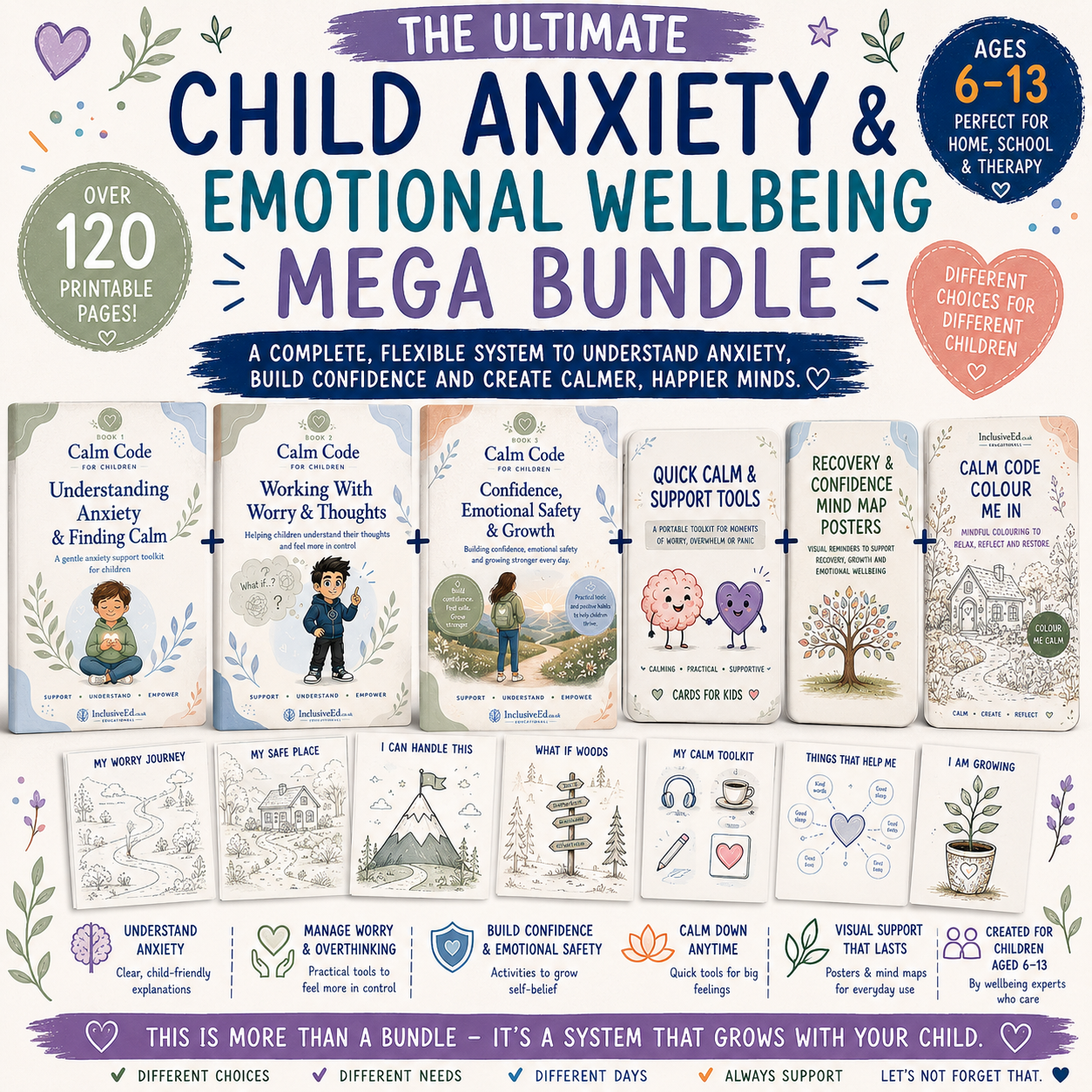
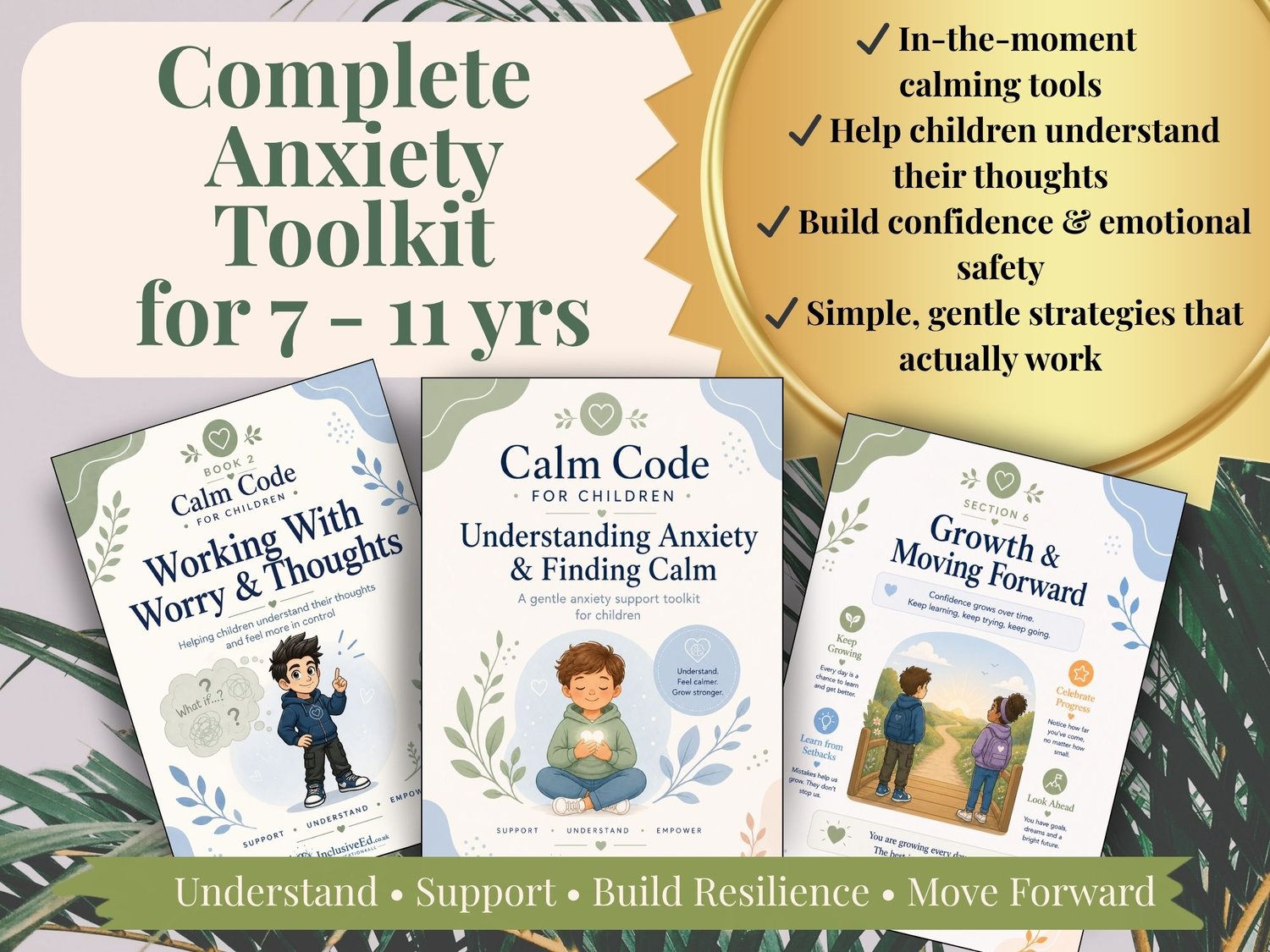
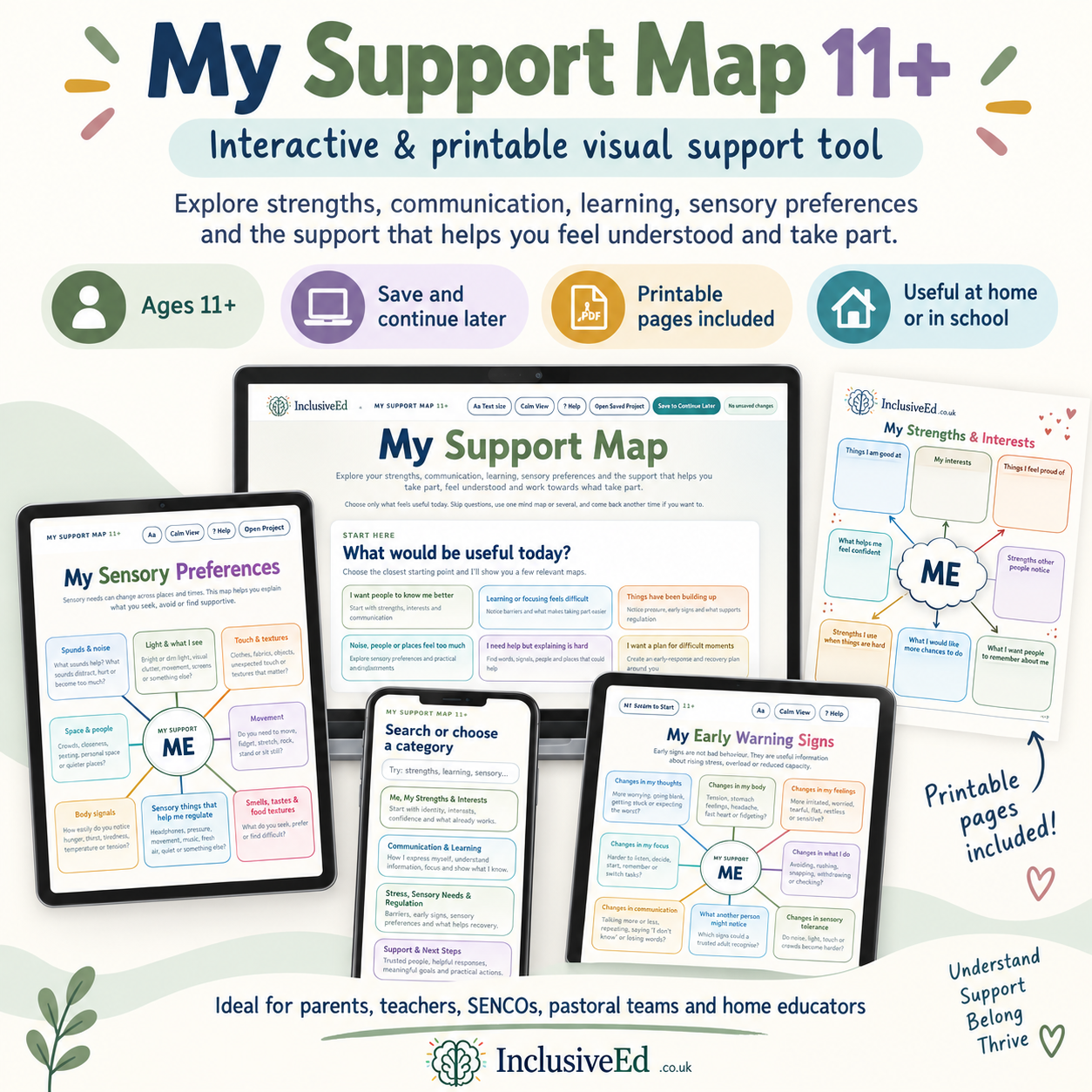
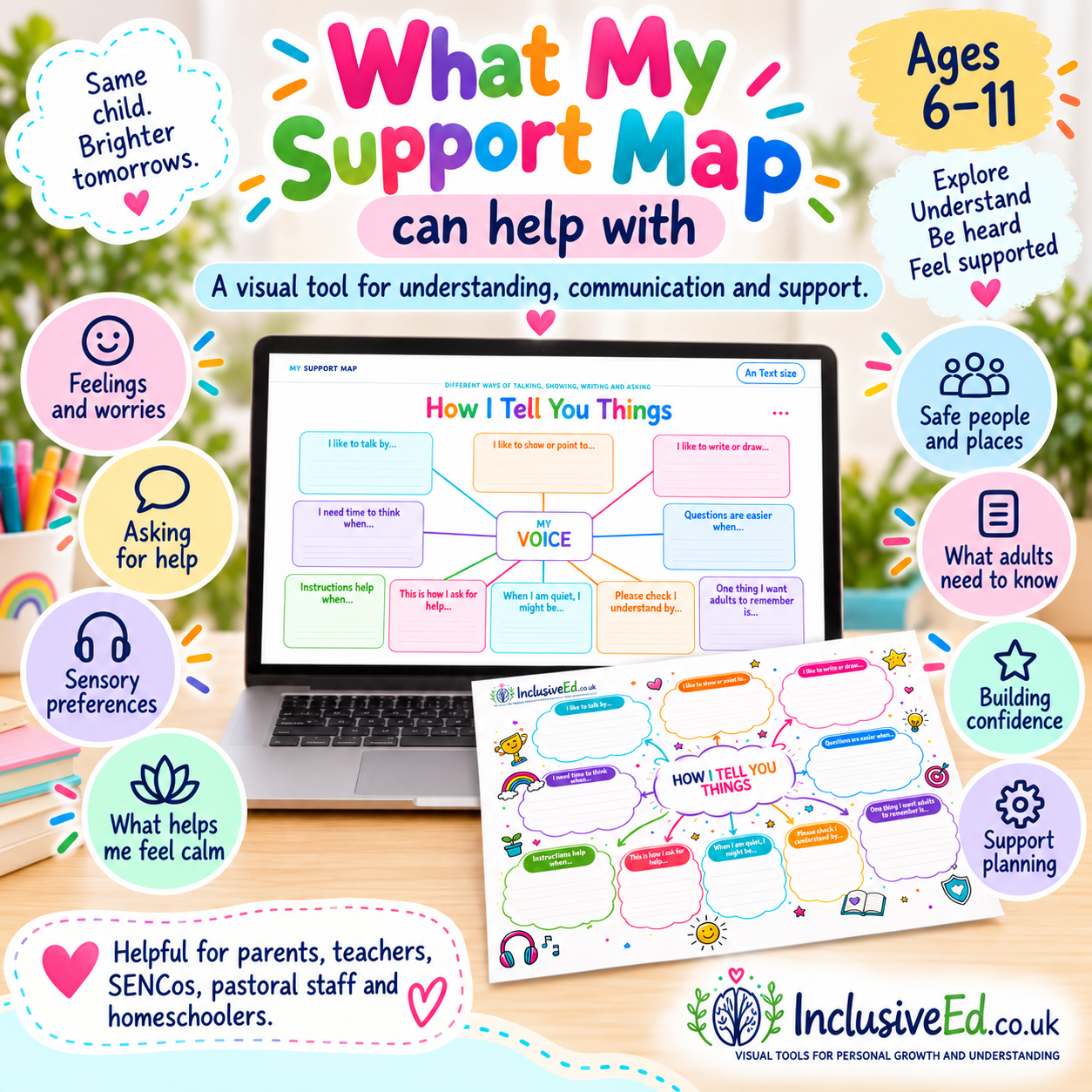
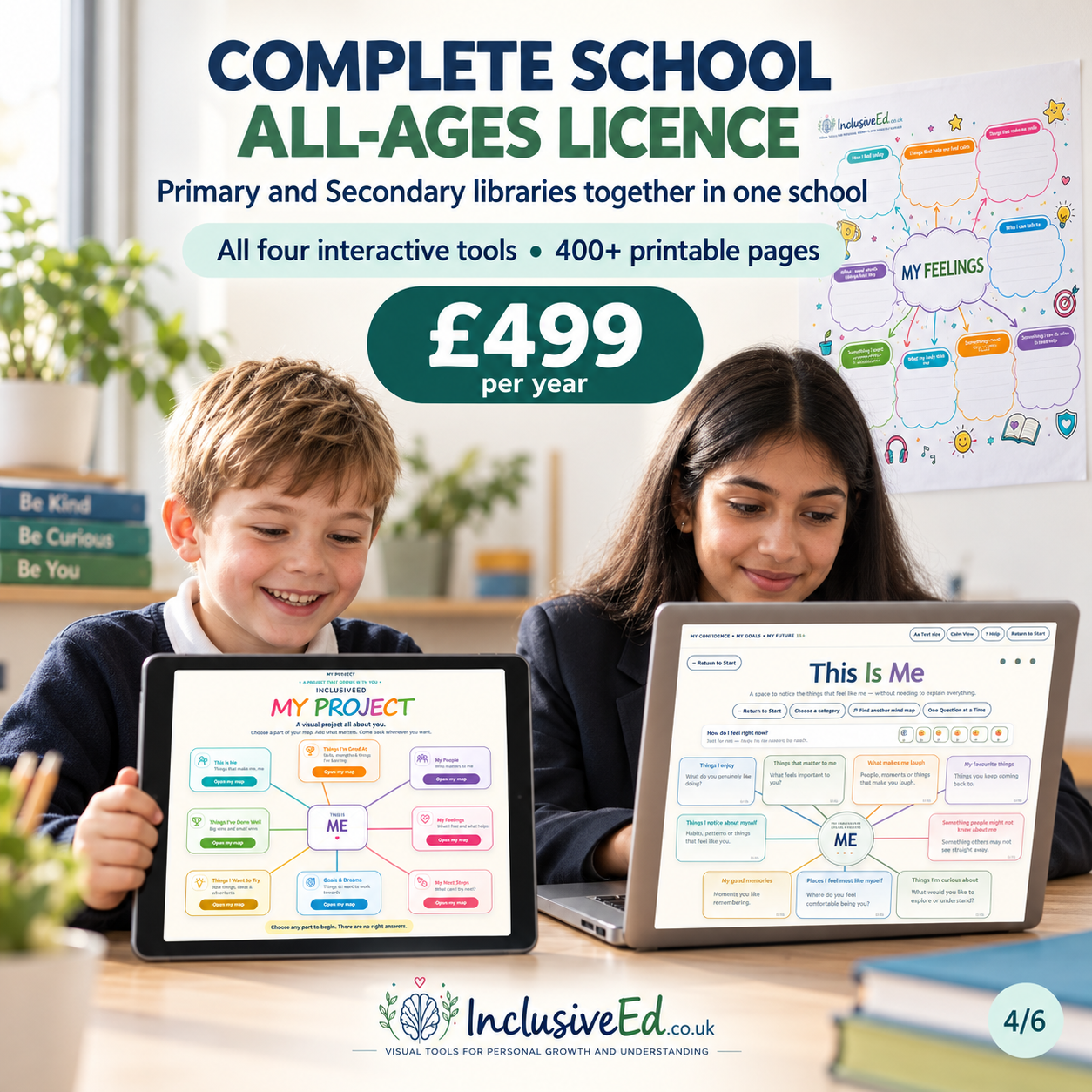
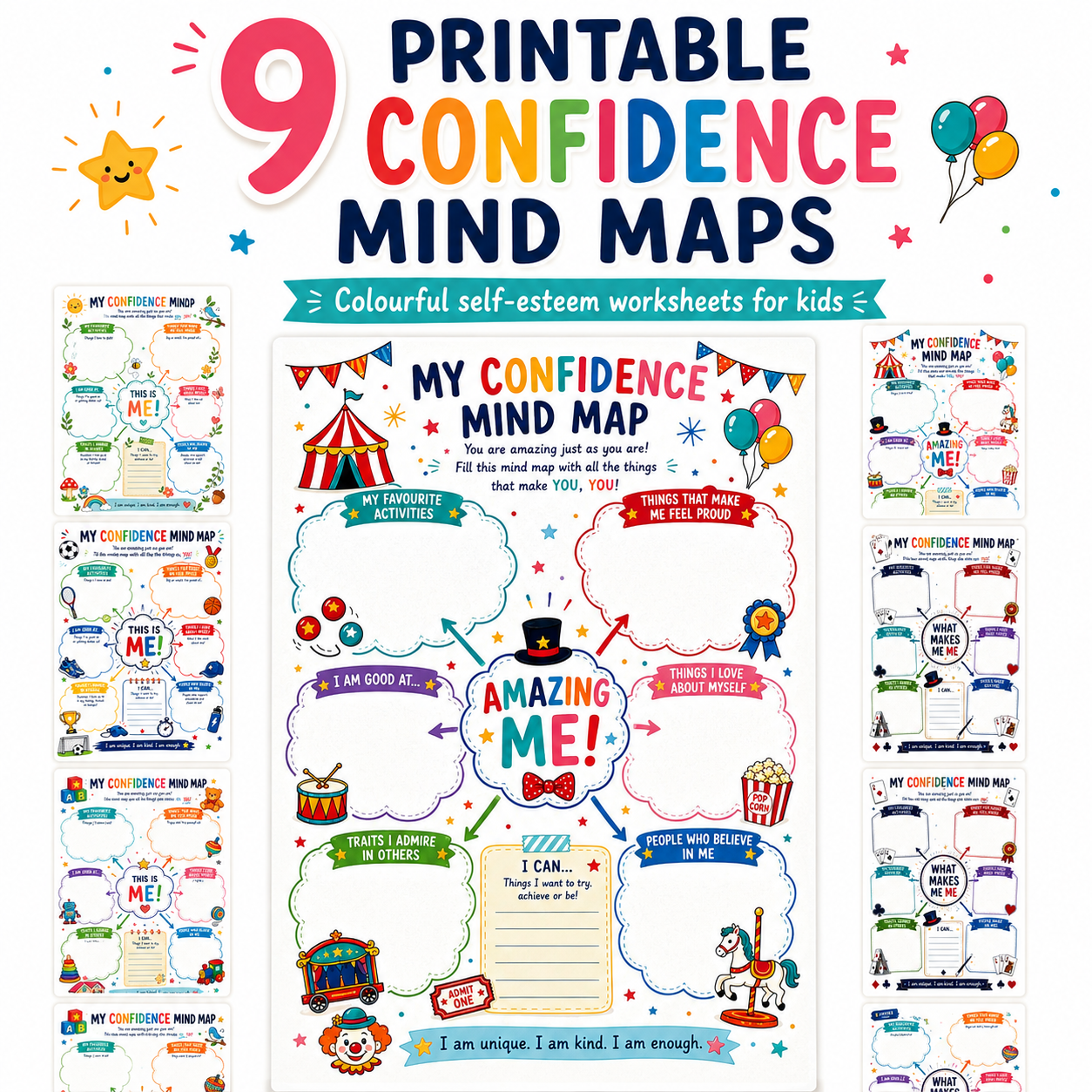
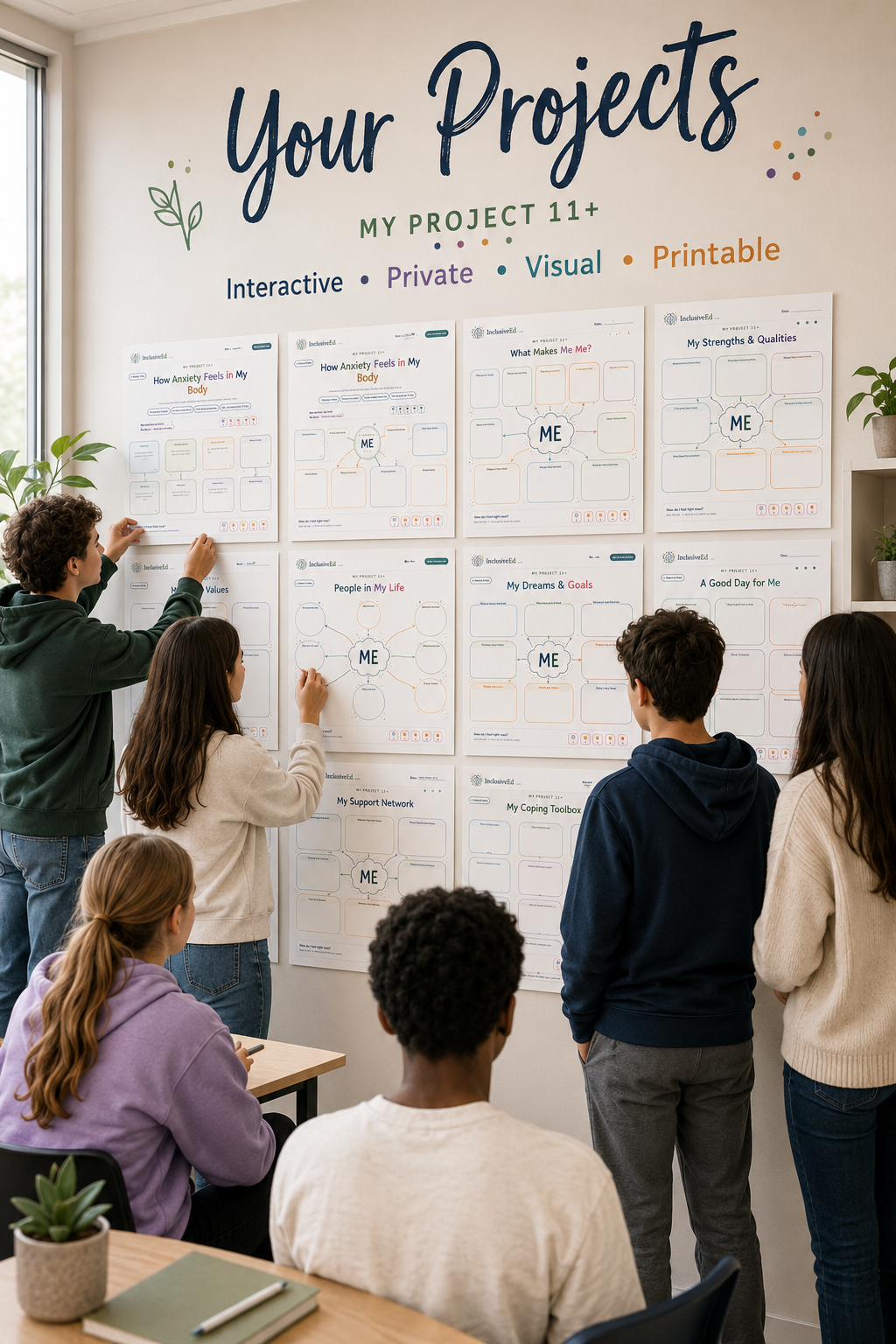
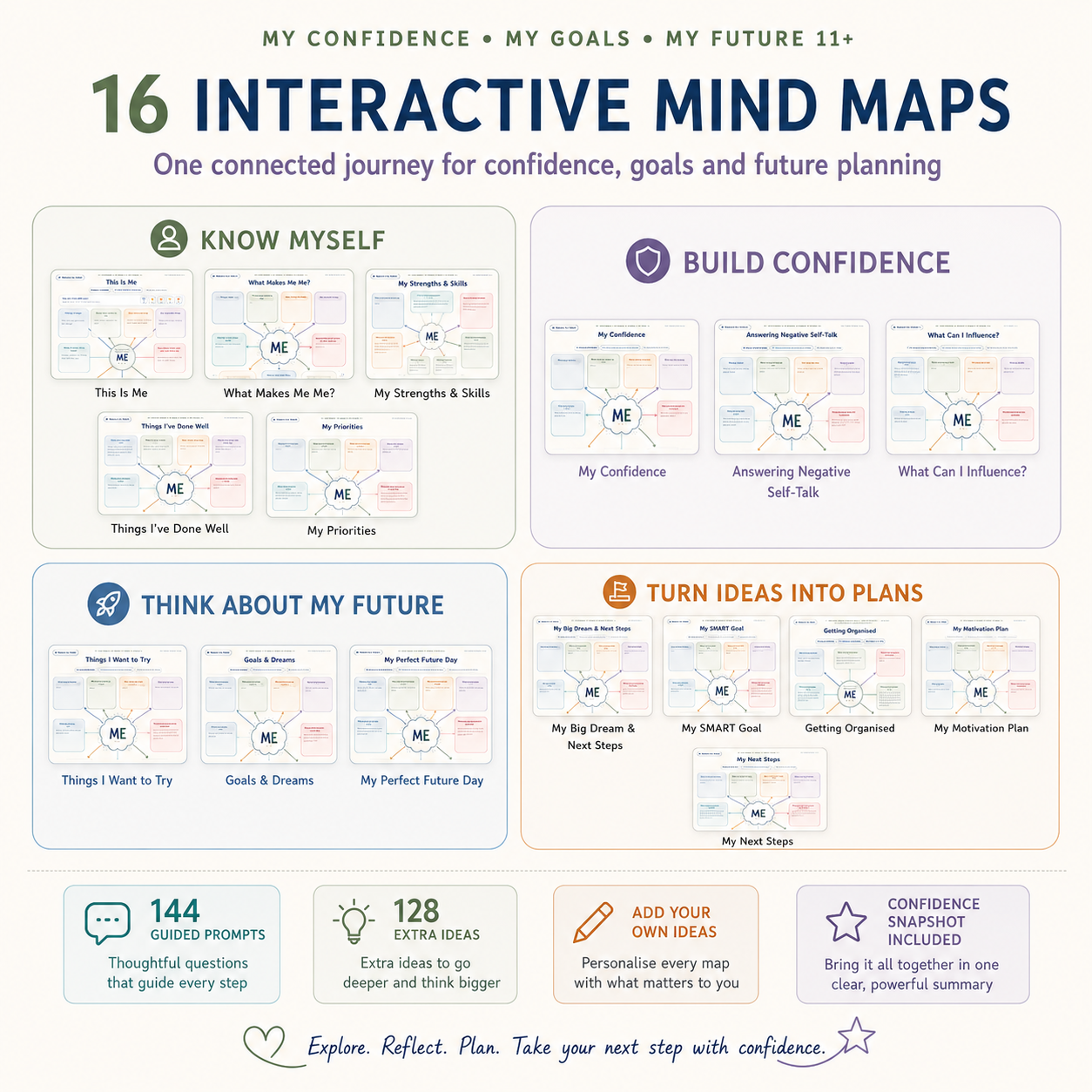
One approach works across the school. Primary and Secondary resources offer age appropriate ways to explore strengths, anxiety, emotional regulation, sensory needs, relationships and future goals. Staff can use the same child centred principle in SEND, pastoral, nurture, mentoring and wellbeing provision.
Insight leads to support. The maps help adults listen, identify patterns with the pupil and agree practical next steps. They make space for the young person to be an active participant in decisions about their learning and wellbeing.