
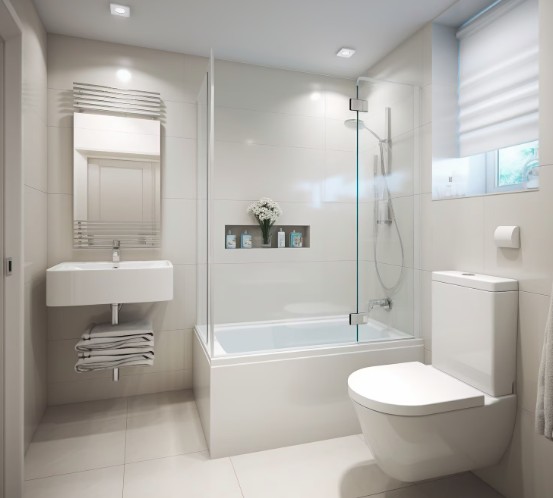
Ready to Retire the Shower Curtain? What Does Bathtub Door Installation Really Involve?
A shower curtain clings, collects mildew, and often lets water escape along the edges. It is no surprise that many homeowners eventually consider glass instead. Bathtub door installation changes how a bathroom looks and manages water, but the process requires more precision than it might seem. Understanding the available options and installation requirements makes it easier to plan a result that fits the bathroom and performs reliably.
The Practical Advantages of Switching to Glass
The reasons are practical as much as visual. Glass helps contain shower spray, allows natural and artificial light to travel through the room, and creates a more open appearance. It also eliminates the rod, hooks, and fabric or vinyl liner that can collect soap residue and require frequent cleaning.
Which Style Suits Your Tub?
Most bathtub enclosures fall into three main configurations:
- Sliding (bypass) doors: Two glass panels move along a track, making them suitable for narrower bathrooms because they do not swing into the room.
- Hinged or pivot doors: A glass panel opens outward for easier access but requires sufficient clearance.
- Fixed panel with a return or hinged section: A stationary panel blocks most shower spray, sometimes paired with a smaller opening panel for access.
These configurations are available in framed, semi-frameless, and frameless designs. Framed doors provide support around the glass edges and can accommodate some minor wall irregularities. Frameless options offer a cleaner appearance but depend on accurate measurements, suitable hardware, and properly aligned mounting surfaces.
Understanding the Bathtub Door Installation Process
Shower door for bathtub installation begins with accurate measurements because tempered glass panels are manufactured to specific dimensions and cannot be trimmed on site. Installers measure the opening at several heights, check whether the walls are plumb, and assess the tub's rim, which can be slightly uneven, sloped, or curved.
The process typically involves these steps:
- Prepare the area: Remove the old curtain rod and hardware, then clean and dry the installation surfaces.
- Mark the layout: Use a level to position tracks or hinges correctly, accounting for any unevenness in the tub or walls.
- Anchor the hardware: Select suitable fasteners and drilling methods for the wall material, whether tile, acrylic, or fiberglass. Incorrect drilling can crack tile or damage the surrounding surface.
- Position the glass: Carefully lift and secure the panels using appropriate support. Tempered glass can break if its edges strike hard surfaces.
- Adjust and test: Check door movement, alignment, clearances, and contact between the panels and seals.
- Apply sealant: Seal only the joints specified by the manufacturer and allow the recommended curing time before exposing the area to water.
Unique Installation Challenges in NYC Bathrooms
A bathtub door installation NYC homeowners plan can involve additional building and access considerations. Older properties sometimes have walls and tubs that are not perfectly square or level, which can affect measurements and hardware placement. Narrow hallways, stairwells, and elevators can also complicate transporting large glass panels.
Co-ops and condominiums might require contractor approvals, insurance documentation, or advance scheduling before work begins. Poorly managed water leakage can also affect shared walls and ceilings. Confirming building requirements, access routes, and tub dimensions before ordering glass helps prevent avoidable delays.
What to Check Before Choosing a Bathtub Door
- Glass type and thickness: Select safety glazing that meets applicable requirements for the location and enclosure design. Tempered glass is commonly used for bathtub doors.
- Track design: Choose a track that directs water back into the tub and allows convenient cleaning.
- Hardware finish: Consider finishes that complement bathroom fixtures and are suitable for humid environments.
- Seals and sweeps: Check that the seals fit the door configuration and help control water escaping around the edges.
- Tub condition: Inspect for movement, cracks, uneven surfaces, or deteriorating caulk before installation.
A Small Change With a Big Payoff
Replacing a curtain with a glass door can create a cleaner appearance and help keep bathroom floors drier. However, the result depends on accurate measurements, secure hardware, suitable glass, and properly detailed seals. Planning around the tub's condition, wall alignment, and available space helps create an enclosure that functions smoothly and remains reliable over time.