
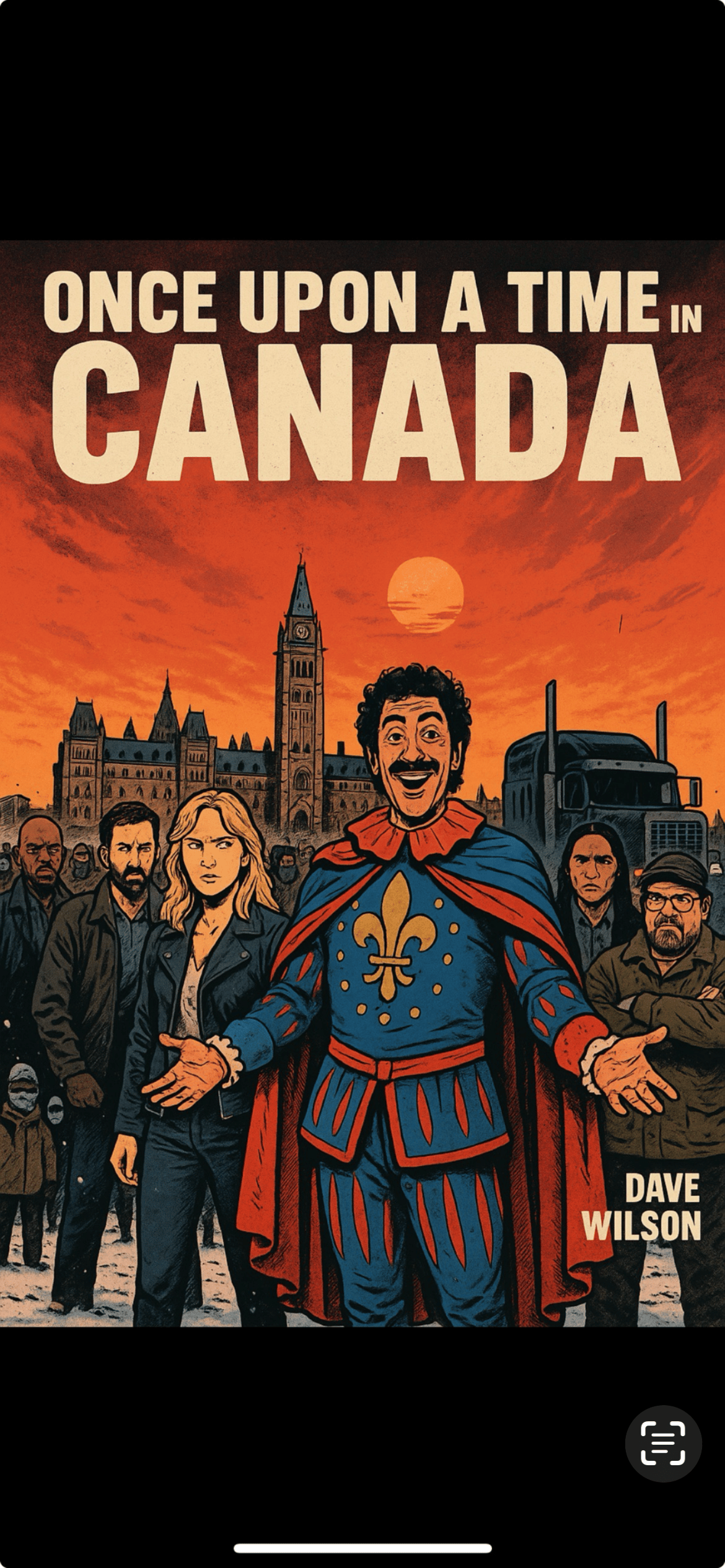
Once Upon A Time In Canada
Chris, a quiet but sharp-tongued mechanic in Ottawa, and Emily, a fiercely independent restaurant owner, find themselves out of patience — and options — when their lives are upended by a collapsing economy, suffocating restrictions, and a Prime Minister who seems more committed to performance art than governance.
At the heart of the chaos is Prime Minister Trevor Lemieux, a former theatre actor turned political narcissist who believes Canada can be unified through method acting, cultural cosplay, and costume changes. Whether he’s fasting as a “Spirit Brother of the Wind” or impersonating a trucker named “Trevor McGraw,” Lemieux treats the nation like his stage — while the country burns under absurd mandates and economic ruin.
Emily loses her restaurant to lockdown policies. Chris, already burned out from a toxic job and a failed kitchen career, becomes an accidental hero after flipping off a Lemieux supporter in traffic. The moment goes viral. Suddenly, he’s dubbed “Middle Finger Man” — the reluctant face of a growing grassroots resistance.
As protests swell and the nation fractures, Emily and Chris find themselves at the center of a cultural revolt — not through violence, but honesty, exhaustion, and truth. Their impromptu porch speech unites the working class, embarrasses the government, and ignites a revolution led not by politicians, but by the everyday people they failed.
Meanwhile, Lemieux descends into madness, donning disguises, staging empathy stunts, and melting down in silk robes while screaming about betrayal. He sees his downfall not as political failure — but as misunderstood genius. All while General Rainwater, a grounded military man, quietly prepares for a rescue mission: to save the country from the performance artist running it.
Funny, sharp, and deeply satirical, Once Upon A Time In Canada is a story about class, sanity, and what happens when the people who keep a country running finally stop pretending to be polite.