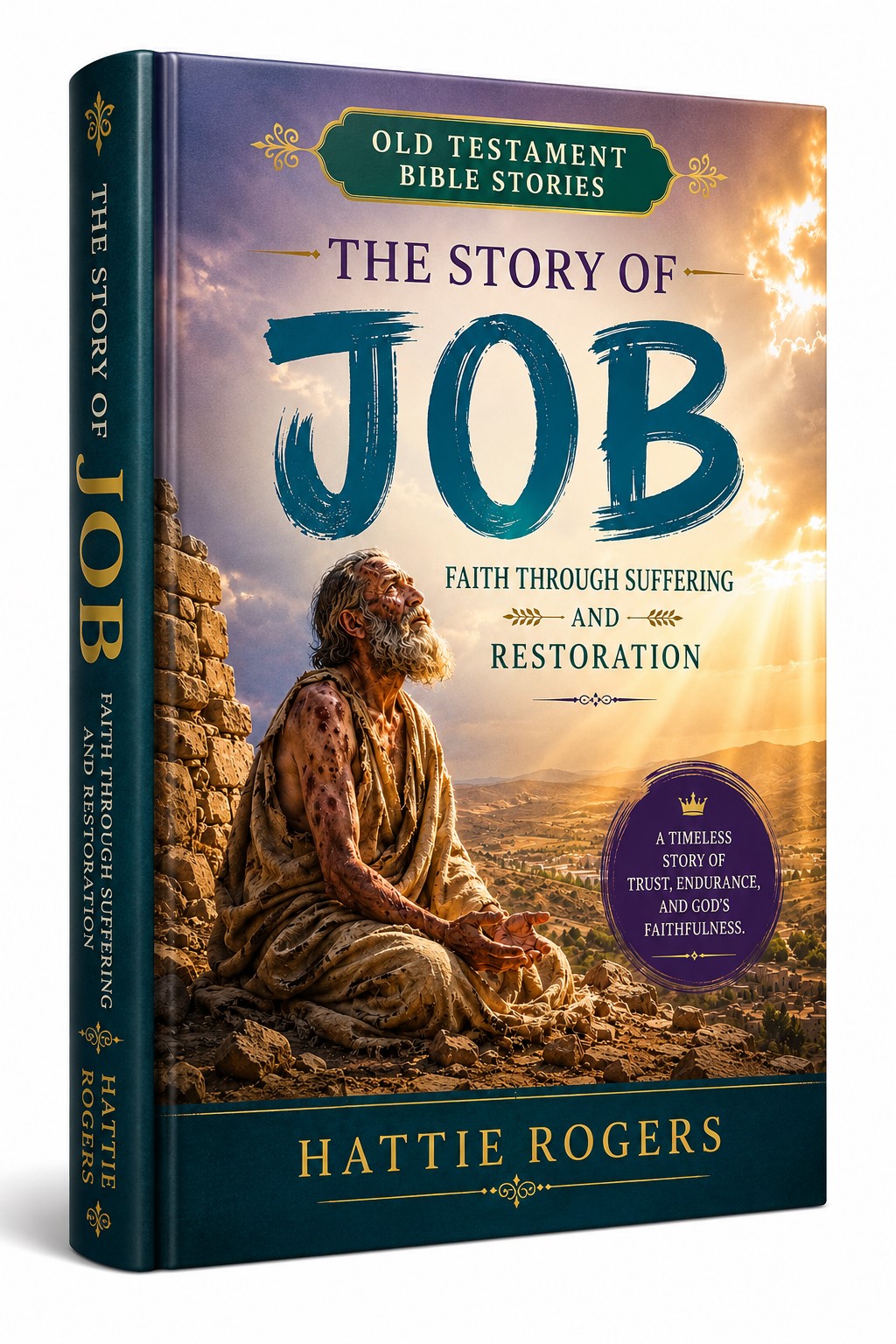
THE STORY OF JOB : Faith Through Suffering and Restoration
INTRODUCTION
Job did everything right. That is where the story starts, and it is what makes the story so difficult.
He was blameless, upright, and feared God. He turned away from evil in the small decisions and the large ones. He rose early every morning to offer sacrifice for his children, not because he had evidence they had sinned, but because he was the kind of man who attended to spiritual things before they became urgent. By every visible measure — his wealth, his family, his reputation at the city gate — he was a man in whose life faithfulness had produced exactly the outcomes faithfulness is supposed to produce.
And then, in the space of a single day, he lost everything.
His livestock were taken by raiders and fire. His servants were killed. His seven sons and three daughters died when the house collapsed on them while they were feasting together. And Job, in the first moment of unimaginable grief, tore his robe and shaved his head and fell to the ground — not in a curse, but in worship. The Lord gave, he said. The Lord has taken away. Blessed be the name of the Lord.
What we know, reading the opening chapters, that Job does not know is this: his suffering was not the result of his failure. It was the result of his faithfulness. Behind the scenes of his ordinary morning, a cosmic question had been asked — does Job fear God for nothing? — and the answer was being demonstrated at the cost of everything he owned and everyone he loved.
The book of Job does not offer easy comfort. It offers something harder and more honest: the portrait of a man who held onto God in the darkness without any of the context the reader is given, and the portrait of a God who, in the end, is larger than any of the arguments assembled against Him. If you have ever suffered without an explanation and been told it must be your fault, Job's story was written to correct that theology — and to sit with you in the ash heap until the morning comes.