
Memnode and Agent Memory Architecture: Building Structured Intelligence for AI Agents
Introduction
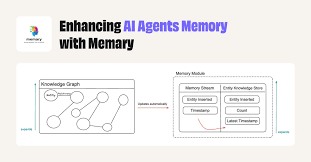
As AI agents become more capable of handling complex tasks, the way they store and manage memory becomes a critical part of system design. Memnode is emerging as a Memnode on agent memory architecture concept and architectural approach focused on structuring agent memory in a more modular, scalable, and interpretable way. Instead of treating memory as a single unstructured store, Memnode-style architecture organizes memory into interconnected nodes that represent knowledge, events, and context.
This approach helps AI systems become more reliable, context-aware, and easier to debug compared to traditional flat memory systems.
What Is Memnode in Agent Memory Systems?
Memnode refers to a structured memory architecture for AI agents where information is stored as interconnected nodes rather than linear logs or simple key-value pairs. Each node represents a distinct piece of memory, such as:
- User preferences
- Task history
- Conversations
- Facts or extracted knowledge
- Decisions made by the agent
These nodes are linked together in a graph-like structure, enabling better reasoning and contextual retrieval.
Why Traditional Agent Memory Falls Short
Most early agent memory systems rely on:
- Chat history buffers
- Simple vector databases
- Flat key-value storage
While these methods work for basic applications, they struggle with:
Lack of Structure
Unstructured memory makes it difficult to understand relationships between different pieces of information.
Poor Long-Term Reasoning
Agents may forget important dependencies or fail to connect past events meaningfully.
Scalability Issues
As memory grows, retrieval becomes noisy and less relevant without proper organization.
Core Principles of Memnode Architecture
Memnode introduces several foundational principles for designing agent memory systems.
Node-Based Memory Representation
Each memory item is stored as a discrete node with metadata, timestamps, and semantic tags. This makes memory easier to manage and update.
Relationship Graphs
Nodes are connected through relationships such as:
- Causal links (event A caused event B)
- Temporal links (event ordering)
- Semantic similarity (related concepts)
This transforms memory into a structured knowledge graph.
Modular Memory Layers
Memnode architectures often separate memory into layers:
- Working memory for active reasoning
- Episodic memory for past events
- Semantic memory for facts and knowledge
Context-Aware Retrieval
Instead of retrieving raw text, the system retrieves relevant nodes based on relationships and context relevance.
How Memnode Works in an AI Agent
A typical Memnode-based system operates in several stages:
1. Memory Ingestion
Incoming information from conversations, tools, or environments is converted into structured memory nodes.
2. Node Linking
The system identifies relationships between new and existing nodes and creates connections.
3. Storage in Memory Graph
All nodes are stored in a graph structure that can be traversed during retrieval.
4. Contextual Retrieval
When the agent needs information, it traverses relevant nodes instead of scanning unstructured logs.
5. Memory Updating
Nodes can be updated, merged, or deprecated as new information becomes available.
Benefits of Memnode Architecture
Improved Reasoning Ability
Structured relationships allow agents to reason across multiple memory points instead of relying on isolated data.
Better Explainability
Since memory is stored as nodes and relationships, developers can trace why an agent made a decision.
Efficient Long-Term Memory
Graph-based storage reduces noise and improves retrieval accuracy over time.
Scalability
Memnode systems can scale more effectively as memory grows, especially in complex multi-agent environments.
Memnode vs Traditional Memory Systems
Flat Memory Systems
- Store data as logs or key-value pairs
- Simple but unstructured
- Hard to scale and interpret
Vector-Based Memory
- Stores embeddings for semantic search
- Good for similarity matching
- Lacks explicit structure and relationships
Memnode Architecture
- Combines structure + relationships
- Enables reasoning over memory
- Provides explainability and long-term coherence
Use Cases of Memnode Architecture
Personal AI Agents
Agents can remember user habits, preferences, and long-term goals in a structured way.
Enterprise Knowledge Systems
Organizations can model internal knowledge as a connected memory graph.
Autonomous Agents
Robotics and task-based agents can track decisions, outcomes, and environmental context.
Multi-Agent Systems
Different agents can share and synchronize memory through linked nodes.
Challenges in Memnode Implementation
Complexity of Graph Management
Maintaining and updating memory relationships requires sophisticated algorithms.
Storage Overhead
Graph-based memory can become large and computationally expensive.
Designing Good Memory Policies
Deciding what to store, merge, or forget is still an open research challenge.
The Future of Agent Memory with Memnode
Memnode-style architectures represent a shift toward more structured and interpretable AI memory systems. As agents become more autonomous, the need for reliable long-term memory will increase.
Future systems will likely combine:
- Memnode-style structured graphs
- Vector databases for semantic retrieval
- Neural summarization for compression
- Reinforcement learning for memory optimization
This hybrid approach could lead to AI agents that think more like humans—balancing structured knowledge with flexible understanding.
Conclusion
Memnode offers a powerful approach to designing agent memory architectures by introducing structure, relationships, and modularity. Compared to traditional flat or purely vector-based systems, Memnode enables more intelligent, explainable, and scalable AI agents. As AI systems continue to evolve, structured memory architectures like Memnode will play a key role in building truly autonomous and context-aware intelligence.