
Cossack Vypovziv 23andme format, UKR164 + UKR165
The Cossacks were a diverse group of free warrior communities that emerged on the frontiers of Eastern Europe, particularly in the steppes of modern-day Ukraine and southern Russia, between the 15th and 19th centuries. Their name derives from the Turkic word qazaq, meaning “free man” or “adventurer,” and this spirit of freedom defined their culture and politics. Originally formed by runaway peasants, adventurers, and frontier settlers seeking autonomy from feudal or state control, the Cossacks developed into semi-independent military societies that played a crucial role in shaping the political and ethnic identity of Ukraine.
The Zaporizhian Cossacks, centered around the Zaporizhian Sich on the Dnipro River, became the most famous of these groups. They were known for their democratic governance, electing their leaders, the hetmans, through councils known as rada. The Zaporizhian Sich functioned as both a military fortress and a proto-state, symbolizing freedom and resistance to outside domination. Over time, the Cossacks became defenders of the Orthodox faith and the Ukrainian peasantry against the pressures of Polish-Lithuanian rule and Catholic conversion efforts.
One of the most influential figures in Cossack history was Bohdan Khmelnytsky, who led a massive uprising in 1648 against the Polish-Lithuanian Commonwealth. This revolt, known as the Khmelnytsky Uprising, led to the establishment of the Cossack Hetmanate, an autonomous Ukrainian state that lasted for over a century. Under Khmelnytsky’s leadership, the Cossacks sought to secure political independence, religious rights, and social justice for the Orthodox population.
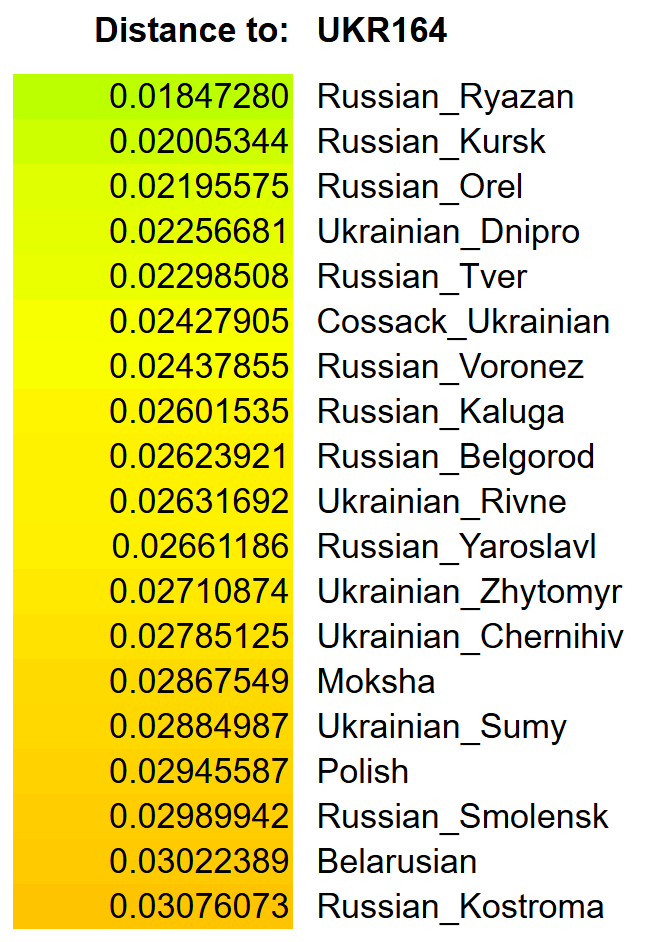
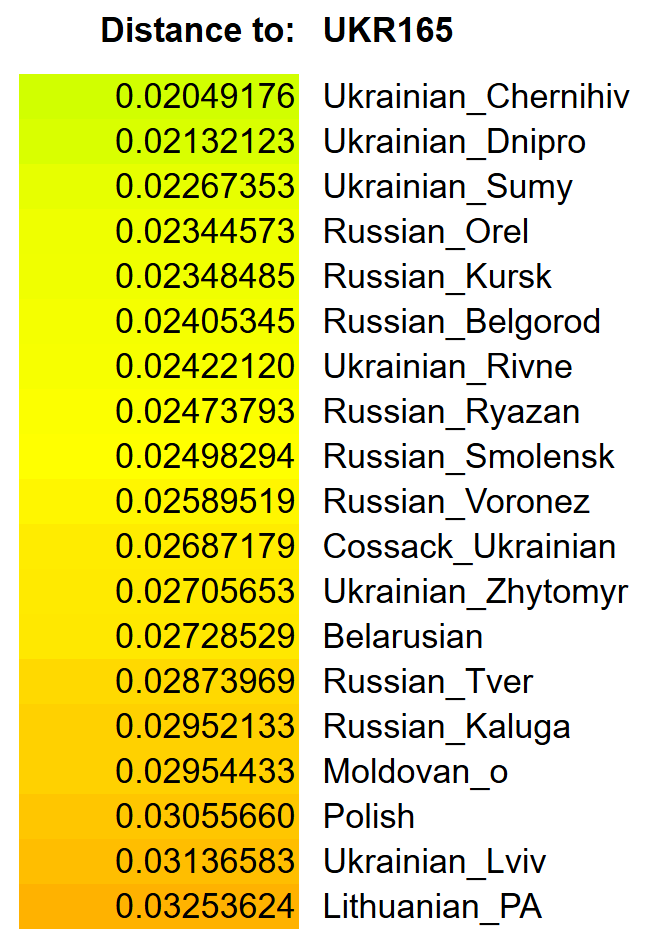
For this video, I’ve gathered the raw genomes of 2 Cossack women dated to the 17th century AD from a study called “North Pontic crossroads: Mobility in Ukraine from the Bronze Age to the early modern period”. I used academic tools, such as admixtools 1 and 2, but also tools developed by me, such as mageplot, Trait predictor, and betacalc.