
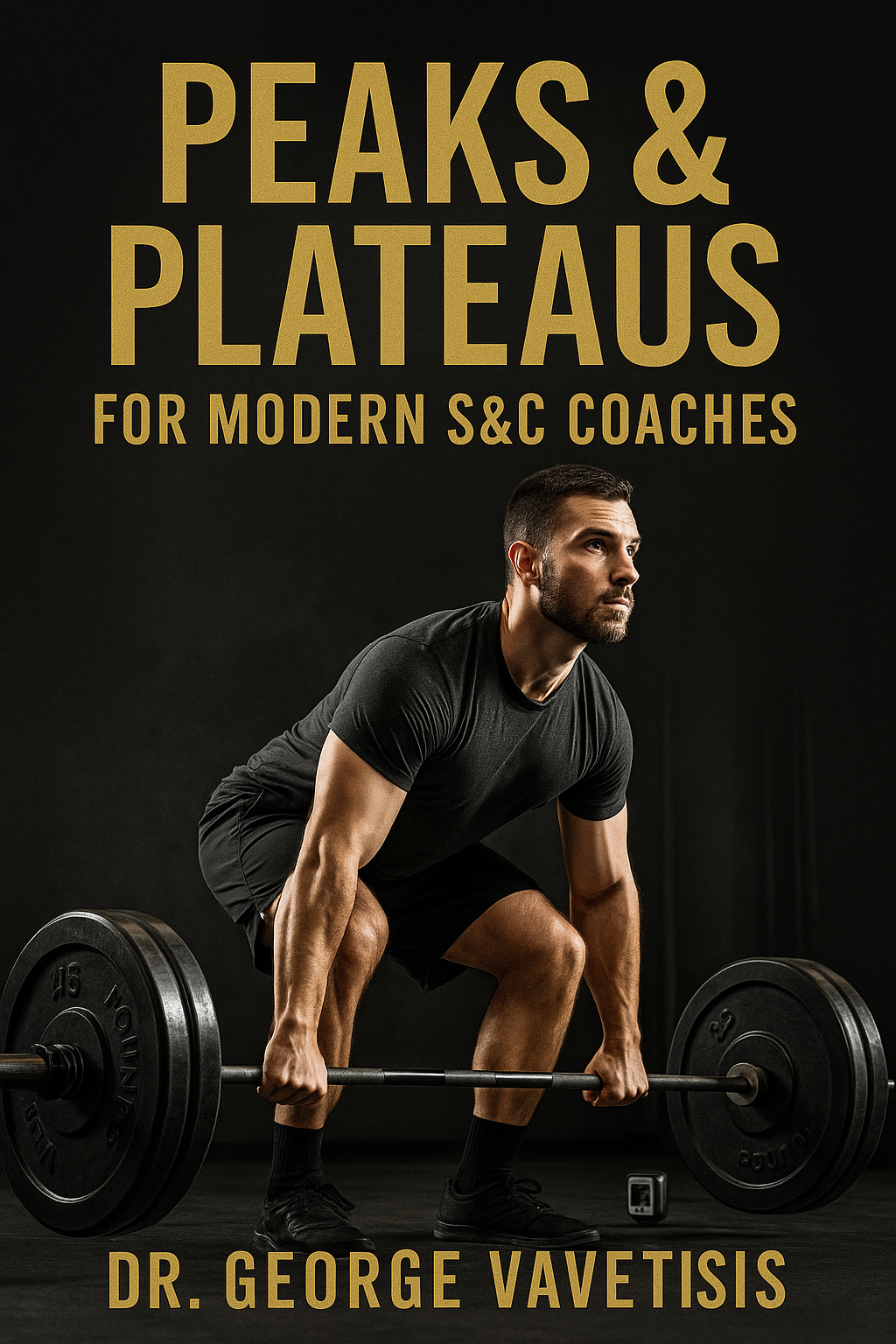
Peaks & Plateaus for Modern S&C Coaches
Pages: 1173
In modern high-performance sport, adaptation has become both the currency of progress and the battleground of failure. The margins that separate peak performance from plateaus, growth from stagnation, and readiness from breakdown are narrower than ever. Strength and Conditioning has matured into a sport science discipline where success is no longer determined solely by sets, reps, or motivational slogans, but by the intelligent orchestration of stress, variability, and recovery. This book was created to serve coaches who understand that performance is not built in a single training session, but emerges — gradually — through the successful navigation of thousands of micro-decisions across the season.
Every athlete is a living ecosystem. Mechanical stress interacts with neural drive, hormonal regulation, immune defense, sleep patterns, emotional state, and environmental constraints. We coach muscles, yet we influence biology; we prescribe training, yet we affect psychology; we chase power, but we must respect fatigue. As science opens new windows into how athletes respond, it also reveals deeper complexity: adaptation is dynamic, nonlinear, and constrained by the ever-changing demands of sport. A program that worked last month may fail tomorrow. A method that elevates one athlete may destroy another. The role of the S&C coach has never been more demanding — or more necessary.
We have entered an era where guessing is unacceptable. Performance teams are expected to manage load, track fluctuations in readiness, monitor biological signals, and adjust training with precision. Thoughtful interpretation — not raw data — is the true competitive advantage. Numbers must speak a language that informs coaching actions. Trends must predict outcomes before breakdown forces changes. Technology must enhance decision-making rather than replace coaching wisdom. This book was designed as a bridge between evidence-driven theory and applied coaching systems: a resource that converts complexity into purposeful strategy.
Adaptation, however, is not linear. All athletes, regardless of talent or training age, inevitably reach periods where progress stalls — when strength does not increase, when power plateaus, when movement efficiency declines, when fatigue suppresses neurological sharpness. These performance plateaus are not roadblocks; they are signals. They reflect imbalances between stimulus and recovery, mismatches between perceived and actual readiness, or prolonged exposure to monotony without sufficient variation. Coaches who recognize these patterns early can intervene intelligently — redirecting the athlete away from overuse, emotional decline, and performance regression.
The chapters that follow explore the science and art of sustaining performance evolution. You will find deep discussions on the physiology of adaptation, the neuromechanics of fatigue, the role of emotional states in force production, and the thresholds that forecast increased injury risk. Practical frameworks are provided to help coaches classify plateaus, diagnose their root causes, and implement targeted interventions. Strategies for manipulating volume, intensity, density, and exercise selection are presented not as rigid formulas but as adaptable models calibrated to the needs of each athlete and context.
A major theme in this book is the essential balance between load progression and load tolerance. We chase overload to stimulate growth; we distribute stress to preserve health. The Acute:Chronic Workload Ratio, training monotony indices, velocity-based fatigue markers, neuromuscular diagnostics, and psychological load metrics are all part of the monitoring ecosystem that informs this balance. However, data alone cannot solve problems. It is the S&C coach — equipped with expertise, intuition, and strategic discipline — who turns data into progress.
Equally important is the recognition that adaptation is a collaborative process. Performance is built through alignment among coaching staff, medical teams, analysts, and most importantly, the athlete. Communication failures can be as damaging as programming mistakes. When environments promote trust, education, and autonomy, athletes become invested owners of their development — reducing stress, improving adherence, and amplifying training quality. The most successful programs are not those that demand compliance, but those that cultivate understanding.
This book treats innovation not as novelty but as refinement. Many of the greatest improvements in training have come from rethinking the fundamentals — organizing blocks with clearer intent, rotating stress more intelligently, sequencing strength and power to maximize neurological freshness, and integrating recovery as a proactive stimulus rather than a reactive afterthought. Progress is often unlocked by subtle changes: adjusting bar speed thresholds, reorganizing microcycle density, recalibrating fatigue tolerance, or resynchronizing training with circadian readiness.
Ultimately, the mission of the Strength and Conditioning coach is simple: to guide athletes toward their peak, at the right moment, with their health intact and their spirit thriving. This requires respect for the science of performance, humility before the body's complexity, and relentless commitment to learning. It means asking the right questions: Is performance progressing? If not, why? What must change? And how quickly must that change occur?
This book will challenge you to think, question, and refine your coaching systems. It will provide tools to monitor patterns, frameworks to solve performance stagnation, and confidence to intervene decisively. It is an invitation to evolve — because our athletes deserve coaches who evolve with them.
If sustainable high-performance is the destination, then intelligent adaptation is the only road. Let us walk that road with clarity, precision, and purpose.