

The Financial Runway
The Financial Runway, a guide by Neil Nelson designed to help individuals de-risk their transition from salaried employment to entrepreneurship.
Core Philosophy
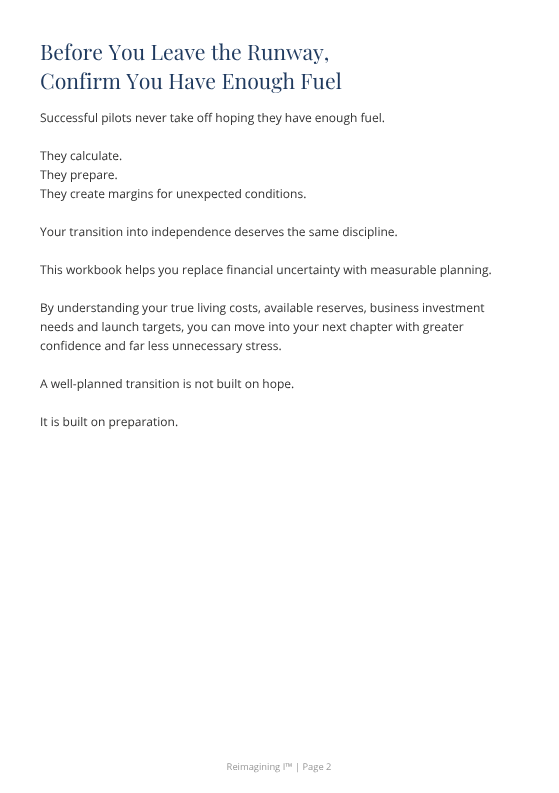
Transitioning from a predictable salary to building a business requires engineering, not emotion. To succeed, one must treat the transition as a calculated relocation of assets rather than a leap of faith, ensuring liquidity to avoid fatal financial gaps. The goal is to remove financial anxiety so the focus can remain entirely on one's craft.
The Runway Audit
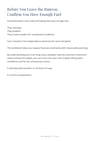
The booklet outlines ten essential questions to establish a financial foundation:
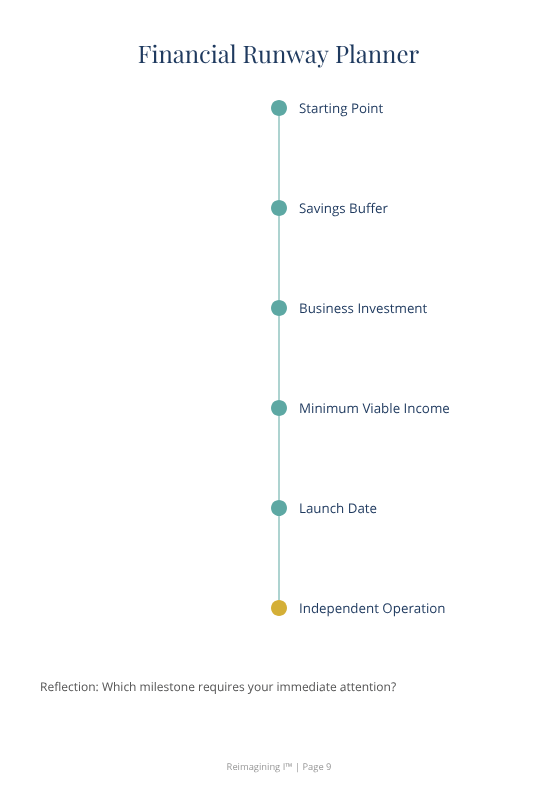
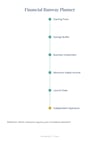
- True Baseline Costs: Determine the "True Nut," or the exact non-negotiable monthly expenses required for survival.
- Liquid Reserves: Calculate your runway by dividing total liquid cash (excluding long-term assets) by your monthly baseline cost.
- Business Economics: Define a Minimum Viable Income (MVI) and identify necessary business overheads, such as software and tools, while eliminating "shelf-ware".
- Strategic Preparation: Use your current salary as an investor by redirecting a percentage toward business setup costs.
- Contingency Planning: Establish a "Drop Dead Date" for your exit and create a "Worst-Case" protocol for cash flow if clients are not secured within 90 days.
- Pricing Integrity: Price offerings based on the value and financial return provided to the client, rather than internal insecurity.
Golden Budget Rules
To maintain structural integrity during the transition, adopt three rules:
1. Separation: Keep household and business finances in separate accounts.
2. Reframe: View the current employer as the venture capitalist funding the business.
3. Cash Flow First: Prioritise revenue-generating activities over vanity metrics during the first 12 months.
Disclaimer: The information contained in this booklet is for educational and personal growth
purposes only. It does not constitute legal, financial, psychological, or medical advice.