
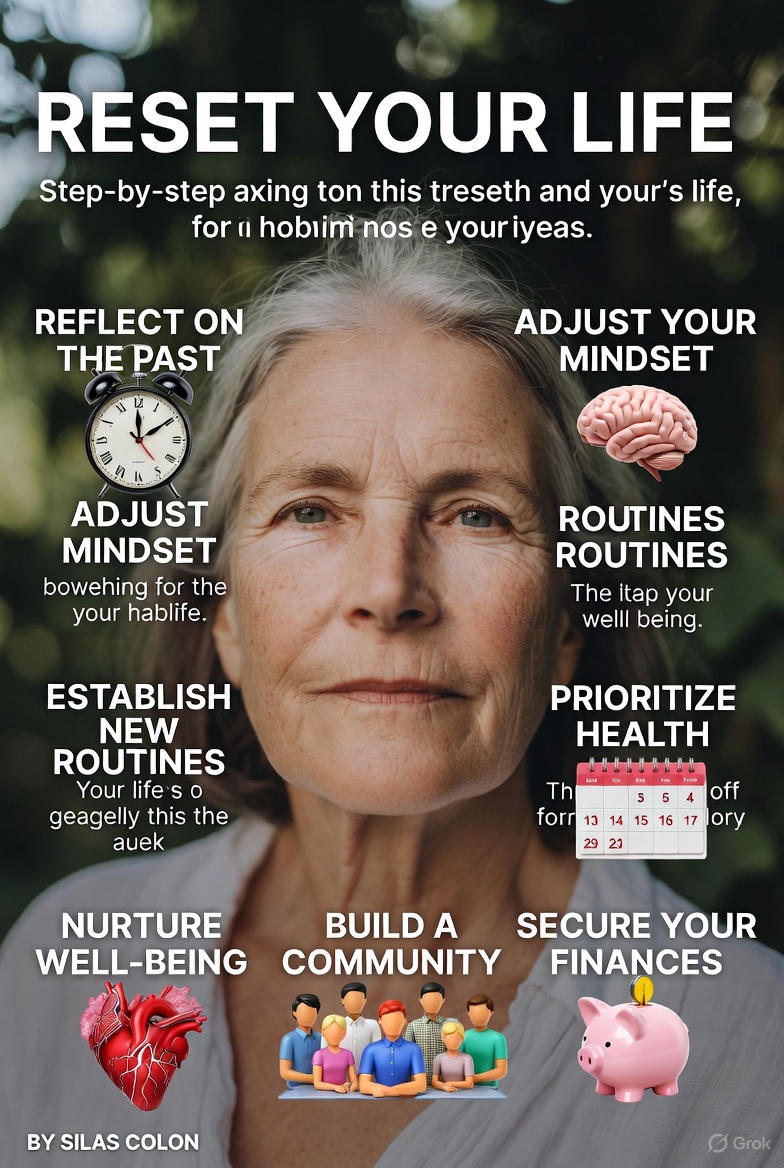
SENIOR Finance Planning
How to Reset Yourself as a Retired Senior:
By Silas Colon Copyright 2025
A Step-by-Step Guide
Retirement marks a new beginning—a chance to rediscover joy, purpose, and balance. This guide provides a clear, actionable path to "reset" your life, drawing from expert insights on retirement transitions. Approach it at your own pace; small, consistent steps lead to lasting change. If something feels overwhelming, consult a professional like a doctor or counselor.
Step 1: Reflect on Your Past and Envision Your Future
Take time to review your life so far. Grab a notebook or use a journaling app to list your career highlights, cherished memories, and lessons learned. Then, dream big about what's next—perhaps more time with family, travel, or learning a skill like painting. Ask yourself: What brings me energy? What do I want to leave behind? This reflection helps you shift from "who I was" to "who I can be." Consider talking it through with a trusted friend or coach for deeper insights.
Worksheet for Step 1: Reflection and Visioning
(Print this or copy into a journal. Fill in your responses honestly.)
- Past Accomplishments: List 5 key achievements from your working life or personal history.
- Lessons Learned: What 3 challenges taught you the most?
- Future Vision: Describe your ideal retirement day. What activities excite you?
- Goals to Explore: Brainstorm 3 new things you'd like to try.
Date Completed: _______________ | Notes: ______________________________
Step 2: Adjust Your Mindset and Break Unhealthy Habits
Retirement can stir up emotions like loss or uncertainty, so reframe it as freedom. Let go of work-related stress by practicing gratitude—note three things you're thankful for daily. Identify habits to drop, such as over-relying on TV or unhealthy snacking. Replace them with positive ones, like limiting screen time to evenings or swapping junk food for fresh alternatives. If anxiety persists, mindfulness apps or short meditations can help build resilience.
Worksheet for Step 2: Mindset Adjustment
(Track your shifts over a week. Check off as you progress.)
- Gratitude Practice: Write 3 things you're grateful for today.
- Day 1: 1. ______ 2. ______ 3. ______
- Day 2: 1. ______ 2. ______ 3. ______
- Day 3: 1. ______ 2. ______ 3. ______ (Continue for 7 days)
- Habits to Break: List 2 unhealthy habits and why they no longer serve you. Habit 1: ______________________________
- Reason: ____________________
- Habit 2: ______________________________
- Reason: ____________________
- Replacement Habits: What positive alternatives will you try? Alternative 1: ______________________________
- Alternative 2: ______________________________
- Mindset Reframe: Turn a negative thought (e.g., "I'm bored") into a positive one (e.g., "I have time for new adventures").
- Negative: ______________________________
- Positive: __________________
Date Completed: _______________ | Notes: ______________________________
Step 3: Establish a Daily Routine and Structure
Without a job, days might feel aimless, so create a flexible schedule. Start simple: Set a consistent wake-up time, plan meals, and block out slots for activities. For example, mornings for a walk, afternoons for hobbies, and evenings for relaxation. Use a planner or app to track it. This structure provides a sense of accomplishment without rigidity—adjust as needed to keep it enjoyable.
Worksheet for Step 3: Routine Builder
(Map out a sample week. Adjust as you go.)
- Wake-Up Time: _______________
- Bedtime: _______________
- Daily Schedule Template: 7-8 AM:
- ______________________________ (e.g., Breakfast & Stretch)
- 9-11 AM: ______________________________ (e.g., Hobby Time) 12-1 PM: ______________________________ (e.g., Lunch)
- 2-4 PM: ______________________________ (e.g., Social or Errands) 5-7 PM: ________________________ (e.g., Dinner & Relax) 8 PM+: _______________________________(e.g., Reading)
- Weekly Highlights: Add one special activity per day (e.g., Monday: Call a friend).
- Mon: ______ Tue: ______ Wed: ______ Thu: ______ Fri: ______ Sat: ______ Sun: ______
- Flexibility Check: What will you do if a day goes off-plan?
Date Completed: _______________
Notes: ______________________________
Step 4: Prioritize Physical Health and Activity
Your body is your foundation, so commit to movement and nutrition. Aim for 30 minutes of daily exercise, like walking in nature, swimming, or gentle yoga. Focus on a balanced diet rich in vegetables, fruits, lean proteins, and whole grains; stay hydrated and limit processed foods. Schedule regular doctor visits for check-ups, and track improvements like better energy or weight management. Small changes compound—start with one new habit this week.
Worksheet for Step 4: Health Tracker
(Log your efforts for a week to build momentum.)
- Exercise Log:
- Day 1: Activity ______
- Duration ______
- How I Felt: ______
Day 2: Activity ______
- Duration ______
- How I Felt: ______ (Continue for 7 days)
- Nutrition Goals: List 3 healthy food swaps (e.g., Soda → Water).
- Health Metrics: Track basics (e.g., Weight, Steps, Water Intake). Start: Weight ______ Steps/Day ______ Water (oz) ______ End of Week: Weight ______ Steps/Day ______ Water (oz) ______
- Doctor's Notes: Upcoming appointment: _______________
- Goals: ______
Date Completed: _______________
Notes: ______________________________
Step 5: Nurture Mental and Emotional Well-Being
Keep your mind sharp and spirits high. Engage in brain-boosting activities: Solve puzzles, read books, or take an online course in something fun like history or cooking. Practice self-care through meditation, deep breathing, or hobbies that relax you. If feelings of isolation or low mood arise (common in retirement), reach out—therapy or support groups can be invaluable. Remember, emotional health is as important as physical; prioritize joy daily.
Worksheet for Step 5: Well-Being Journal
(Reflect weekly on your mental state.)
- Brain Activities: List 3 things you'll do this week (e.g., Puzzle app).
- Self-Care Routine: Daily practice (e.g., 10 min meditation): ______ How it helped: __________________________________________________________________
- Mood Tracker: Rate your mood (1-10) and why. Day 1: Rating ______ Reason: ______ (Continue for 7 days)
- Support Plan: Who can I reach out to if needed?
- Names/Contacts: ______
Date Completed: _______________
Notes: ______________________________
Step 6: Build Social Connections and Community
Humans thrive on relationships, so actively nurture them. Reconnect with old friends via calls or meetups, and seek new ones through clubs, classes, or volunteering (e.g., at a local library or animal shelter). Join senior centers, hobby groups, or online communities for shared interests. Start small if you're shy—a weekly coffee chat can grow into meaningful bonds. Strong social ties reduce loneliness and add fun to your days.
Worksheet for Step 6: Connection Builder
(Plan and track your social efforts.)
- Existing Contacts: List 3 people to reconnect with.
- Name ______ How/When: ______
- Name ______ How/When: ______
- Name ______ How/When: ______
- New Opportunities: 2 groups or events to join (e.g., Book club).
- Weekly Interactions: Log one per day (e.g., Called friend).
- Mon: ______
- Tue: ______
- etc.
- Reflection: How did these connections make me feel? ___________________________________________________
Date Completed: _______________
Notes: ______________________________
Step 7: Secure Your Finances and Explore New Interests
Peace of mind comes from financial stability. Review your budget, income sources (like pensions or savings), and expenses—consider a financial advisor for personalized advice. With basics covered, dive into passions: Try gardening, writing, or travel on a budget. Experiment freely; retirement is your time to explore without pressure. Track spending to ensure sustainability while enjoying treats.
Worksheet for Step 7: Finance and Interests Planner
(Review monthly for security.)
- Budget Overview: Monthly Income: ______ Expenses: ______ Savings: ______
- Advisor Notes: Questions for advisor: 1. ______ 2. ______
- New Interests: 3 passions to try (e.g., Gardening). Budget for each:
- Spending Tracker: Weekly fun spend: ______ (e.g., Coffee out).
Date Completed: _______________
Notes: ______________________________
Step 8: Monitor Progress and Be Patient
Every few months, revisit your goals: What's working? What needs tweaking? Celebrate wins, no matter how small—like sticking to a routine or making a new friend. Be kind to yourself; adjustment takes time, and setbacks are normal. If needed, apps for habit-tracking or goal-setting can help. Over time, this reset will lead to a more vibrant, fulfilling life.
Worksheet for Step 8: Progress Review
(Complete quarterly.)
- Wins: 3 things going well.
- Adjustments: 2 changes needed.
- Overall Rating: How fulfilled do I feel (1-10)? ______
- Why? ______
- Next Goals: Top priority for next month: ______________________________
Date Completed: _______________
Notes: ______________________________
This guide is adaptable—tailor it to your needs. Many retirees find renewed purpose through these steps, and you can too. For more resources, look into more Ebooks and Guides by Silas Colon. Specifically for Seniors! https://payhip.com/TimelessSeniors
Senior Financial Planning: A Step-by-Step Guide for 2025/2026 available!