

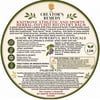
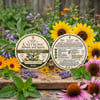
𝗞𝗻𝗶𝘁 𝗕𝗼𝗻𝗲™ 𝗛𝗲𝗿𝗯𝗮𝗹 𝗥𝗲𝗰𝗼𝘃𝗲𝗿𝘆 𝗕𝗮𝗹𝗺
🌿 🌿 KNIT BONE™
Traditional Herbal Recovery Massage Balm
THE LEGENDARY KNITBONE HERB — AND THE BOTANICAL WISDOM OF GENERATIONS.
Some plants have histories so remarkable that their very names tell a story.
For centuries, traditional herbalists gathered roots, leaves, flowers and bark to prepare poultices, infused oils, compresses and salves for the hardworking human body.
Among the most treasured of these plants was COMFREY, historically known as KNITBONE.
Its reputation became so closely associated with traditional care for sprains, bruises and injured tissues that its remarkable nickname has endured for generations.
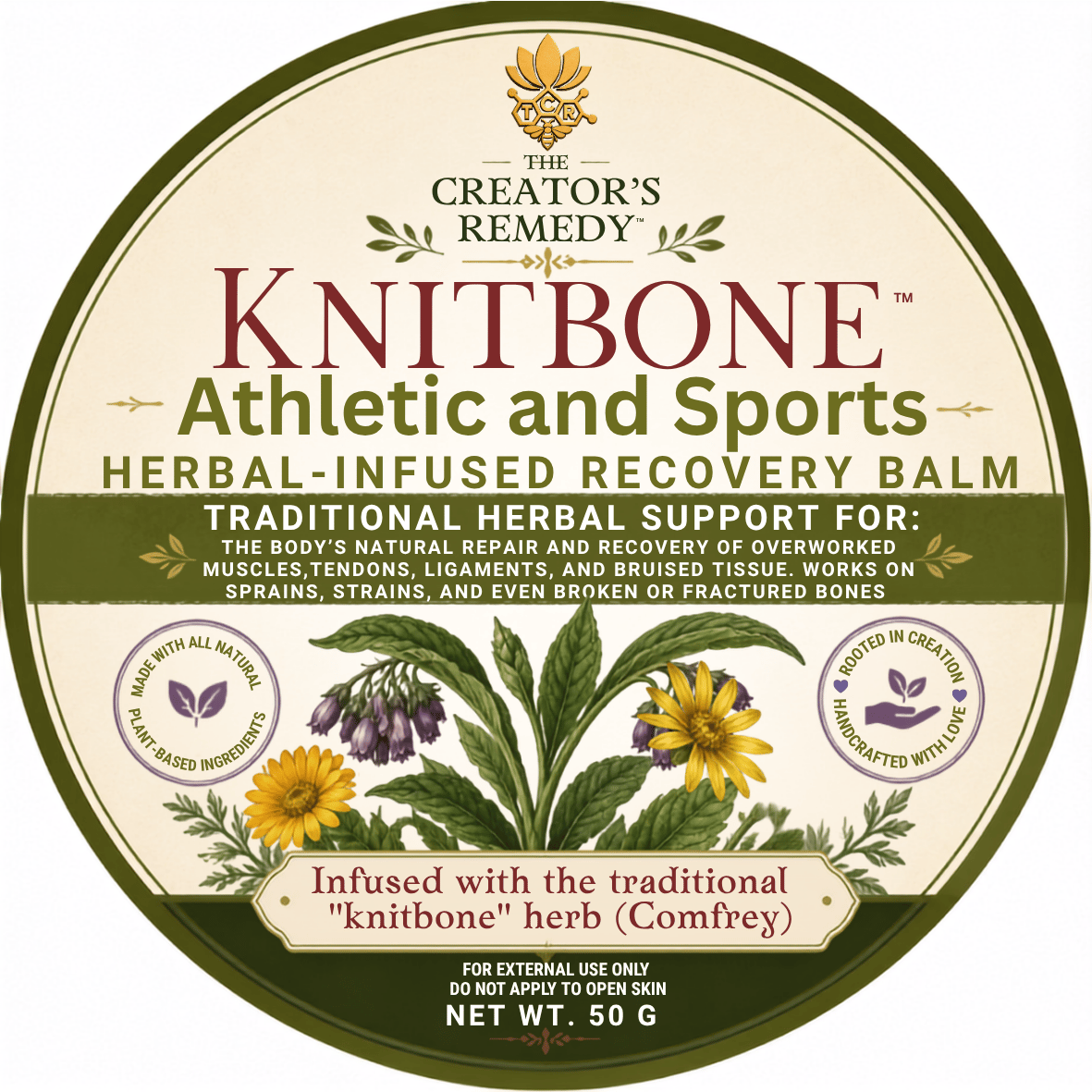
That history inspired Knit Bone™, a handcrafted botanical massage balm from The Creator’s Remedy™.
Created with hardworking hands, physically active lifestyles and traditional herbal wisdom in mind, this rich botanical formulation brings together some of the most fascinating plants in the history of external herbal care.
🌿 THE HERBAL TREASURES BEHIND KNIT BONE™
🌱 COMFREY (Symphytum officinale) — The Legendary Knitbone
The star of our formulation.
Comfrey has one of the most extraordinary reputations in traditional European herbal medicine.
Historically called Knitbone, Boneset and Bruisewort, comfrey was traditionally prepared as poultices, compresses and ointments for:
- Sprains and strains
- Bruises and swelling
- Aching joints
- Muscle discomfort
- Injured tissues and traditional bone-setting care
Comfrey contains allantoin, a compound studied for its skin-conditioning properties, along with rosmarinic acid and other naturally occurring constituents.
Certain specially processed, pyrrolizidine-alkaloid-controlled comfrey preparations have been clinically investigated for back pain, sprains and osteoarthritis-related discomfort.
A special note from The Creator’s Remedy™: I grow comfrey in my own herb garden, making this remarkable plant especially meaningful to me.
Comfrey's traditional reputation is fascinating, but it also contains potentially toxic pyrrolizidine alkaloids. Not all comfrey extracts are suitable for topical use.
🌼 ST. JOHN’S WORT (Hypericum perforatum) — The Traditional Herbal Oil for Nerves and Muscles
Long before St. John’s Wort became widely recognized for its association with emotional well-being, its flowering tops were infused into oils for external herbal preparations.
Traditional European herbalists valued these oils for:
- Nerve-related discomfort
- Bruising and tender areas
- Sore, overworked muscles
- Minor burns and irritated skin
The characteristic reddish oil has been a familiar preparation in traditional herbal households for generations.
Its history in topical herbal care is particularly interesting, although research on oral St. John's Wort should not be assumed to apply to topical infused oils.
🌾 GOLDENROD (Solidago spp.) — The Overlooked Golden Treasure
Goldenrod is one of those beautiful plants whose traditional herbal history is often overshadowed by its reputation as a roadside wildflower.
Historically, goldenrod preparations were used in European and North American herbal traditions for a variety of complaints.
External preparations were sometimes applied to bruises, sore muscles, minor wounds and uncomfortable joints.
Goldenrod contains flavonoids and other plant compounds that have attracted interest for antioxidant and anti-inflammatory activity in preliminary research.
A humble wildflower with a surprisingly rich herbal history.
🌿 WHITE WILLOW (Salix alba) — The Ancient Pain-Relief Tree
Willow bark has an exceptionally long history in traditional medicine.
Across different cultures, willow preparations were used for:
- Headaches
- Fever
- Aching joints
- Back discomfort
- Rheumatic complaints
White willow bark contains salicin-related compounds that are historically connected to the development of salicylate medicines.
Most modern research concerning willow bark and pain involves oral extracts, rather than topical infused oils, but its historical significance is undeniable.
🌼 ARNICA (Arnica montana) — The Mountain Flower of Traditional Recovery
Arnica has been treasured in European herbal practice for generations.
Its bright yellow flowers became closely associated with external preparations traditionally used for:
- Bruises
- Sprains
- Muscle soreness
- Tenderness following exertion
- Minor soft-tissue injuries
Arnica remains a familiar ingredient in many modern massage products.
Research into topical arnica has produced mixed results, but its traditional reputation is an important part of botanical history.
🌼 CALENDULA (Calendula officinalis) — The Golden Skin Protector
Calendula has been a beloved ingredient in herbal salves for centuries.
Its golden petals were traditionally infused into oils and used in preparations for dry, irritated and vulnerable skin.
Calendula is valued in contemporary botanical skincare for its emollient and skin-conditioning qualities.
🌼 CHAMOMILE (Matricaria chamomilla) — The Gentle Botanical Comforter
Chamomile is much more than a soothing cup of tea.
Traditionally used in compresses, baths and ointments, chamomile has a long history in preparations for irritated skin and physical comfort.
Its naturally occurring constituents, including apigenin and bisabolol-related compounds, have been investigated for their potential anti-inflammatory activity.
💛 WHY KNIT BONE™ IS SPECIAL
Seven treasured botanicals. One carefully handcrafted massage balm.
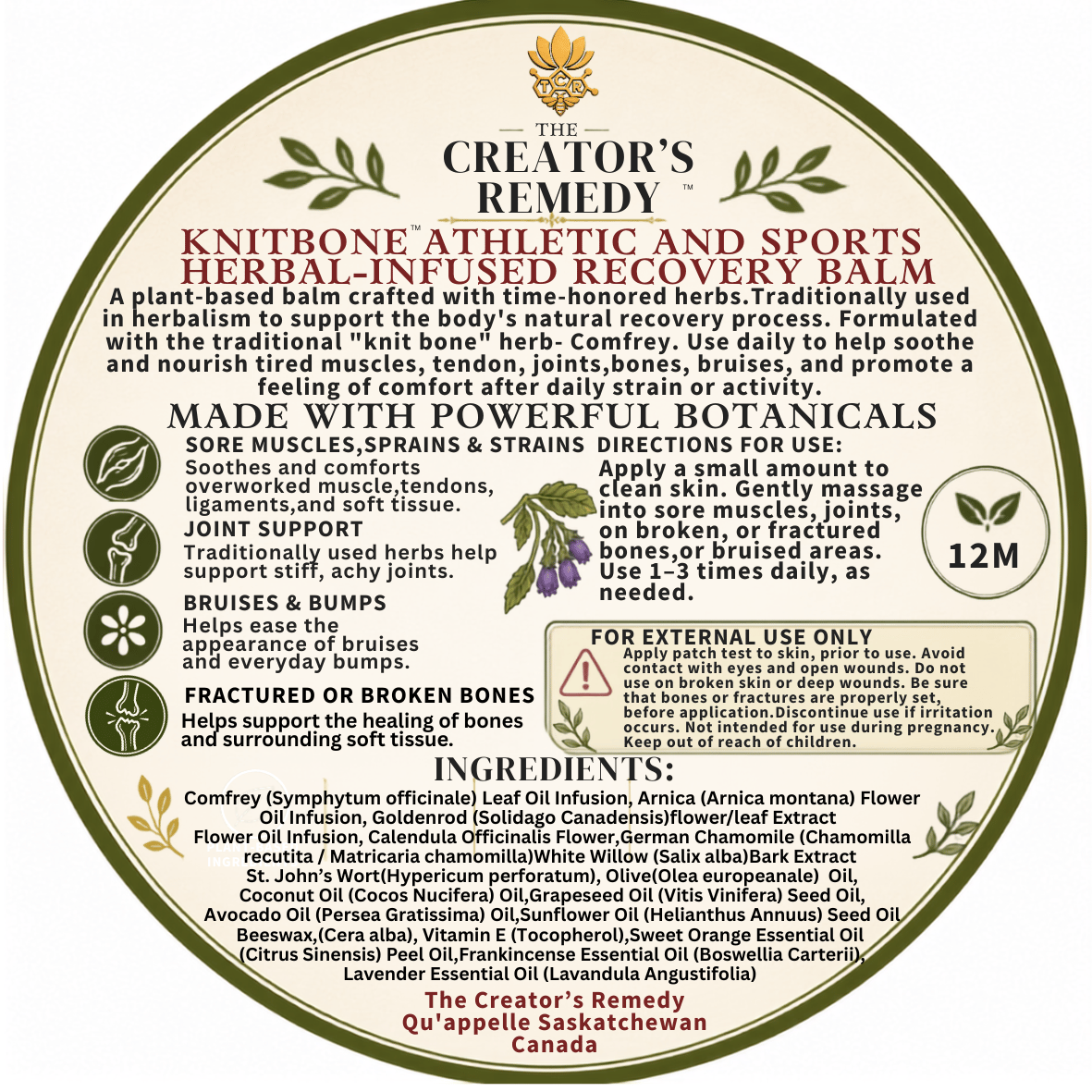
Knit Bone™ combines traditional herbal infusions with a nourishing blend of Avocado Oil, Grapeseed Oil, Jojoba Oil and Coconut Oil, complemented by beeswax and vitamin E.
The formula is finished with the beautiful aromatic notes of Frankincense, Lavender and Sweet Orange.
The result is a rich, botanical massage balm created for those who appreciate traditional herbal knowledge and a comforting body-care experience.
For the gardener. The athlete. The tradesperson. The nurse. The hardworking hands and bodies that give so much every day.
🌿 HOW TO USE
Massage a small amount gently into clean, intact skin as part of your body-care routine. Avoid vigorous massage over a recent injury or visibly swollen area.
IMPORTANT CAUTIONS: External use only. Patch test before use. Avoid eyes, mucous membranes, broken skin and irritated areas. Do not use during pregnancy or breastfeeding. Keep away from children. Avoid use if allergic to any ingredients, including plants in the daisy family. Consult a healthcare professional before use if you have a medical condition or take medication. Discontinue if irritation occurs.
🌱 A LITTLE HERBAL HISTORY WORTH PRESERVING
Comfrey earned the name Knitbone centuries ago.
Willow helped shape the history of pain-relieving medicines.
Arnica became a familiar mountain herb in traditional care for bruises and sprains.
St. John's Wort oil was treasured in European herbal households.
And goldenrod, calendula and chamomile each earned their own place in generations of botanical practice.
These are not ordinary plants with ordinary histories.
They are part of a remarkable heritage of traditional herbal knowledge — a heritage worth learning about, respecting and preserving.
Rooted in Creation ❤️ Hand-crafted with Love.
THE CREATOR’S REMEDY™
Handcrafted in Qu’Appelle, Saskatchewan, Canada.
The historical uses described above are provided for herbal education. They are not evidence that this finished balm treats pain, arthritis, fractures, sprains, inflammation or other medical conditions.