
Understanding Emotions
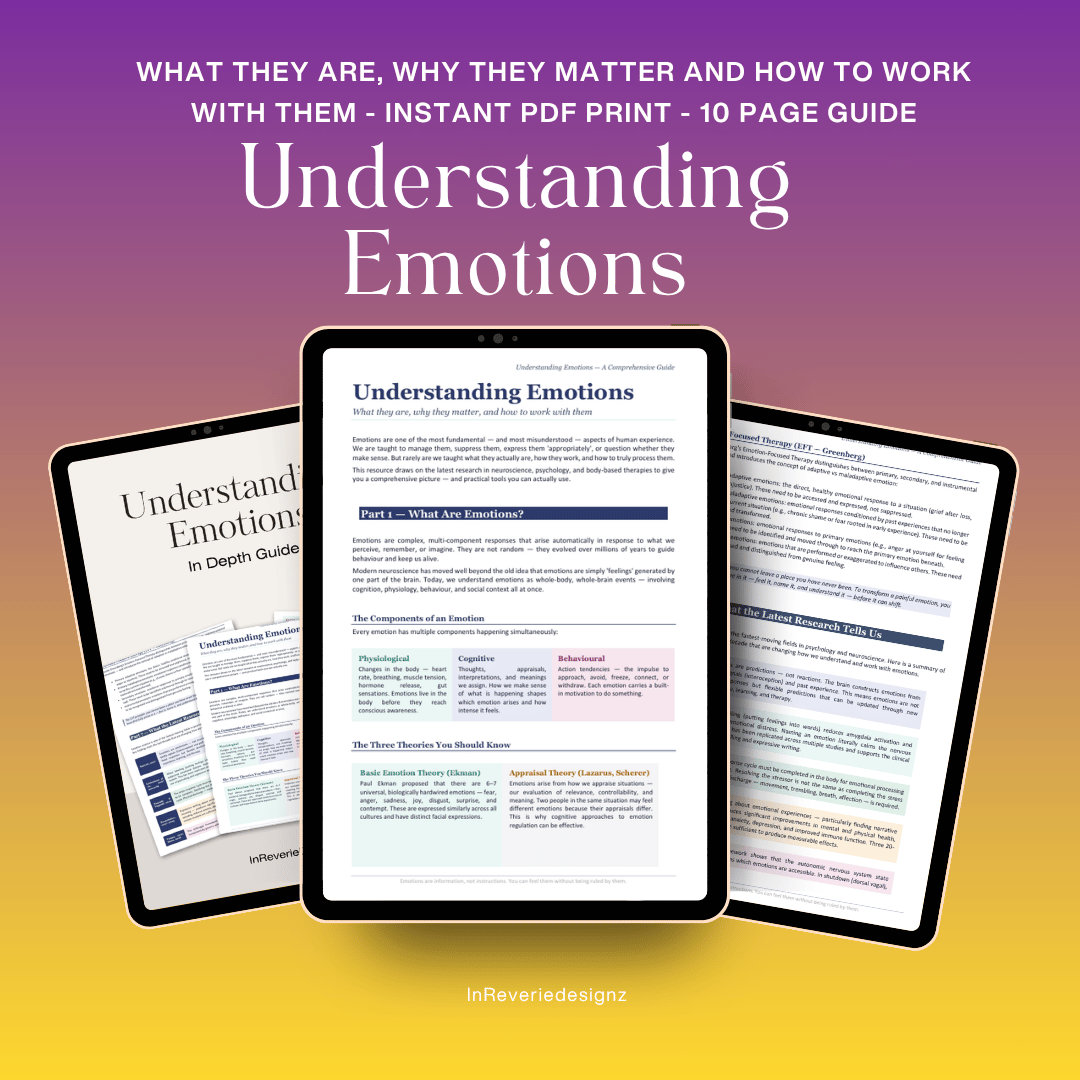
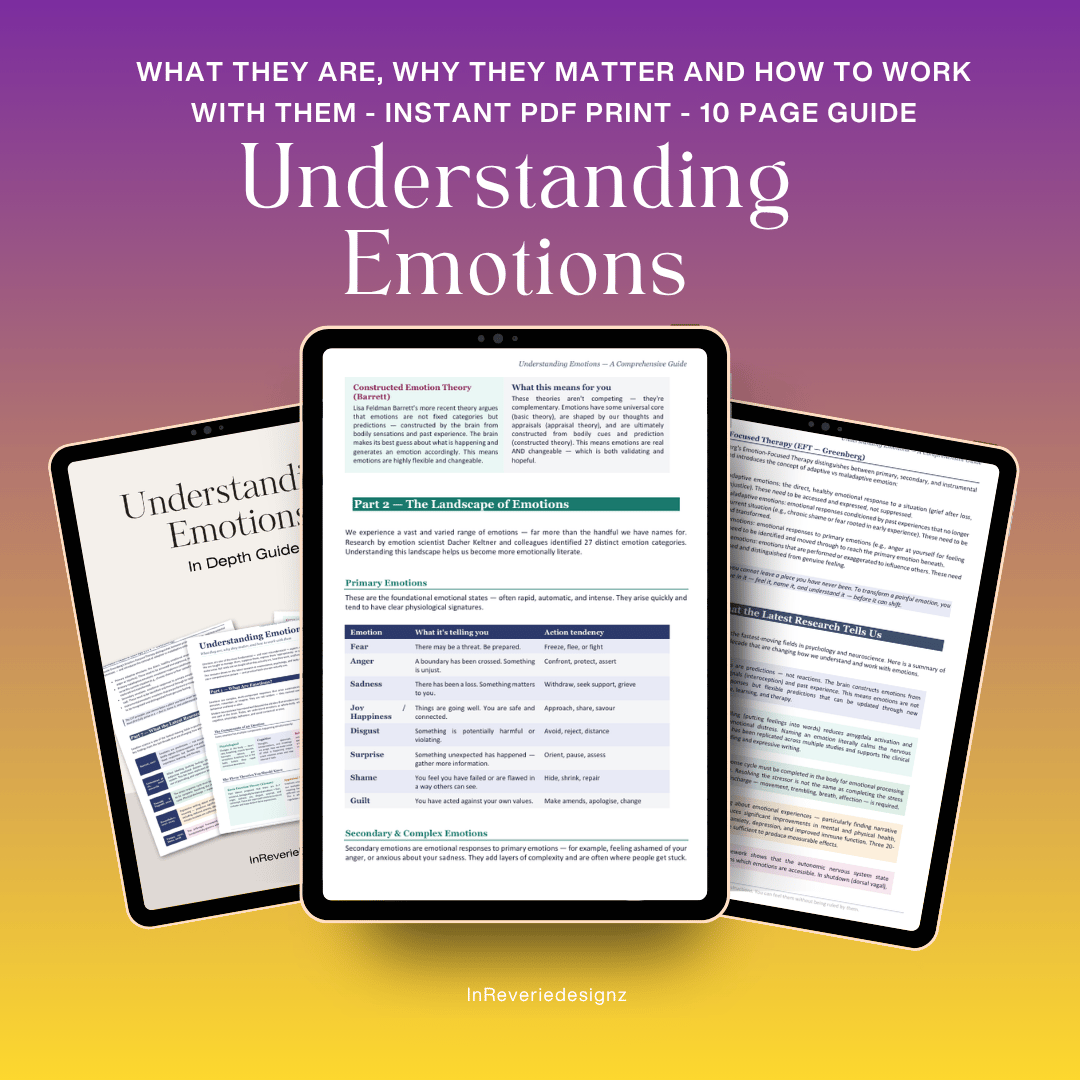
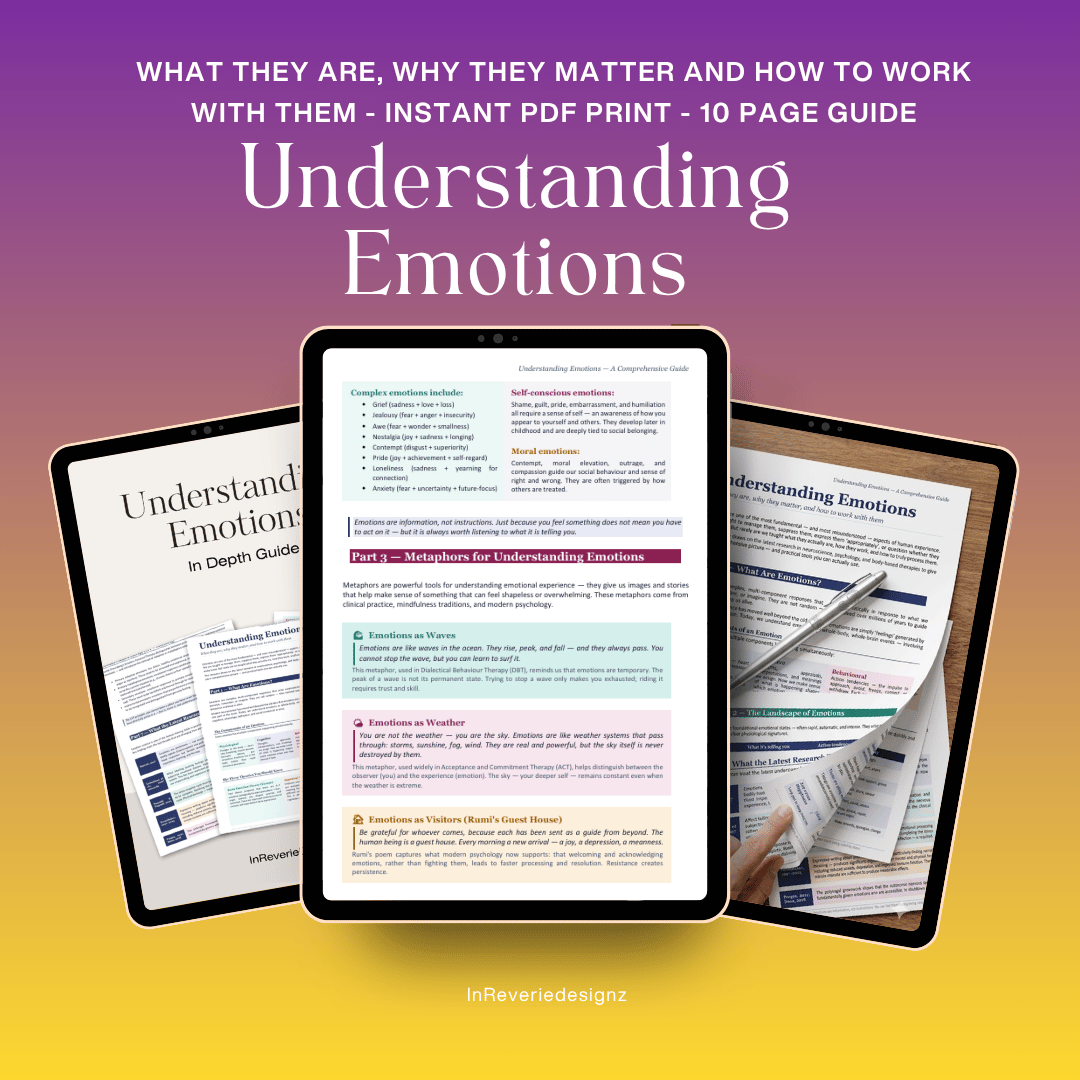
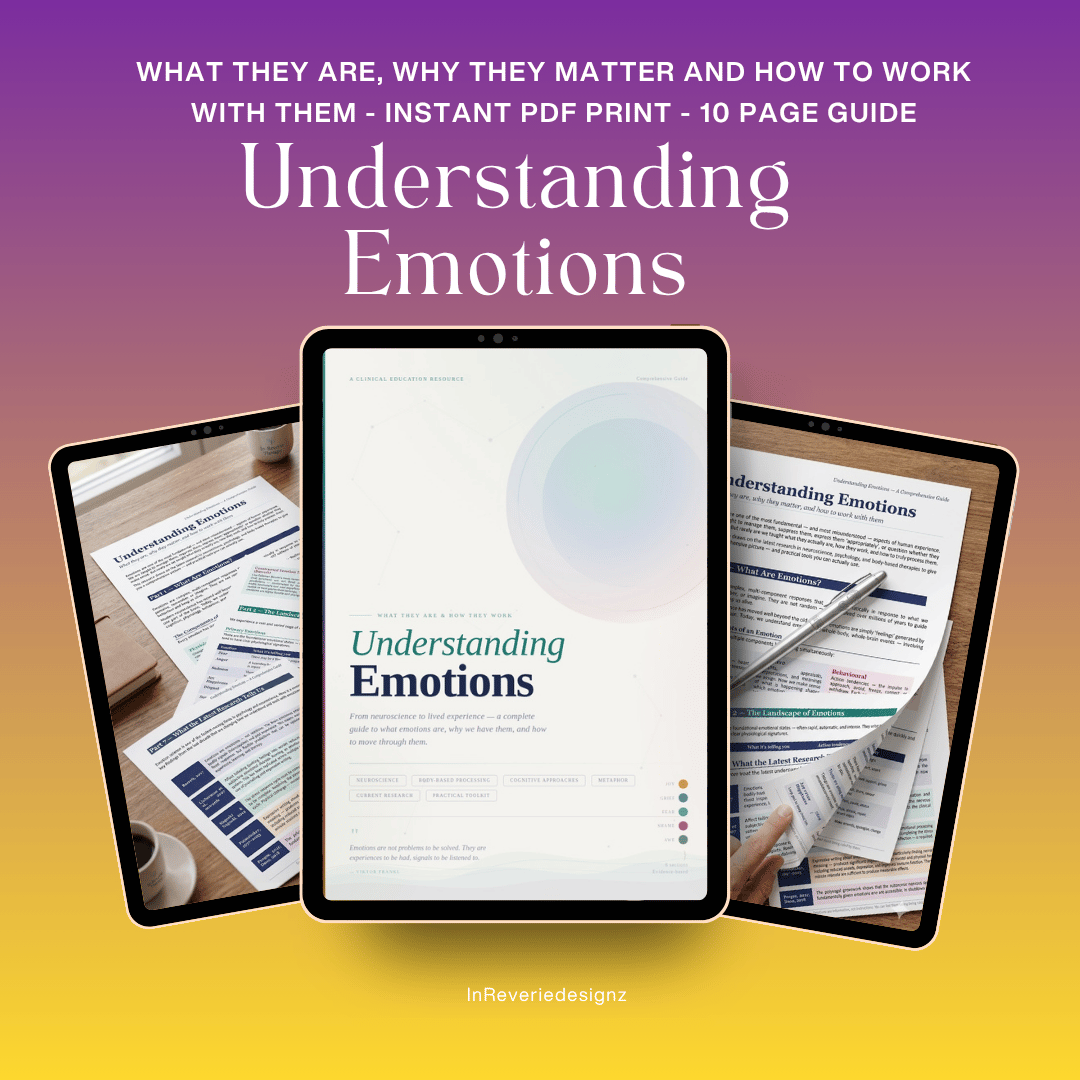
This comprehensive education resource on emotions covers the full landscape of emotional experience — from foundational theory through to practical, evidence-based tools. It opens by explaining what emotions actually are at a neurological and psychological level, drawing on three major frameworks: Ekman's basic emotion theory, Barrett's constructed emotion model, and Lazarus's appraisal theory. It then maps the full range of human emotions — primary, secondary, complex, self-conscious, and moral — with a table showing what each emotion is signalling and the action tendency it carries. Six richly written metaphor cards follow, drawing on clinical traditions including ACT, DBT, and Rumi's Guest House poem, to give readers images and stories that make emotional experience feel more navigable.
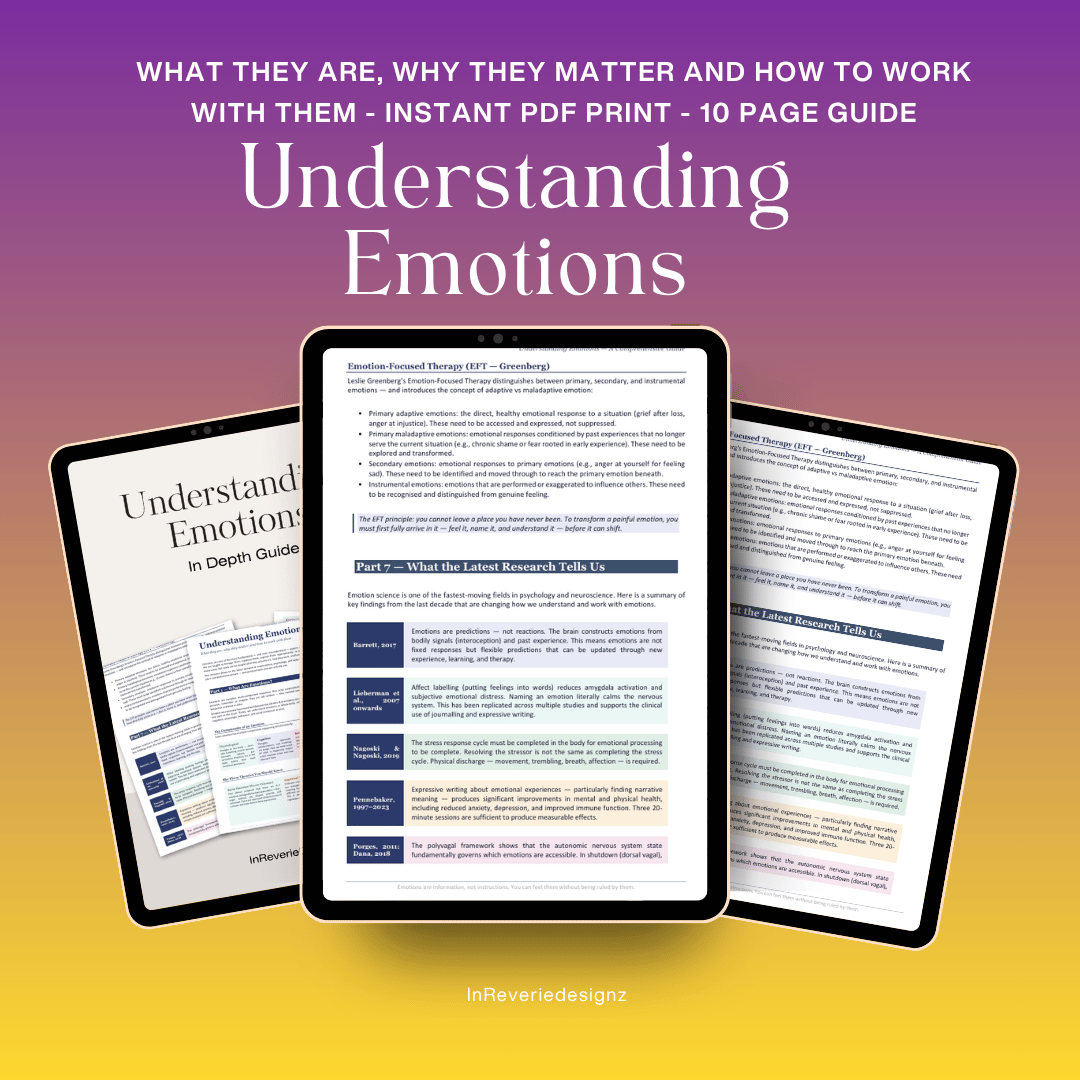
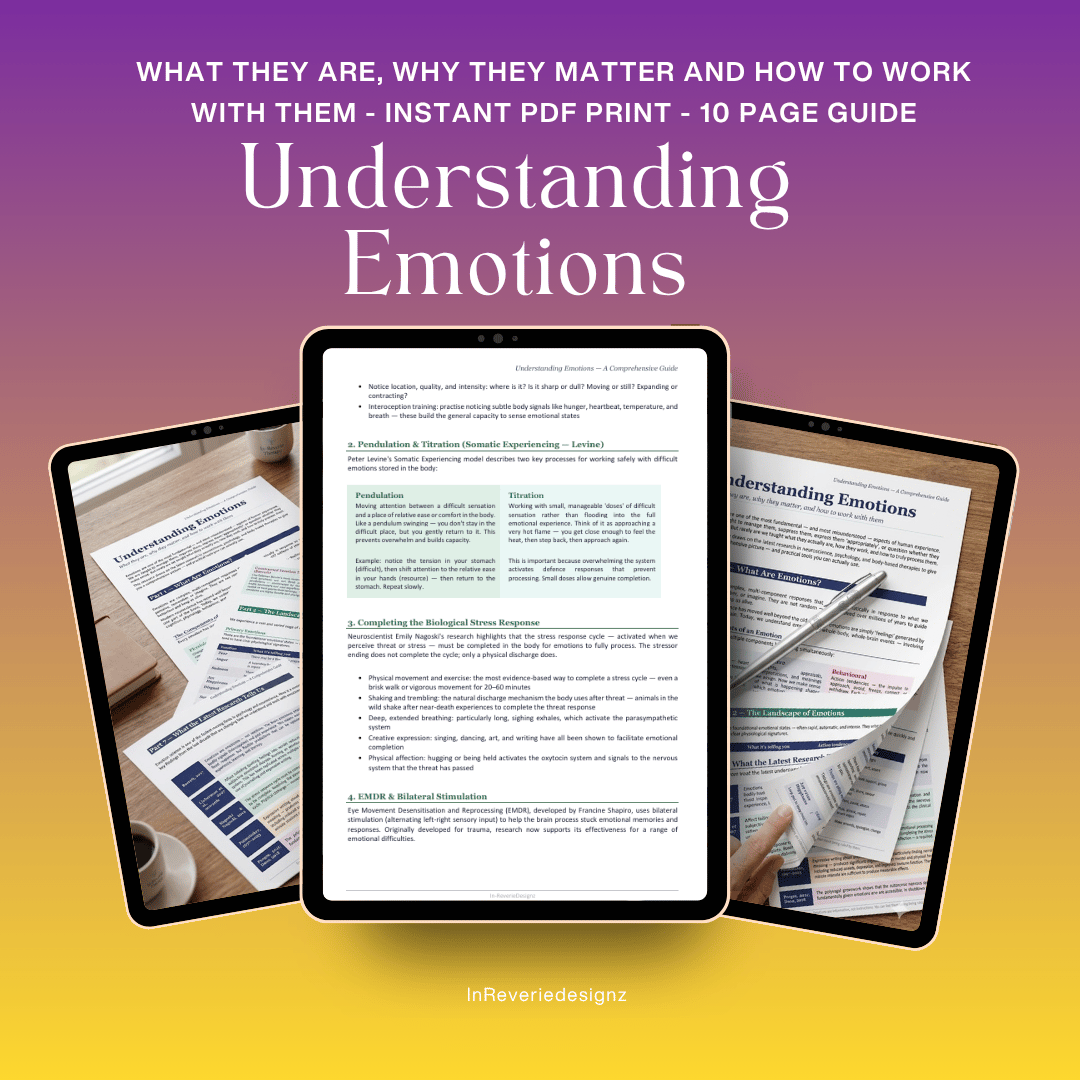
The second half of the document is deeply practical. It covers body-based processing approaches — somatic awareness, Levine's pendulation and titration, Nagoski's stress cycle completion, and EMDR — alongside cognitive approaches including reappraisal, affect labelling, defusion, and mentalisation. Integrated models such as RAIN and Greenberg's Emotion-Focused Therapy bring both levels together. A dedicated research section summarises eight key findings from the last decade — Barrett, Lieberman, Nagoski, Pennebaker, Porges, Kross, Shapiro, and van der Kolk — grounding everything in current science. The document closes with a practical toolkit: a six-step in-the-moment process and a set of daily habits for building long-term emotional capacity.