
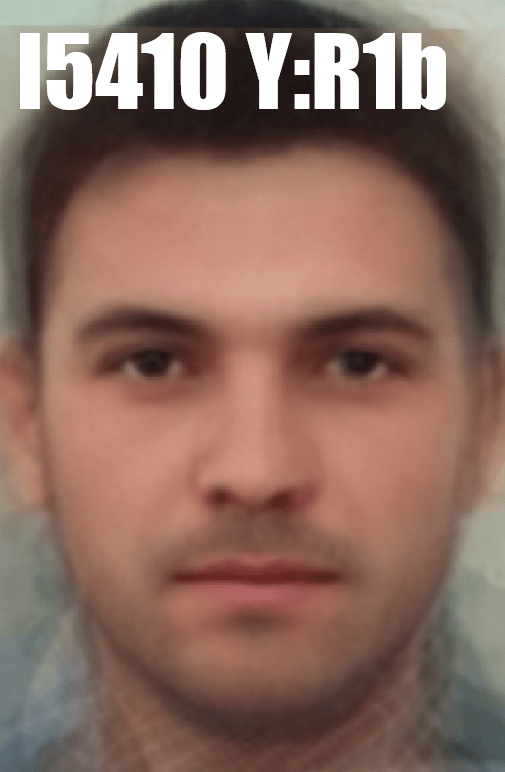
I5410 Paleolithic Romanian 23andme format
The Upper Paleolithic individual I5410 from Romania belongs to the late phase of the Last Glacial Maximum recovery, a period when populations associated with the Epigravettians were expanding across southeastern Europe. Genetically, such individuals typically cluster with Western Hunter-Gatherers, but southeastern European samples like I5410 often show subtle affinities to earlier populations related to the Dzudzuana Cavemen. This Qpadm model proves the presence of Dzudzuana ancestry in I5410 through the presence of basal Eurasian ancestry. The sample also shows strong Gravettian affinities.
This fits a transitional context: the Epigravettian emerged directly out of the Gravettian after the LGM, preserving elements of earlier Gravettian populations while undergoing genetic drift and regional differentiation. In this sense, I5410 likely represents a population still carrying residual “pre-Villabruna” ancestry, but already moving toward the more homogeneous WHG genetic profile that would dominate Europe in the Mesolithic. In a way, this sample is proto-WHG. According to F2 statistics, the closest modern ethnicities to this sample are Lithuanians, Estonians, and other Northeastern Europeans.
Culturally, populations of this transitional Gravettian–Epigravettian horizon retained many hallmark Upper Paleolithic traditions. They produced advanced blade and microlithic stone tools suited for mobile hunting in post-glacial environments, and likely practiced seasonal mobility tied to reindeer, horse, and red deer herds. Symbolic expression continued as well, remember the classic Gravettian “Venus” figurines. Burial customs in this period ranged from simple inhumations to more elaborate graves with ochre, ornaments, and personal items, reflecting increasing social differentiation and ritual behavior.
I ran I5410 through my Trait Predictor tool for DNA analysis.