
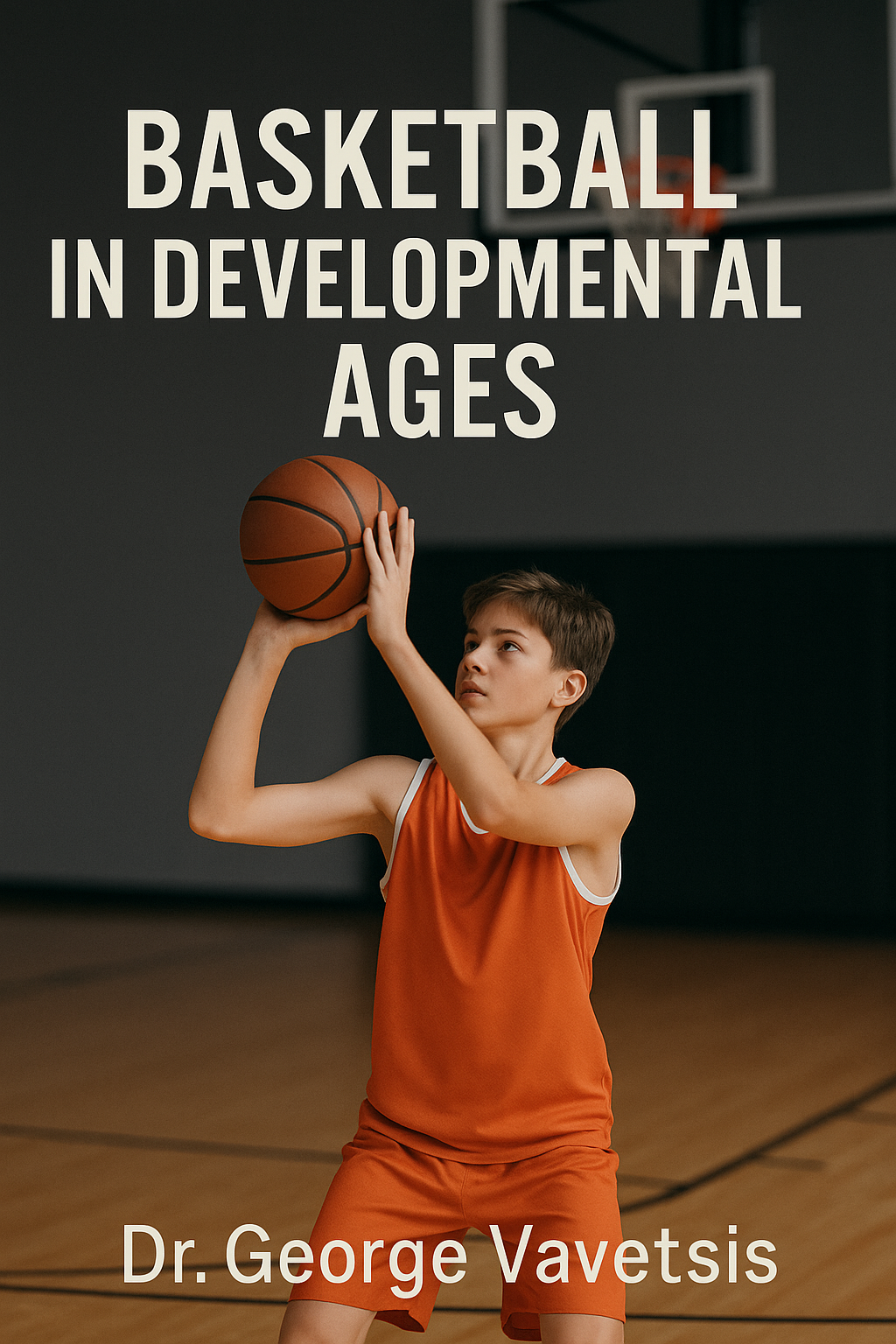
Basketball in Developmental Ages
Pages: 1650
Basketball, as a dynamic, high-intensity sport, requires a synthesis of physiological optimization, neuromuscular efficiency, perceptual-cognitive expertise, and biomechanical precision. The game extends beyond its aesthetic appeal to encapsulate an intricate framework of motor learning, energy system maturation, and strength development, all of which evolve in a structured manner across developmental stages. This book explores the contemporary science underpinning basketball development, dissecting the critical training methodologies that align with biological and chronological age-specific adaptations.
The evolution of player development paradigms has necessitated a shift from traditional volume-based training approaches to an evidence-based model that integrates motor learning principles, load management strategies, and neuromechanical adaptations. By leveraging data-driven methodologies such as velocity-based training (VBT), heart rate variability (HRV) monitoring, and neuromuscular profiling, we can optimize player performance while mitigating injury risk.
A primary focus of this book is the differentiation between motor learning strategies across age groups. Implicit learning mechanisms dominate early childhood development (ages 6-8), where fundamental movement skills (FMS) and basic spatial awareness are paramount. As players progress to ages 9-11, skill acquisition frameworks shift towards a hybrid implicit-explicit learning structure, incorporating constraint-led approaches and perceptual-motor coupling techniques to enhance reactive agility and situational decision-making. Adolescence (ages 12-17) marks a period of increased specialization, where neuroplasticity, myelination, and neuromuscular synchronization contribute to rapid skill refinement and strength gains. Understanding the interplay between these factors is essential for developing high-performance training regimens tailored to individual athletic trajectories.
From a physiological standpoint, this book delves into the maturation of energy systems across developmental stages. While aerobic base-building remains foundational in younger athletes, the transition to anaerobic glycolysis and ATP-PC system optimization becomes crucial for elite-level explosiveness and in-game endurance. The application of lactate threshold training, high-intensity interval training (HIIT), and sprint interval training (SIT) forms the backbone of conditioning protocols designed to enhance metabolic efficiency and fatigue resistance.
Neuromuscular adaptations, a core aspect of basketball training, are explored in depth through the lens of strength and power development. Early-stage neural adaptations, characterized by increased motor unit recruitment and rate coding efficiency, lay the groundwork for subsequent hypertrophic adaptations. The integration of eccentric strength training, plyometrics, and isometric stabilization drills fosters injury resilience and movement efficiency, essential for both offensive and defensive biomechanics. Furthermore, the role of myelination in fine-tuning neuromuscular coordination highlights the necessity of age-appropriate resistance training programs that align with biological maturation milestones.
Biomechanics, often the determining factor in skill execution, is examined through an analytical breakdown of movement efficiency. Shooting mechanics, cutting efficiency, deceleration strategies, and vertical jump kinetics are scrutinized using force plate analysis, motion capture technology, and electromyography (EMG) studies. Understanding the kinematic and kinetic variables influencing basketball-specific movements enables coaches and practitioners to implement evidence-based corrective interventions that enhance movement economy and kinetic chain efficiency.
Cognitive processing speed and decision-making proficiency, critical determinants of elite performance, are addressed through perceptual-cognitive training methodologies. The integration of virtual reality (VR) simulations, reaction-time drills, and neurofeedback protocols serves to accelerate game intelligence, enabling athletes to anticipate defensive coverages, manipulate defensive rotations, and execute high-IQ plays under temporal constraints.
Load management and recovery science form the final pillar of this book, emphasizing the necessity of balancing workload distribution with physiological recovery. The strategic application of HRV metrics, sleep monitoring, and periodization frameworks ensures that athletes sustain peak performance while minimizing overtraining risks. Furthermore, growth-related fatigue management strategies are delineated, acknowledging the physiological stressors imposed by peak height velocity (PHV) and hormonal fluctuations during adolescence.
This book is designed to serve as an advanced guide for strength and conditioning coaches, sports scientists, basketball tacticians, and player development specialists. Through a comprehensive synthesis of sport science, biomechanics, and high-performance training principles, it provides a roadmap for maximizing basketball potential across developmental age groups. By adopting a scientifically rigorous approach, we aim to bridge the gap between research and practice, fostering a new era of evidence-based basketball training methodologies that cultivate both athletic excellence and long-term player sustainability.