


The 1% Risk Rule Explained — Measured (PDF Guide)
You have read that risking one per cent a trade keeps you safe, and you have never been shown the number that claim rests on. Without a measured result and a run of simulations, it is a slogan rather than a finding.
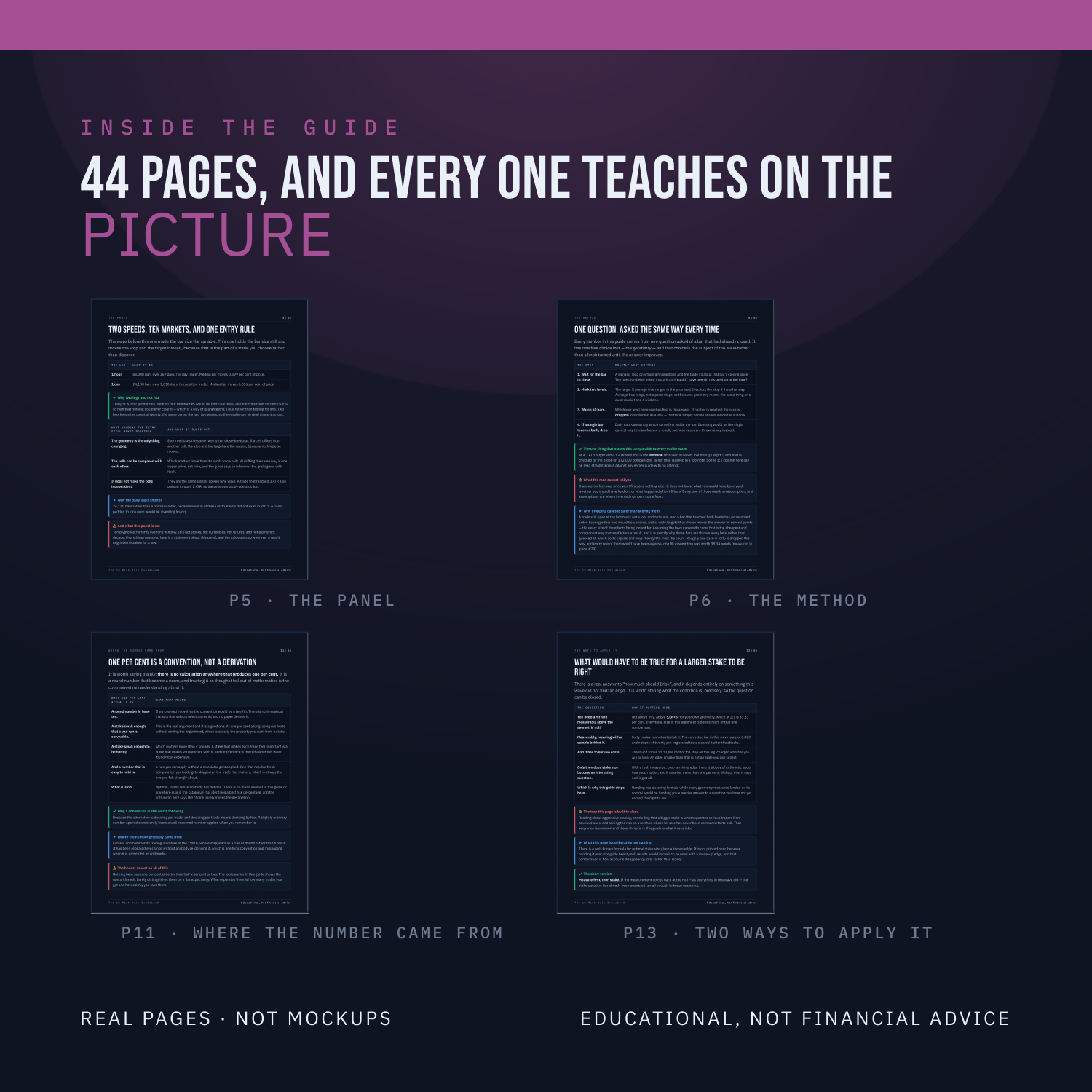
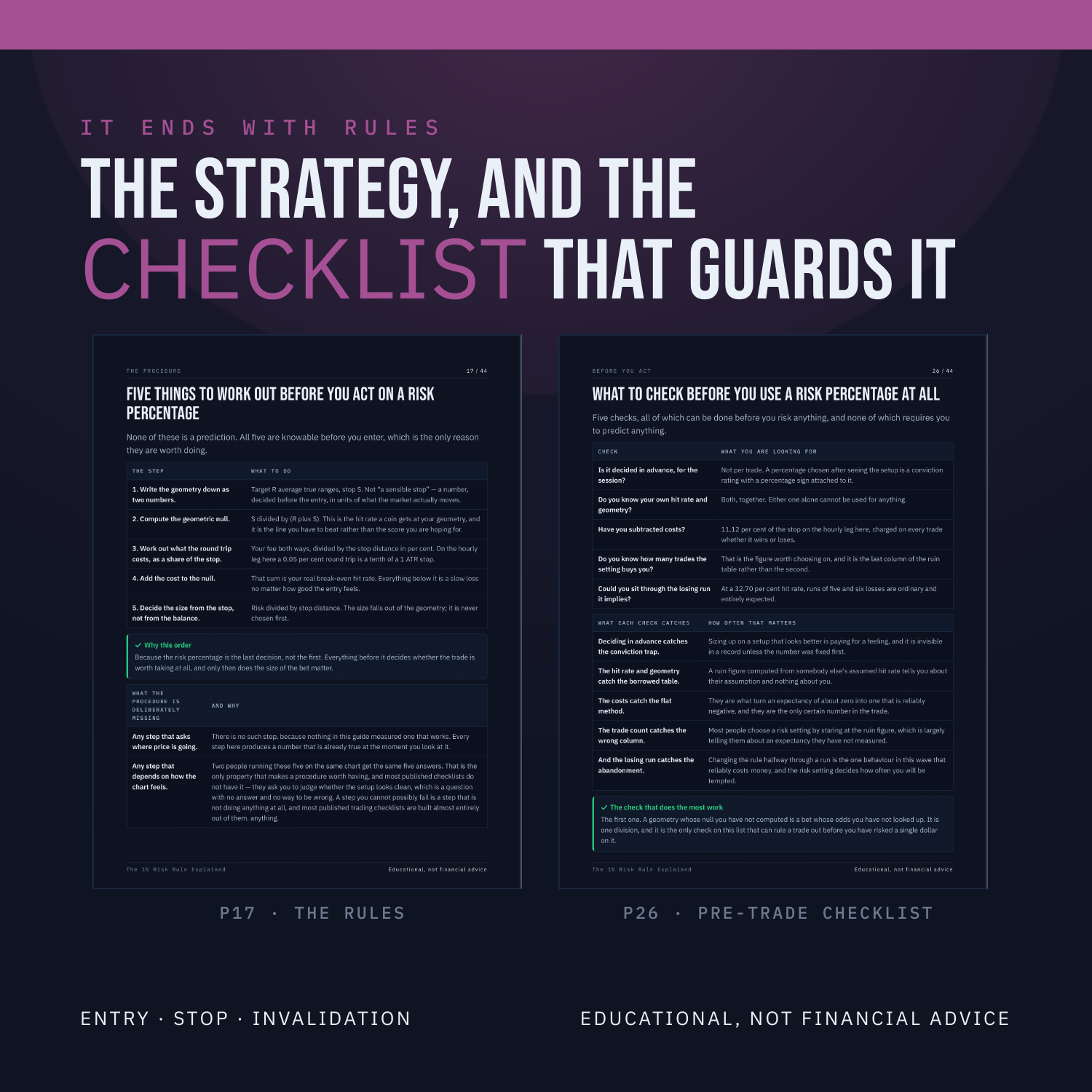
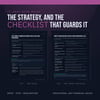
This guide runs twenty thousand simulated accounts at one, two, five and ten per cent risk, on a result measured here rather than assumed, and prints what fraction of them are ruined. The seed and the rules are printed too, so the whole thing can be repeated. This is a 44-page PDF that teaches The 1% Risk Rule from the first thing you see on the screen through to a written strategy with an entry, a stop and an explicit rule for when the trade is wrong.
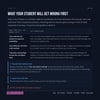
Nothing is taught underneath a chart. Every label sits on the candle, the line or the level it is describing, on real BTC, ETH, SOL and LINK charts. There are three quizzes on real charts, each followed by the same chart re-shown annotated with the reasoning, plus faded practice pages where the first steps are filled in and you finish the rest.
WHAT'S INSIDE
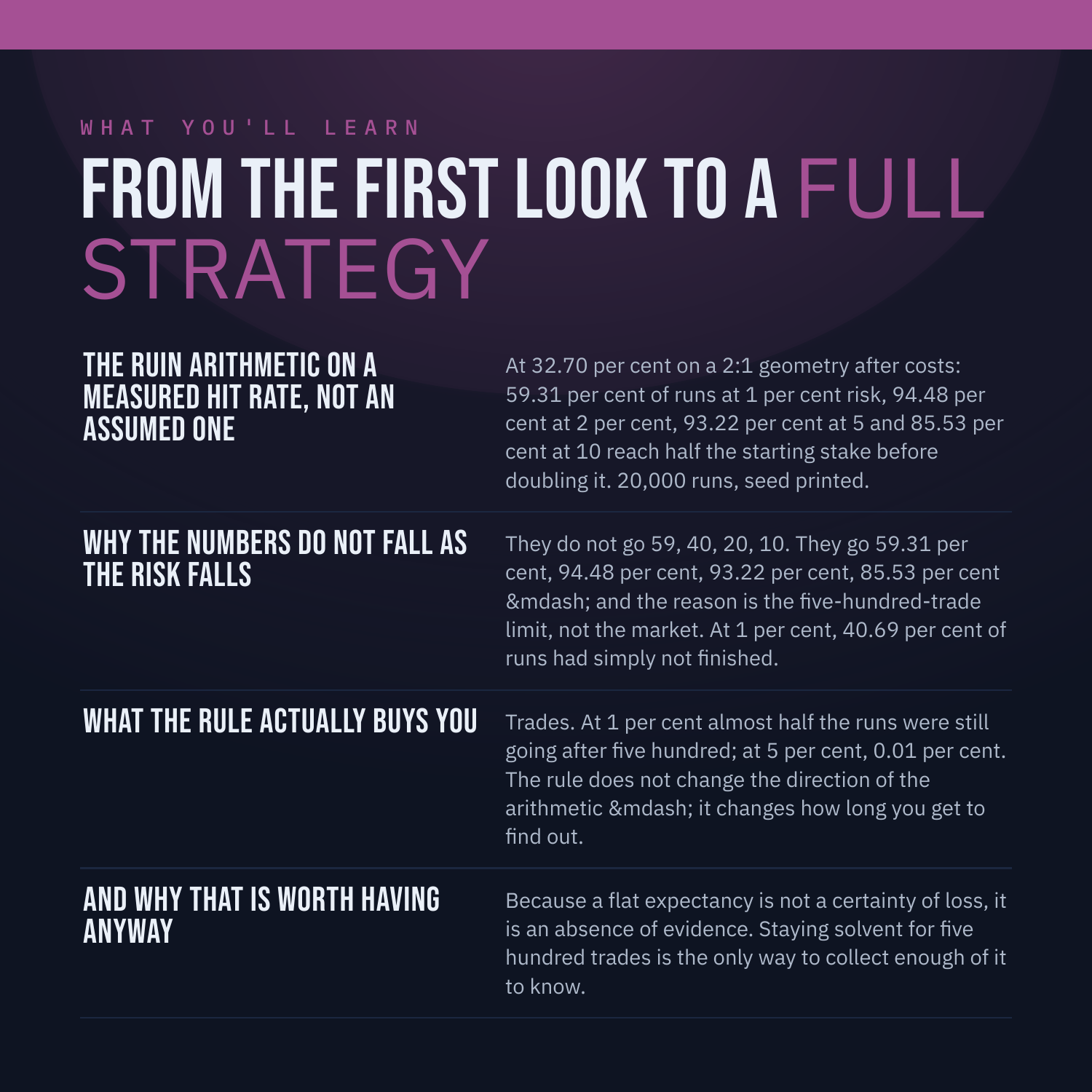
The ruin arithmetic on a measured hit rate, not an assumed one -- At 32.70 per cent on a 2:1 geometry after costs: 59.31 per cent of runs at 1 per cent risk, 94.48 per cent at 2 per cent, 93.22 per cent at 5 and 85.53 per cent at 10 reach half the starting stake before doubling it. 20,000 runs, seed printed.
Why the numbers do not fall as the risk falls -- They do not go 59, 40, 20, 10. They go 59.31 per cent, 94.48 per cent, 93.22 per cent, 85.53 per cent -- and the reason is the five-hundred-trade limit, not the market. At 1 per cent, 40.69 per cent of runs had simply not finished.
What the rule actually buys you -- Trades. At 1 per cent almost half the runs were still going after five hundred; at 5 per cent, 0.01 per cent. The rule does not change the direction of the arithmetic -- it changes how long you get to find out.
And why that is worth having anyway -- Because a flat expectancy is not a certainty of loss, it is an absence of evidence. Staying solvent for five hundred trades is the only way to collect enough of it to know.
The number this guide refuses to give you -- A recommended risk percentage. The arithmetic is printed at four levels; which rung a person can stand on depends on facts about them that no market data contains.
WHAT YOU'LL BE ABLE TO DO
Compute the ruin odds for your own hit rate and risk setting.
Say what a risk percentage does and does not protect you from.
Spot a ruin figure computed from an assumed hit rate.
Read a simulation that hit its trade limit without misreading it.
Explain why lower risk buys time rather than safety.
AN HONEST NOTE
The 1% Risk Rule is a clue, not a crystal ball. It describes what price has already done. This guide contains no win-rates, no backtest results and no promises about what you will make, because nobody can verify those and you should not trust anyone who prints them. What it hands you instead is a set of rules you can test yourself on TradingView in an afternoon. Educational, not financial advice.
Instant download. 44 pages, PDF.