
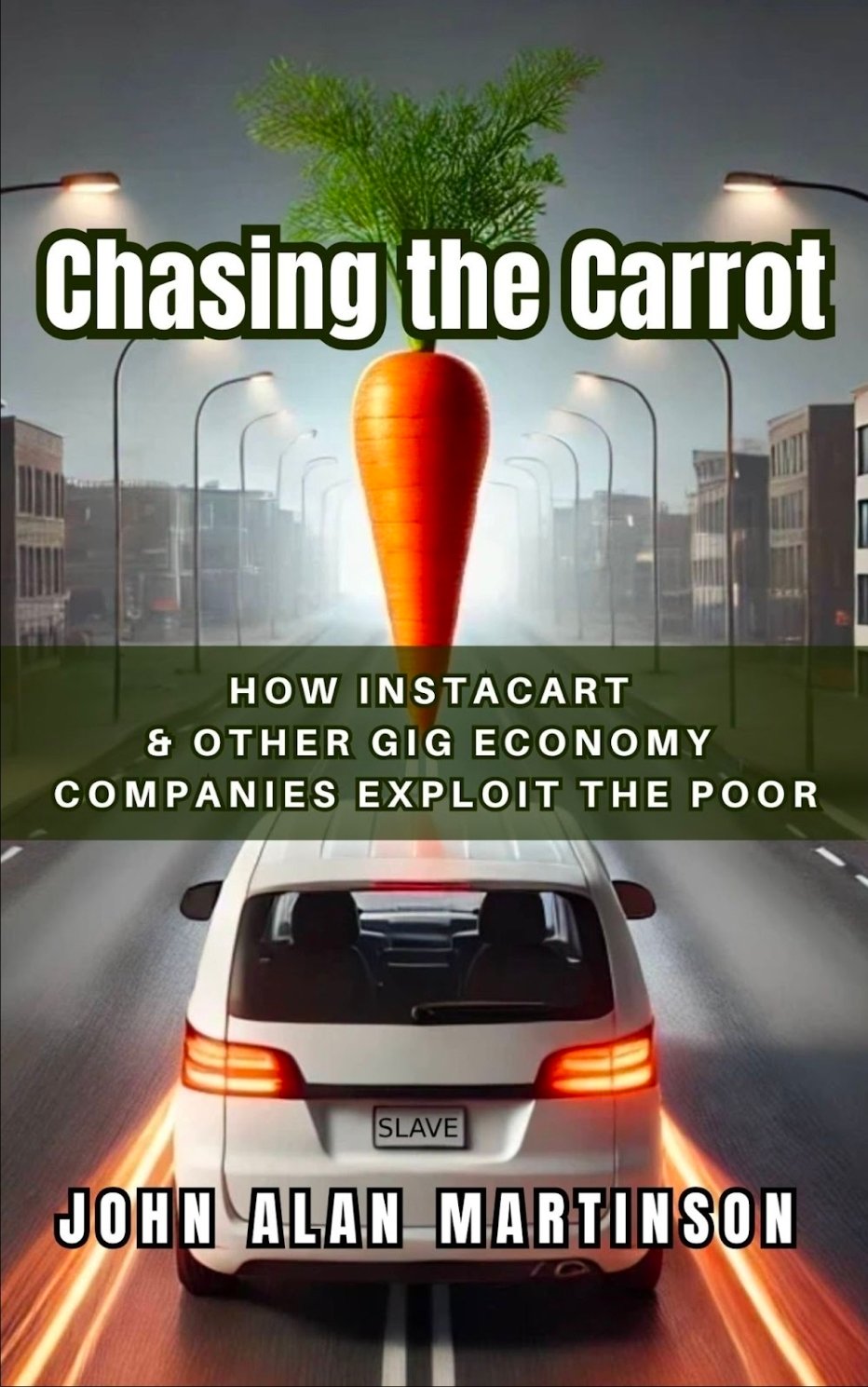
Chasing the Carrot
Chasing the Carrot: How Instacart & Other Gig Economy Companies Exploit the Poor is a raw, firsthand testimony from inside the modern gig economy—written by someone who has lived it, endured it, and refused to stay silent about it. In this book, John Alan Martinson pulls back the curtain on the glossy promises of “flexibility,” “being your own boss,” and “side hustles,” exposing what he argues is a system designed to keep workers exhausted, desperate, and chasing income that never quite materializes. Drawing from thousands of deliveries, long days on the road, and the harsh reality of trying to survive on app-based work, Martinson describes the psychological tactics, financial traps, and hidden costs that define life inside companies like Instacart, DoorDash, Uber, and similar platforms.
This book is not written from an office chair or a research grant—it’s written from the front lines of economic survival. Martinson recounts the experiences that pushed him into gig work, including protecting his family after traumatic events and trying to earn a living while staying close to them. Along the way, he describes how workers are lured into the system with promises of independence, only to discover algorithms, manipulated incentives, and pay structures that often leave them earning far below minimum wage once expenses like gas, maintenance, insurance, and equipment are considered.
Throughout Chasing the Carrot, the author explores what he believes are the deeper problems behind the gig economy: a shrinking middle class, rising living costs, and corporations shifting risk and responsibility onto workers while keeping the profits. He argues that the gig model doesn’t just rely on technology—it relies on desperation. By examining real deliveries, app mechanics, tipping culture, legal controversies, and lawsuits involving major gig companies, the book paints a picture of a system that many workers feel trapped inside rather than empowered by.
But this book is more than a critique—it’s also a warning and a testimony. Martinson speaks directly to people currently working in the gig economy, offering practical observations about what the work actually costs, emotionally and financially, and what to expect if you step into it. At the same time, he challenges customers and readers who have never worked these apps to understand the human reality behind the convenience economy. Every delivery, he argues, represents someone trying to survive in a system that rewards corporations far more than the people doing the labor.
If you’ve ever considered working in the gig economy—or if you’ve relied on it without seeing the other side—Chasing the Carrot is a blunt, unfiltered look at what happens when modern technology meets economic pressure. This book is a voice from inside a system many people depend on but few truly understand.