
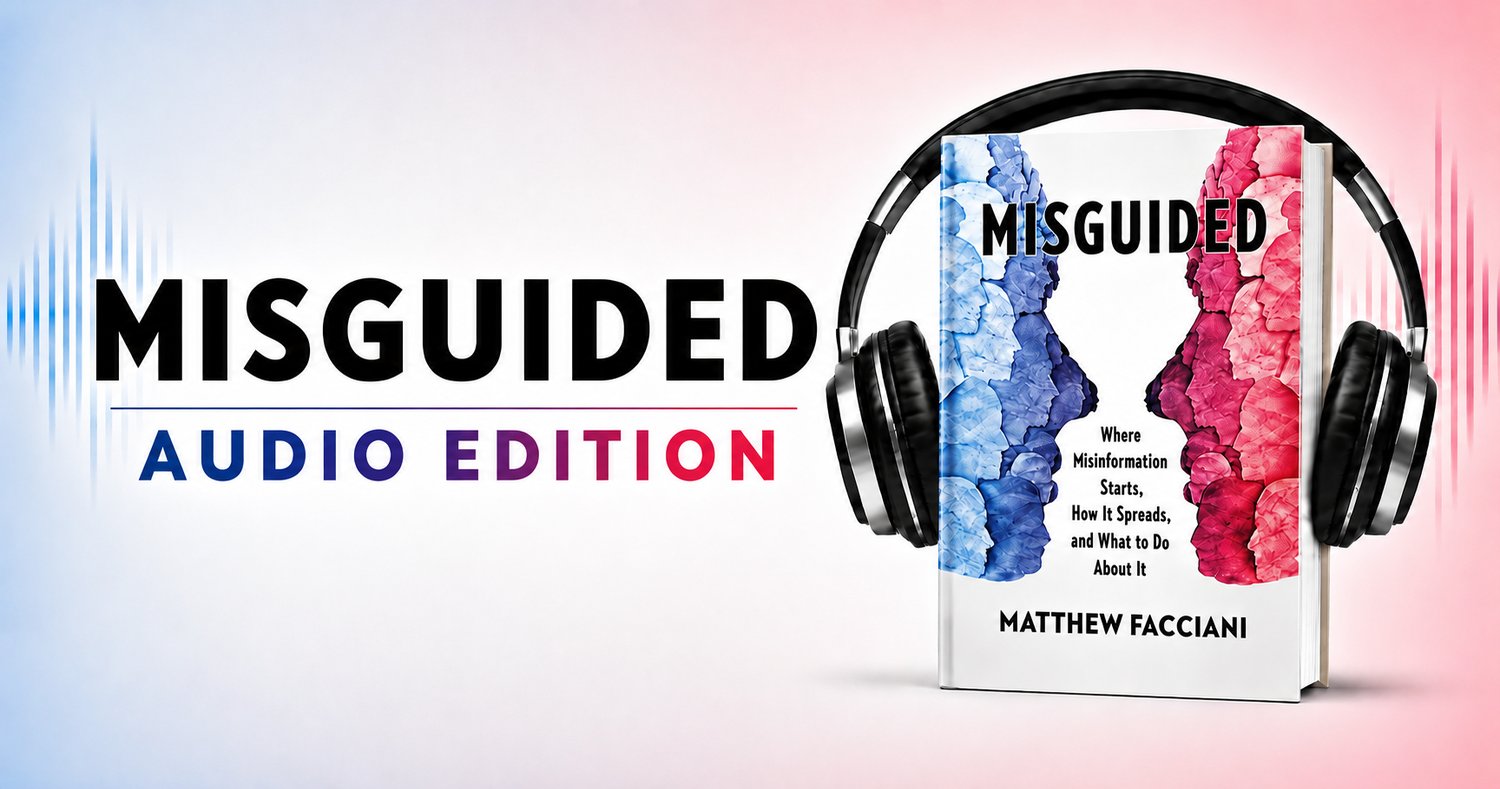
Misguided: The Audiobook
This is the audio edition of the award-winning book: Misguided: Where Misinformation Starts, How It Spreads, and What to Do About It. Each chapter is summarized to the main points, and then followed by a Director's Cut recorded a year and a half after the final draft: what's changed, what held up, with new research findings. Separated into 8 episodes, for about 2 hours of content. Read and produced by the author, Matthew Facciani.
Audiobook contents:
Introduction: What this book explores, and how a sociologist who started out in neuroscience ended up studying why people believe false things.
Chapter 1 — The Scope and Consequences of Misinformation: Starts with a 19th-century con man who sold an entire fake country to people who trusted him, then defines the terms we throw around loosely (misinformation, disinformation, propaganda) and lays out what it actually costs us in violence, health, and money.
Chapter 2 — How Our Identities Make Us Vulnerable: A 1968 classroom experiment shows how fast group identity can turn people against each other. This chapter gets into why we defend beliefs instead of evaluating them, and what actually loosens that grip. This chapter is the heart of understanding why we believe different things.
Chapter 3 — Political Identities, COVID-19, and Productive Conversations: How a virus that Democrats and Republicans viewed almost identically in February 2020 became the most partisan issue in the country within two months, and a five-step approach for talking to someone across that divide.
Chapter 4 — How Social Networks and Social Media Spread Misinformation: From homophily in our offline social circles to the specific platform features that supercharge bad information, ending on how loneliness, not gullibility, is one of the strongest predictors of falling into conspiracy communities.
Chapter 5 — Vaccine Misinformation and Rebuilding Trust: Opens with a mother who lost trust in her daughter's nurse over one dismissive answer. Covers who actually spreads vaccine misinformation and why hesitancy is fundamentally a trust problem rather than an information problem, then what rebuilding that trust would take.
Chapter 6 — Media Literacy, Critical Ignoring, and Prebunking: I cover the educational side of what actually helps people navigate bad information from intellectual humility, to critical ignoring, to lateral reading, and then describe the cross cultural challenges of developing these interventions.
Chapter 7 — The Future of Misinformation: Deepfakes, AI personas, and chatbots that answer confidently and wrongly. I cover the dangers of outsourcing our judgment to a confident machine, and what misinformation scholars should focus on in the age of AI.