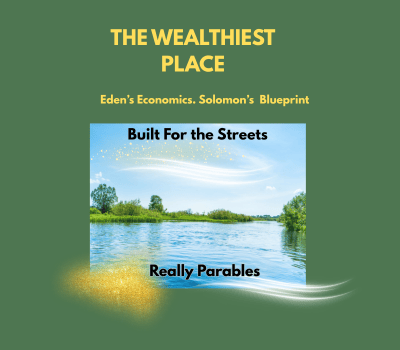
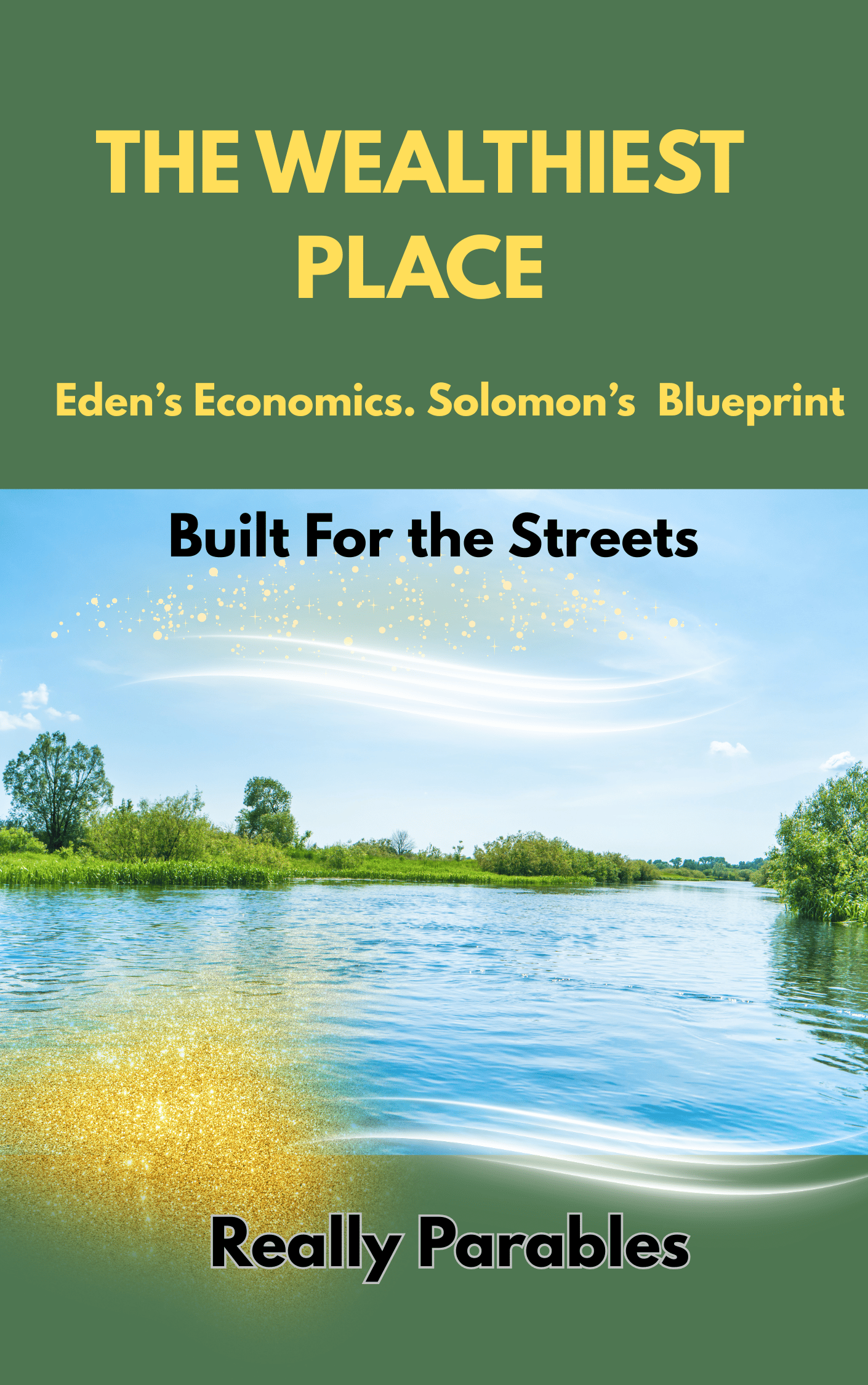
The Wealthiest Place
The wealthiest place that ever existed was a garden.
Not a trading floor. Not a tech campus. Not a hedge fund. A garden where God walked in the cool of the day, where every resource needed for human flourishing was already present, where the work was meaningful and the rest was built in and the abundance flowed from proximity to its source rather than from anxious accumulation.
And then it was lost. And human beings have been trying to rebuild it ever since — mostly in the wrong direction, with the wrong tools, on the wrong foundation.
THE WEALTHIEST PLACE is the book that starts from the right place.
Not another accumulation strategy. Not another hustle-harder manifesto. Not another prosperity gospel that promises divine blessing in exchange for a seed gift to the author's ministry. Something older, something more honest, something that works — the economics of Eden, applied to the world you actually live in.
THE BOOK IN PLAIN TERMS:
The Great Wealth Hoax opens by naming the lie that has been sold to an entire generation: that wealth is what other people can see. The research from The Millionaire Next Door is clear — most people who look wealthy are not, and most genuinely wealthy people do not look it. The performance of prosperity is the most expensive hobby available. This chapter ends it.
The Seven Realities of Eden is the heart of the book — seven chapters, each taking one reality from the Garden of Eden and applying it to modern wealth building with full research support:
The Presence — cultivating proximity to God as a practical economic strategy, with the research on how inner security produces better financial decisions, lower anxiety, and the clarity that wealth requires to be built and sustained.
Productivity — work preceded the fall. Eden was a working garden, not a hammock. The ten thousand hours of Anders Ericsson's deliberate practice research, the talent-to-GOAT progression, Beyonce as a four-decade case study in craft becoming empire, and AI as the modern equivalent of Solomon's craftsmen.
Righteousness — clean money lasts longer. The Warren Buffett newspaper test. The forensic economics of corruption — how get-rich-quick schemes, fraud, and ethical shortcuts destroy wealth faster than any bad investment. The structural case for integrity as a financial strategy, not just a moral one.
Peace — anxious wealth is poverty. Mullainathan and Shafir's research on the bandwidth tax of financial anxiety — the cognitive cost that scarcity imposes, the IQ points that worry consumes. Shalom as a financial operating system. Addiction as the silent wealth destroyer — UK gambling cost data, alcohol's twenty-one billion pound annual economic cost, the specific mechanism by which addiction destroys accumulated wealth.
Joy — generosity as a wealth engine, not a charity obligation. Rockefeller's giving ledger from age sixteen. Arthur Brooks' research on the prosperity-generosity correlation. The neurological reality of giving. Covenant activation — why the most consistently generous people in history were also among the most consistently prosperous.
Orderliness — structure is not the enemy of abundance. The budget as freedom, not cage. Limited company tax efficiency for the UK reader. Estate planning basics. Solomon's administrative sophistication as the model for modern business structure.
Rest — the Sabbath economy. Burnout costs the US economy between $125 and $190 billion annually. Chick-fil-A closed on Sundays and outperformed every competitor on a per-day basis. Passive income as Sabbath expression — the income that works while you sleep.
The Solomon Blueprint takes the ten dimensions of Solomon's extraordinary wealth and makes them reproducible without a royal bloodline: covenant relationship, generosity as activation, wisdom and a rich library, a heart to serve, strategic relationships, contracts, inherited foundations, diversified trade routes, gold and real estate, and operational excellence. Each dimension is applied to the starting-from-zero reader with specific, actionable guidance.
Protecting What You Build is the section no wealth book wants to write honestly: the forensic autopsies of the wealth killers — addiction, bad debt, scavengous relationships, lifestyle inflation, tax ignorance, and the absence of legal protection. Followed by practical UK tax strategy — ISA allowances, pension relief, limited company salary-dividend extraction, and inheritance tax planning. And the inheritance trap: why 70% of wealthy families lose everything by the second generation, and how to transfer the culture rather than just the capital.
The epilogue returns to the garden. Because the wealthiest place is not a portfolio or a postcode or a net worth figure. It is the presence of God, where creativity is activated, purpose is clear, and abundance flows without the striving that characterises the world's alternative.
Every chapter ends with three specific, actionable Eden Principles — not vague inspiration but concrete next steps drawn directly from the chapter content.
This book was written for young adults starting with nothing, Christian professionals building with purpose, and anyone who is tired of wealth advice that either leaves God out entirely or puts Him in without any practical substance.
Gritty. Fun. Biblical. Deeply researched. Built for the streets.
PDF — Instant download — 56 pages