
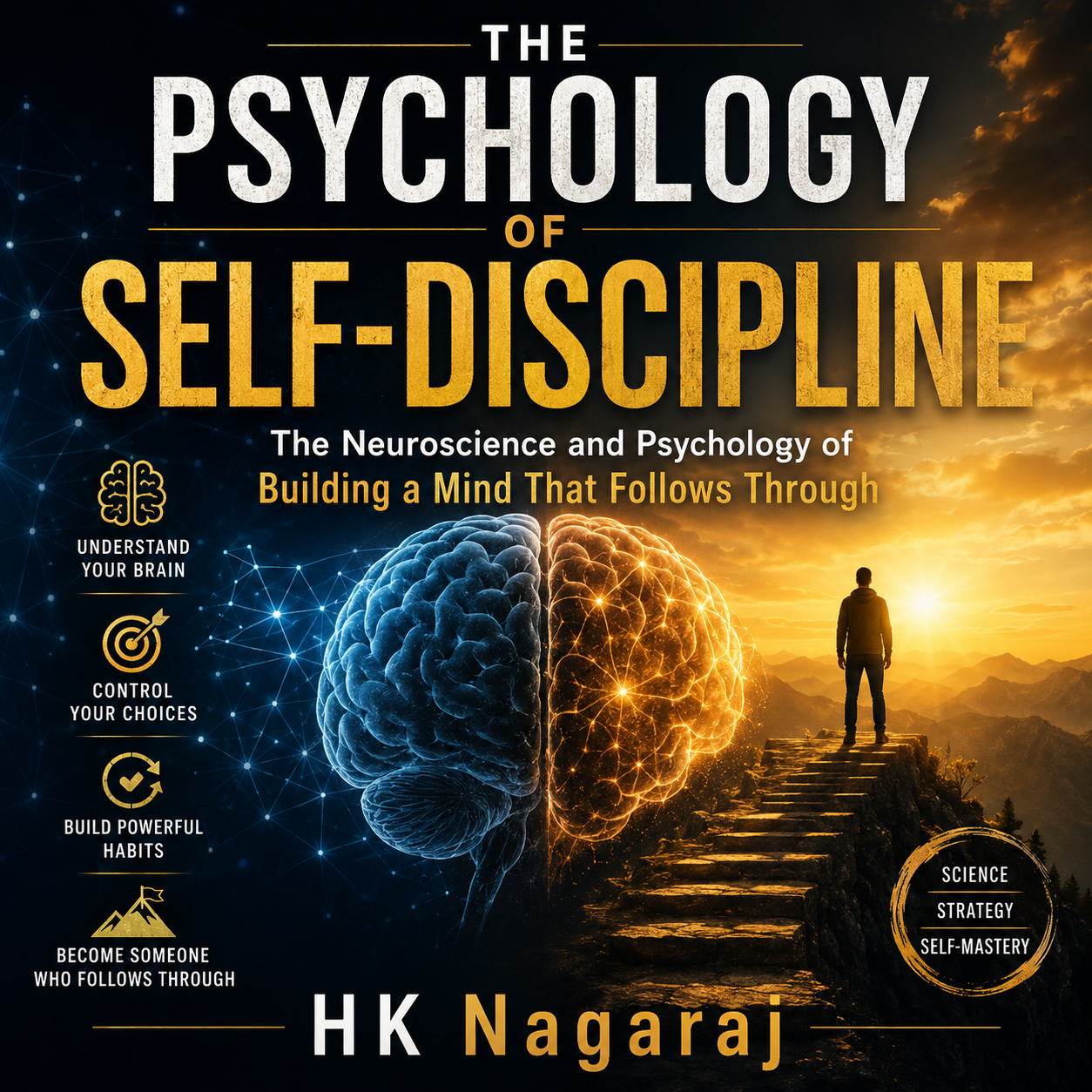
THE PSYCHOLOGY OF SELF-DISCIPLINE
Why do we know what we should do—but still struggle to do it?
Self-discipline is often described as a matter of willpower, motivation, or simply “trying harder.” But modern psychology and neuroscience reveal a far more interesting picture. Discipline is influenced by reward systems, emotional regulation, habits, decision-making, identity, environment, and the brain's ability to manage competing impulses.
The Psychology of Self-Discipline explores the science behind why we follow through—or fail to—and how disciplined behavior can be deliberately developed.
Across 14 insightful chapters, this book examines:
- How our understanding of discipline has evolved
- The tension between immediate impulses and long-term goals
- The role of the prefrontal cortex and limbic system
- Dopamine, rewards, and motivation
- The debate surrounding ego depletion and willpower
- How habits shape automatic behavior
- Identity-based approaches to discipline
- Choice architecture and environmental design
- The science of delayed gratification
- Emotional regulation during difficult situations
- Implementation intentions and if-then planning
- Biological factors that influence mental capacity
- The difference between healthy discipline and destructive rigidity
- Applying discipline across work, learning, health, relationships, and personal growth
- Building sustainable discipline as a lifelong practice
Rather than presenting discipline as punishment or constant self-denial, this book looks at it as a system of choices, habits, mental processes, and environmental influences.
Whether you're a student trying to study consistently, a professional seeking greater focus, an entrepreneur building long-term habits, or simply someone who wants to become more reliable in following through, this book offers a practical framework for understanding the mind behind disciplined behavior.
Understand your brain. Design your environment. Regulate your emotions. Build better habits. Become someone who follows through.