
Sango oba koso
**Sango** (also spelled Ṣàngó, Shango, Chango, or Xangô) is one of the most powerful and widely revered Orishas in the Yoruba religion and its diaspora traditions (Santería, Candomblé, etc.).
### Who He Is
Sango is the Orisha of **thunder, lightning, fire, and justice**. He embodies kingship, masculine power, passion, authority, courage, and divine retribution. He is both a historical figure and a deified ancestor: traditionally regarded as the third Alaafin (king) of the Oyo Empire in what is now southwestern Nigeria.
### The Meaning of “Oba Koso”
His famous title **Oba Koso** (or Olukoso) means **“The King Did Not Hang.”**
According to legend, after political conflict and the burning of his palace, Sango left Oyo. One version says he hanged himself in despair at a place called Koso. His devoted followers rejected this story of shame and declared instead that the king did not hang — he ascended into the sky in a flash of lightning and became fully divine. The phrase became both a denial of defeat and a declaration of his immortality and power.
### Appearance & Symbols
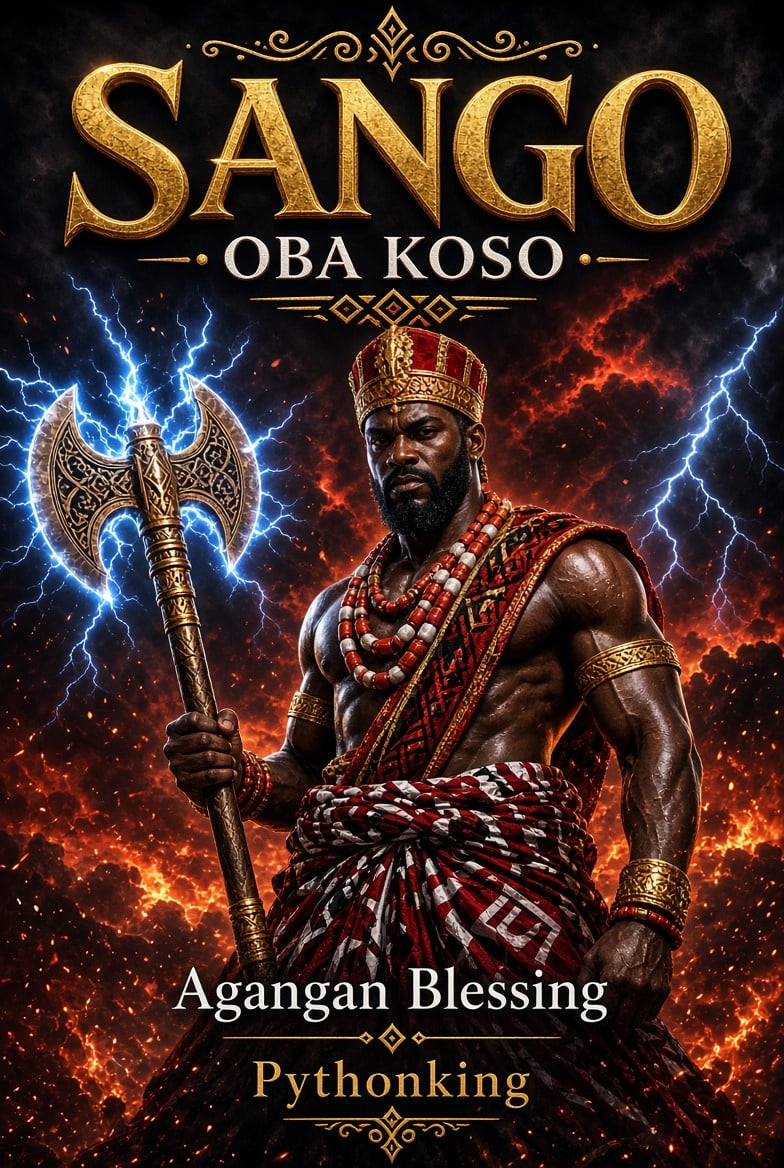
Sango is typically portrayed as a strong, regal, dark-skinned warrior-king. Classic attributes include:
- The **oshe** (double-headed axe) that channels lightning
- Red and white colors (especially red coral beads and cloth)
- A crown or royal headdress
- Fierce, commanding presence surrounded by fire, storm clouds, and bolts of lightning
### Spiritual Role
Devotees call on Sango for:
- Justice and the exposure of truth
- Protection against enemies
- Courage, leadership, and victory
- Passion, charisma, and personal power
- Transformation through fire and storm
He is both feared and loved — a force that can destroy what is unjust and empower those who stand in integrity.
In short, Sango is the divine king who rules through thunder: powerful, passionate, uncompromising, and eternally undefeated.