

Lifespace Access Profile-Autism Spectrum Disorder (Single Use)
Lifespace Access Profile – Autism Spectrum Disorder
(Single Administration Version)
Cost: $10.00
Format: downloadable pdf.
Requires: Adobe Reader or Acrobat to complete.
Dear Parents,
Are you feeling frustrated, confused, unheard, or just overwhelmed, with the assessment and IEP process for your child?
Would you like to feel that the process was conducted by a multidisciplinary Team that has a shared perspective of both your child’s strengths and weaknesses when making IEP recommendations?
Would you appreciate the opportunity to be a real part of that Team?
It will be neither quick nor easy, but if you are still interested……..
Welcome to Lifespace Access
Let me tell you about the Lifespace Access Profile – Autism Spectrum Disorder
The Lifespace Access Profile - Autism Spectrum Disorder (LAP-ASD) represents the next assessment and planning instrument in the series that started with the publication of the original Lifespace Access Profile in 1993.
The LAP-ASD provides direction for the development of individualized educational or training programs for Individuals at Level 2 and 3 on the spectrum.
It is not a standardized test. It does not diagnose, or result in the identification of a disability or condition.
It is an Adobe Acrobat app that produces a record of observations and ratings made by a Team of care and service providers. It guides the Team through the process of identifying program planning priorities and program specifications. It is a shared document that encourages discussion and problem-solving that considers both an Individual’s strengths and weaknesses.
Key features of the LAP-ASD
Integrated Administration Manual
The built-in Administration Manual is designed explain the “what”, “how”, and “why”, for each part of the Team assessment and program planning process. Guidelines for every rating scale and information gathering field are available via a simple mouse click.
Assessment and Planning Team: A Multidisciplinary Approach
Program planning is most effective when conducted by a multidisciplinary team that includes the individual, family, instructional and support personnel, and all other important stakeholders. This approach, a key component of the original Lifespace Access Profiles, has been shown to be the correct one.
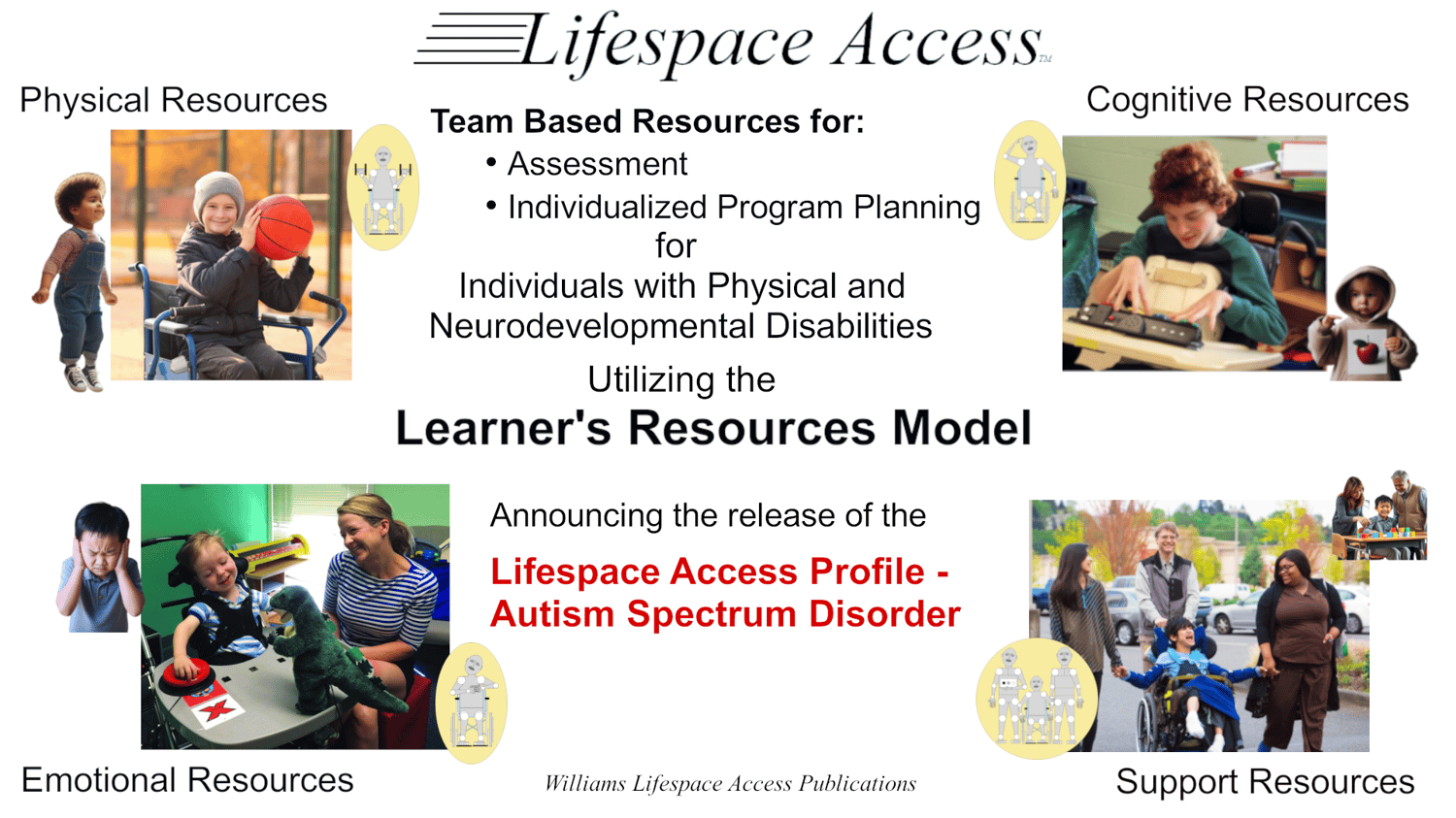
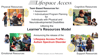
Learner’s Resources Model (LRM) – A robust conceptual framework
The Learner Resources Model is based upon this simple premise. Every individual enters an instructional or training setting with an array of existing resources and that effective assessment and planning processes consider each of these resources. Use of the model ensures the evaluation process considers the whole person, and not just the Individual’s disabilities or limitations.
There are four Resource categories in the LRM
Physical Resources
The Physical Resources category is concerned with the individual’s general health, and the functioning of the individual’s sensory and motor systems.
These factors are sometimes overlooked in assessments done for planning individual educational or training programs, but experience and research have consistently shown that when working with individuals with neurodiverse backgrounds these factors are fundamental considerations.
Cognitive Resources
The Cognitive Resources category compasses a wide range of abilities that share the characteristic of being mediated by the individual’s mental processes.
A major focus of the rating scales for this category are related to the individual’s receptive and expressive communication abilities.
Understanding and developing the individual’s communicative capacity is a critical consideration for planning any teaching or training efforts.
Skills in problem-solving, sorting, classification, numeration, and quantification are also considered.
Emotional Resources
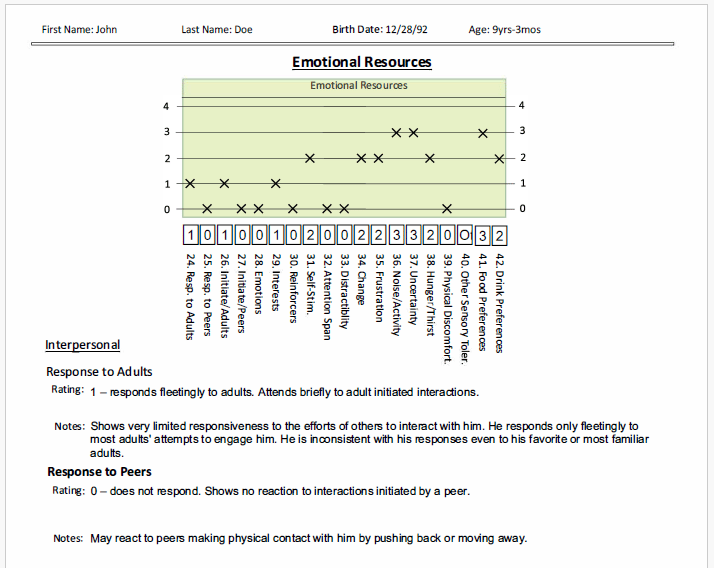
The Emotional Resources category is concerned with those aspects of the individual’s interactions within activities and environments mediated primarily by the individual’s affective (emotional) state.
Given the number of these affective variables that have been shown to be critical when planning programs for individuals on the autism spectrum, the number of rating scales in this section of the protocol is extensive.
Support Resources
The resources considered in the first three categories are concerned with the functioning and characteristics of the individual. The Support Resources category focusses on the availability, or need for equipment or supplies, consultation, training, or personnel to develop and implement the individual’s educational or training program.
The honest appraisal of these resources across home, school, and therapy settings is essential.
Environmental Analysis
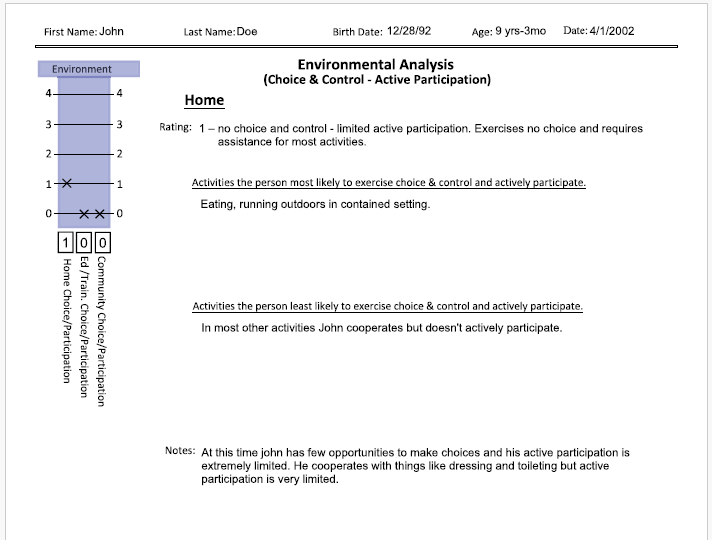
The goal of instructional and training programs is to improve and support an Individual’s active participation and level of choice and control in their Lifespace. Using the scales in this area of the protocol the Team is asked to evaluate the Individual’s functioning across Home, School, and Community environments.
Results Graphing and Report Generation
Here is how it works.
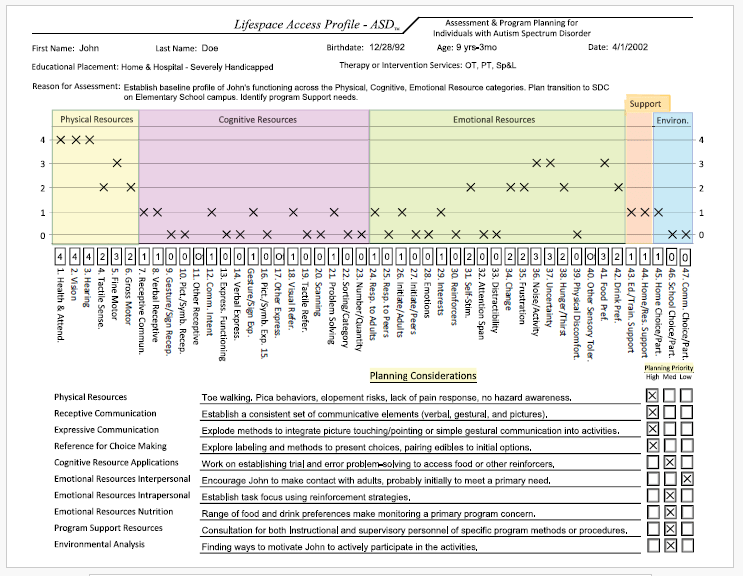
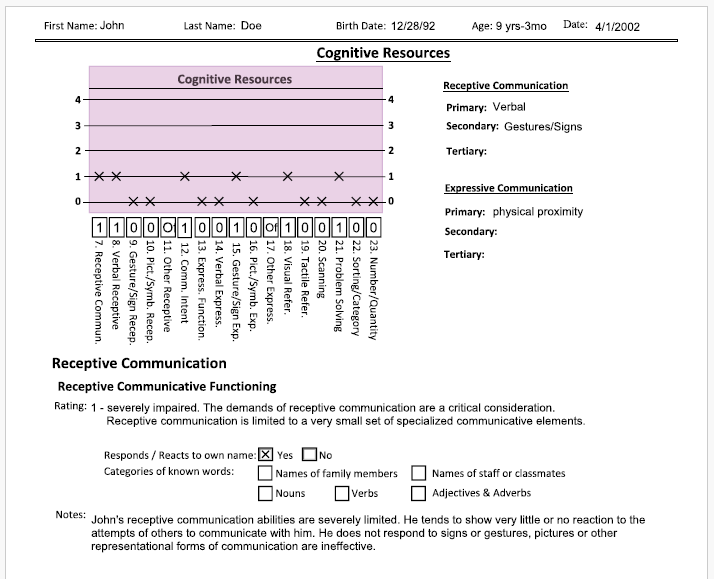
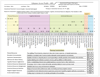
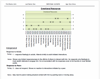
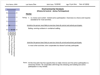
The Team’s ratings produce graphs that allow the Team to see the Individual's relative strengths and weaknesses.
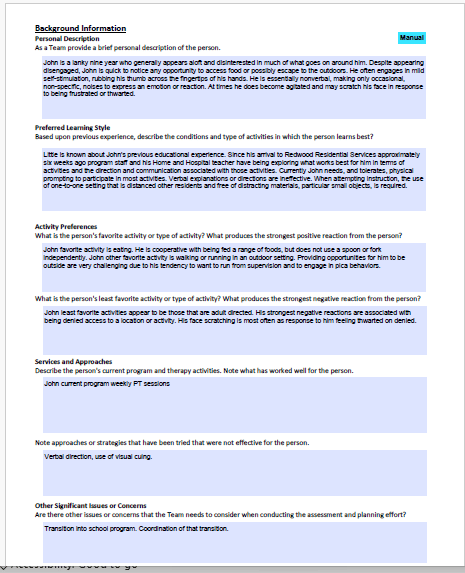
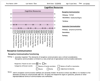
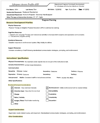
The explanation of the rating chosen for each scale are automatically entered into the Results and Planning Considerations report.
The Team's notes, along with any other information related to the scale, are imported into the report.
Using all that information in their discussion, and the guidance provided in the administration manual, the Team is asked to identify program planning considerations or recommendations in ten key areas across the assessment.
The Team is asked to identify Resource Development Priorities in each of these areas.
A summary graph is produced that presents the profile of the Individual’s functioning across the four resource categories and allow the Team to record their program planning priorities.
Program Planning
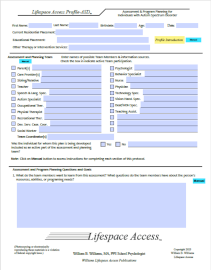
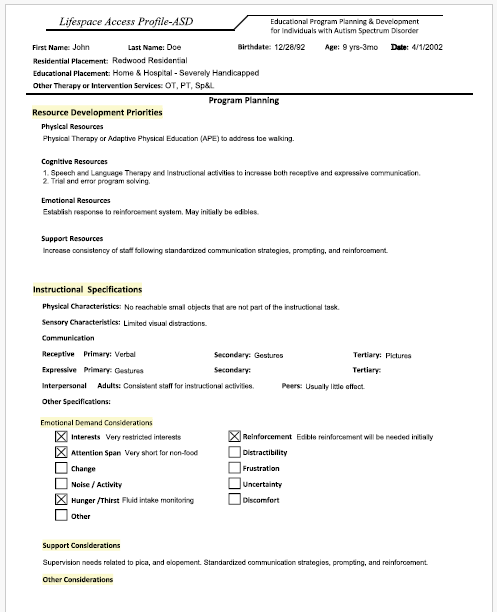
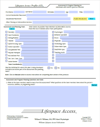
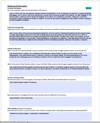
The Program Planning form is designed to lead the Assessment and Planning Team through a process that results in the following set of recommended Program Planning elements.
Resource Development Priorities in each resource category.
Specifications for Physical and Sensory Characteristics of instructional settings.
Specifications for Receptive and Expressive Communication modes or methods.
Specifications for Individual’s Interpersonal Interactions with both adults and peers.
Other Specifications the Team feels are priority considerations.
A checklist for Emotional Demands that may be critical in program planning or conducting
instructional activities.
Support Resources Requirements.
Other Considerations.
The LAP-ASD takes an expansive approach to assessment and planning for Individuals on the spectrum. Even with that approach, there may be other issues or concerns the Team feels need to be acknowledged in their program planning recommendations.
Well, you have heard the sales pitch. What do you think?
If you decide to purchase a single-use copy of the Profile you will receive a downloadable file that contains the assessment and planning form and the integrated administration manual. When you approach the school or training program for your child, one of the selling points for asking them to use it in the IEP or other assessment or program planning is your ability to offer them the use of that file.
Hope to hear from you. Any questions, we are here to answer them.
A Little History:
According to Dr. Stephen Shore, “If you've met one individual with autism, you've met one individual with autism."
Lifespace Access was established just as the mandates for Special Educational services were being expanded and clarified on a national basis. Lifespace Access was founded on a simple belief.
Educational and training programs should be designed to increase the participation of the Individual in what goes on in their lifespace and to exercise increasing levels of choice and control in those events.
In 1993 our transdisciplinary team introduced the Lifespace Access Profile – Assistive Technology Planning for Individuals with Severe or Multiple Disabilities.
The team drew on the collective experience of William B. Williams, MA, School Psychologist, Severely Handicapped Program Specialist, and Assistive Technology Specialist; Gerald Stemach, MA, CCC-SP, Augmentative and Alternative Communication Specialist; Sheila Wolfe, MA, OTR, Occupational Therapist and Development Specialist; and Carol Stanger, MS, Bio-Medical Engineer.
In 1994 the team published the Lifespace Access Profile – Upper Extension, Assistive Technology Assessment and Planning for Individuals with Physical Disabilities in response to requests from professionals in the AT field.
Since their introduction, the Profiles have continued to provide guidance for assistive technology practices for organizations ranging from local school districts to
national programs.