
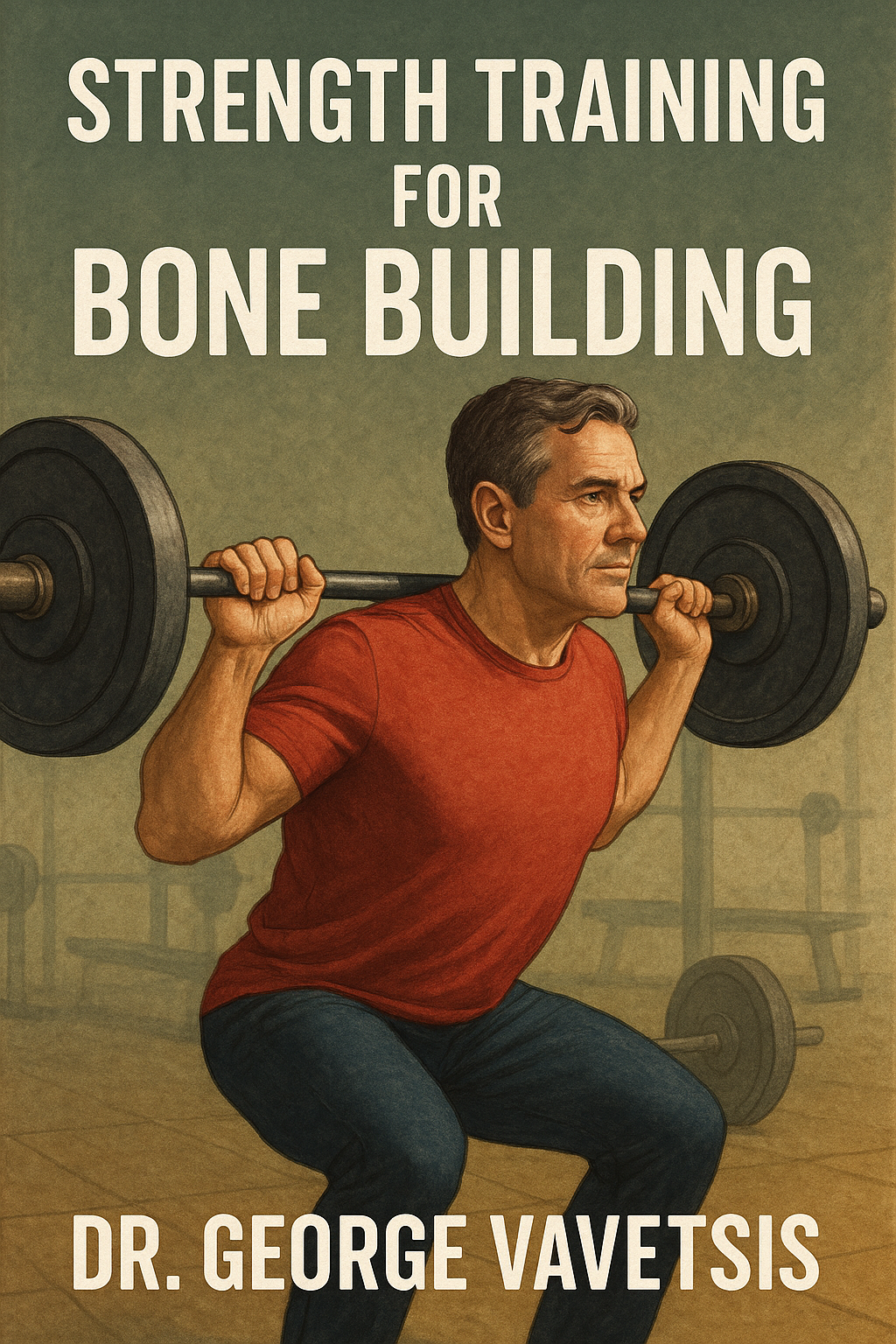
Strength Training for Bone Building
Pages: 1135
High-performance sport exists at the intersection of biology and extreme mechanical demand. Every jump, sprint, tackle, and lift translates into forces transferred through bone — forces that shape skeletal architecture just as much as they challenge athletic performance. In the modern era of elite competition, strength and conditioning coaches are no longer simply applying generic resistance routines; they are designing mechanobiological interventions that must simultaneously elevate performance, protect against catastrophic failure, and extend the career longevity of the athlete. Bone health — once treated as a slow-changing, medical-only concern — has become a dynamic training frontier where loading specificity can meaningfully alter the structural and cellular composition of the skeleton.
This book was written to bridge a gap that has persisted for too long in applied sports science: the absence of a comprehensive, load-prescriptive framework that integrates mechanotransduction physiology, micro-architectural bone adaptation, and elite-level exercise programming. While coaches are fluent in concepts such as force, power, and velocity, fewer are trained to think in terms of strain magnitude, strain rate, loading frequency, and polar moment distribution — the very mechanical variables that osteocytes read and translate into tissue remodeling. For an athlete, the skeleton is far more than a rigid chassis. It is a living mechanosensitive organ that constantly adapts to the volume, direction, and speed of imposed load.
Bone remodeling is driven by controlled chaos: incremental microdamage followed by targeted repair, always seeking a balance between strength and efficiency. Too little loading leads to bone resorption and fragility; too much causes structural breakdown and injury. The mechanostat theory introduced decades ago provided the conceptual foundation for understanding these thresholds, but only recently have coaches gained the technology and scientific insight to manipulate strain adaptation intentionally. The goal of this text is to evolve that theory into a practical programming model aligned with elite sport demands — transforming what was once a medical curiosity into a performance-enhancing tool.
Athletes in power-dominant and impact-heavy sports — volleyball, basketball, football, rugby, combat sports, and weightlifting — push their skeletons to the limits of physiologic tolerance. Their load patterns are asymmetrical, explosive, and directional. Their growth plates, epiphyses, and trabecular networks experience recurring torsional shocks and axial compression waves. Their careers often hinge on the femoral neck, tibial plateau, metatarsals, and lumbar spine — regions prone to stress-induced failure when adaptation is outpaced by demand. The traditional approach of “getting stronger” is insufficient if the structural substrates supporting strength are not concurrently targeted.
The chapters that follow detail bone compartment–specific loading strategies grounded in mechanobiological research: axial compression for cortical thickening, high-rate impulse landings for trabecular stiffening, torsional carries and rotational lunges for polar moment adaptation, and strain-rate potentiation techniques that amplify osteocyte responsiveness. Programming is treated not as an art of repetition and percentage selection, but as a precise orchestration of mechanical stimuli capable of reshaping bone tissue at the microstructural level.
Special emphasis is given to elite-specific constraints — accumulated match congestion, travel-induced unloading, hormonal fluctuations (e.g., RED-S, menstrual cycle–specific turnover), age-dependent plasticity windows, and return-to-play tissue vulnerabilities. Coaches will find actionable prescriptions on how to dose bone-stimulating exercises during high-performance training blocks without tipping into overload-related injury.
Yet, this book is not exclusively about enhancing bone robustness. It is about embedding bone-centric reasoning into the entire ecosystem of strength & conditioning. When a coach prescribes a lift, they are influencing not just muscle fiber recruitment and neuromotor performance — they are activating osteogenic pathways, sclerostin modulation, paracrine signaling, and circulation of bone-derived hormones such as osteocalcin, which feed back into metabolic and strength outcomes. Bone is not passive — it is a biochemical partner in performance.
Our emerging understanding of the bone-muscle unit reveals that the most durable athletes are not only powerful but structurally adapted to tolerate repeated maximal output. The paradox of elite sport — that the forces required to win are often the same forces that can end a career — becomes manageable only when training constraints incorporate tissue mechanobiology as a central pillar. Ultimately, putting performance before physiology is no longer acceptable. Both must co-evolve.
This text unapologetically pushes forward a new paradigm: load prescription based on mechanobiological intelligence. It recognizes that each athlete’s skeleton has a different ability to receive, absorb, and remodel load — and that knowing this ability is the key to unlocking their true potential. By treating bone not as an afterthought, but as a primary performance structure, we elevate our capacity to build resilient champions who can not only perform at their highest, but perform longer.
To all the performance coaches, sports scientists, physiotherapists, orthopedic clinicians, and researchers reading: may this book provide you with new lenses, sharper tools, and a deeper appreciation for the extraordinary mechanical engineering masterpiece that is the human skeleton. It is time for bone to take its rightful place at the center of elite strength and conditioning.