



Understanding the PMBOK Guide
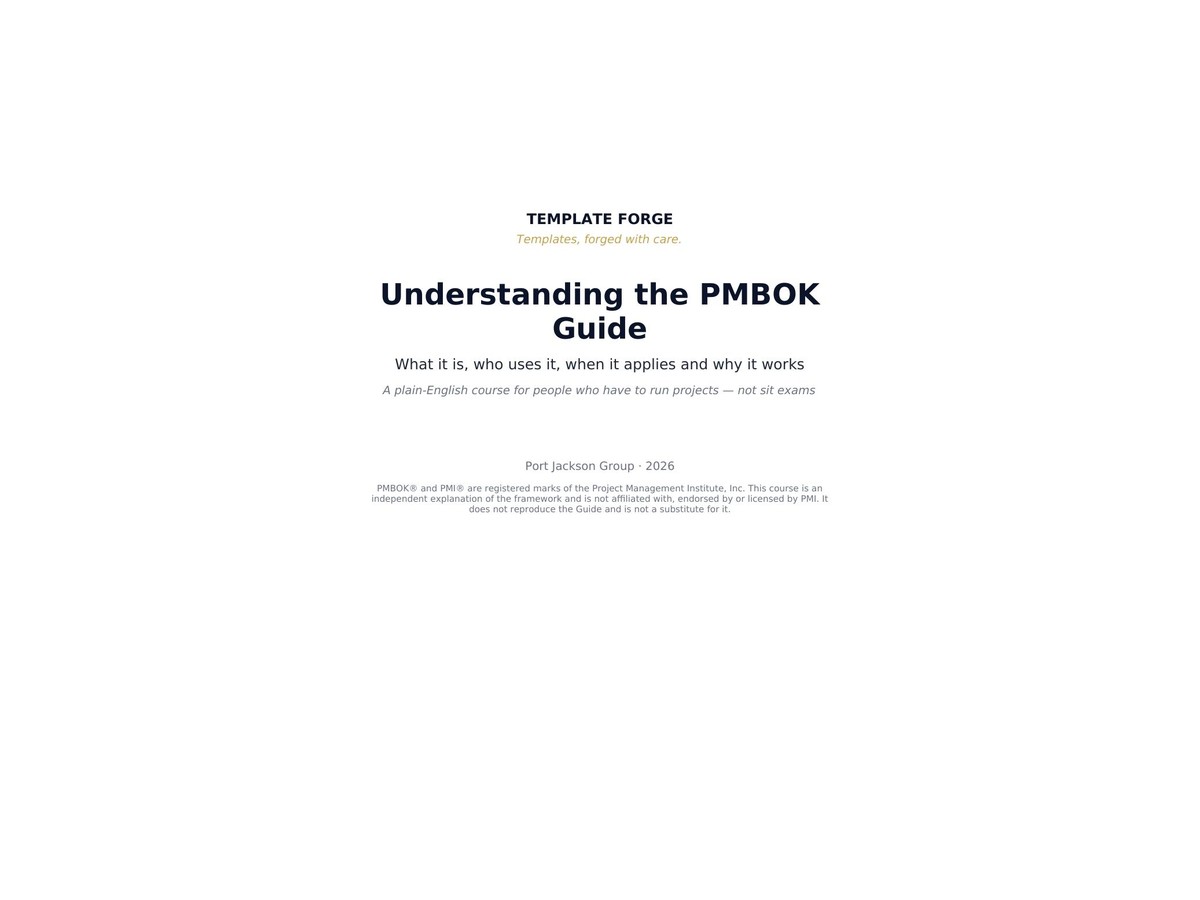
Understanding the PMBOK Guide
What it is, who uses it, when it applies and why it works. A plain-English course for people who have to run projects — not sit exams.
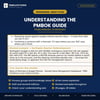
Twelve modules
What the Guide is · Process groups and knowledge areas · Integration · Scope · Schedule · Cost · Quality · Resources · Communications · Risk · Procurement and stakeholders · The Seventh Edition: principles and performance domains
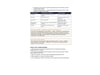
Twenty-six tables, worked examples throughout, and five check-your-understanding questions at the end of every module.
What makes it different from exam prep
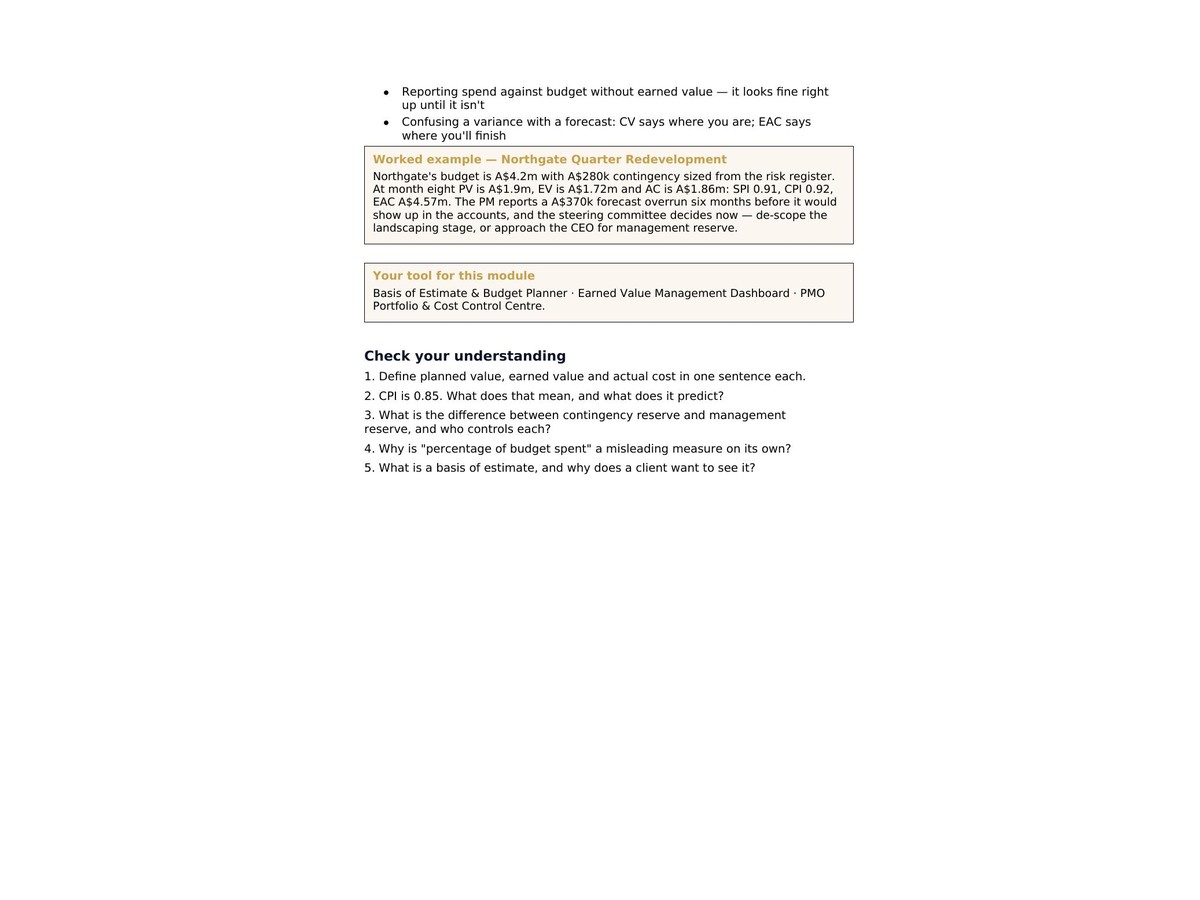
It is written for people who have to deliver, not certify. Each module ends with the questions a working project manager actually needs answered: why is "percentage of budget spent" a misleading measure on its own? · what is the difference between contingency reserve and management reserve, and who controls each? · does the Seventh Edition make the Sixth wrong?
Both editions, honestly
The Sixth Edition's process groups and ten knowledge areas are still what most organisations, tenders and clients actually work to. The Seventh's principles and performance domains are where the discipline is heading. This covers both and explains how they relate, rather than pretending one replaced the other.
Worked examples that carry through
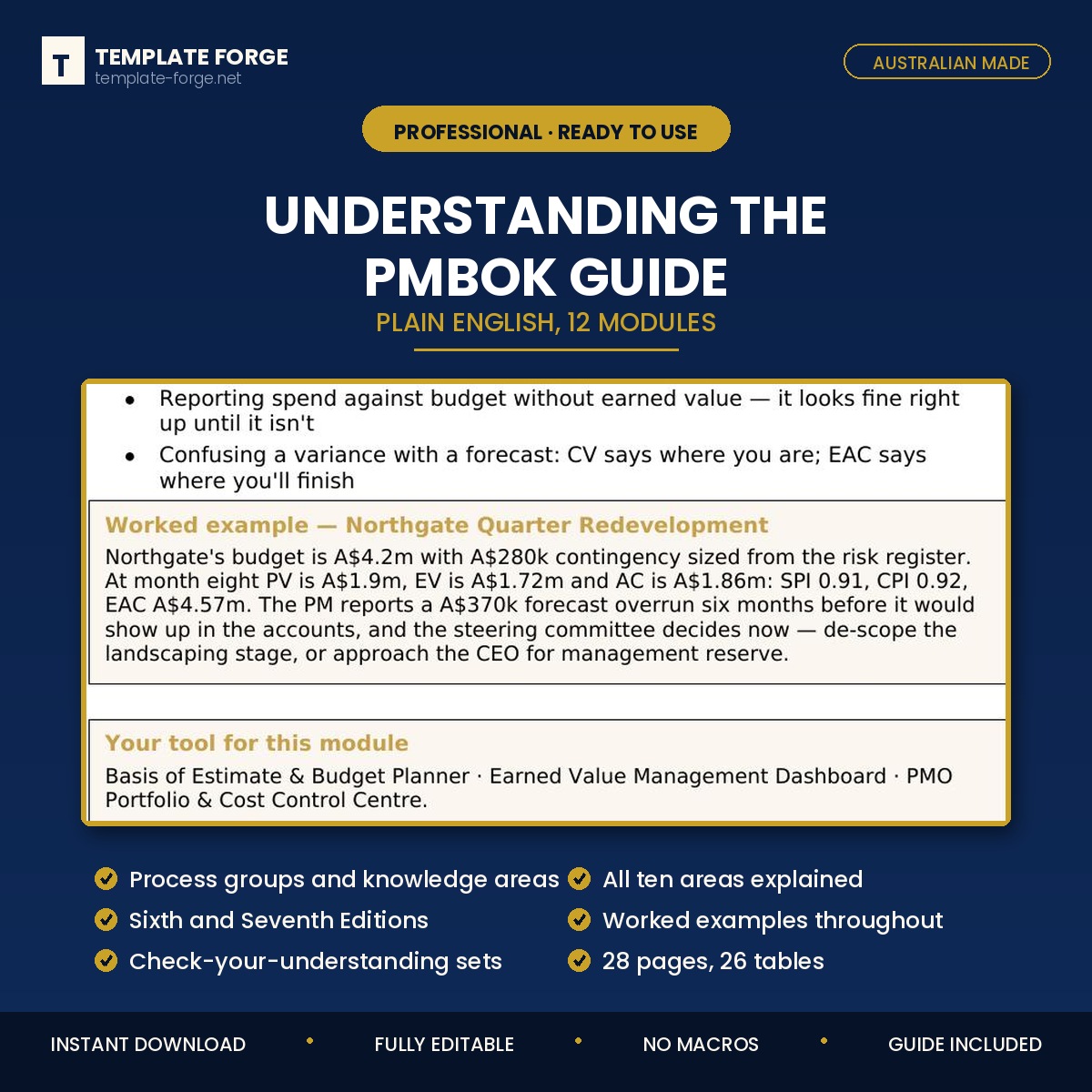
A single project — the Northgate Quarter redevelopment — runs through the modules. By the cost module you are reading real numbers: budget A$4.2m, contingency A$280k sized from the risk register, at month eight SPI 0.91 and CPI 0.92, forecasting a A$370k overrun six months before it would appear in the accounts, with the steering committee choosing between de-scoping and management reserve.
A ten-point project health check
The closing section is a checklist you can run against any project in twenty minutes — signed charter, scope exclusions, logic-linked schedule, bottom-up estimate, defined hold points, one accountable person per deliverable, every risk owned and dated, long-lead items ordered on time, and whether the person who could stop the project is being engaged.
Who it's for
Project managers who have been handed the Guide and found it heavy going, people moving into project roles, and anyone whose client tender asks for "PMBOK-aligned project management" and needs to know what that actually commits them to.
28 pages. PDF and editable Word. Yours to keep, no login, no expiry.
Built in Australia. PMBOK® and PMI® are registered marks of the Project Management Institute; this is an original work explaining publicly known project-management concepts and is not affiliated with or endorsed by PMI.Pairs with the Basis of Estimate & Budget Planner, the EVM Dashboard, and the PMO Portfolio & Cost Control Centre — the tools named inside each module.