





ELENOVE Vol.07 - Lip Balm: Scientific Formulation Library
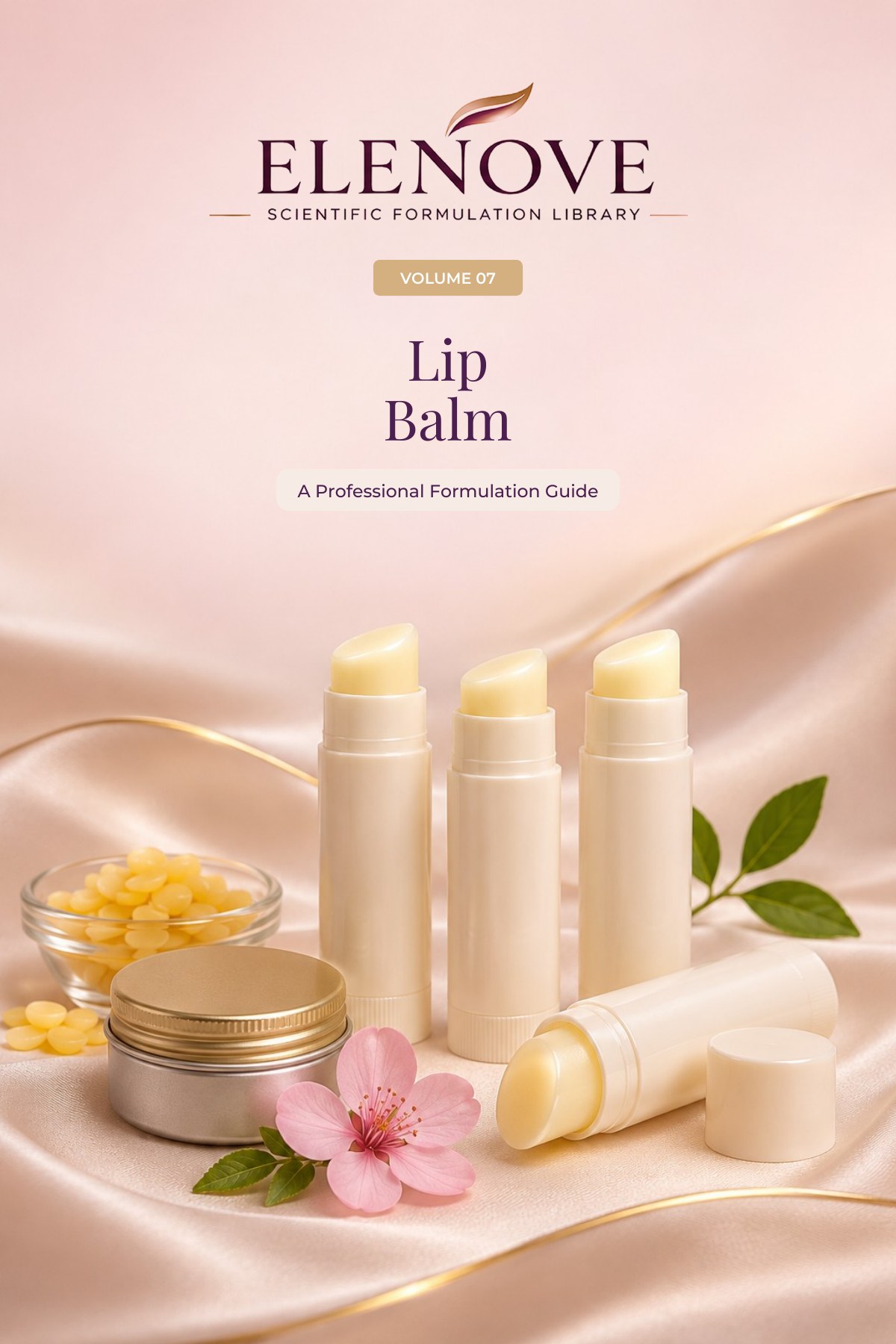
ELENOVE Vol. 07 - Lip Balm
A Professional Formulation Guide
WHAT YOU GET
• 123-page PDF formulation book
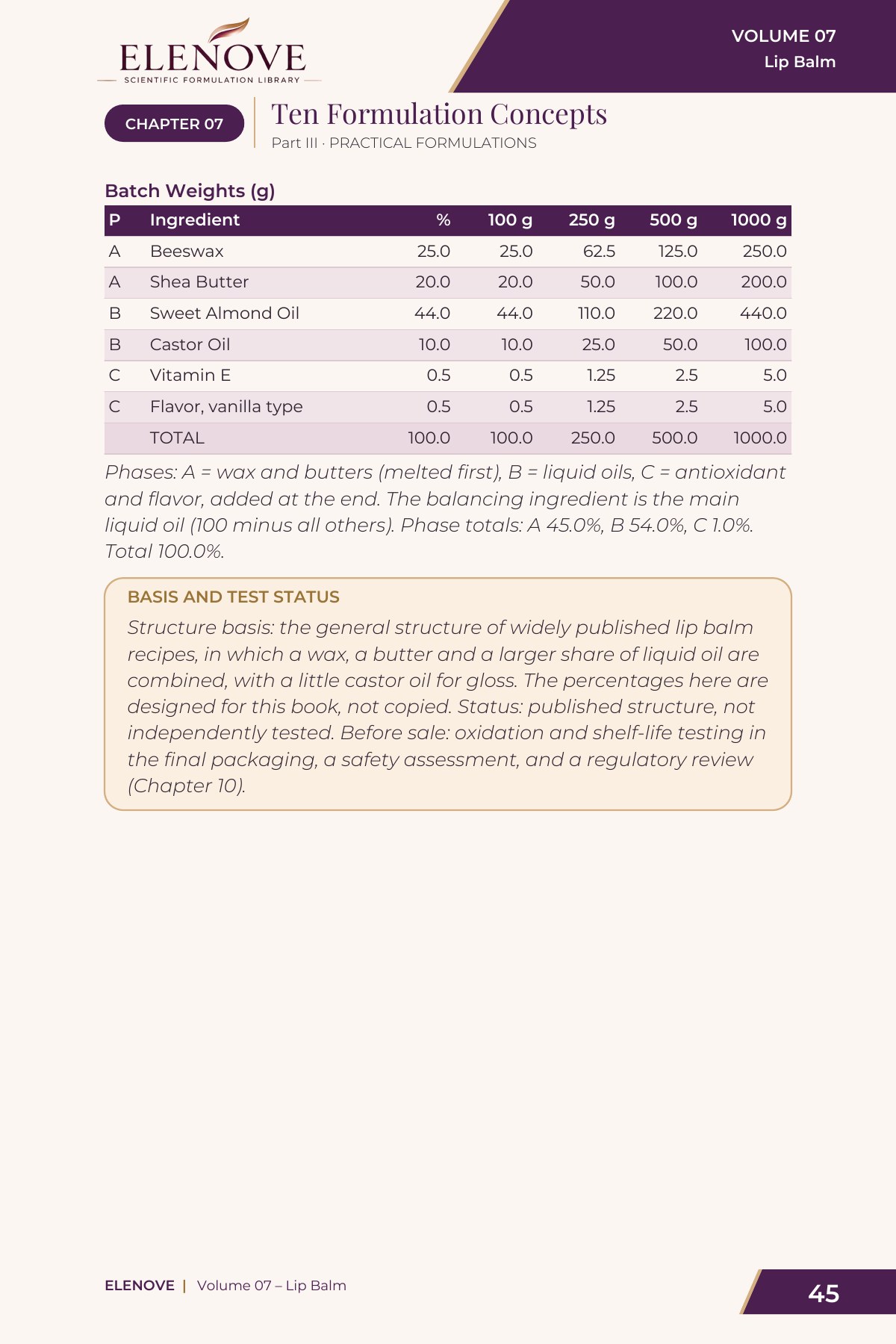
• Excel formulation calculator (.xlsx) for scaling and costing your batches
• Instant digital download after payment
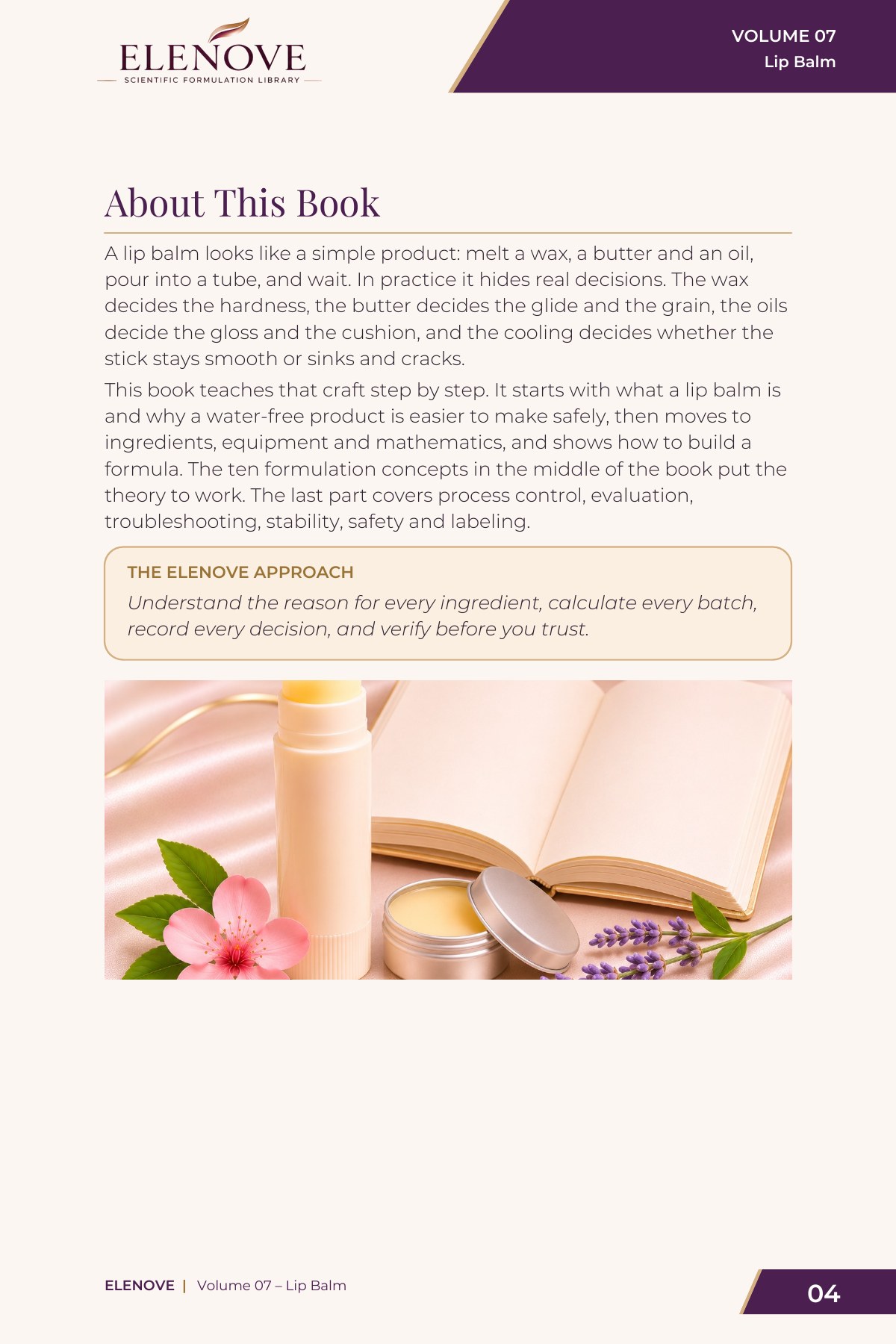
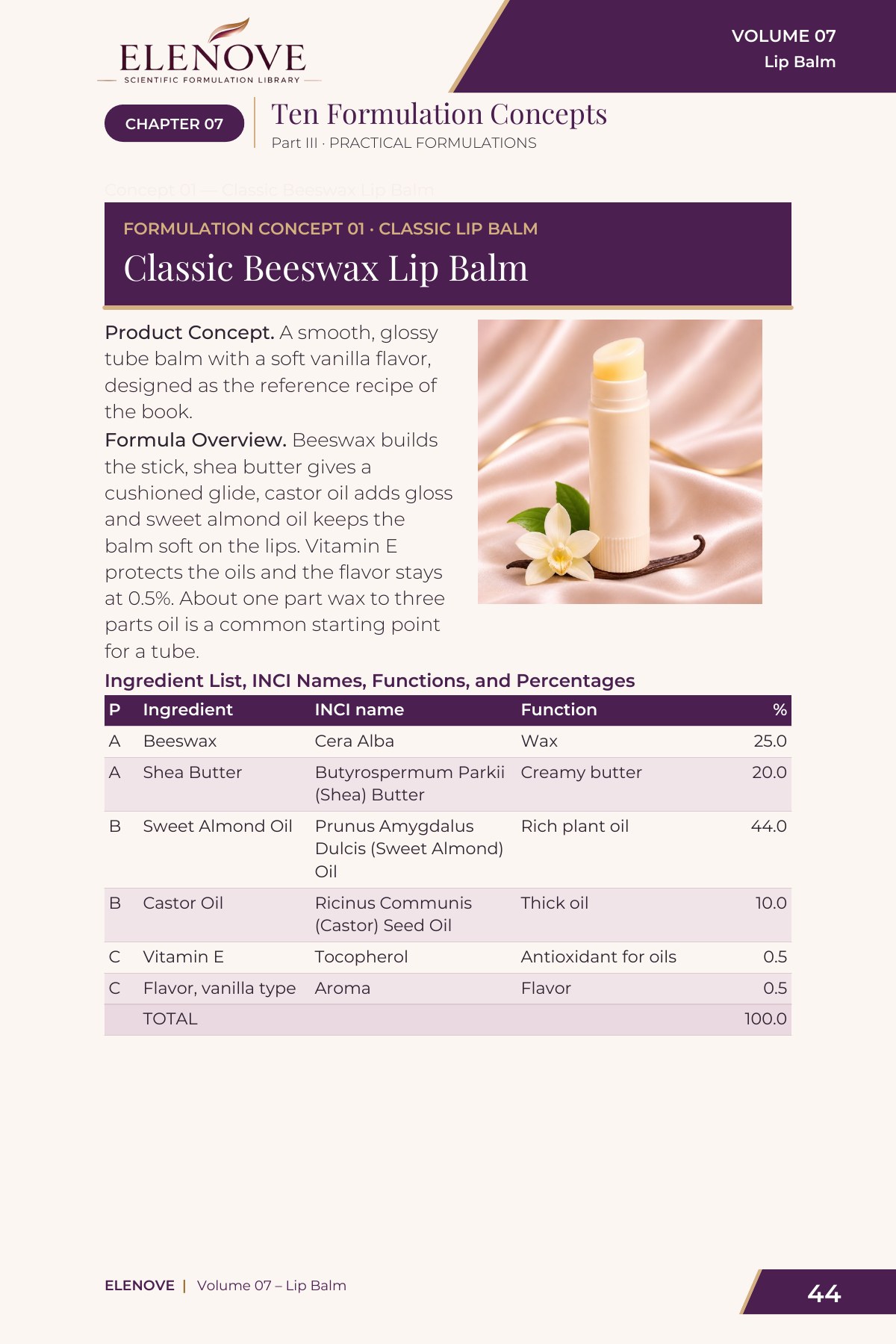
A lip balm looks like a simple product: melt a wax, a butter and an oil, pour into a tube, and wait. In practice it hides real decisions. The wax decides the hardness, the butter decides the glide and the grain, the oils decide the gloss and the cushion, and the cooling decides whether the stick stays smooth or sinks and cracks.
This book teaches that craft step by step. It starts with what a lip balm is and why a water-free product is easier to make safely, then moves to ingredients, equipment and mathematics, and shows how to build a formula. The ten formulation concepts in the middle of the book put the theory to work. The last part covers process control, evaluation, troubleshooting, stability, safety and labeling.
WHAT YOU WILL LEARN
• What a lip balm is, why it needs no water, what it can and cannot claim, and where its limits lie
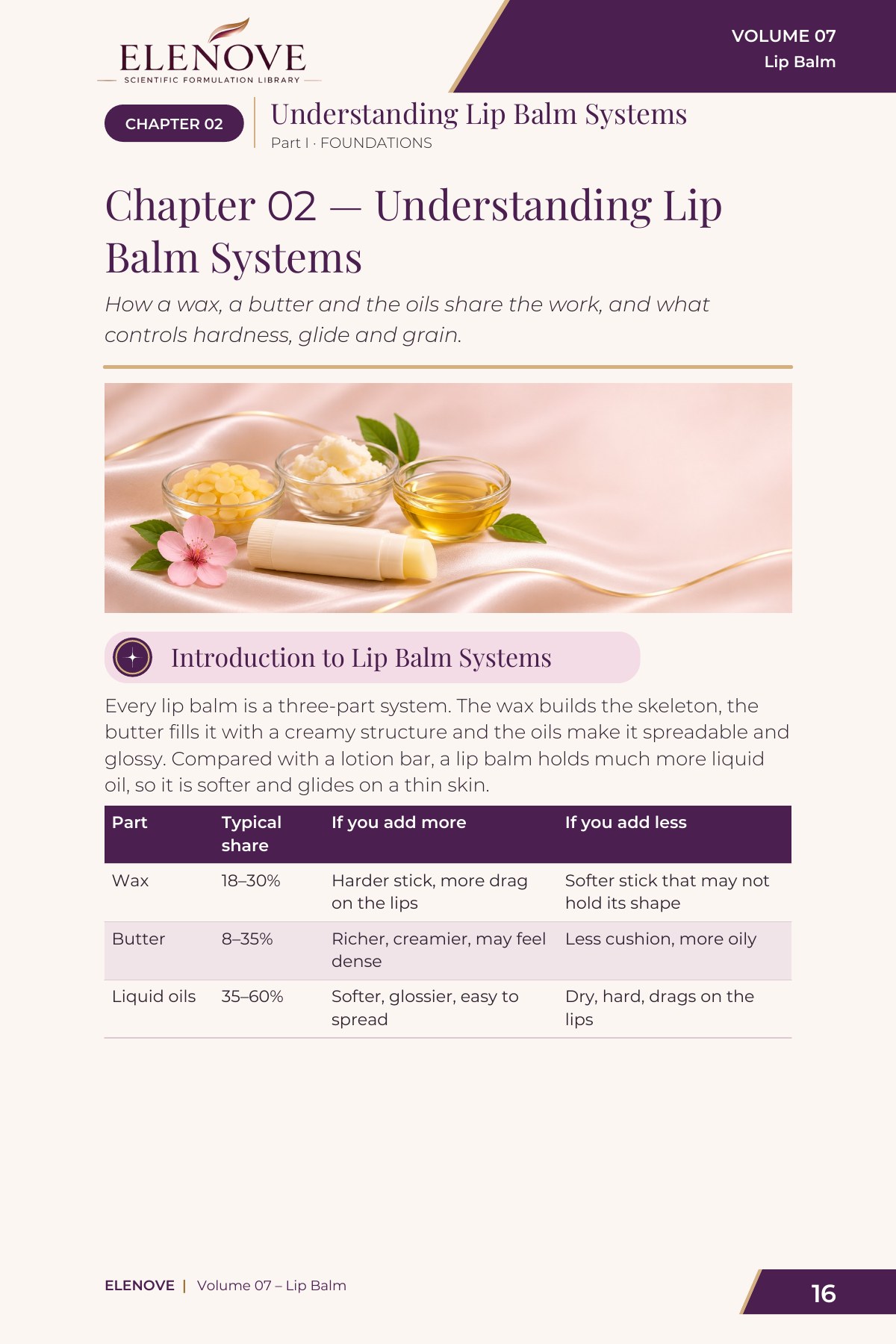
• How a wax, a butter and the oils work together, and how to tune hardness, glide and gloss
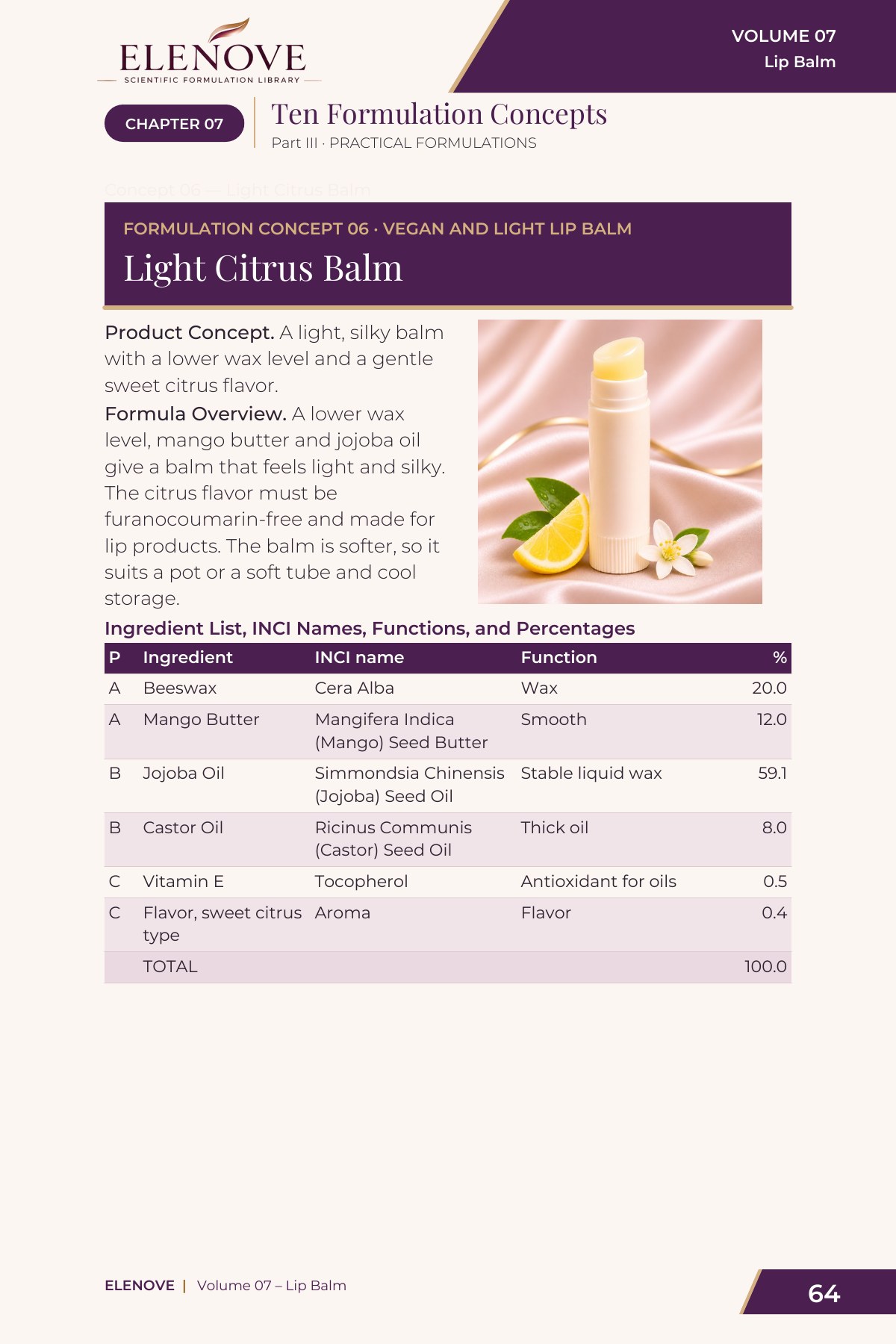
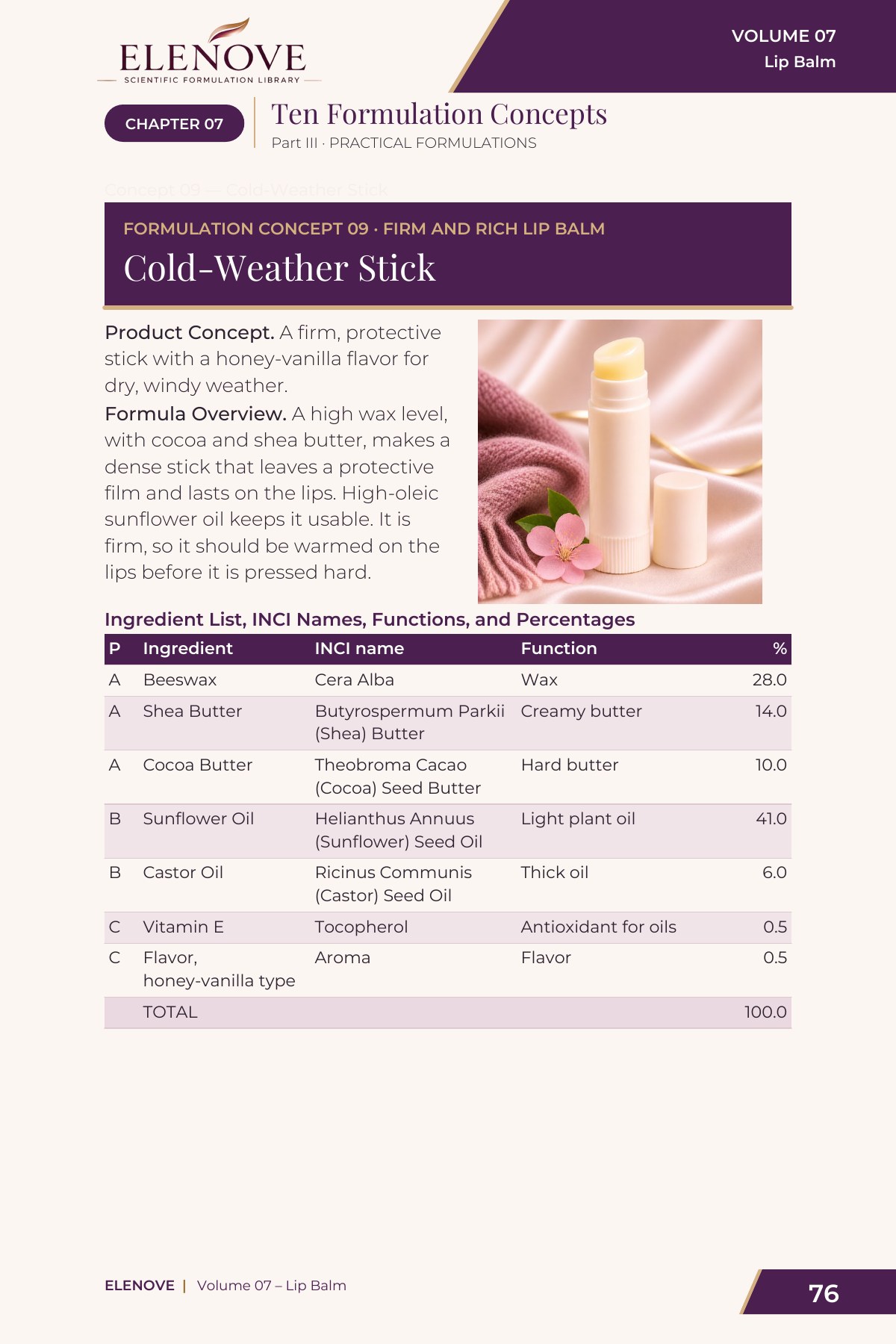
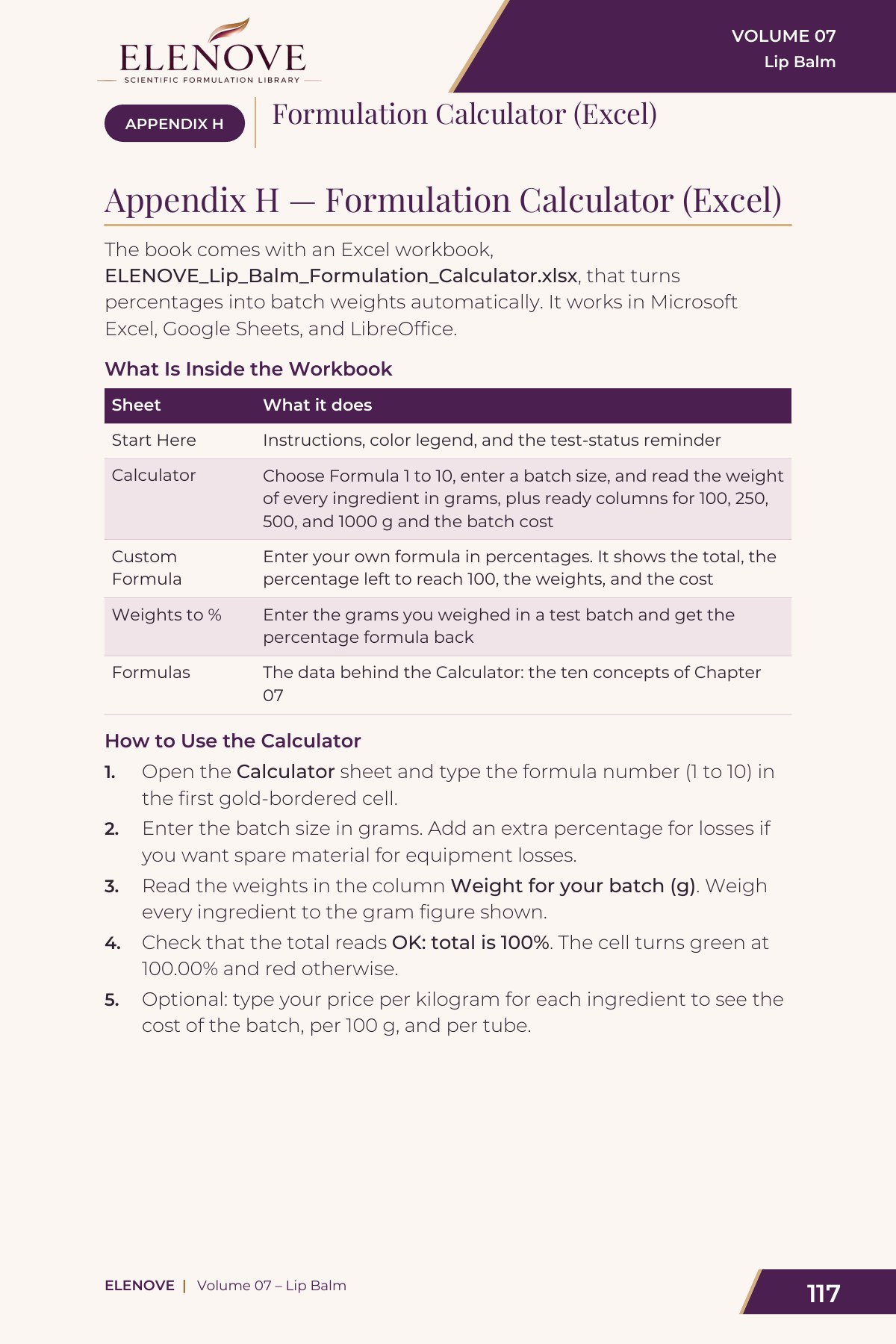
• Classic, vegan and light, and firm forms (tube or pot), with the strengths and risks of each
• The main ingredient families, the job of each, and why a lip product has stricter limits
• How to set up a clean, dry workspace, convert percentages into grams and scale batches to a number of tubes
• Ten complete formulation concepts, and why each was designed the way it was
• How to control manufacturing, document every batch, evaluate and troubleshoot the result, and understand stability, safety, packaging and labeling at an introductory level
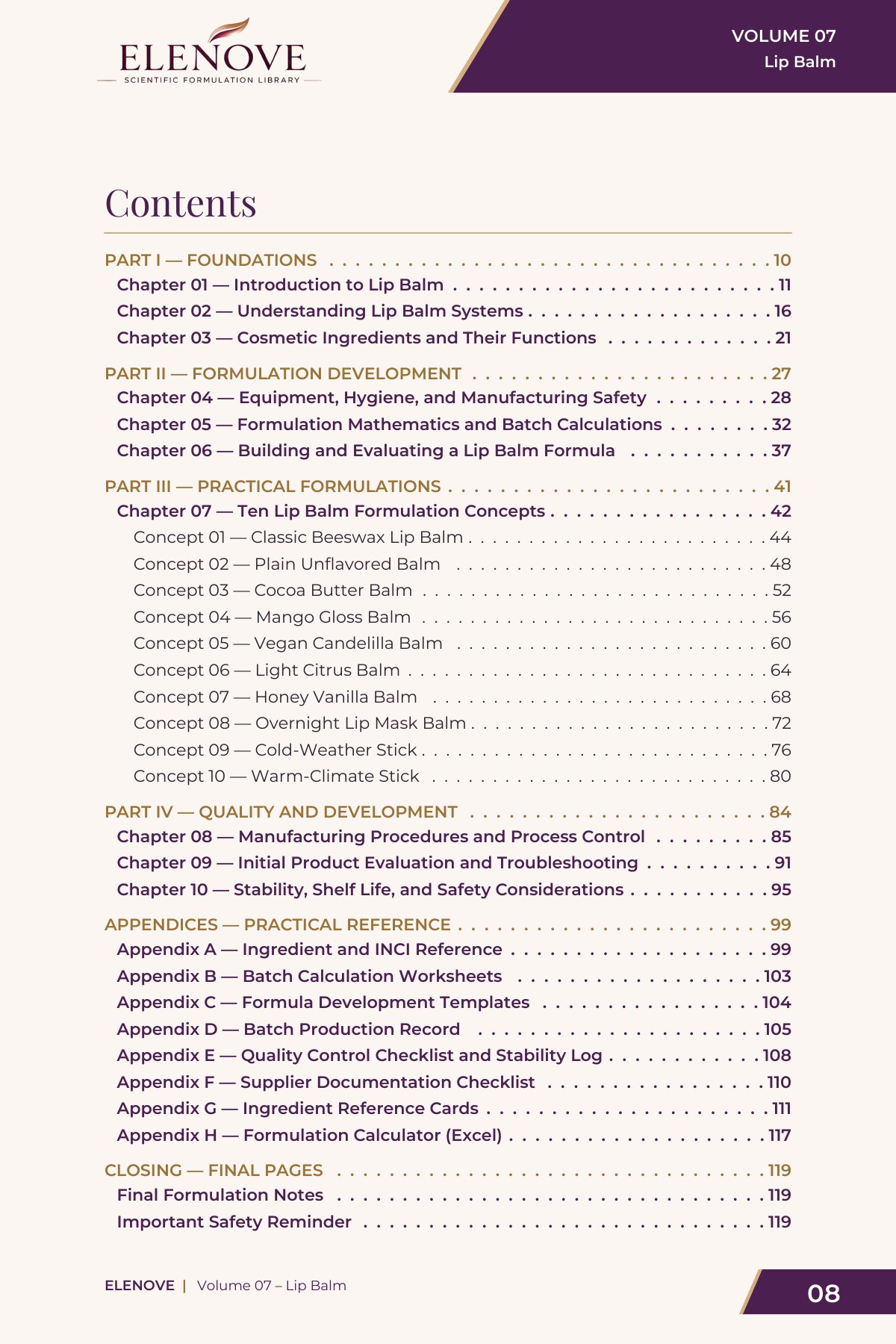
CONTENTS
Part I - Foundations
Ch. 01 Introduction to Lip Balm
Ch. 02 Understanding Lip Balm Systems
Ch. 03 Cosmetic Ingredients and Their Functions
Part II - Formulation Development
Ch. 04 Equipment, Hygiene, and Manufacturing Safety
Ch. 05 Formulation Mathematics and Batch Calculations
Ch. 06 Building and Evaluating a Lip Balm Formula
Part III - Practical Formulations
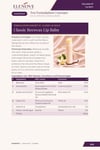
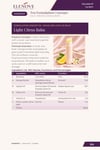
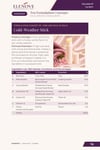
Ch. 07 Ten Lip Balm Formulation Concepts: Classic Beeswax, Plain Unflavored, Cocoa Butter, Mango Gloss, Vegan Candelilla, Light Citrus, Honey Vanilla, Overnight Lip Mask, Cold-Weather Stick, Warm-Climate Stick
Part IV - Quality and Development
Ch. 08 Manufacturing Procedures and Process Control
Ch. 09 Initial Product Evaluation and Troubleshooting
Ch. 10 Stability, Shelf Life, and Safety Considerations
Appendices: Ingredient and INCI Reference, Batch Calculation Worksheets, Formula Development Templates, Batch Production Record, Quality Control Checklist and Stability Log, Supplier Documentation Checklist, Ingredient Reference Cards, Formulation Calculator (Excel)
WHO THIS BOOK IS FOR
Beginners who want a structured and safe first product with no water, no lye and no complicated equipment. Independent brand founders who plan to sell lip care and need to speak confidently with suppliers and regulators. Aspiring formulators and cosmetic science students who want practical examples to accompany theory. Small-batch makers who want to improve consistency, documentation and safety practices. No chemistry degree is required: basic arithmetic and careful measuring are enough.
EDUCATIONAL USE
This book is an educational reference. It explains the principles behind water-free lip balms made from waxes, butters and oils, and presents example formulation concepts so that readers can learn how such products are designed, calculated and evaluated. It is not medical, legal or regulatory advice.
IMPORTANT DISCLAIMER
The formulas are concepts, not approved products. None of the ten formulas in Chapter 07 has been laboratory tested by the publisher. They are original concepts that follow the general structure of widely used lip balm recipes (a wax, a butter and liquid oils). Treat every one as a starting point to test, not as a finished, approved product.
A lip balm contains no water, so it does not need a water preservative. That lowers one important risk. It does not remove the others: oils can turn rancid, flavors can cause reactions, and a product that is partly swallowed carries legal responsibility for its safety.
Before you sell any product made from these concepts:
• Obtain the documents of every raw material: INCI name, safety data sheet, technical data sheet, certificate of analysis, allergen statement and, for the flavor, a statement that it is made for lip products.
• Test your finished balm for stability in its own tube or pot (heat, cold, oxidation over time) and set a best-before date from the results.
• Complete the safety assessment or product registration your market requires for lip products.
• Label ingredients in INCI order, declare allergens above the legal thresholds, and make only claims you can support.
• Patch test every batch on yourself before anyone else uses it.