

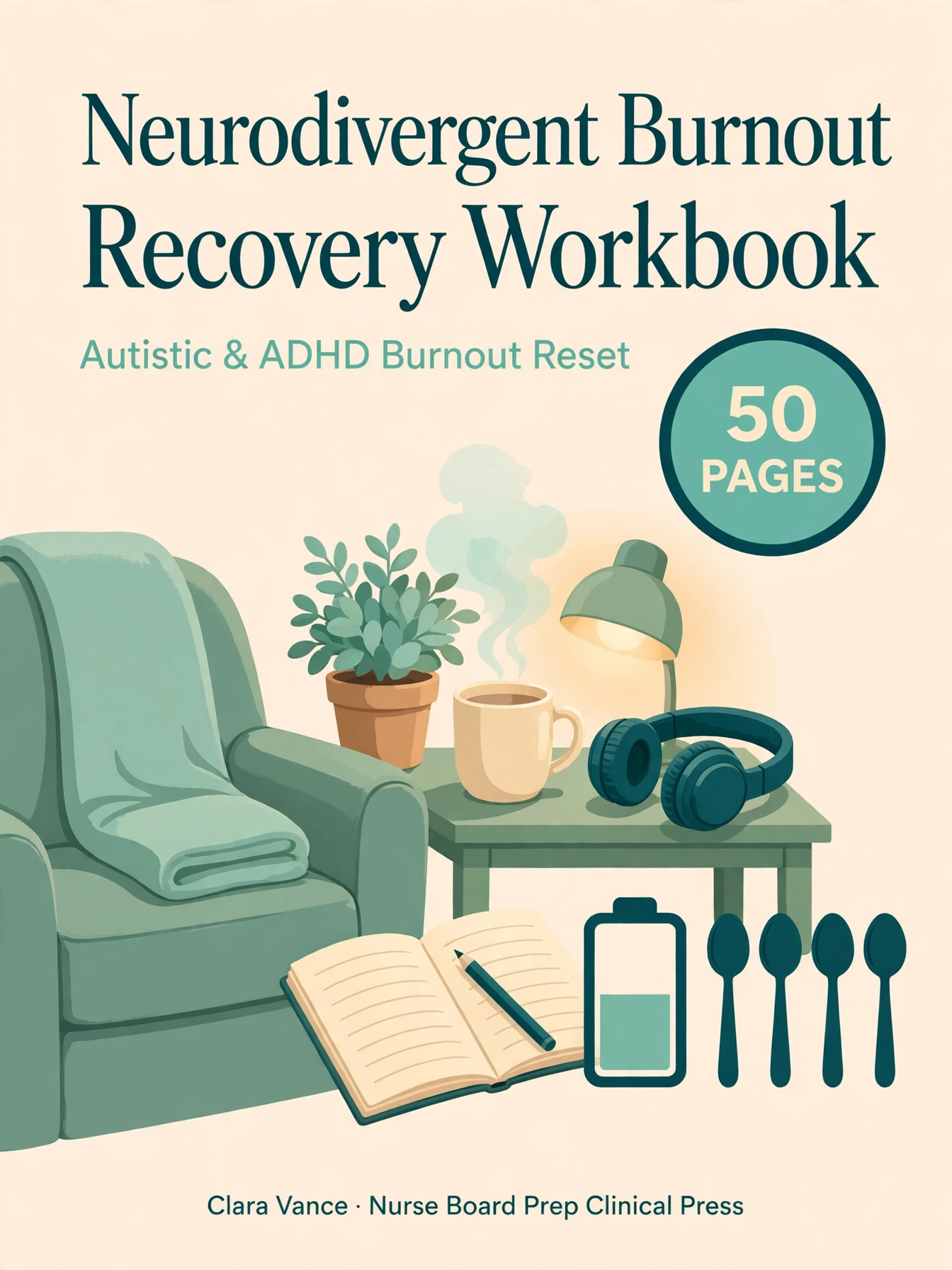
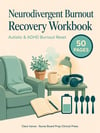
Neurodivergent Burnout Recovery Workbook — Autistic & ADHD Burnout Reset
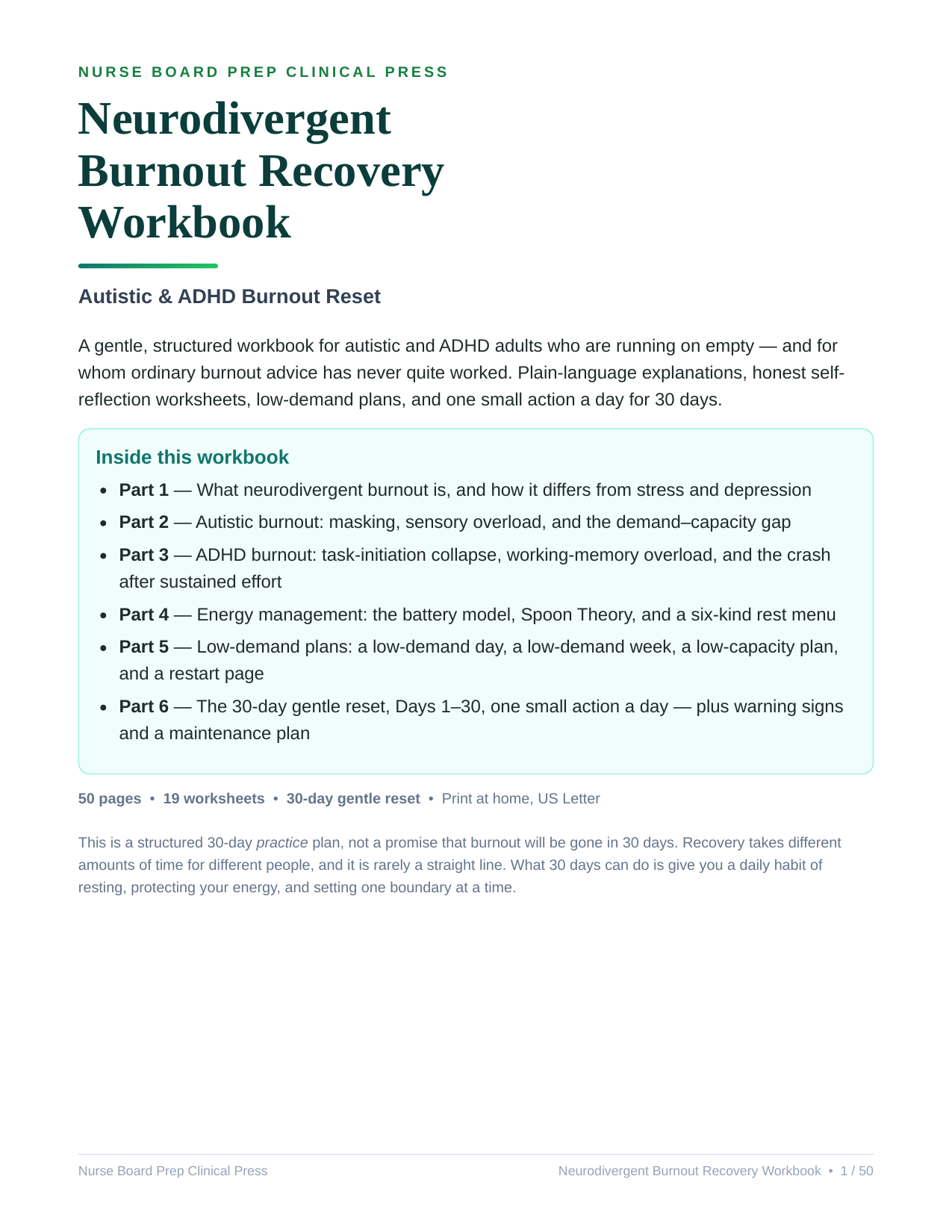
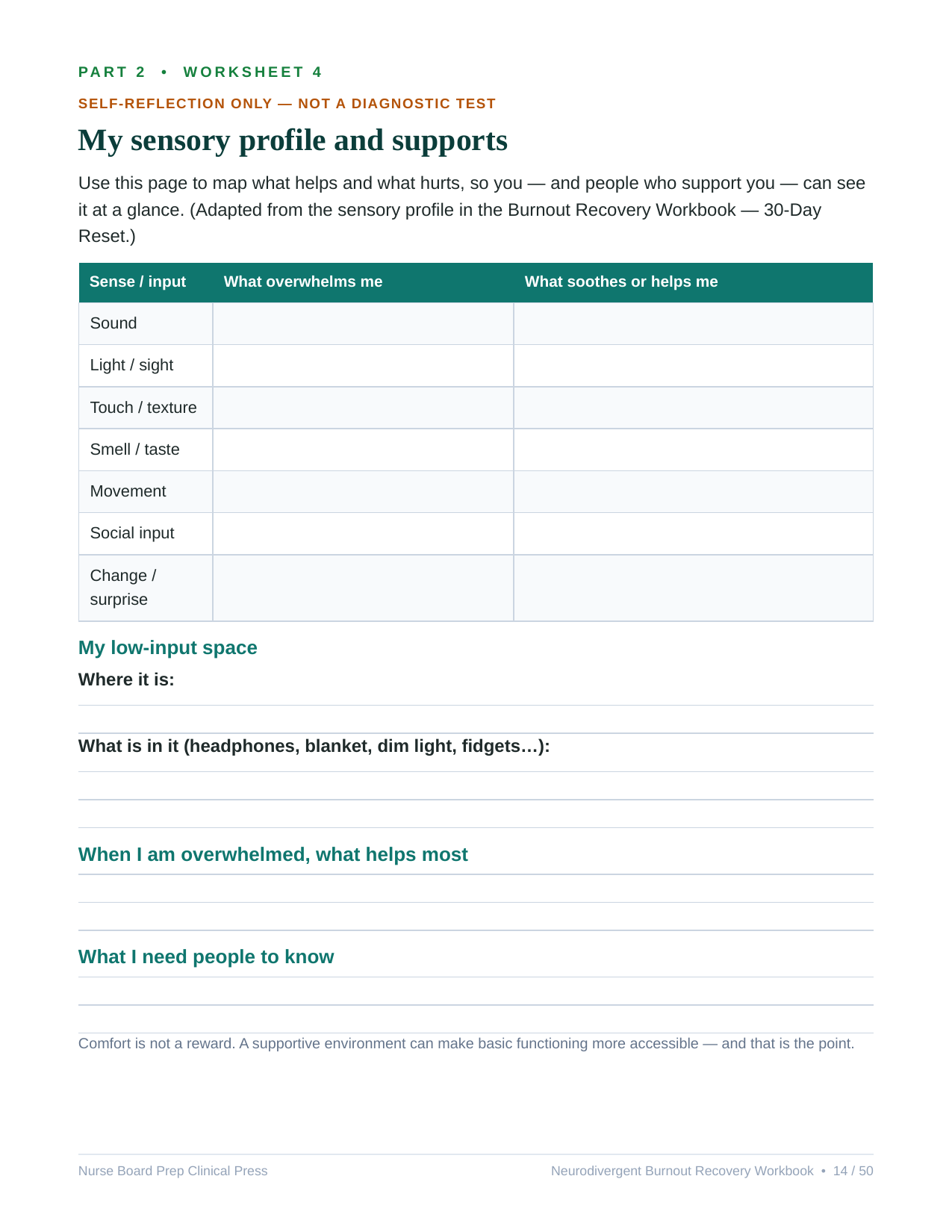
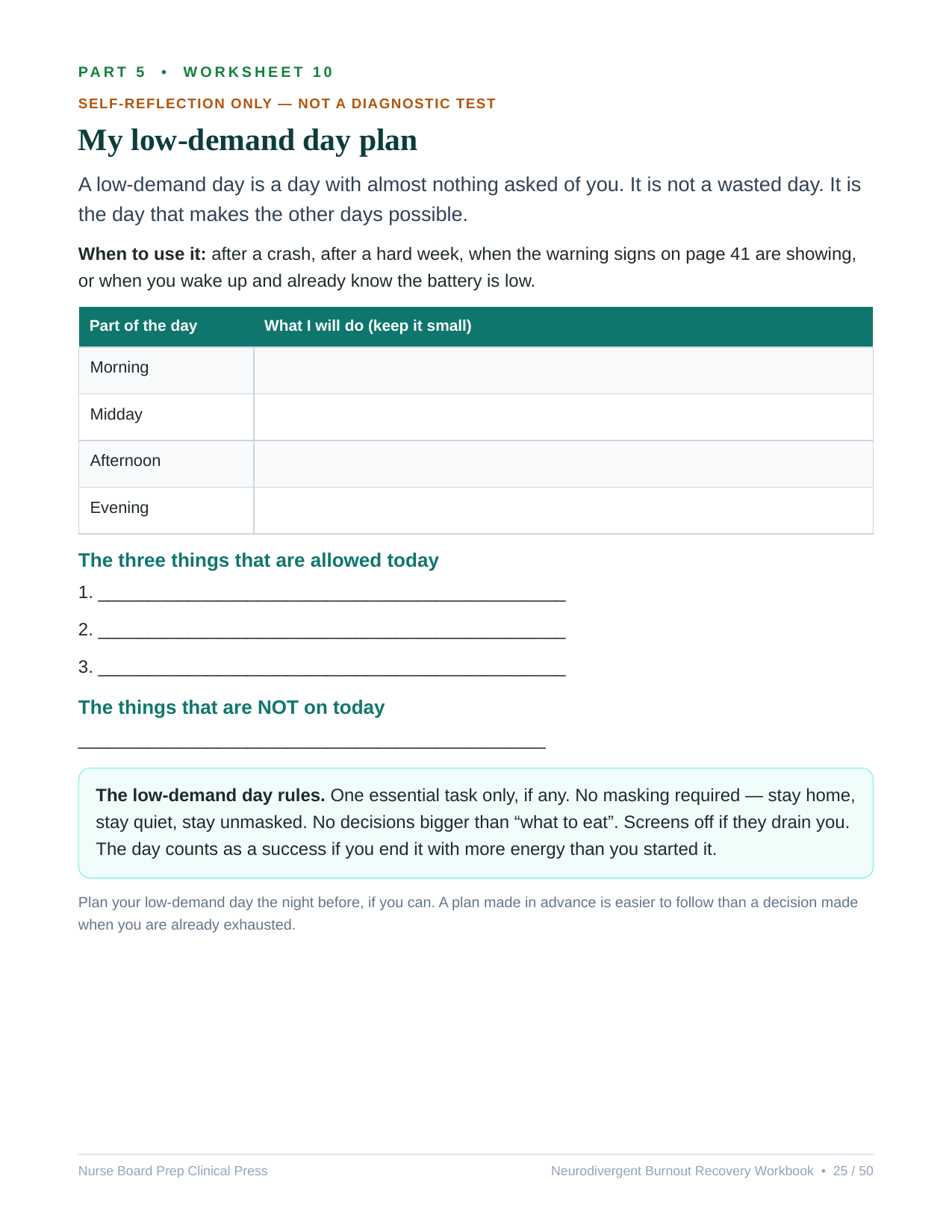
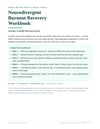
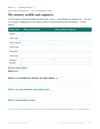
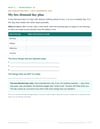
Running on empty — and ordinary burnout advice never worked for you? 'Take a holiday' can leave you more tired than you left. 'Just rest more' doesn't remove masking, sensory overload, or a week of demands waiting for you on Monday. This workbook was built for autistic and ADHD adults whose burnout looks different — and whose recovery needs different tools. The Neurodivergent Burnout Recovery Workbook is a 50-page printable PDF (US Letter) — a gentle, structured reset with plain-language explanations, honest self-reflection worksheets, low-demand plans, and one small action a day for 30 days. What is inside (actual counts from the built PDF): 50 pages, Letter 8.5x11, print-ready PDF. 19 worksheets, every one labelled 'self-reflection only — not a diagnostic test' (no scores, no cut-offs, no thresholds). Part 1 — What neurodivergent burnout is: how it differs from stress and depression; the WHO/ICD-11 description and Maslach's three dimensions; why standard burnout advice fails here; a 12-item self-reflection inventory. Part 2 — Autistic burnout (Raymaker et al., 2020): masking and what it costs, a masking map, unmasking safely step by step, 8 word-for-word scripts for saying no and setting boundaries, sensory overload (including shutdown and meltdown in plain language), a 7-row sensory profile, a sensory diet and low-demand environments, stimming without shame, and the demand–capacity gap. Part 3 — ADHD burnout: task-initiation collapse, working-memory overload, rejection sensitivity (a descriptive term, not a formal DSM-5 category), the crash after masking and sustained effort, and a crash-pattern worksheet. Part 4 — Energy management: the battery model and Spoon Theory (Christine Miserandino, 2003), an energy audit, a daily spoons budget planner, and a six-kind rest menu (physical, mental, sensory, social, emotional, creative). Part 5 — Low-demand plans: a low-demand day plan, a low-demand week plan, a crisis / low-capacity plan, a restart page for fallen-apart days, and one fully worked example — Sam's low-demand Tuesday, using the tools in the book. Part 6 — The 30-day gentle reset: Days 1–30, one small action a day with a checkbox — Week 1 rest & notice, Week 2 boundaries & unmasking, Week 3 energy & sensory, Week 4 rebuild & maintain. Keeping it going: a 12-sign relapse warning-signs checklist, a maintenance plan (weekly 10-minute check-in + monthly review), a one-page recovery plan, a weekly boundary tracker, a weekly energy & demand tracker, scripts for telling people what you need, a supports & safe people map, and a one-page reset-at-a-glance card. 99 checkboxes in total across the inventories, trackers, and the 30-day reset. Honest notes (keep in the listing): This workbook is educational material, not a substitute for professional care. It does not diagnose any condition and does not give treatment advice for any individual. The full disclaimer is on page 2 of the workbook, with crisis lines (988 in the US; Samaritans 116 123 in the UK and Ireland). No cure language, no 'this will fix your burnout' — the 30 days are a structured practice plan, not a promise that burnout will be gone in 30 days. If you find an error, report it — a corrected version is issued free. Evidence: Amazon listing with 199 reviews @ $25.99.