

ERP Template - Sample Org Change Management Strategy
OCM Strategy — Presentation PPTX
ERP-Sherpas-OCM-Strategy.pptx
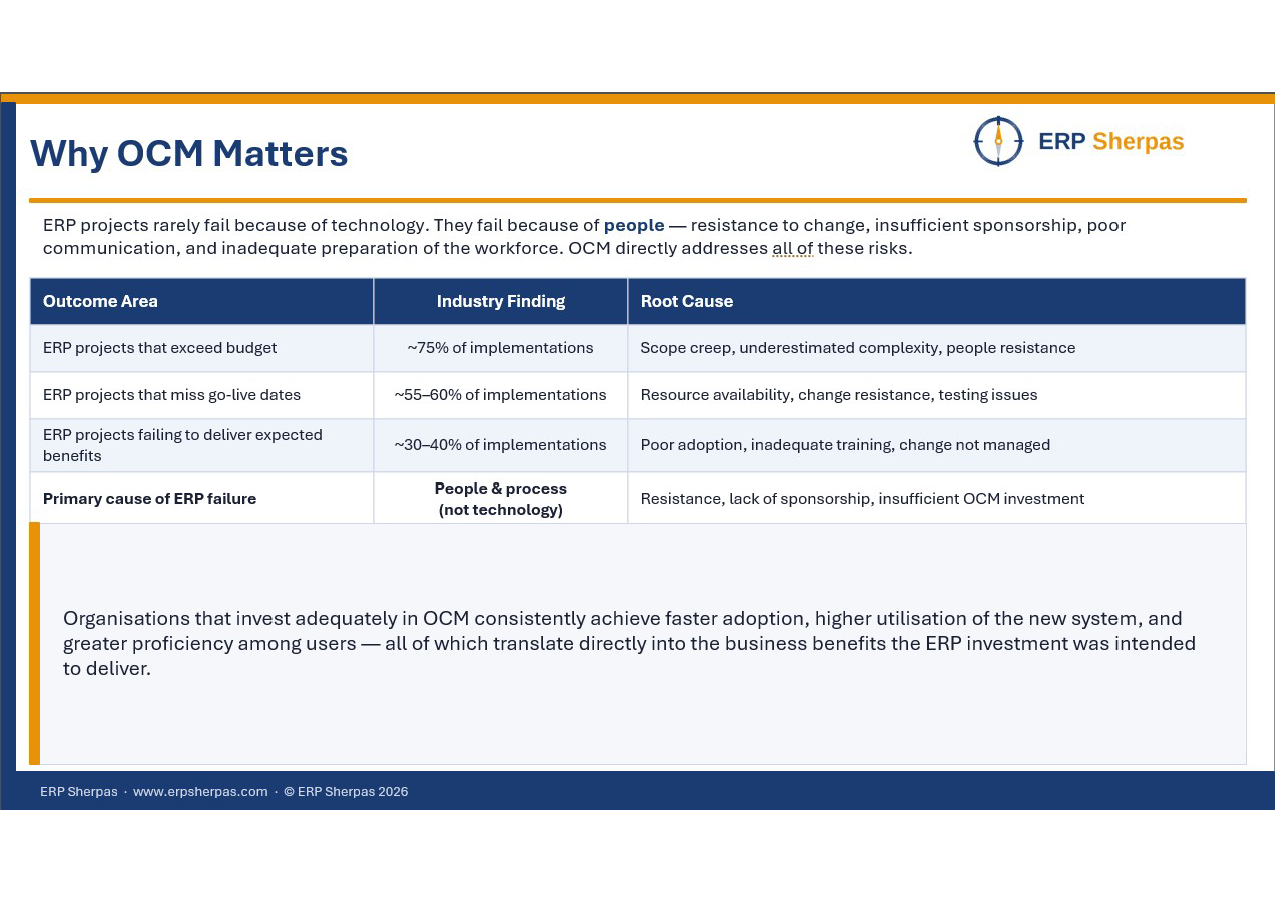
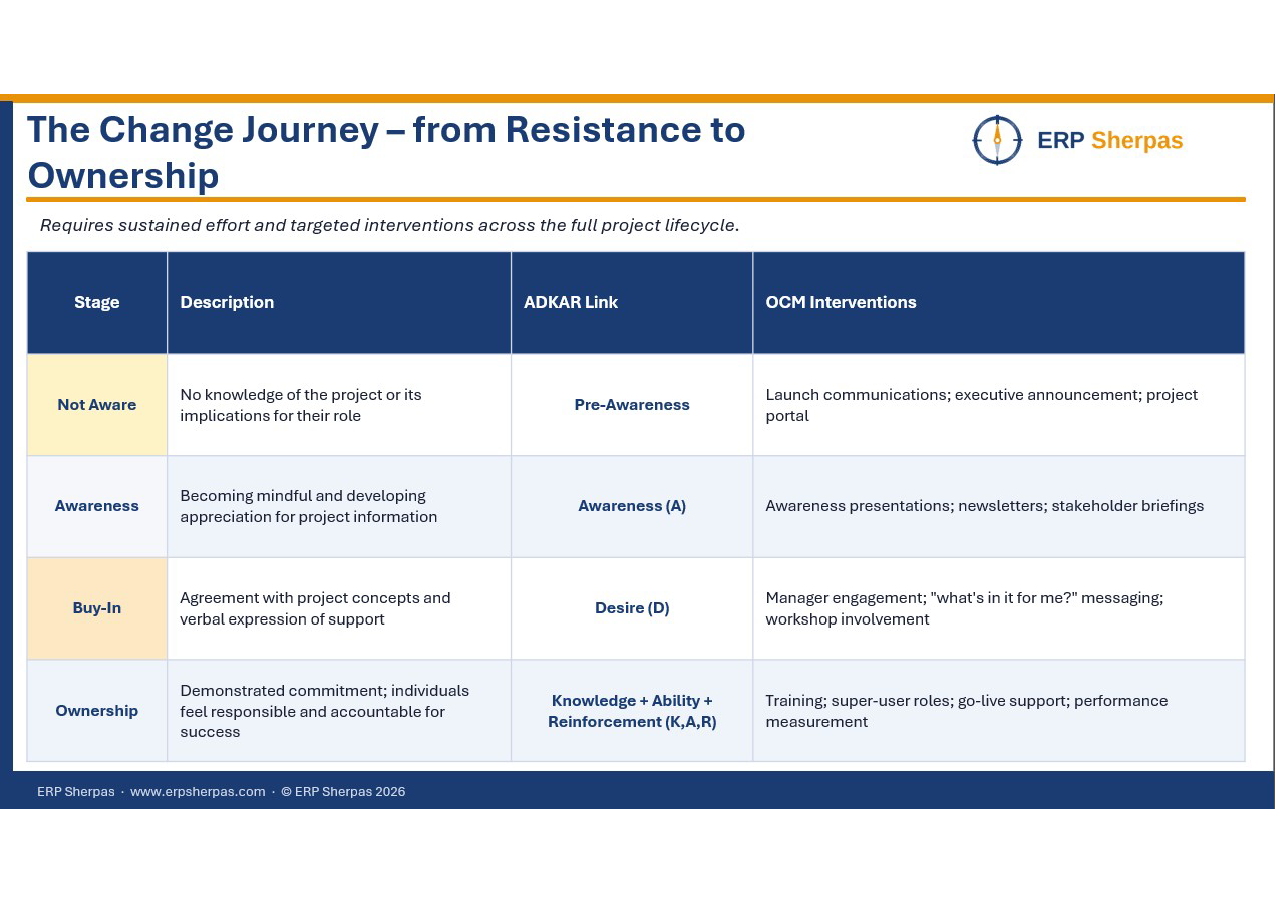
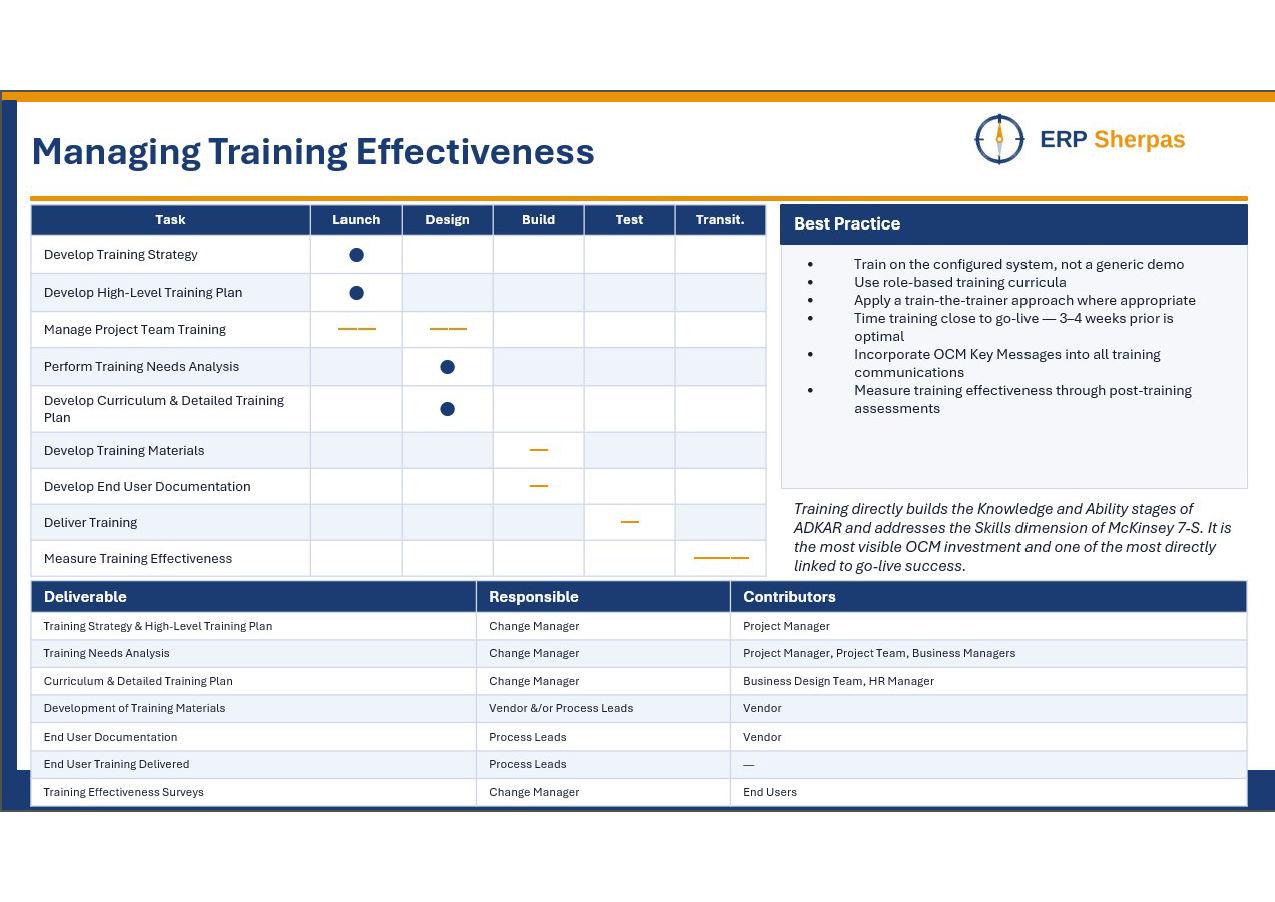
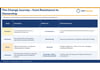
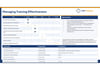
A 16-slide OCM strategy presentation suitable for delivery at a project steering committee or client workshop, covering why OCM matters (with the explicit point that ERP projects fail because of people, not technology), the ADKAR and McKinsey 7-S frameworks applied to ERP, the integrated five-workstream OCM framework, the change journey from resistance to ownership, OCM tasks mapped across the full project lifecycle, business readiness and go/no-go accountability, training effectiveness principles, and OCM deliverables by phase.
For a PM, this presentation provides the vehicle to have the change management investment conversation with executive stakeholders in a format they engage with, backed by established frameworks — making it substantially easier to secure budget, resources, and genuine sponsor commitment for OCM activities before they become critical.
OCM Strategy — Word Document DOCX
ERP-Sherpas-OCM-Strategy.docx
The written companion to the OCM Strategy presentation, providing the full narrative framework for the ERP Sherpas Organisational Change Management approach. It covers the OCM objectives, scope, the five core OCM workstreams, business readiness and go/no-go governance, and training effectiveness principles — with the underlying methodology drawing on Prosci ADKAR, McKinsey 7-S, and the Lumenia Consulting ERP OCM framework.
For a PM, having a documented OCM strategy that references three recognised methodologies is a significant differentiator in client conversations: it demonstrates that change management on this project is a structured, evidence-based discipline rather than a communications afterthought. It also provides clear accountabilities that reduce the risk of the PM being held responsible for adoption failures driven by business-side inaction.
OCM Workbook Template XLSX
ERP_Sherpas_OCM_Workbook_Template.xlsx
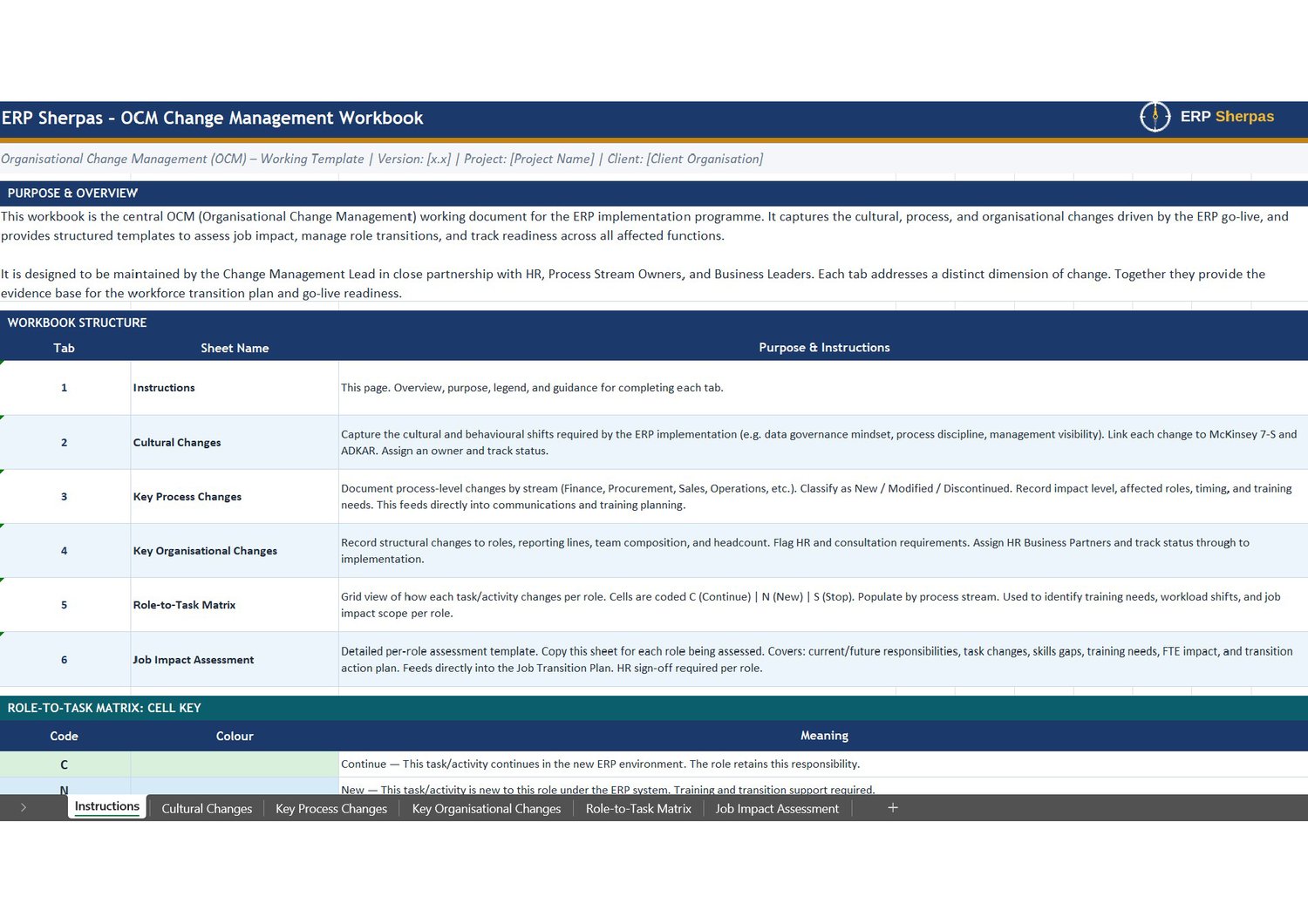
A six-sheet Excel working template for the Change Management Lead, covering cultural changes (mapped to McKinsey 7-S elements and ADKAR stages), key process changes by workstream, key organisational changes including HR and consultation requirements, a role-to-task matrix coded Continue/New/Stop, and a detailed per-role job impact assessment template. Pre-populated with eight realistic cultural change scenarios drawn from ERP implementations — data governance mindset, decision-making approach, process discipline, cross-functional collaboration, management visibility, technology adoption, reporting culture, and continuous improvement.
For a PM, this workbook converts the OCM strategy from a theoretical framework into operational intelligence — making the actual scope of people-change visible and manageable, and producing the evidence base needed to justify training content and transition support for each affected role.