


ERP Template - Data Migration Strategy
Data Migration Strategy — Word Document DOCX
ERP_Sherpas_Data_Migration_Strategy.docx
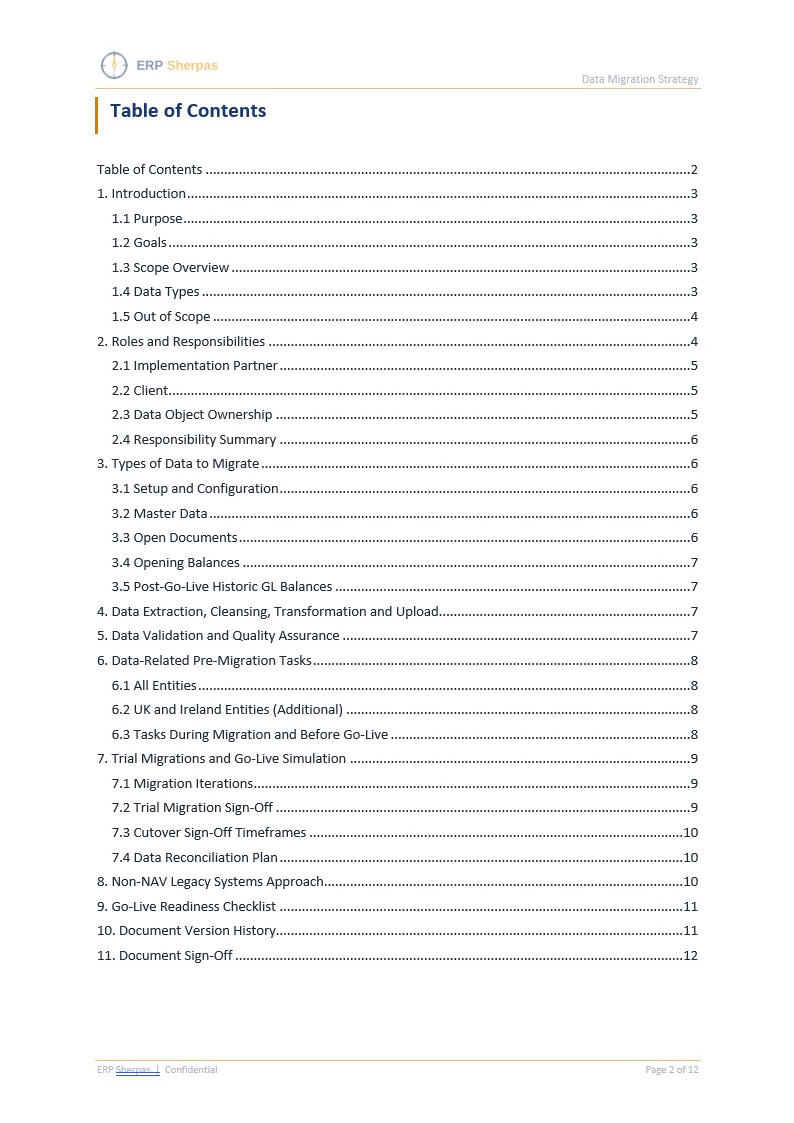
A comprehensive data migration strategy document covering the five categories of data in scope for a typical ERP migration (setup and configuration, master data, open transactional data, historical data, and opening balances), roles and responsibilities between the implementation partner and client, an ETL approach (*for both and automated legacy NAV-to-BC migrations and also a more traditional non-NAV legacy system migrations), the four-stage data quality assurance lifecycle, opening balance load sequence requirements, trial migration programme requirements, and a go-live readiness checklist.
For a PM, data migration is consistently cited as one of the highest-risk activities on any ERP project, and a poorly defined strategy is the most common cause of go-live delays. This document provides a governance framework that sets clear client obligations upfront — particularly around data cleansing — preventing the scenario where the PM is held responsible for data quality issues that were always a client responsibility.
*Often, where a client is upgrading their ERP from an old version to a newer version of the same ERP platform, there is an opportunity to get the SI to automate that ETL process, as they will usually have deep knowledge of both the legacy and the new ERP platforms and the technical capability to automate the migration process (an example is an upgrade from Microsoft Navision to it’s replacement – Business Central).
Data Migration Strategy — Presentation PPTX
ERP_Sherpas_Data_Migration_Strategy.pptx
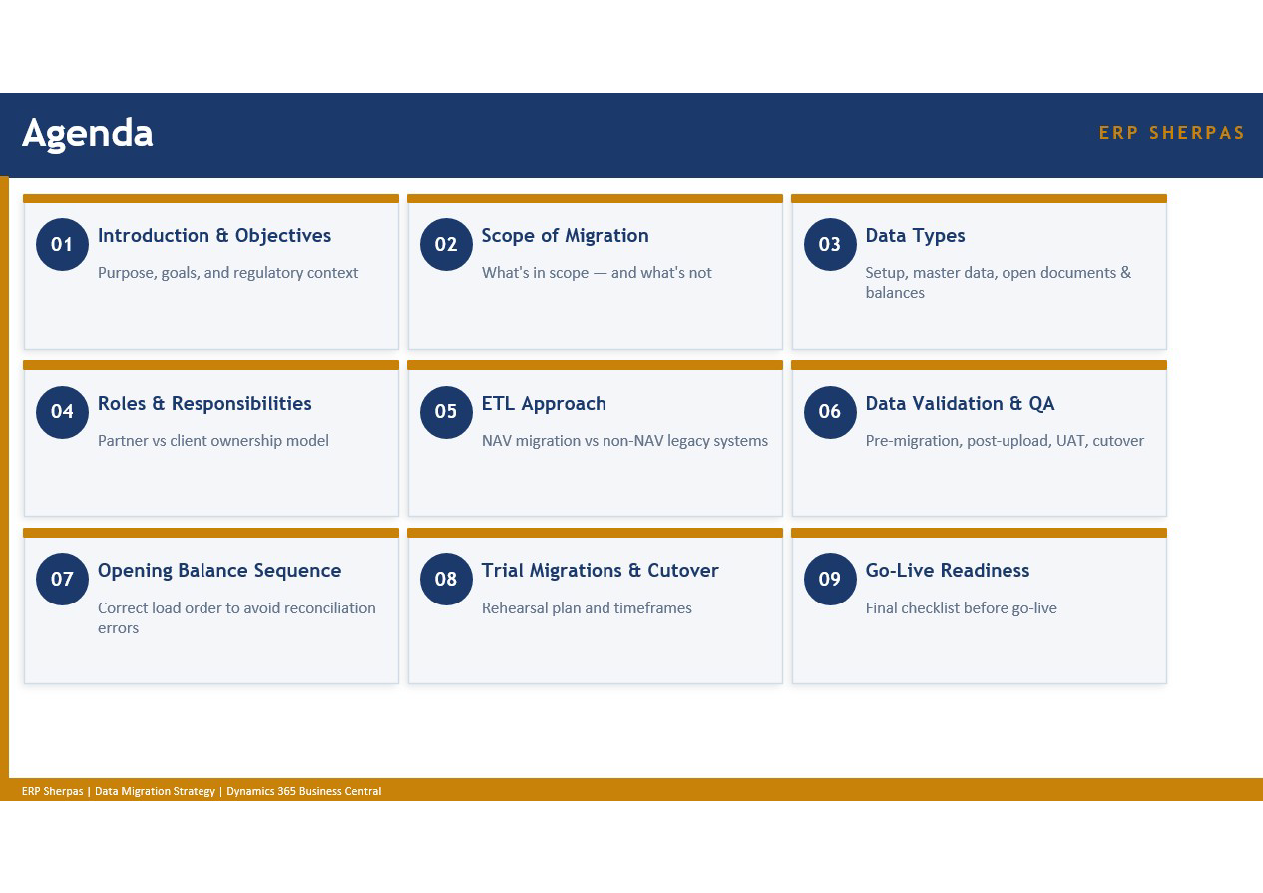
The 12-slide presentation version of the Data Migration Strategy, designed for delivery at a project workshop or steering committee. It covers migration objectives, data categories in scope, roles and responsibilities between ERP Sherpas and the client, ETL approach (including the distinction between NAV-legacy and non-NAV sources), the four-stage data QA lifecycle, the critical opening balance load sequence, trial migration requirements, and pre-migration task list.
For a PM, this presentation is most valuable at the start of the project, when it is necessary to establish the client's understanding of their own obligations — particularly around data extraction, cleansing, and sign-off — before the migration timeline becomes critical. Delivering this content in a structured workshop format produces a shared understanding that is far more durable than a written document sent by email.