

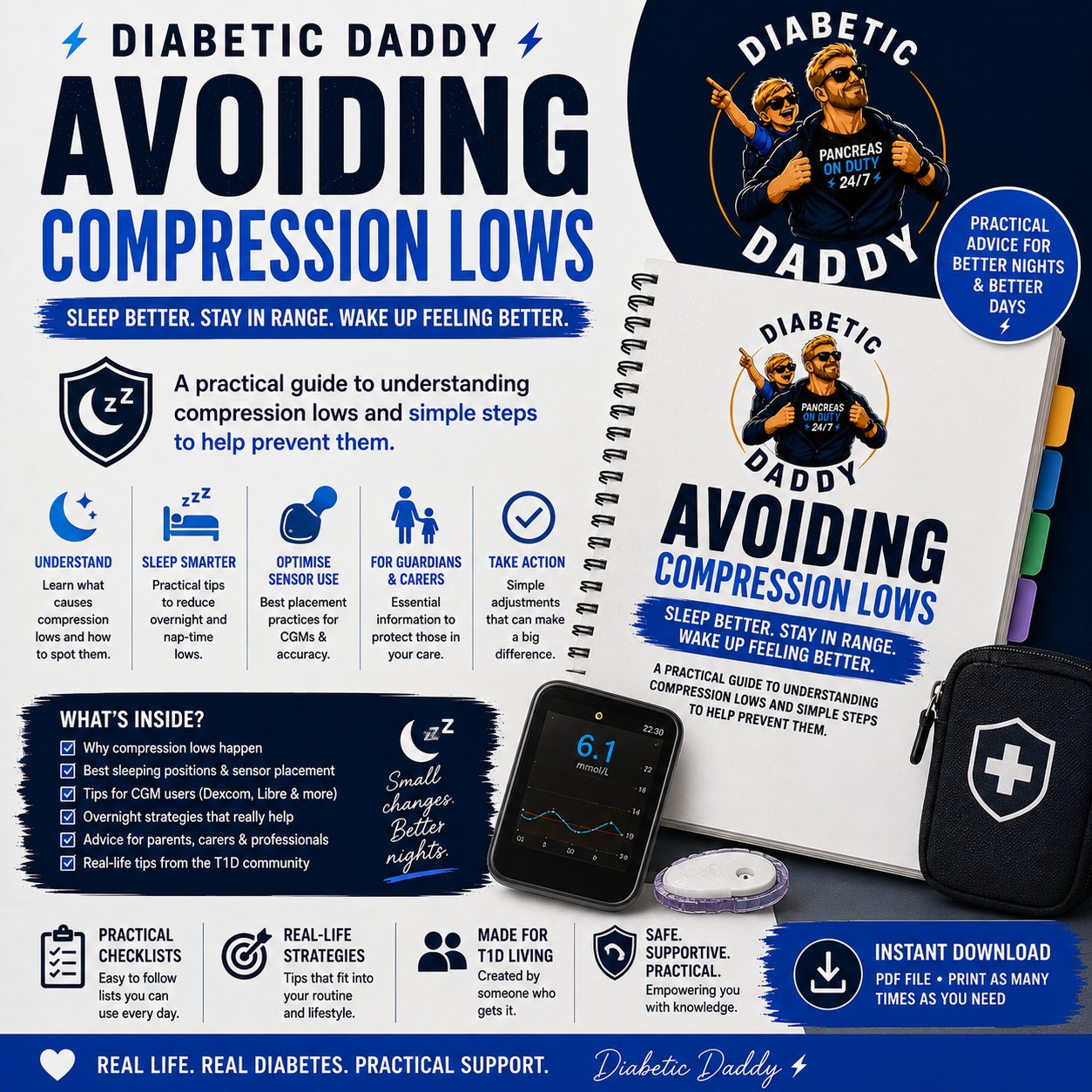
Diabetic Daddy - Avoiding Compression lows
📉 Avoiding Compression Lows — Diabetic Daddy
Is your CGM telling you you're low — but you're not sure it's real?
Compression lows can happen when pressure is placed on a CGM sensor, causing a falsely low glucose reading. They can be particularly frustrating at night, when you're sleeping on your sensor or lying against it.
The Diabetic Daddy Avoiding Compression Lows Guide gives you practical tips to help reduce the chances of compression-related false readings and understand what to do when your CGM reading doesn't match how you feel.
🩸 What's inside?
✔️ What a compression low is and why it can happen
✔️ How sleeping position can affect CGM readings
✔️ Tips for choosing sensor placement
✔️ Practical ways to reduce pressure on your sensor
✔️ Considerations for Dexcom, Libre and other CGM users
✔️ Tips for parents and carers of children using CGMs
✔️ What to do when your CGM shows an unexpected low
✔️ When to confirm a reading with a finger-prick test
✔️ Understanding CGM trends and symptoms together
✔️ Practical bedtime tips
✔️ A simple checklist to help reduce overnight sensor compression
🌙 Sleep better. Check smarter.
Nobody wants to be woken up by a CGM alarm only to discover that they've been sleeping directly on their sensor.
This guide is designed to help you spot potential compression lows, reduce unnecessary alarms and make better-informed decisions about unexpected CGM readings.
Understand → Check → Confirm → Act
⚡ Made by Diabetic Daddy
Real life. Real diabetes. Practical support.
Created from lived Type 1 diabetes experience to help make everyday CGM management a little less frustrating.
Digital PDF — instant download. No physical product will be posted.
Important: A suspected compression low should never simply be ignored. If a CGM reading is unexpectedly low, particularly if you have symptoms of hypoglycaemia, follow your usual hypo treatment plan and/or confirm the glucose level with a blood glucose meter where appropriate. Always follow the advice of your diabetes healthcare team.