




Swing Trading Explained — Measured (PDF Guide)
You were told to slow down, stop overtrading and let winners run. It is probably good advice and nobody has ever attached a number to it, so you have no way to tell whether slowing down helps because it predicts better or for some completely different reason.
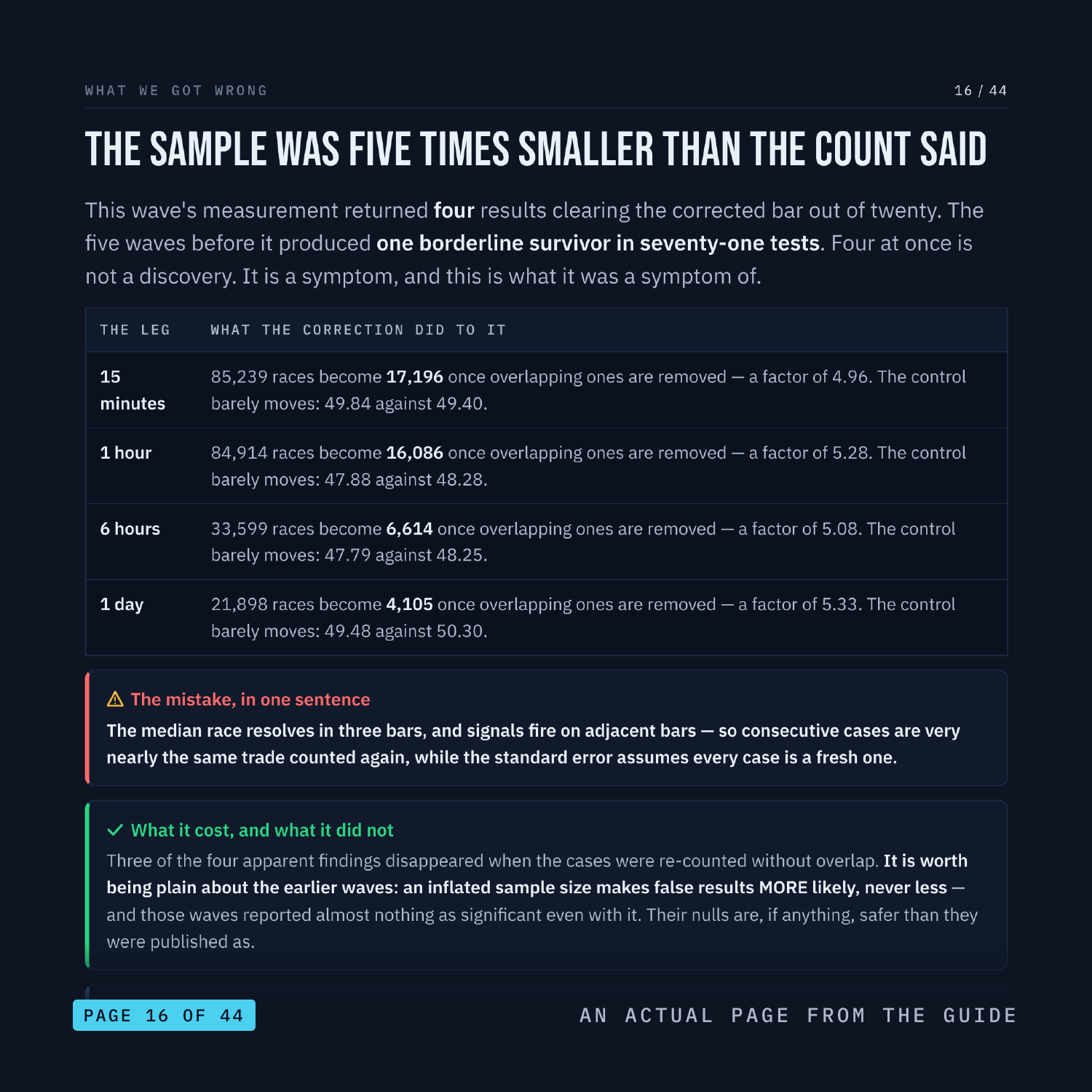
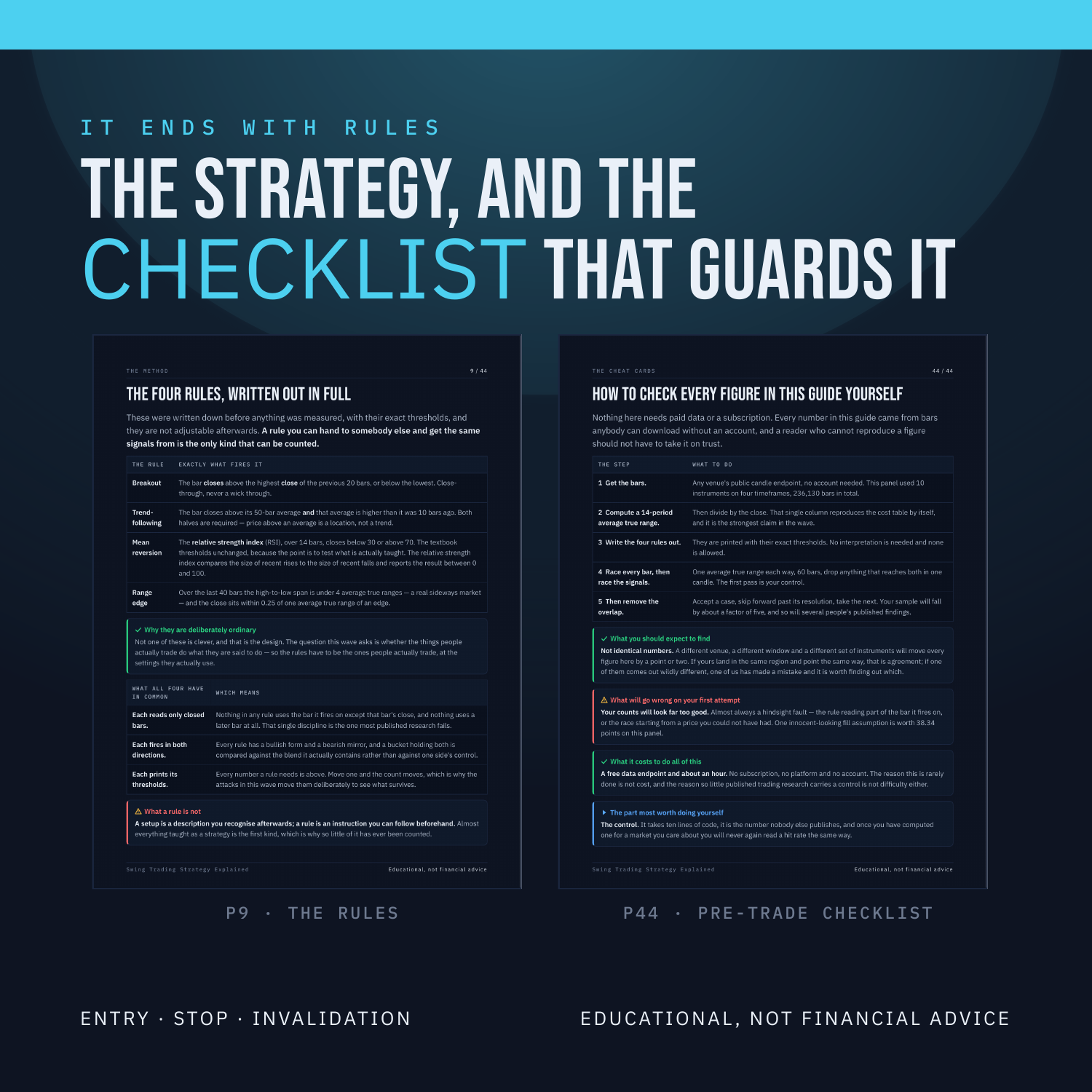
This guide runs the same four written-down rules on the six-hour and daily bars, prints them beside the fast ones, and then measures the two things that genuinely change: what a trade costs and how long you wait. Both are arithmetic and neither is a forecast. This is a 44-page PDF that teaches Swing Trading from the first thing you see on the screen through to a written strategy with an entry, a stop and an explicit rule for when the trade is wrong.
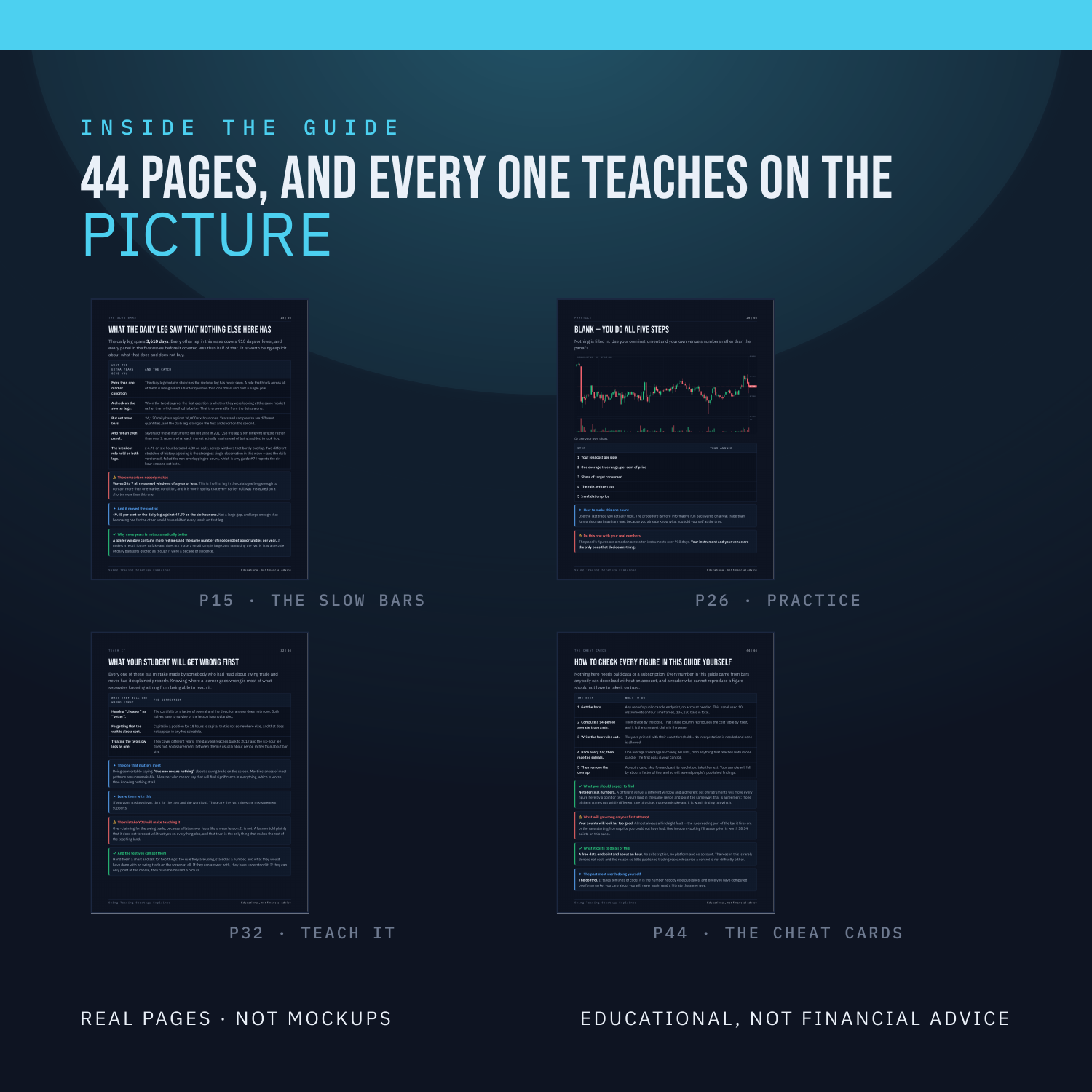
Nothing is taught underneath a chart. Every label sits on the candle, the line or the level it is describing, on real BTC, ETH, SOL and LINK charts. There are three quizzes on real charts, each followed by the same chart re-shown annotated with the reasoning, plus faded practice pages where the first steps are filled in and you finish the rest.
WHAT'S INSIDE
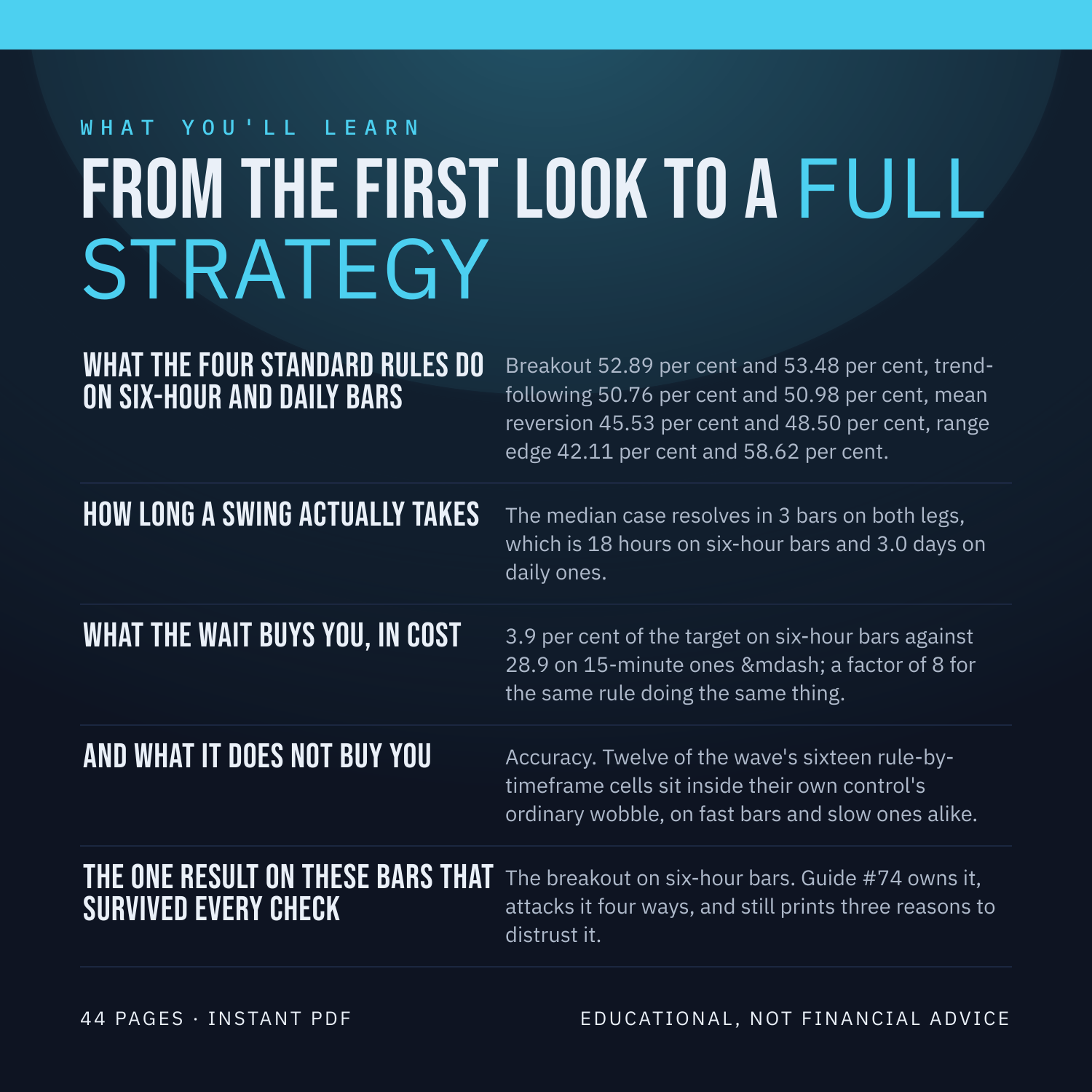
What the four standard rules do on six-hour and daily bars -- Breakout 52.89 per cent and 53.48 per cent, trend-following 50.76 per cent and 50.98 per cent, mean reversion 45.53 per cent and 48.50 per cent, range edge 42.11 per cent and 58.62 per cent.
How long a swing actually takes -- The median case resolves in 3 bars on both legs, which is 18 hours on six-hour bars and 3.0 days on daily ones.
What the wait buys you, in cost -- 3.9 per cent of the target on six-hour bars against 28.9 on 15-minute ones -- a factor of 8 for the same rule doing the same thing.
And what it does not buy you -- Accuracy. Twelve of the wave's sixteen rule-by-timeframe cells sit inside their own control's ordinary wobble, on fast bars and slow ones alike.
The one result on these bars that survived every check -- The breakout on six-hour bars. Guide #74 owns it, attacks it four ways, and still prints three reasons to distrust it.
WHAT YOU'LL BE ABLE TO DO
Say what slowing down buys you, in cost and in time.
Estimate how long a slow-bar trade will take before you take it.
Tell a cheaper trade from a better one.
Compare two studies by their date ranges before their methods.
Size a position from a wide stop rather than from a balance.
AN HONEST NOTE
Swing Trading is a clue, not a crystal ball. It describes what price has already done. This guide contains no win-rates, no backtest results and no promises about what you will make, because nobody can verify those and you should not trust anyone who prints them. What it hands you instead is a set of rules you can test yourself on TradingView in an afternoon. Educational, not financial advice.
Instant download. 44 pages, PDF.