
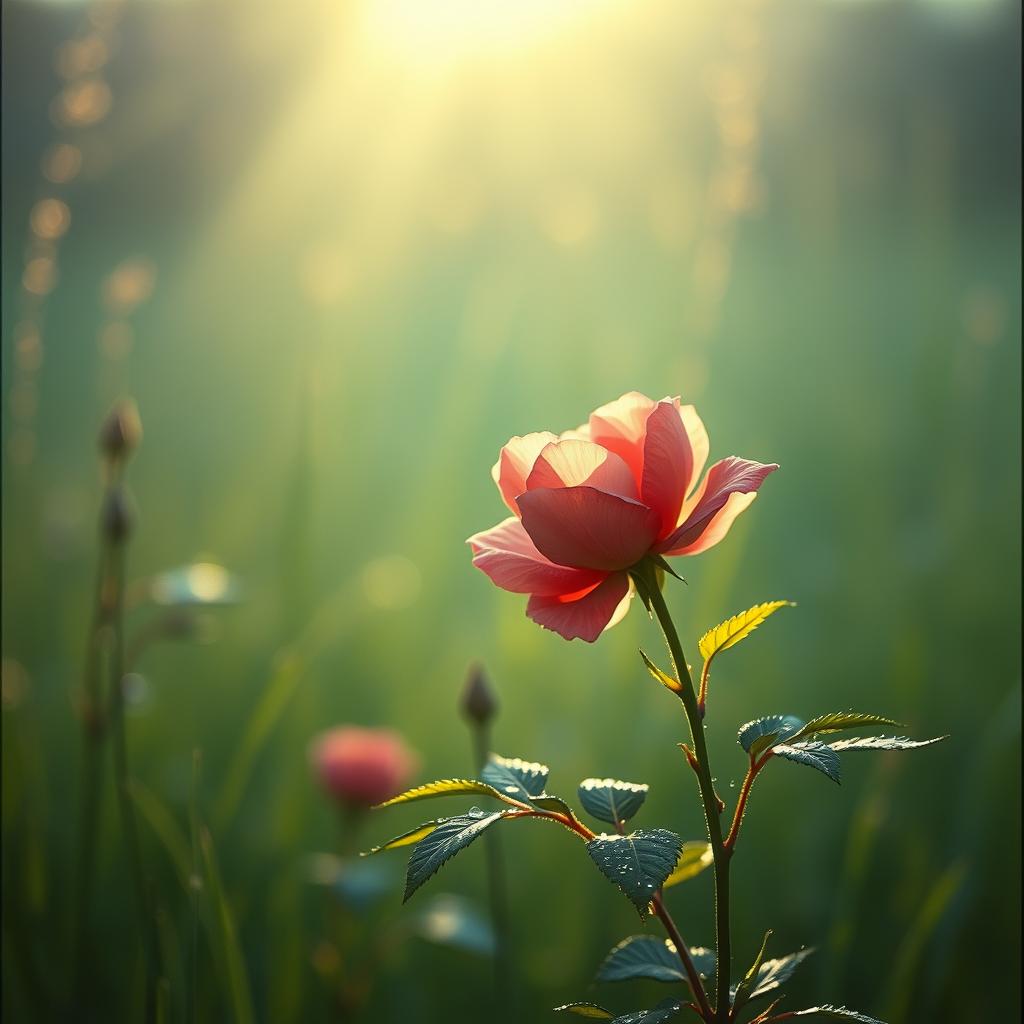
The Wild Rose
Overall Meaning & Tone
This poem is a parable of resilience, faith, and self-worth, told through the life cycle of a wild rose. The tone is reverent, hopeful, and gently triumphant. What begins as a quiet observation of nature evolves into a spiritual testimony—one that affirms purpose, beauty, and renewal even in the face of inevitable hardship.
The Wild Rose as Central Symbol
The wild rose represents a soul—humble, resilient, and divinely created. Unlike a cultivated rose, a wild rose grows without protection or control, making it a powerful symbol of:
- inner strength
- natural beauty
- survival outside ideal conditions
It suggests a being that thrives not because life is easy, but because growth is intrinsic.
Growth & Awakening
“it lifts its leafy arms to pose”
This personification turns growth into an act of praise or prayer. The rose does not hide—it reaches upward, open and receptive.
Rain as blessing
Raindrops are not harsh or punishing; they are gentle and nurturing. The rose “opens its eyes,” suggesting awakening, trust, and willingness to receive what comes from above. Rain becomes grace rather than adversity.
Divine Identity & Worth
“gods rose is reaching its peak”
This line marks a spiritual turning point. The rose’s beauty is not accidental—it is intentional and sacred. The poem asserts inherent worth: the rose is valuable because it is God’s creation, not because it seeks approval.
Radiance and pride
The rose’s brightness “shines so loud,” implying confidence without arrogance. This is not ego—it is self-acceptance. The rose knows what it is and is unashamed to be seen.
Healing & Connection
Aroma as offering
The scent represents emotional generosity—kindness, presence, love. It is freely shared, not guarded. The idea that aroma cures loneliness suggests that simply being oneself can comfort others.
This transforms beauty into service, not display.
Voice & Purpose
“singing its praises all through the day”
The rose has something “important to say,” implying testimony. Its existence is its message. The poem suggests that living fully and authentically is itself a form of praise.
Impermanence Without Fear
One of the most mature insights of the poem appears here:
“i will go away in days to come”
There is no panic in this acknowledgment. The rose accepts cycles—darkness, cold, dormancy—not as failure, but as part of life.
Dormancy is framed as rest, not death.
Renewal & Hope
Spring’s return
The rose’s promise to “bounce back with a smile” reinforces resilience. The smile suggests memory—having survived before, it trusts survival again.
This is faith rooted in experience, not denial.
Closing Message
The final lines widen the poem’s scope beyond the rose:
“watch for me and you will see”
The reader is invited to witness—not just the rose’s return, but God’s consistency. Love and care are not one-time gifts; they are cyclical, renewable, and shared.
Key Themes
- Divine creation and purpose
- Resilience through seasons
- Beauty as service
- Faith without naivety
- Acceptance of impermanence
- Hope grounded in renewal
Emotional Impact
This poem comforts rather than convinces. It doesn’t argue for hope—it models it. The wild rose becomes a quiet assurance that:
- you can fade without being lost
- rest is not failure
- beauty can return
- and love outlasts winter
In the context of your other poems
This feels like a culmination piece. Where earlier poems dealt with harm, fear, and protection, this one offers integration: a soul that has endured, learned, and now blooms freely—without denying past winters.