

Move It Right
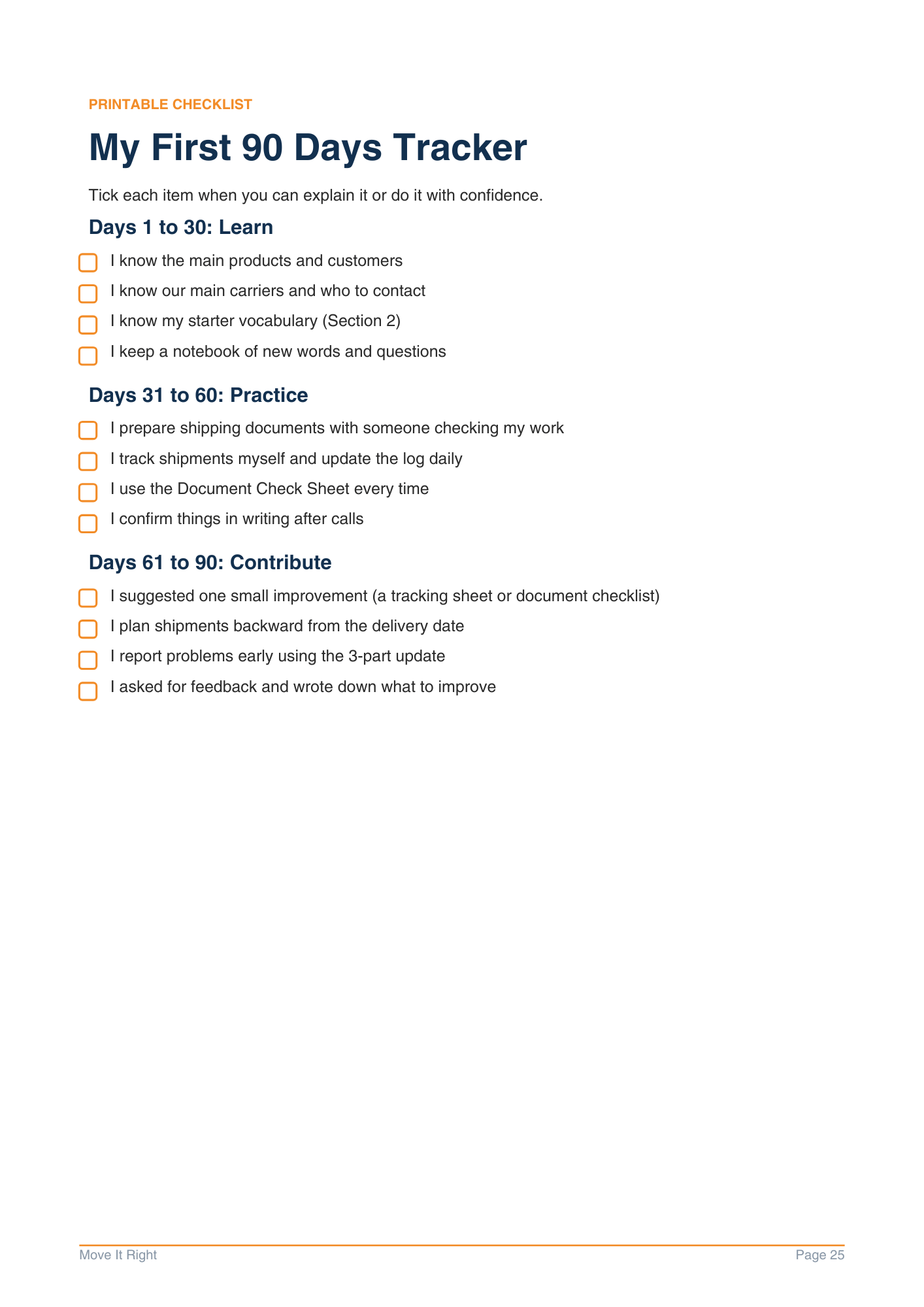
New to logistics? Start here. Move It Right is a plain-English, printable playbook that shows you how goods move, teaches the words people use on the job, and walks you through your first shipments with confidence. It is written by a supply chain and operations professional with 20+ years in warehousing, inventory and logistics.
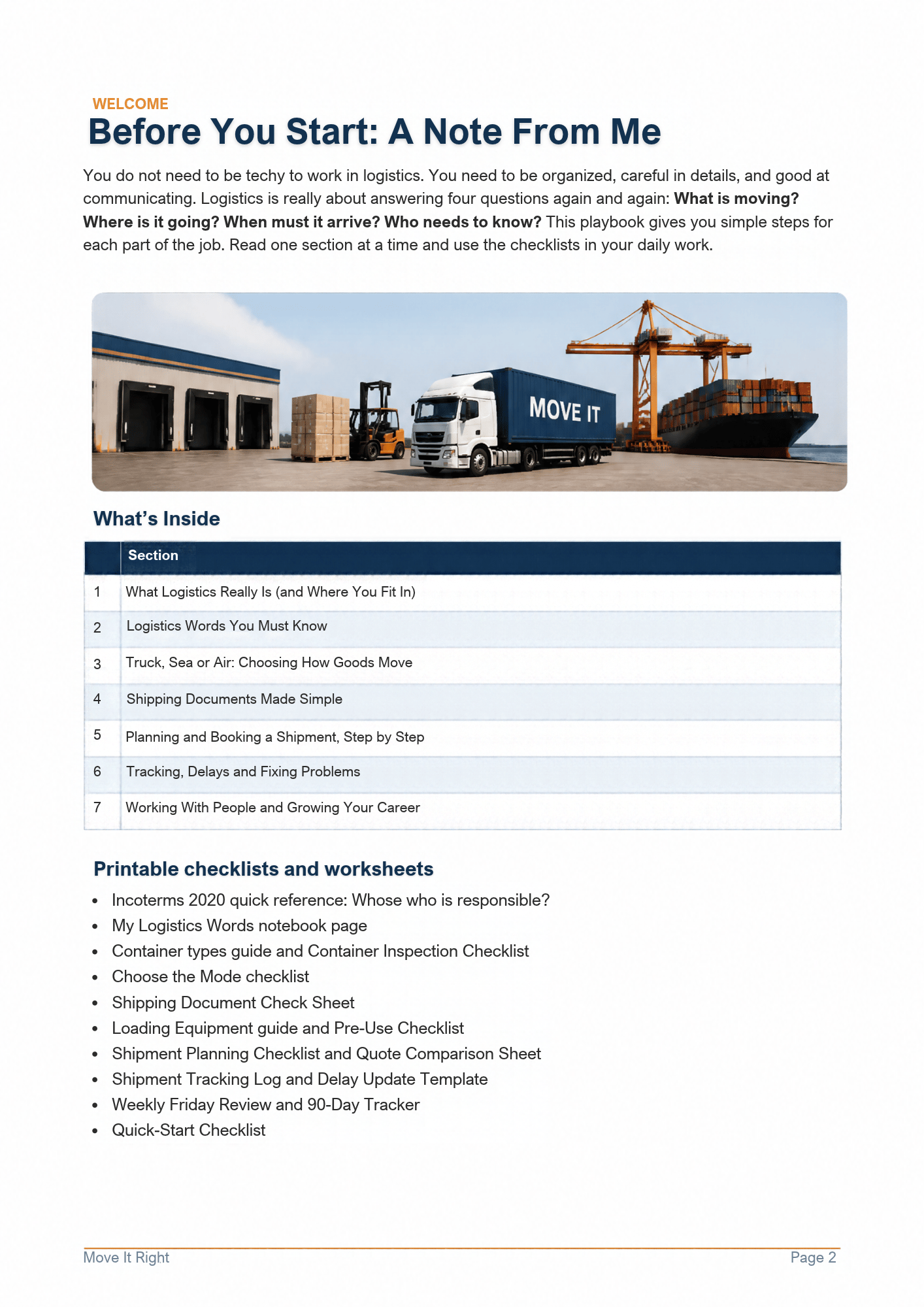
You do not need to be techy to work in logistics. You need to be organized, careful with details and good at communicating. This playbook gives you simple steps for every part of the job.
What's inside (27 pages)
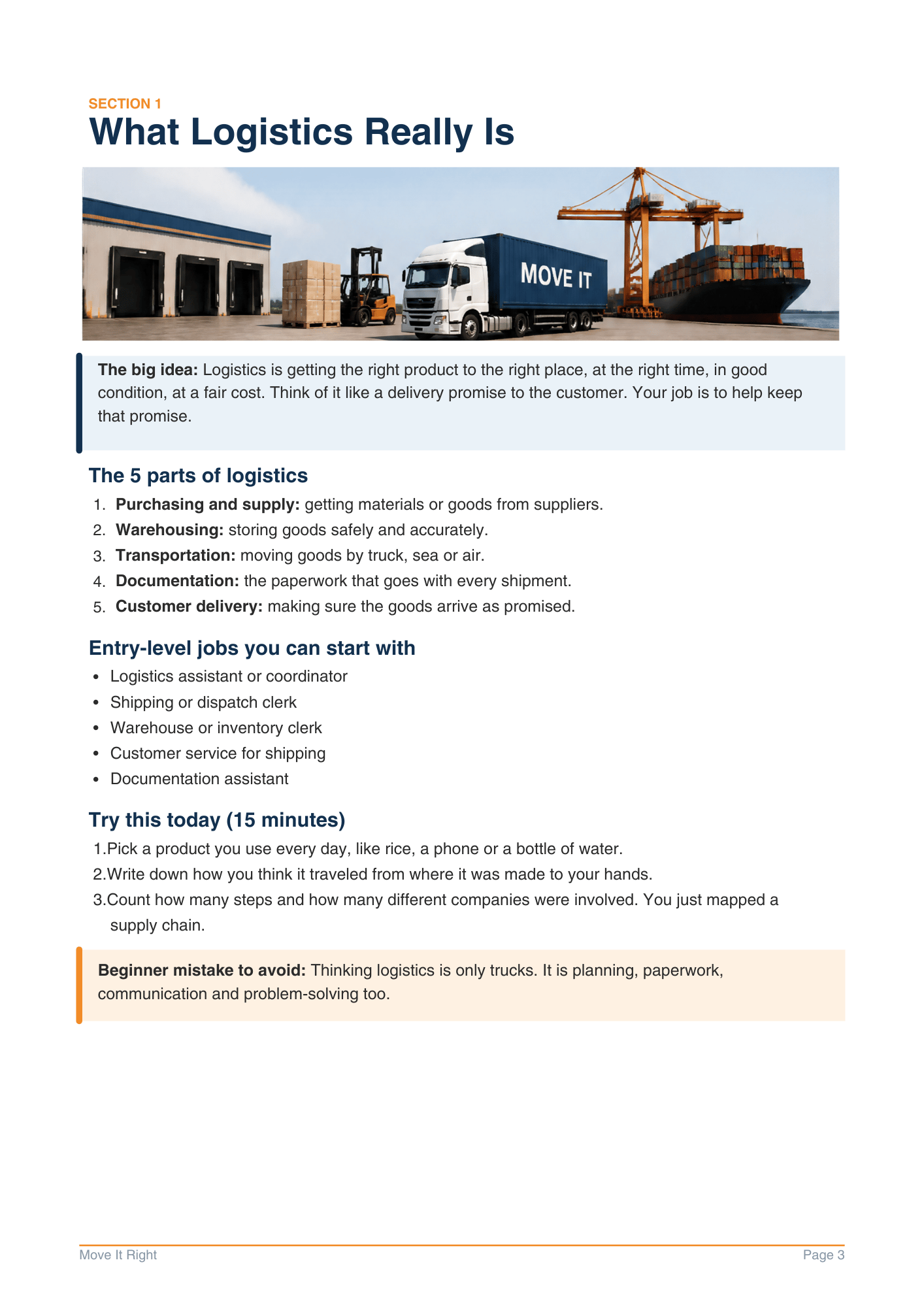
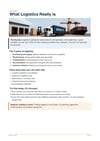
- What logistics really is, and the entry-level jobs you can start with
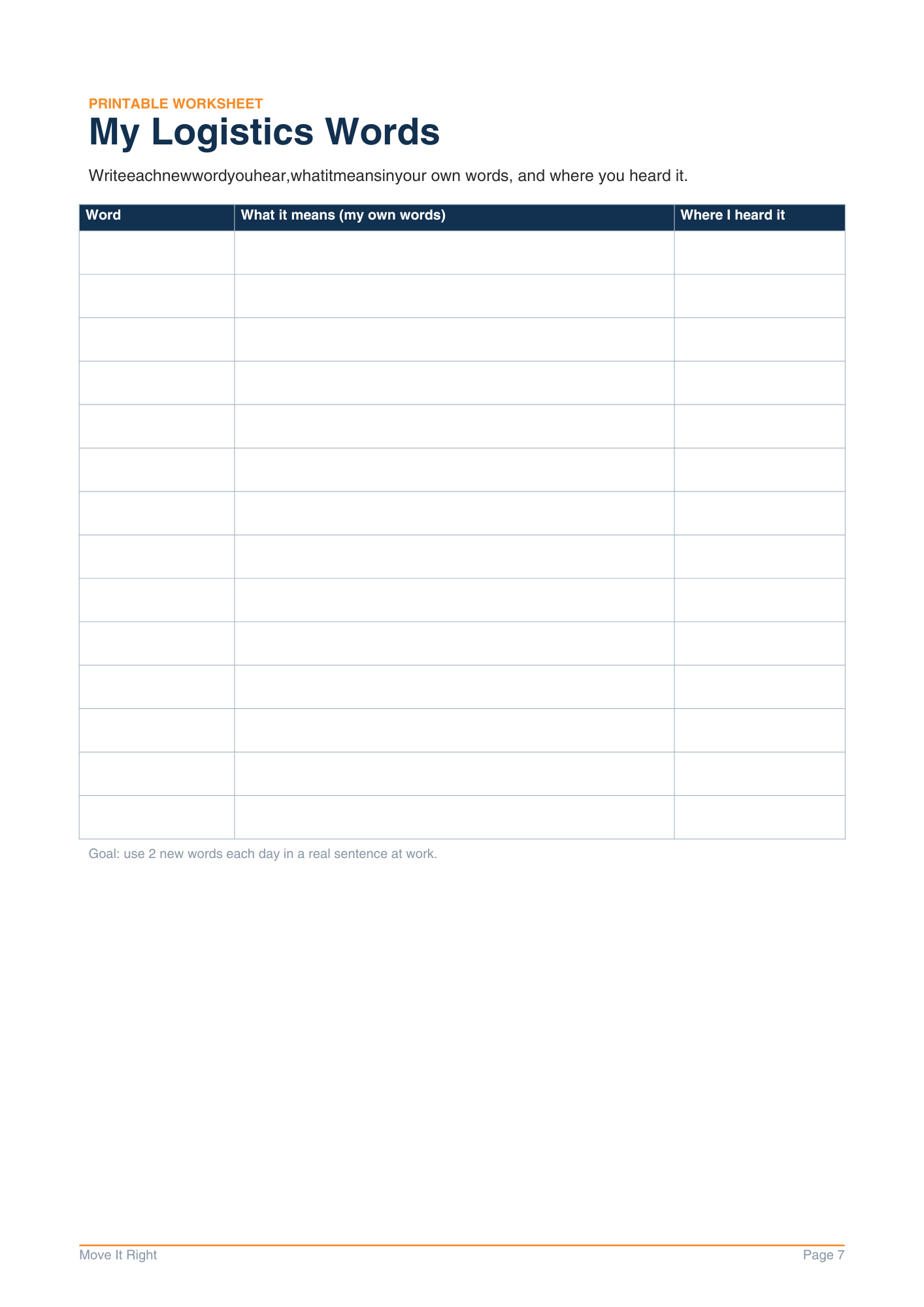
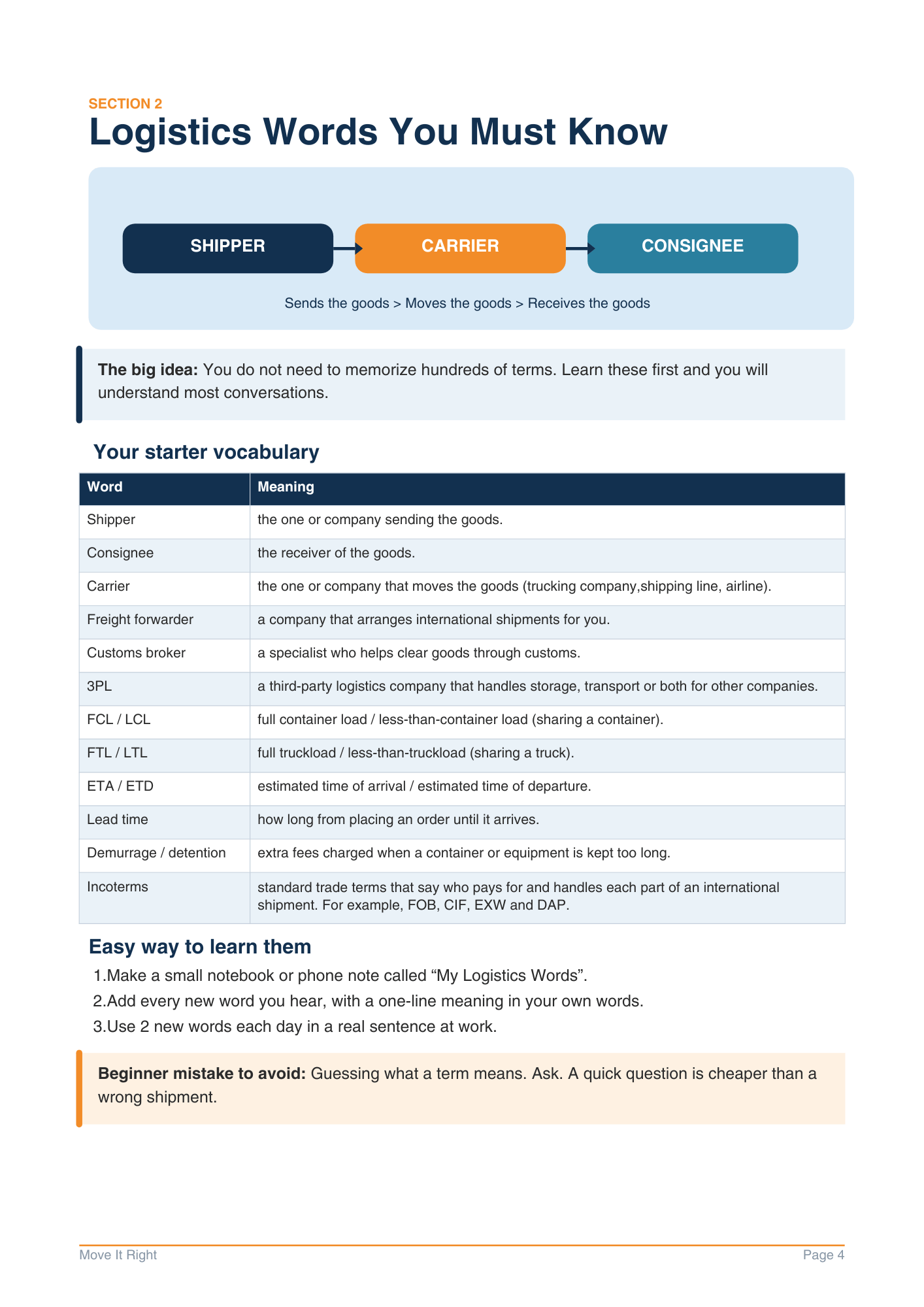
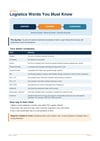
- Your starter logistics vocabulary (shipper, consignee, carrier, FCL/LCL, FTL/LTL, ETA/ETD, demurrage and more)
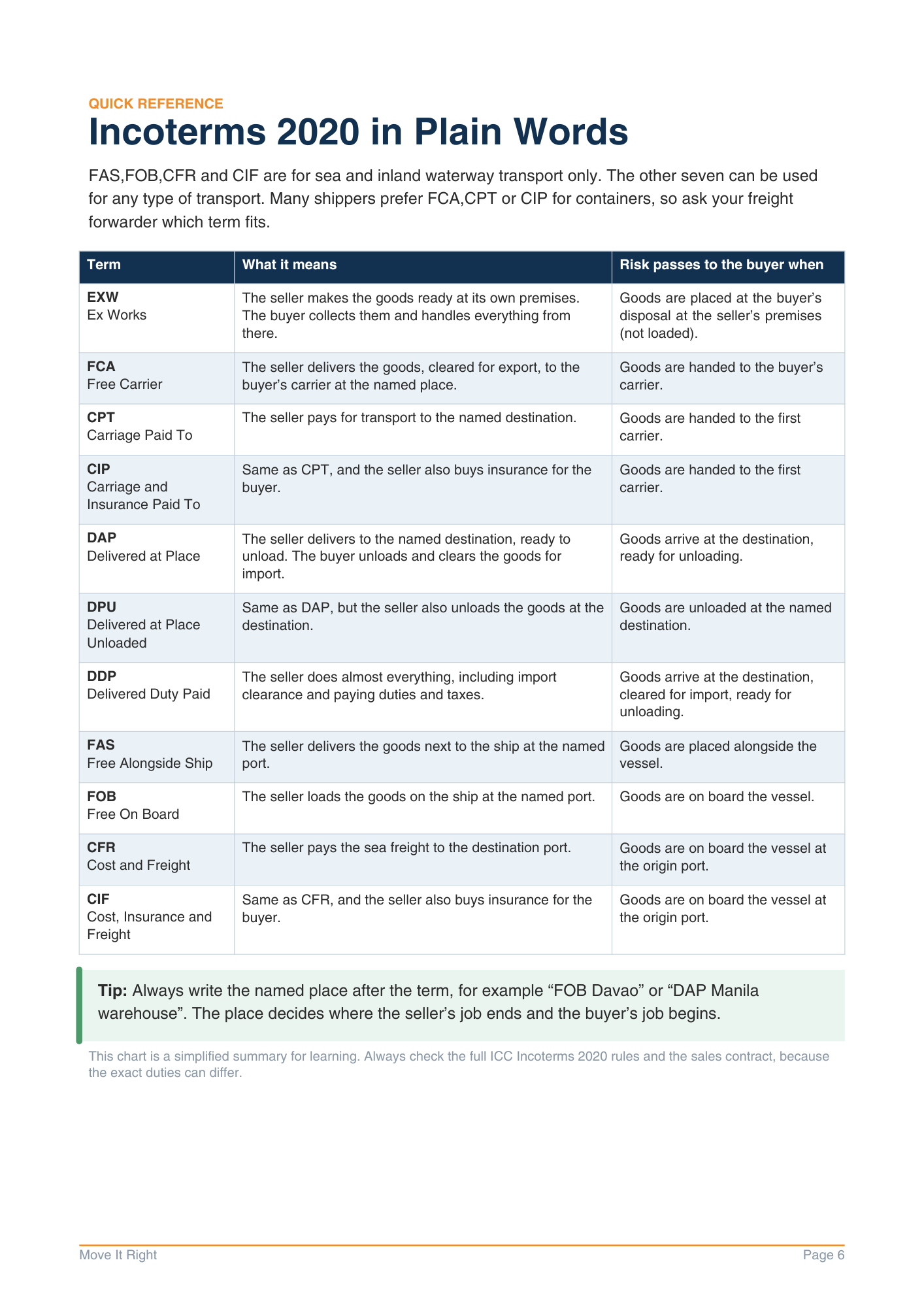
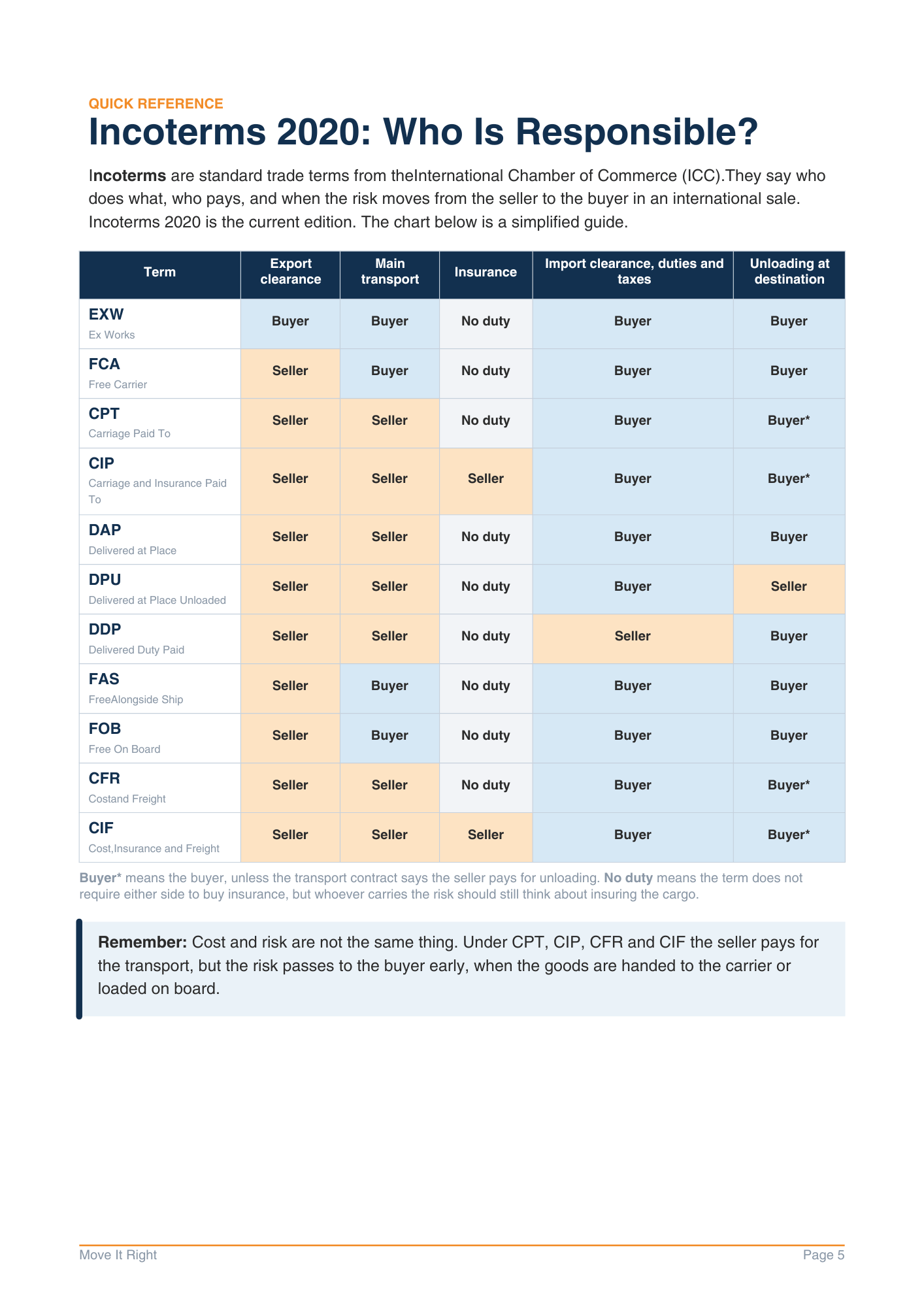
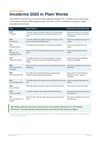
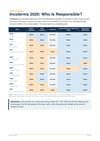
- Incoterms 2020 quick reference: who is responsible, in a chart and in plain words
- Truck, sea or air: how to choose the right mode with 4 simple questions
- Container types guide and other ways goods are moved
- Shipping documents made simple: PO, invoice, packing list, bill of lading, delivery receipt
- Planning and booking a shipment, step by step
- Loading equipment guide with safety tips
- Tracking, delays and fixing problems, with a 3-part update message
- Working with people and growing your career, plus your first 90 days
Printable checklists and worksheets
- My Logistics Words notebook page
- Container Inspection and Loading Checklist
- Choose the Mode Checklist
- Shipping Document Check Sheet
- Loading Equipment Pre-Use Checklist
- Shipment Planning Checklist and Quote Comparison Sheet
- Shipment Tracking Log and Delay Update Template
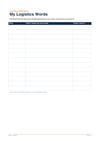
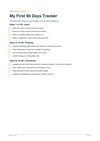
- Weekly Friday Review and My First 90 Days Tracker
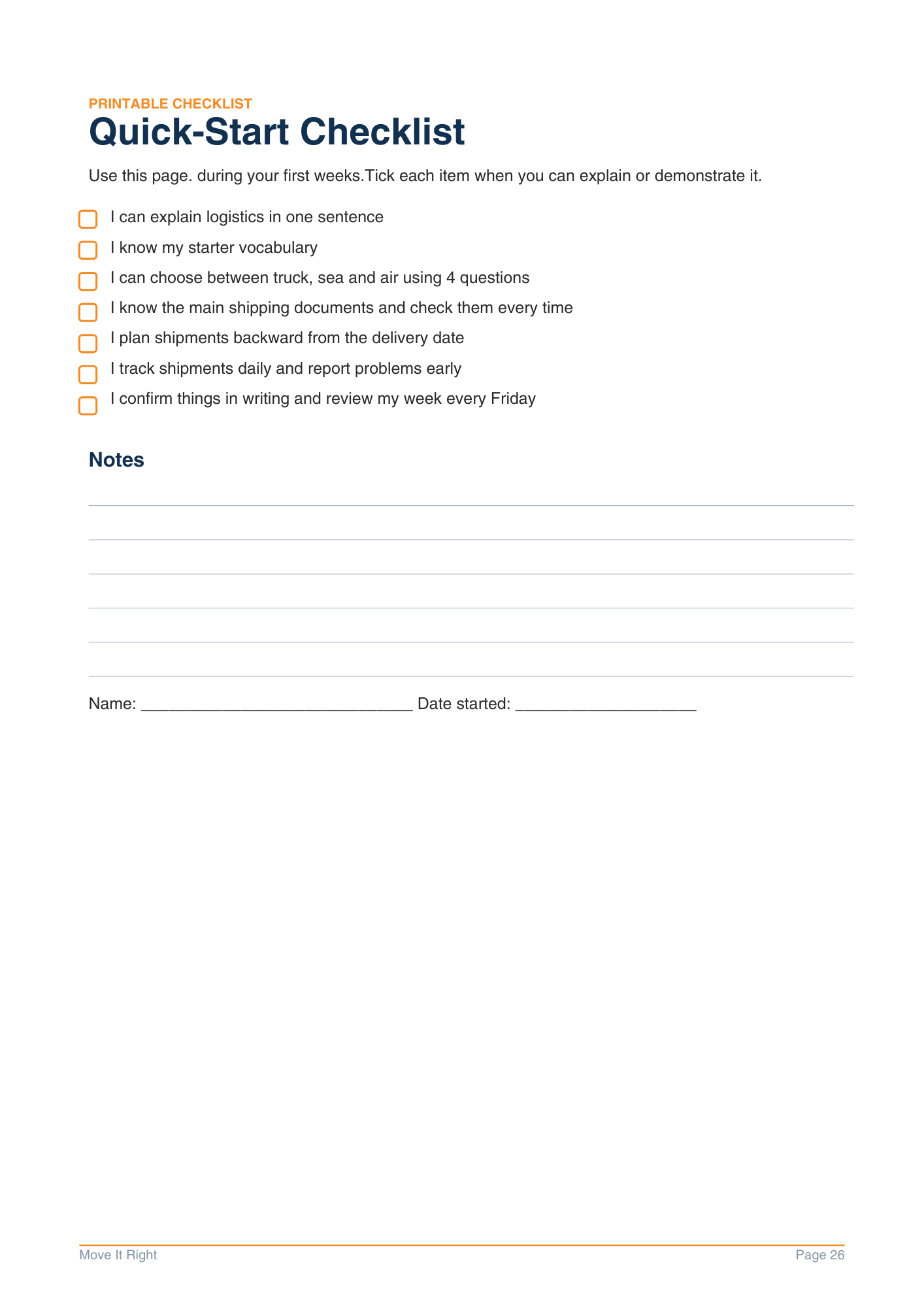
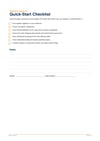
- Quick-Start Checklist
Who it is for
Anyone starting a logistics career: new logistics assistants and coordinators, shipping and dispatch clerks, warehouse and inventory clerks, documentation assistants, and career changers.
Format: Instant PDF download. Print the worksheets and use them in your daily work.
This playbook is for general learning and does not replace your employer's procedures, training, or local rules and regulations. Shipping and customs requirements differ by country, carrier and product, so always confirm them before you ship.