
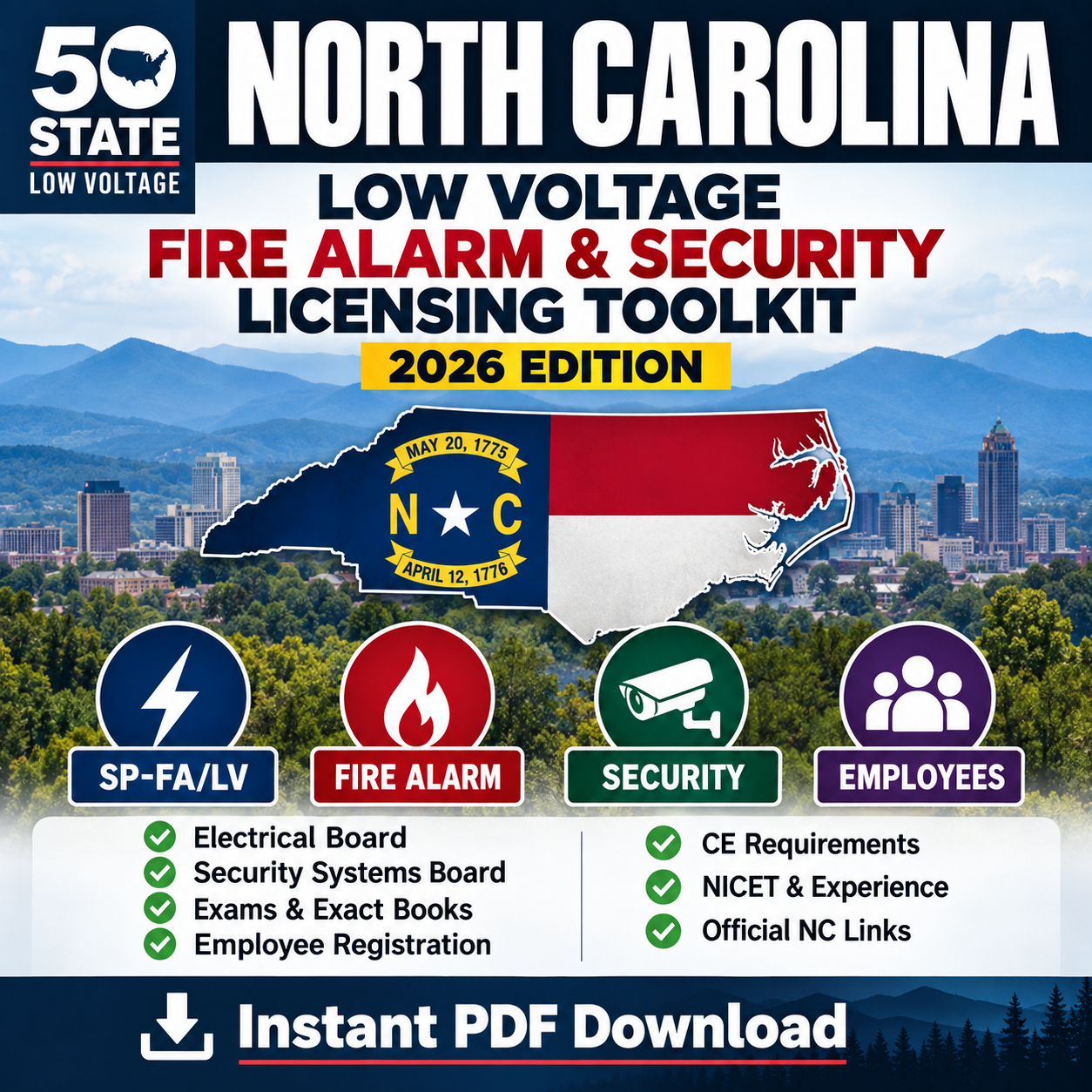
North Carolina Low Voltage, Fire Alarm & Security Licensing Toolkit — 2026
North Carolina low-voltage licensing can involve TWO separate state licensing systems.
The North Carolina Low Voltage, Fire Alarm & Security Licensing Toolkit — 2026 is a practical reference for contractors, technicians, business owners, qualifying individuals and security-system companies working with fire alarm, burglar alarm, access control, security cameras and other low-voltage systems in North Carolina.
This guide explains both the North Carolina State Board of Examiners of Electrical Contractors requirements and the separate North Carolina Security Systems Licensing Board / Chapter 74D requirements.
ELECTRICAL CONTRACTOR — SP-FA/LV
• SP-FA/LV Fire Alarm & Low Voltage license explained
• What work the license covers
• Low-voltage exemptions and limitations
• Current experience requirements
• Primary vs. secondary experience
• NICET experience credit
• 2026 examination requirements
• Exact exam books and editions
• Open-book exam rules
• Passing score and testing information
• Qualifying-individual requirements
• New-qualifier Laws & Rules course
• Annual electrical-board continuing education
• License fees and renewal requirements
• Georgia reciprocity and other reciprocity considerations
SECURITY SYSTEMS — CHAPTER 74D
• Security Systems business licensing
• When Chapter 74D applies
• Qualifying-agent requirements
• Electrical-license requirements for security companies
• Burglar alarm requirements
• Monitored access-control requirements
• Security-camera considerations
• Monitoring requirements
• Branch-office requirements
• Liability-insurance requirements
• Company license terms and fees
EMPLOYEES & TECHNICIANS
North Carolina has extensive requirements for people working under a licensed security company.
The toolkit explains:
• Which employees must be registered
• Installer and service-technician requirements
• Employees with access to security codes and system information
• Monitoring personnel
• Residential sales personnel
• Employee fingerprints
• Criminal-history checks
• Employee photographs and registration documents
• Probationary employees
• 16- and 17-year-old apprentices
• Employee transfers and termination reporting
• Registration-card renewals
• Employee continuing education
• 1099 and independent-subcontractor considerations
TWO DIFFERENT CONTINUING-EDUCATION SYSTEMS
The toolkit separates the requirements of the Electrical Board from those of the Security Systems Licensing Board, including continuing education for electrical qualifiers, security licensees and applicable registered employees.
ALSO INCLUDED
• “Which license do I need?” examples
• Fire alarm vs. security licensing comparison
• Company vs. individual requirements
• Employee compliance roadmap
• Exam book-buying checklist
• NICET considerations
• Insurance checklist
• Application roadmaps
• Reciprocity information
• Local/AHJ considerations
• Common licensing mistakes
• Official North Carolina links
• Final licensing-readiness checklist
Know what the company needs. Know what the qualifier needs. Know what your employees need.
Format: Instant digital PDF download
Edition: 2026
Verified: September 2026
Important: This toolkit is an independent educational reference and is not affiliated with or endorsed by the North Carolina State Board of Examiners of Electrical Contractors, North Carolina Security Systems Licensing Board, North Carolina Department of Public Safety, PSI, NICET, ESA or any government or certification organization. Licensing laws, rules, examinations, fees, forms, adopted codes and agency procedures can change. Always verify current requirements with the appropriate licensing authority before applying, contracting or performing regulated work.