
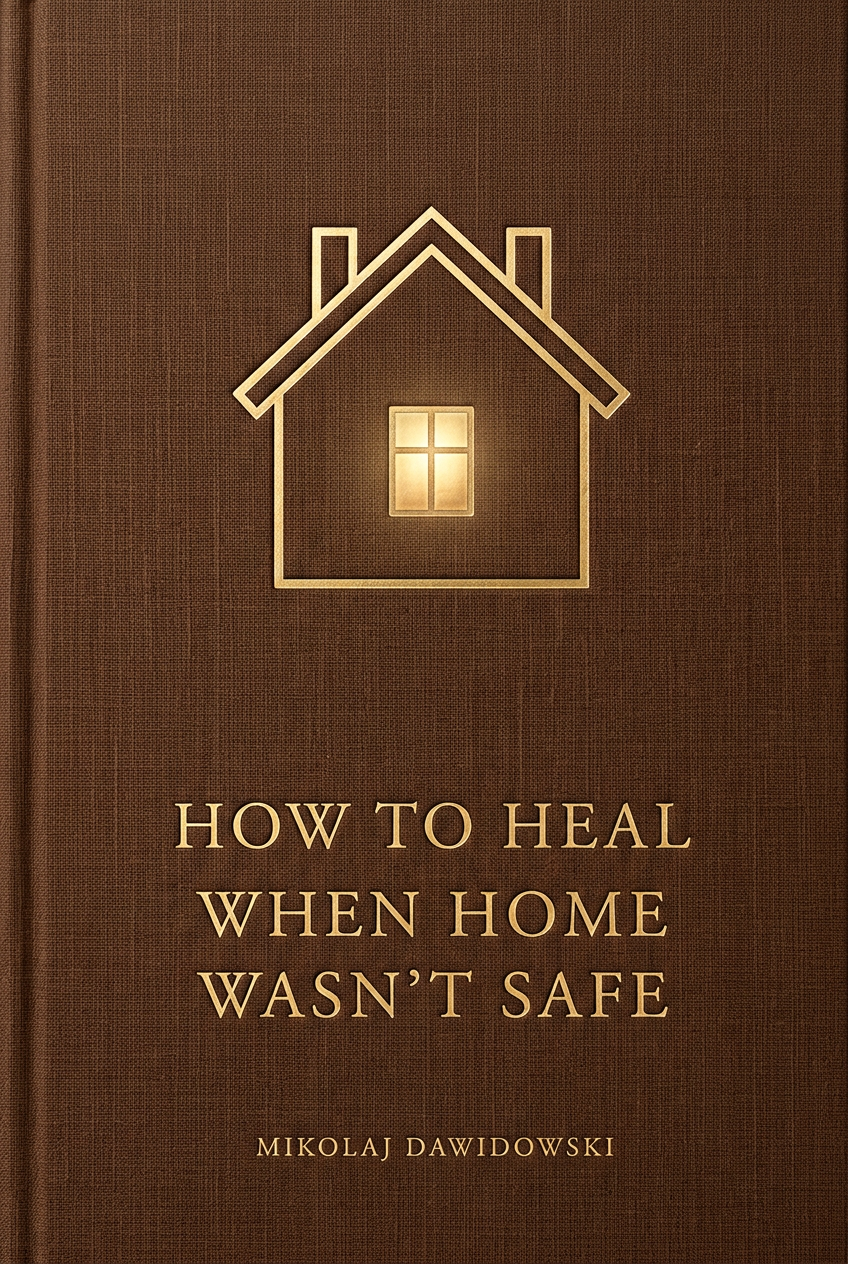
How to Heal When Home Wasn't Safe
How to Heal Childhood Wounds Book + Workbook
Understanding the Quiet Damage of an Ordinary Childhood, and What to Do About It
Your life is fine. You have a job, you have people, you function. But there's something underneath it you can't quite name — a feeling that you're performing a version of yourself, that you don't really know what you want, that if people saw all of you they'd be disappointed.
And when you look back at your childhood for a reason, you come up with nothing. Your parents were fine. They provided. Nothing happened.
That gap — between how you feel and the lack of an obvious cause — is what this book is about.
The wounds you can't point to
Some childhood damage comes from things that happened. A lot of it comes from things that didn't.
The parent who was there but never really there. The house where feelings were an inconvenience. The comparison to a sibling that ran for eighteen years. The criticism so constant it stopped sounding like criticism and started sounding true. The parent you ended up taking care of.
There's no single memory to hold up. There are ten thousand ordinary moments, none of which is a story. So you conclude nothing was wrong, and you're left with the feeling and no explanation — which usually leads people to the only answer left: the problem must be me.
You're not just like this. Something shaped you. It just didn't leave marks you were taught to recognise.
What's inside (158 pages)
- 11 specific wound types, so you can stop trying to describe an absence and start naming a pattern
- How this actually works — attachment, brain development, and why a child's mind draws the conclusions it does
- What faith traditions really say about parents and children, including how much more complicated "honour your father and mother" is than most people were taught
- The mistakes people make trying to heal this, including a few that look exactly like progress
- 15 hands-on exercises
- A 30-day plan to change your life step by step
- Reflection questions
- Affirmations, and the honest research on when they backfire and what to use instead
- Real cases from published memoirs and major studies — no made-up people
- Re-parenting yourself, figuring out what relationship to have with your family now, and not passing it on
Built on evidence, not vibes
The research here is real and it's named in the text — the ACE Study of 17,000 adults, Bowlby's work on attachment, Jonice Webb on emotional neglect, and a forty-year study that followed 700 children from birth.
That last one matters most. It found that most people recover. And the single biggest thing that made the difference wasn't luck or temperament — it was having at least one steady, caring relationship. Often not a parent. An aunt. A teacher. Someone who paid attention.
Note
Each book in the series tackles different experiences and traumas. So even if descriptions sound similar the books are distinct.
What this book isn't
It's not about blaming your parents. Understanding what happened to you and condemning the people it happened around are two different things, and you only need the first.
It's not about telling you to cut your family off, or to stay. That decision is yours and the book supports all versions of it.
And it's not a diagnosis. It's a way of understanding a pattern.
One last thing
You don't need to prove your childhood was bad enough. A home can be comfortable and emotionally empty at the same time — that's not a contradiction, it's extremely common. You're allowed to work on what's actually there.
Note: this book is written for the quieter wounds. If your childhood involved abuse, violence, or a parent's addiction, the companion book How to Heal When Home Wasn't Safe is built for that.
Each of my books contains a chapter dedicated to 30 day transformation so not only do you get theory of what you can do but you also get a step by step guide on how to change.