Patrol Case Law Field Guide — Volume 1: Traffic Stops (Free Download)
Traffic stops are one of the most common enforcement actions in patrol, but the legal authority behind a stop can change as the encounter develops.
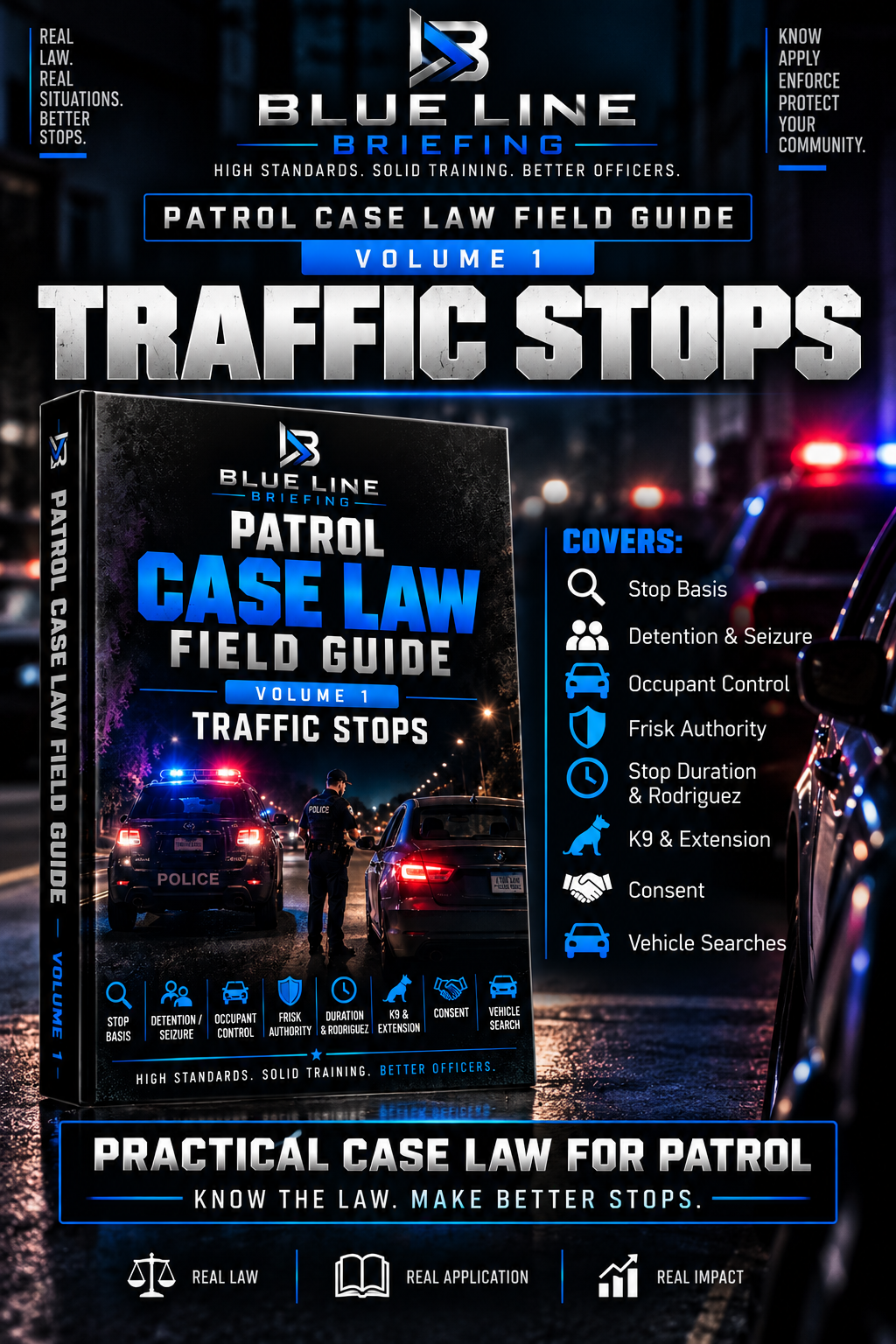
Volume 1: Traffic Stops breaks down the major federal constitutional case law governing traffic stops and organizes it around the decisions officers actually face in the field: initiating the stop, controlling occupants, conducting frisks, managing the duration of the detention, developing additional reasonable suspicion, using K9s, and determining when a vehicle may lawfully be searched. Rather than simply listing cases and holdings, the guide focuses on what the case established, how the rule applies during patrol, and where the limits of that authority are.
TOPICS INCLUDE:
• Legal authority for initiating a traffic stop
• Mistakes of law and reasonable suspicion
• Registered-owner inferences
• Drivers and passengers as seized occupants
• Ordering drivers and passengers out of a vehicle
• Frisks and officer-safety considerations
• The mission and lawful duration of a traffic stop
• Unrelated questioning during a stop
• Developing reasonable suspicion during the detention
• K9 sniffs and prolonging a stop
• Consent during traffic stops
• The automobile exception and scope of vehicle searches
• Protective searches of vehicles
• Searches incident to arrest and vehicle-search limitations
The guide examines major decisions including Whren v. United States, Heien v. North Carolina, Kansas v. Glover, Brendlin v. California, Pennsylvania v. Mimms, Maryland v. Wilson, Arizona v. Johnson, Rodriguez v. United States, Illinois v. Caballes, United States v. Sharpe, Michigan v. Long, Arizona v. Gant, Carroll v. United States, United States v. Ross, California v. Acevedo, and related cases.
Cases are presented using a practical format emphasizing the holding, patrol application, and limits of the decision, helping officers understand not only what authority exists, but where that authority ends.
BUILT FOR:
Patrol Officers • FTOs • Supervisors • Instructors • Academy Recruits
DIGITAL FIELD GUIDE
This guide focuses primarily on federal constitutional principles and significant U.S. Supreme Court decisions. State law, state constitutional protections, controlling jurisdictional case law, and agency policy may impose different or additional requirements.
Blue Line Briefing materials are educational training aids and do not constitute legal advice or replace agency policy, department training, prosecutors, legal advisors, or controlling law.
HIGH STANDARDS. SOLID TRAINING. BETTER OFFICERS