
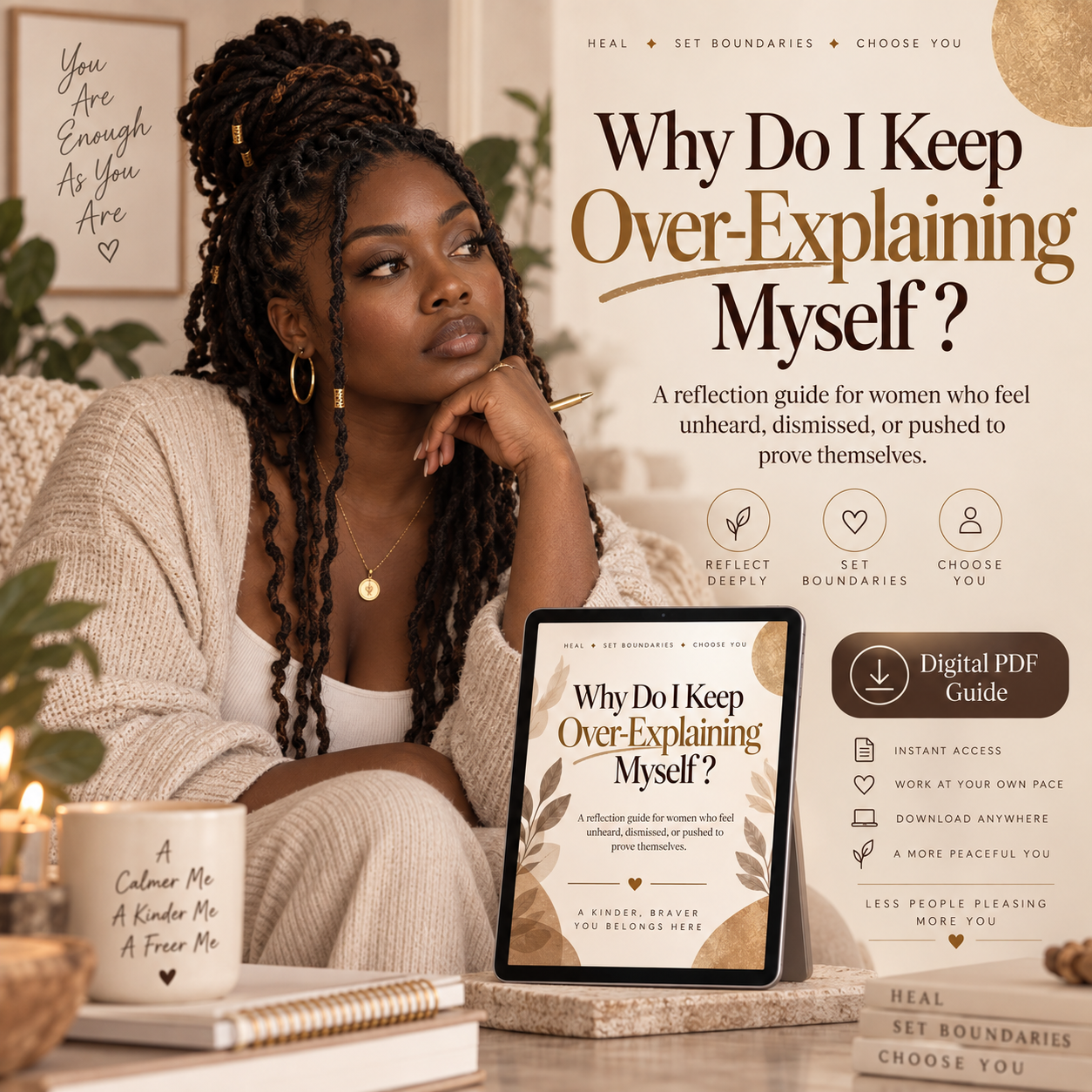





Why Do I Keep Over-Explaining Myself?
There is a difference between explaining yourself and feeling like you have to keep explaining until somebody finally gives you the response you were hoping for.
You may repeat yourself, reword the same point, add more evidence, send another paragraph, soften your boundary, or apologize for something you do not believe was wrong.
You keep searching for the sentence that will finally make them understand, agree, soften, reassure you, or see your intentions correctly.
Why Do I Keep Explaining Myself? was created to help you understand what you are really trying to secure through another explanation and learn how to communicate without making someone else’s reaction the final authority over your truth.
This guide will not teach you to become cold, silent, or unwilling to clarify. Healthy communication matters. The transformation is learning when clarity has already been given and when the next step is allowing your words to stand.
Using the Honey May Love Four A’s framework, you will move through:
Awareness: Recognize what you are doing and what response you are trying to receive.
Acceptance: Accept what the conversation and the other person’s repeated behavior have already shown you.
Accountability: Identify where you still have a choice without blaming yourself for another person’s unwillingness to listen.
Action: Communicate clearly, tolerate the response, and let your words carry weight.
As you work through this guide, you will:
• Map the situations that trigger your over-explaining pattern
• Identify what you hope another explanation will finally make someone say or do
• Recognize when communication has turned into a search for emotional relief
• Explore the labels, rejection, guilt, or misunderstanding you are trying to avoid
• Learn the difference between being misunderstood, disagreed with, dismissed, and disrespected
• Examine whether the other person has already heard you but does not agree or does not intend to change
• Recognize when you are communicating honestly and when you are trying to manage another person’s reaction
• Identify where over-explaining has caused you to weaken boundaries, add unnecessary apologies, or doubt your original point
• Practice shortening a long explanation into a clear and honest statement
• Use the CLEAR Pause when you feel the urge to send another paragraph or reopen the conversation
• Create personal communication standards for circular or emotionally exhausting conversations
• Complete an Evidence Page that shows when the problem was no longer your wording
• Write a Letter From Your Clear Mind for moments when you feel pressured to defend, justify, or prove yourself again
Over-explaining can cost you peace, time, energy, sleep, focus, confidence, self-trust, and the boundary you were originally trying to communicate.
The longer you remain in a circular conversation, the easier it becomes to lose your point underneath your need to be understood.
Changing this pattern requires you to tolerate something uncomfortable. Someone may disagree with you, feel disappointed, misunderstand your intentions, or keep believing their own version of you.
You are responsible for communicating with honesty and integrity. You are not responsible for controlling every version of you that exists in another person’s mind.
You can finish this guide with a clearer understanding of why you keep explaining, a process for stopping the pattern in real time, and stronger communication standards that allow you to speak without begging to be understood.
Sometimes the next step is not another paragraph.
Sometimes the next step is standing by what you already said.
You do not need perfect words to have a valid voice.
Digital PDF | 18 pages | Instant download
This is an educational and self-reflection resource. It is not therapy, diagnosis, medical advice, or a substitute for professional mental-health care.