
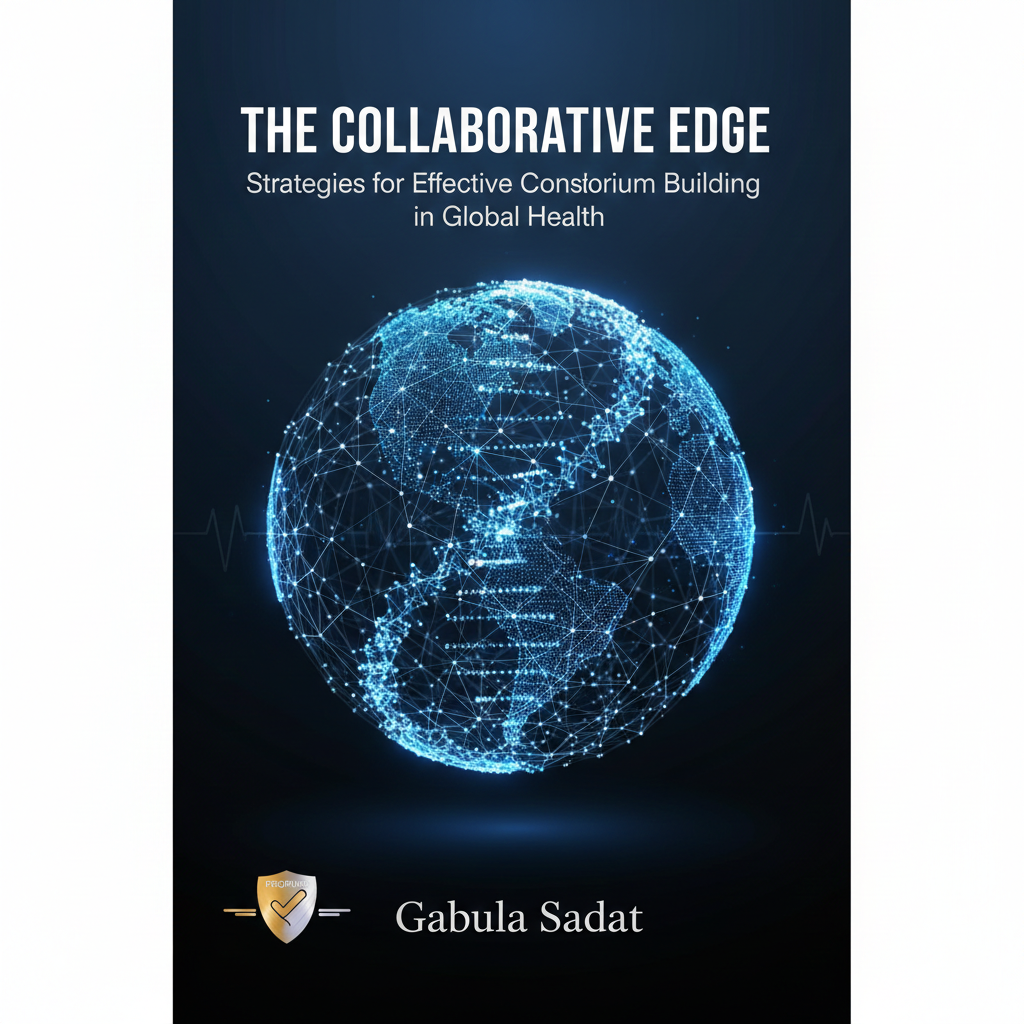
The Collaborative Edge Strategies for Effective Consortium Building in Global Health
The Collaborative Edge: Strategies for Effective Consortium Building in Global Health" by Gabula Sadat
Who Needs This Book and Why?
If you are a policymaker, a health administrator, a donor, a supply chain manager, or a leader within a non-governmental organization, you are operating in a world of increasingly complex challenges. From pandemic preparedness and infectious disease control to strengthening health systems against non-communicable diseases, no single entity can go it alone.
"The Collaborative Edge: Strategies for Effective Consortium Building in Global Health" by Gabula Sadat is the essential guide for you.
This book is not just about the theory of partnership; it is a field-tested blueprint for building and managing the powerful, multi-stakeholder consortia required to make a real impact. It moves beyond the simple call to "collaborate" and provides the concrete strategies you need to navigate the intricacies of public-private partnerships and multi-sectoral innovation.
Inside, you will discover how to:
- Move from Vision to Action: Learn the step-by-step process of identifying the right stakeholders—from government ministries to private sector innovators—and forging them into a unified, effective consortium.
- Design for Success: Understand how to structure your consortium with clear governance models, decision-making processes, and defined roles that prevent gridlock and foster accountability.
- Secure Sustainable Funding: Move beyond short-term grants with practical advice on creating resilient financial models and leveraging resources from the private sector to maximize your impact.
- Implement and Scale: Discover best practices for joint implementation, monitoring and evaluation, and—crucially—how to scale successful initiatives to create lasting, systemic change.
- Overcome Real-World Challenges: Gain actionable strategies for conflict resolution, building trust across diverse organizational cultures, and adapting to the rapid changes and innovations that define the global health landscape.
For the policymaker, this book offers a framework for creating an enabling environment where public-private partnerships can thrive, aligning collaborative efforts with national health objectives.
For the health administrator and manager, it provides the tools to build relationships, manage complex projects, and ensure that collaborative efforts translate into tangible improvements in service delivery.
For the donor and supply chain manager, it offers insights into how to strategically allocate resources and design partnerships that are not only efficient but also equitable and sustainable.
"The Collaborative Edge" is more than a book; it is a strategic asset. It provides the knowledge and confidence to turn the challenge of collaboration into your greatest strength, ultimately building a healthier, more resilient world.