Reading an Insurance Card: Member ID, Copays and Who to Call for Life Skills, Ages 14 to 21
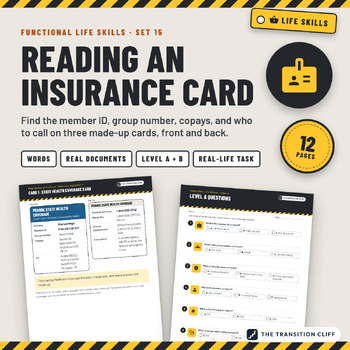
Around 18 students start carrying their own insurance card, and the first time a front desk asks for a member ID they freeze. This set stays on reading the card: find the member ID, group number, copays, and who to call on three made up cards, front and back, so students know where each field is and who to call with a question. It stays away from what plans cover or who qualifies.
• A teacher page: why I made it, how to use both levels, and the skills covered
• Words to know: 10 key words, each with a picture
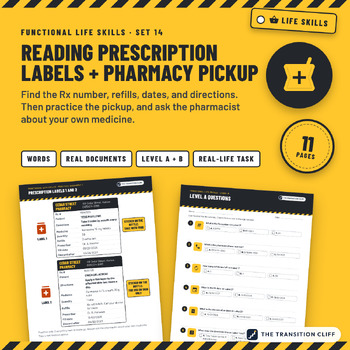
• 3 pages of practice documents: three made up health insurance cards, front and back: a state health coverage card, a marketplace plan card, and an employer plan card. All businesses, names, and numbers are made up.
• 12 Level A questions, each with a picture and three answer choices
• The same 12 questions at Level B, with open answers and room to show the math
• A real life task: a "my card info" sheet with a blank card and a what to bring checklist, plus a short script for calling member services
• An answer key that shows where to find each answer
Read through the practice documents together, then give each student the level that fits. Both levels ask the same questions, so the whole class can check answers together. I use the real life task as a wrap up or right before a community outing.
This set is field reading only. It does not cover what a plan pays for, who qualifies, or how to apply. All plans, companies, people, and numbers are made up, and phone numbers use the 555 to 01 practice range. How it is different from my Phone Skills for Everyday Calls set: that set practices calls in general. This set is field reading on insurance cards, with one short member services script.
Part of the Functional Life Skills series: every set uses the same layout (words, real looking documents, two levels of the same questions, and a real life task), so students know the routine when you move to the next set.
Made by Jeremy D. Gooch, special education teacher and transition coordinator. Drafting and layout had AI assistance; every page was checked by me.