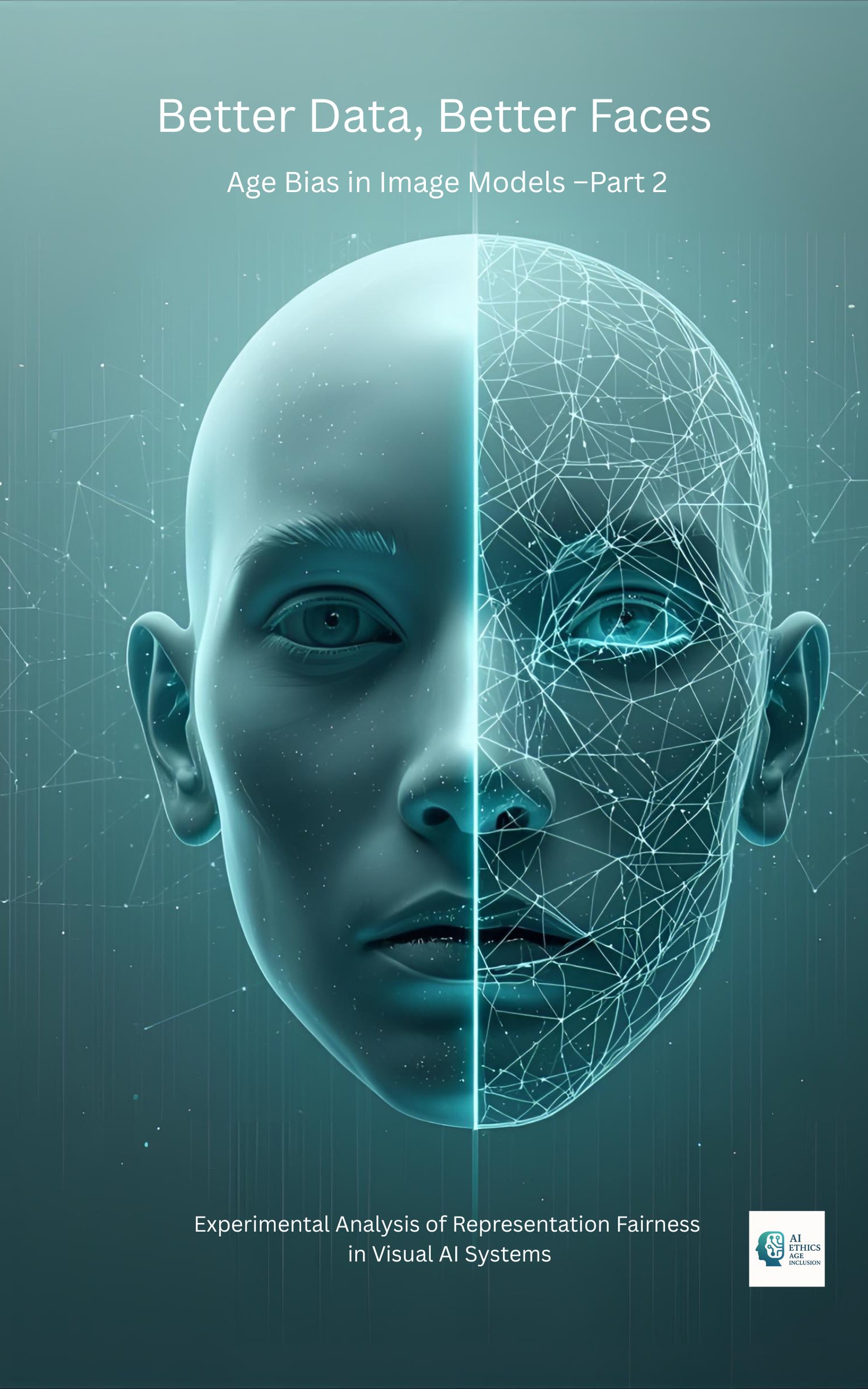
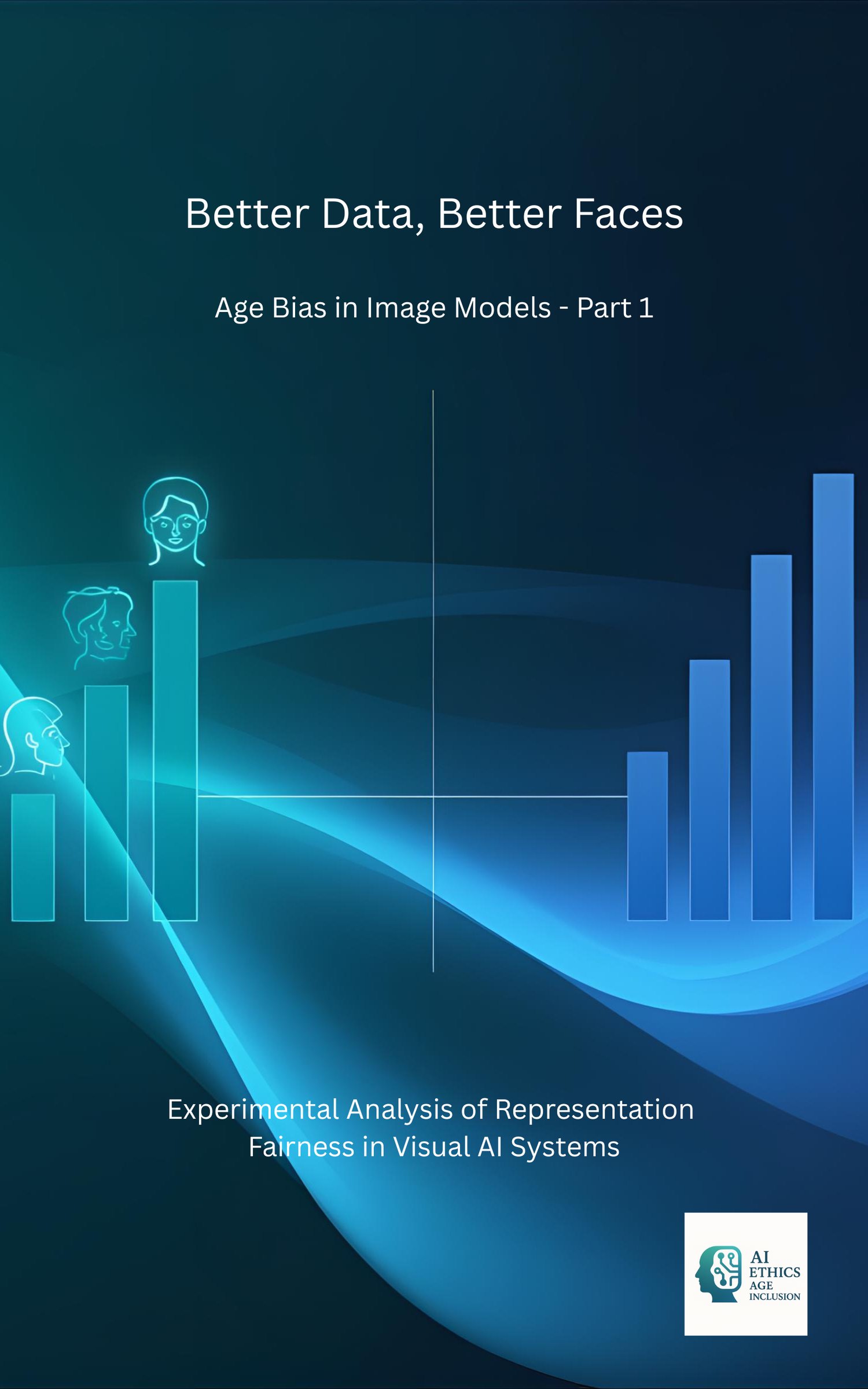


Better Data, Better Faces (Part 2) - Age Bias in Image Models
Research Report: Age Bias in Image Models (Part 2)
+ Free Report - Age Bias in Image Models (Part 1)
By Imogen Hull · Age-Inclusive AI · Beyond the Average
Summary
This report presents an experimental analysis of age-related fairness in image-classification models trained on the FairFace dataset. Using a controlled series of ResNet-18 models, the study tests how dataset composition and fine-tuning influence recall parity between younger (<40) and older (≥50) adults.
Three conditions were compared—unbalanced, balanced, and balanced-plus-tuned—to isolate whether fairness is driven by architecture, representation, or optimisation depth.
The findings show that data is the dominant fairness lever: balancing the dataset reduced the recall gap from 57 to 4 percentage points, and modest fine-tuning achieved near parity.
This report is a continuation of the Better Data, Better Faces (Part 1) Report, now available as a free download to Substack subscribers at BeyondtheAverage
Key findings
- Age bias in facial classification is primarily caused by representational imbalance, not architectural limitations.
- Balancing the dataset improved fairness dramatically, even with frozen layers.
- Fine-tuning deeper layers captured age-relevant features and achieved near-zero fairness gap.
- Accuracy remained strong in all models, showing that fairness and performance can coexist.
- Results reinforce the need for data audits and representation checks in AI assurance workflows.
Why it matters
Age remains an overlooked dimension in computer-vision fairness research. Models trained on skewed datasets risk misclassification, exclusion, and unequal error rates for older adults.
This study provides empirical evidence that inclusion can be improved through simple, transparent interventions—data balancing, careful fine-tuning, and regular fairness evaluation. It forms part of the Age-Inclusive AI research series, building a stronger evidence base for equitable model design.
Ideal for
Data scientists, ML engineers, AI auditors, fairness researchers, and organisations working on:
- AI assurance
- Responsible AI tooling
- Bias detection in vision models
- Inclusive dataset design
- Age-related and intersectional fairness
Details
Format: PDF
Length: ~20 pages
Version 1.0 · Published November 2025
© Imogen Hull | Age-Inclusive AI | Beyond the Average
📘 Topics covered
Bias & Fairness • Computer Vision • Model Evaluation • Responsible AI • Dataset Design • Age-Inclusive AI • Auditing Image Models
You will get:
A PDF (≈1MB)
Better Data, Better Faces [Free Report]
Experimental Analysis of Age Bias in Image Models
About this report
AI image models don’t see everyone equally. When training data over-represents younger faces, older adults become statistically invisible — and that bias shows up in the results.
This report from Beyond the Average | Age-Inclusive AI presents new experimental evidence on how dataset balance affects fairness in visual AI systems.
Inside you’ll find
- Comparative results using young-biased and balanced versions of the UTKFace dataset
- Quantitative metrics showing how recall parity improves when representation is equalised
- Discussion of residual bias, model-level causes, and ethical implications for inclusive design
- Visual charts, reproducibility notes, and recommendations for fairer AI vision pipelines
Why it matters
Representation isn’t a detail — it’s the foundation of fairness. This study demonstrates how balancing data can close measurable performance gaps between younger and older faces, highlighting both the power and the limits of technical fixes.
Licence: CC BY-NC-ND 4.0
Author: Imogen Hull, Beyond the Average – Age-Inclusive AI Project
Release: November 2025 | Version 1.0
You will get a PDF (691KB) file