
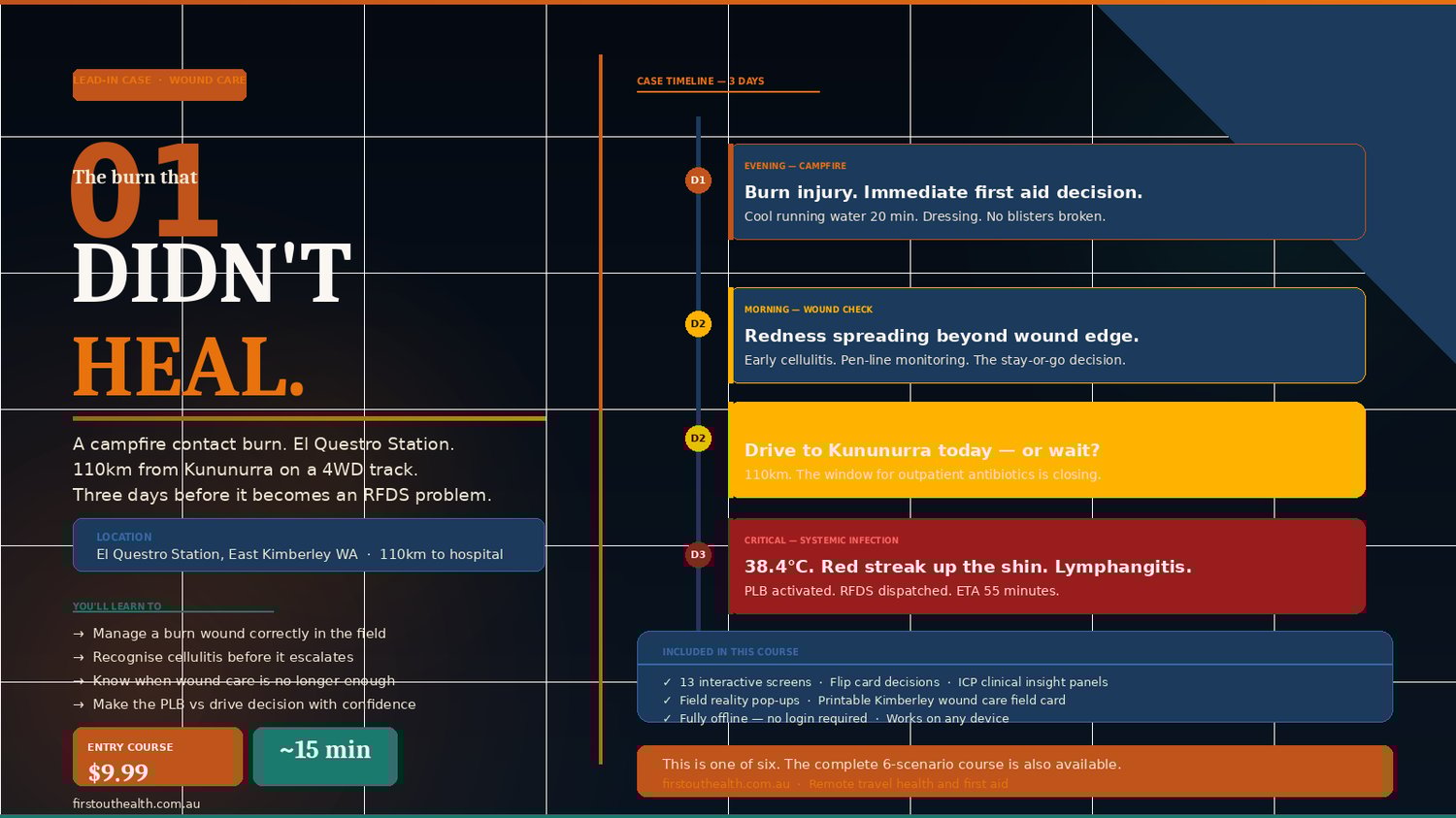
First out Micro course.
The Burn That Didn't Heal — Lead-Case Study
Single-Scenario Decision-Training Course — First Out Health
It started as a campfire accident. Three days later, it needed the RFDS.
This is the First Out Health lead-in course — a single case study that runs you through one of the most common and preventable remote health failures in Australian travel: a minor burn that wasn't managed correctly in the field, became infected, and escalated into a systemic infection requiring evacuation.
The setting is real. El Questro Station, East Kimberley, Western Australia. 110km from Kununurra District Hospital. 16km of unsealed 4WD track between you and the sealed road. 37 degrees. Limited clean water. One person with a blistered foot and a travel partner who has to decide what to do next.
That travel partner is you.
What happens across three days.
Day 1 — the burn. You make the first decisions: what goes on it, what doesn't, how to dress and protect it overnight.
Day 2 — the wound changes. The redness has spread beyond the wound edge. The foot is warmer. The pain is increasing, not decreasing. You learn to read what that means, how to monitor correctly, and when it stops being a field problem.
Day 3 — you waited. The pen line you drew around the redness yesterday is now well inside a much larger red area. There's a faint streak running up the shin. Temperature 38.4 degrees. The window for outpatient treatment has closed.
What you'll learn.
How to manage a burn wound correctly from the first minute — using ANZCOR protocol, not instinct. The difference between normal wound inflammation and early cellulitis. The pen-line monitoring technique that tells you whether an infection is progressing or responding. Why wound care alone isn't treatment for cellulitis. What lymphangitis looks like, what it means, and why it changes the evacuation decision entirely.
How it works.
13 screens. Flip card decisions throughout — tap to reveal what happens, then learn why. Field reality pop-ups shift the situation mid-scenario the way real emergencies do. ICP insight panels deliver the clinical 'why' in plain language. Ends with a confidence check, six rapid-fire questions, and a printable Kimberley wound care field card.
Runs approximately 15 minutes. Works fully offline on any device. No login. No app. No internet required in the field.
This is one scenario.
The complete First Out Health platform covers six — the emergencies that most commonly end a remote Australian trip badly. If this course gives you one decision you wouldn't have made correctly before, it's done its job.
Not medical advice. Educational preparedness tool for remote travel. In a medical emergency, call 000. firstouthealth.com.au