


Explain It | 20 Neurodiversity-Affirming Psychoeducation Handouts | Autism & ADHD Therapy Worksheets for Clients & Families | Fillable PDF
On Sale
$999.99
Your client finally understands their autistic burnout. Now they have to explain it to their partner, their mom and their manager, and they freeze. 🧡
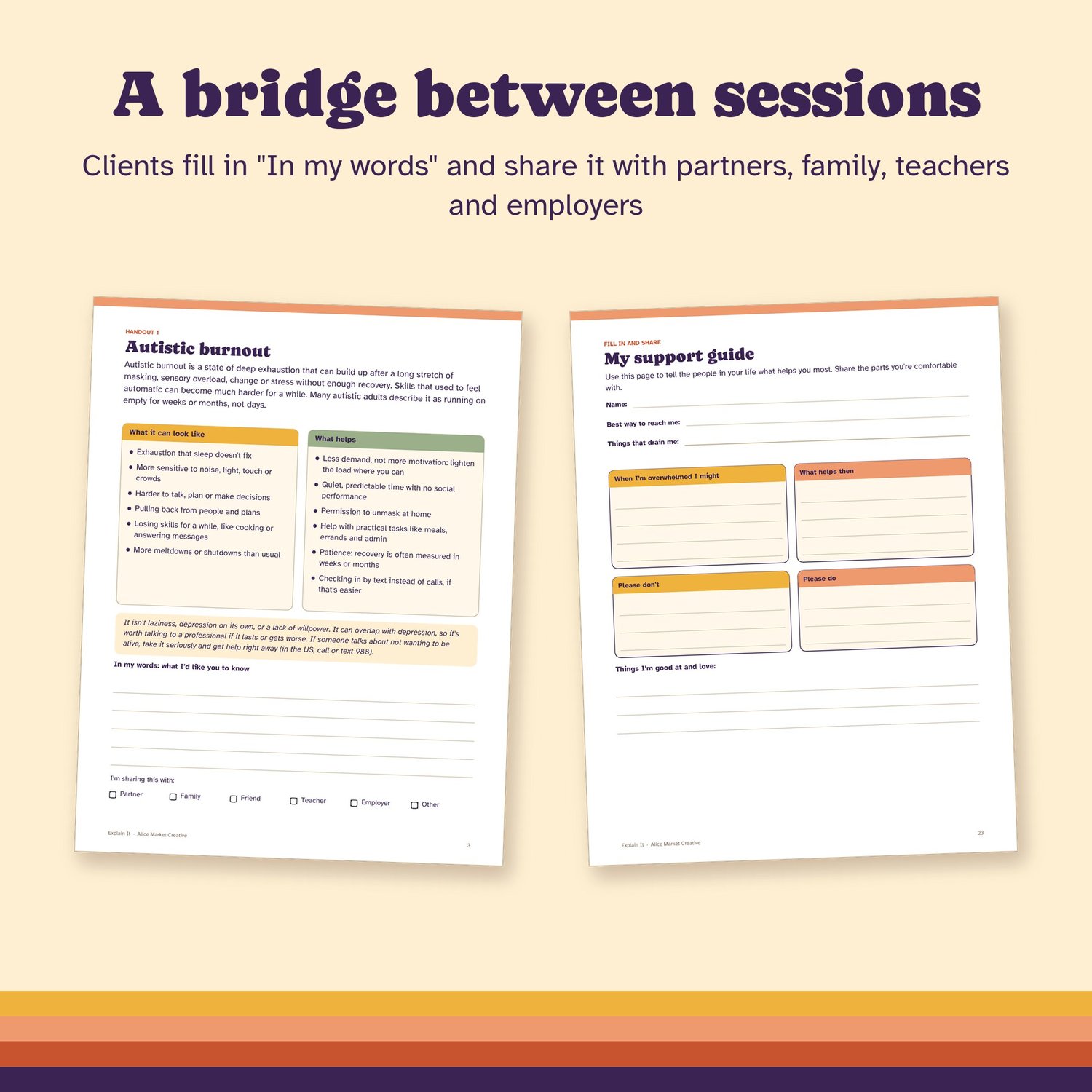
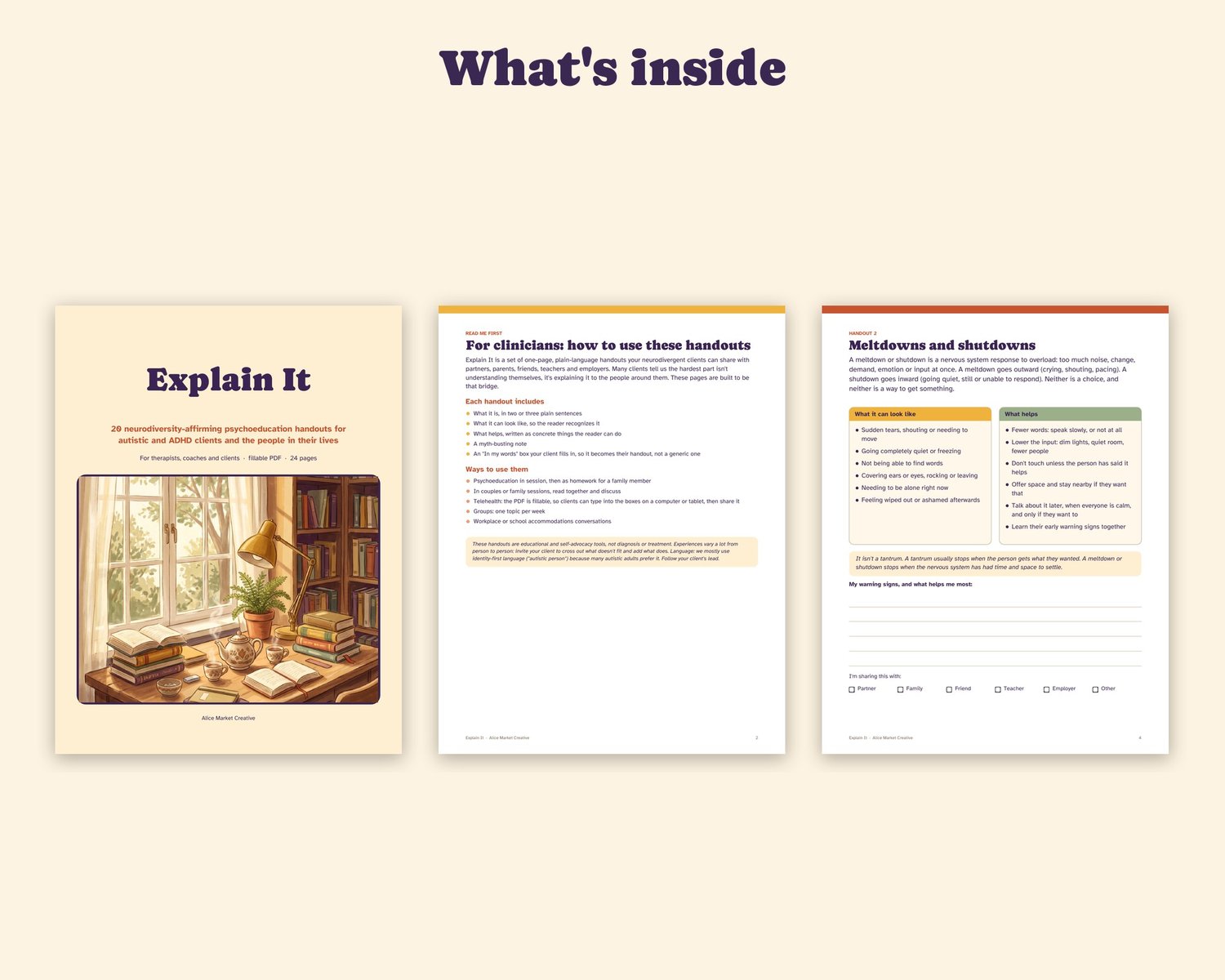
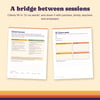
Explain It is a set of 20 one-page, plain-language psychoeducation handouts written for neurodivergent clients and the people in their lives. Each page explains one topic in everyday words, shows what it can look like, and lists concrete things the reader can do to help. Then your client fills in the "In my words" box, so it becomes their handout, not a generic one.
20 topics:
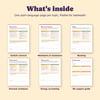
- Autistic burnout · Meltdowns and shutdowns · Masking · Sensory differences
- Executive function · Time blindness · Rejection sensitivity · Demand avoidance (PDA)
- Interoception and alexithymia · Stimming · Special interests and monotropism · Energy accounting
- Late diagnosis · AuDHD · Communication differences (double empathy) · Inertia and transitions
- ADHD and emotions · Social exhaustion · Routine and change · What neurodiversity-affirming means
Plus: a clinician how-to page, a fill-in My support guide, and A letter to my people with sentence starters.
Each handout has:
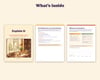
- What it is, in 2 or 3 plain sentences
- What it can look like, and What helps, side by side
- A myth-busting note
- "In my words" lines and an "I'm sharing this with" checklist
Good to know:
- Fillable PDF: clients can type into the boxes on a computer or tablet, so it works for telehealth
- Instant download: ZIP with US Letter and A4 PDFs (24 pages each), READ ME and license note
- Identity-first language, with a note to follow your client's lead
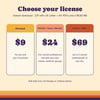
- Three licenses: Personal is for you and your household. Therapists, counselors, coaches, OTs and school staff can pick the Clinician/Coach/Educator license (one professional, unlimited copies for your own clients) or the Practice/Team license (up to 5 at one site). Bigger organizations: reply to your receipt for a quote
- Educational and self-advocacy tools, not diagnosis, therapy or medical advice. In a crisis, call or text 988 (US) or your local emergency number