

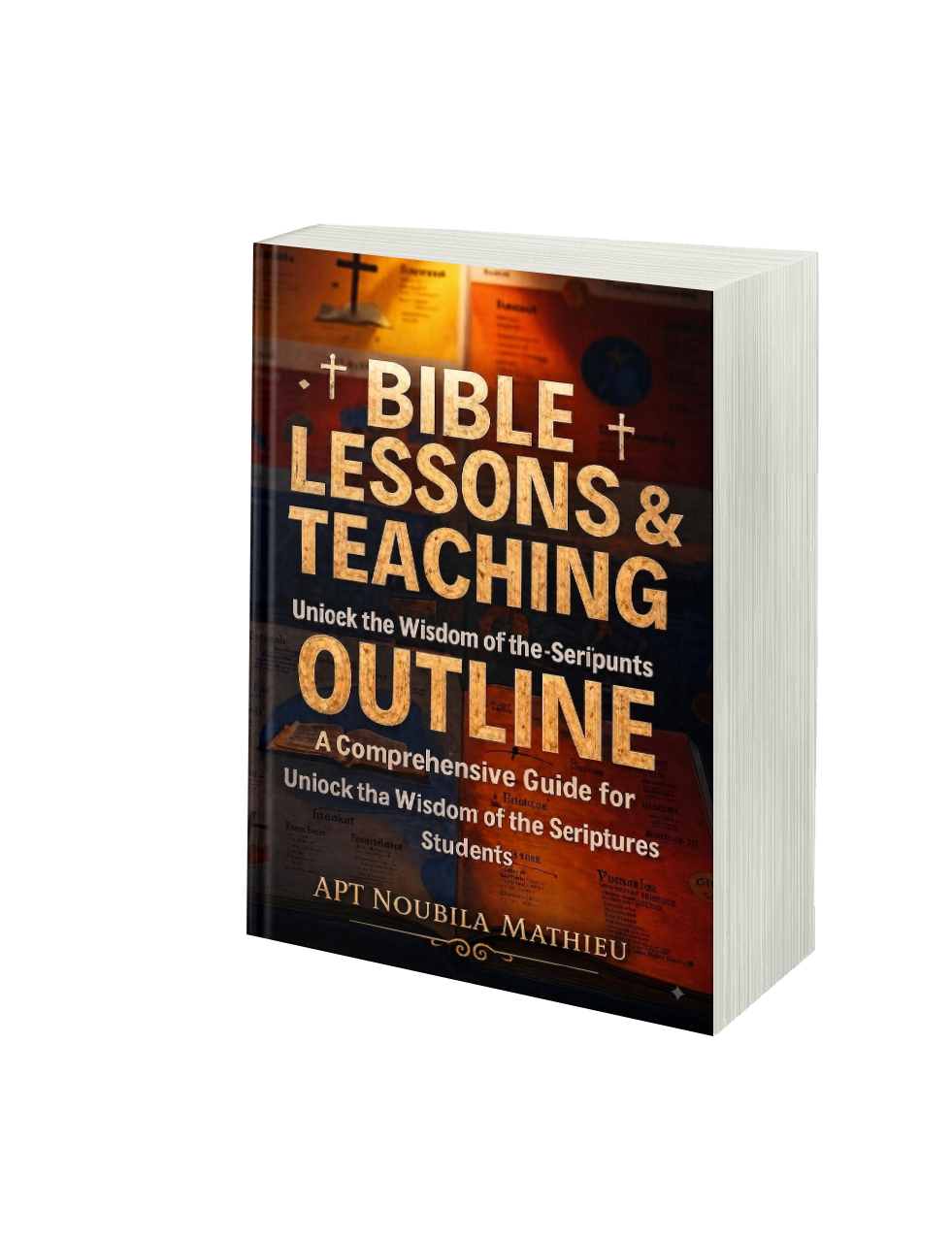
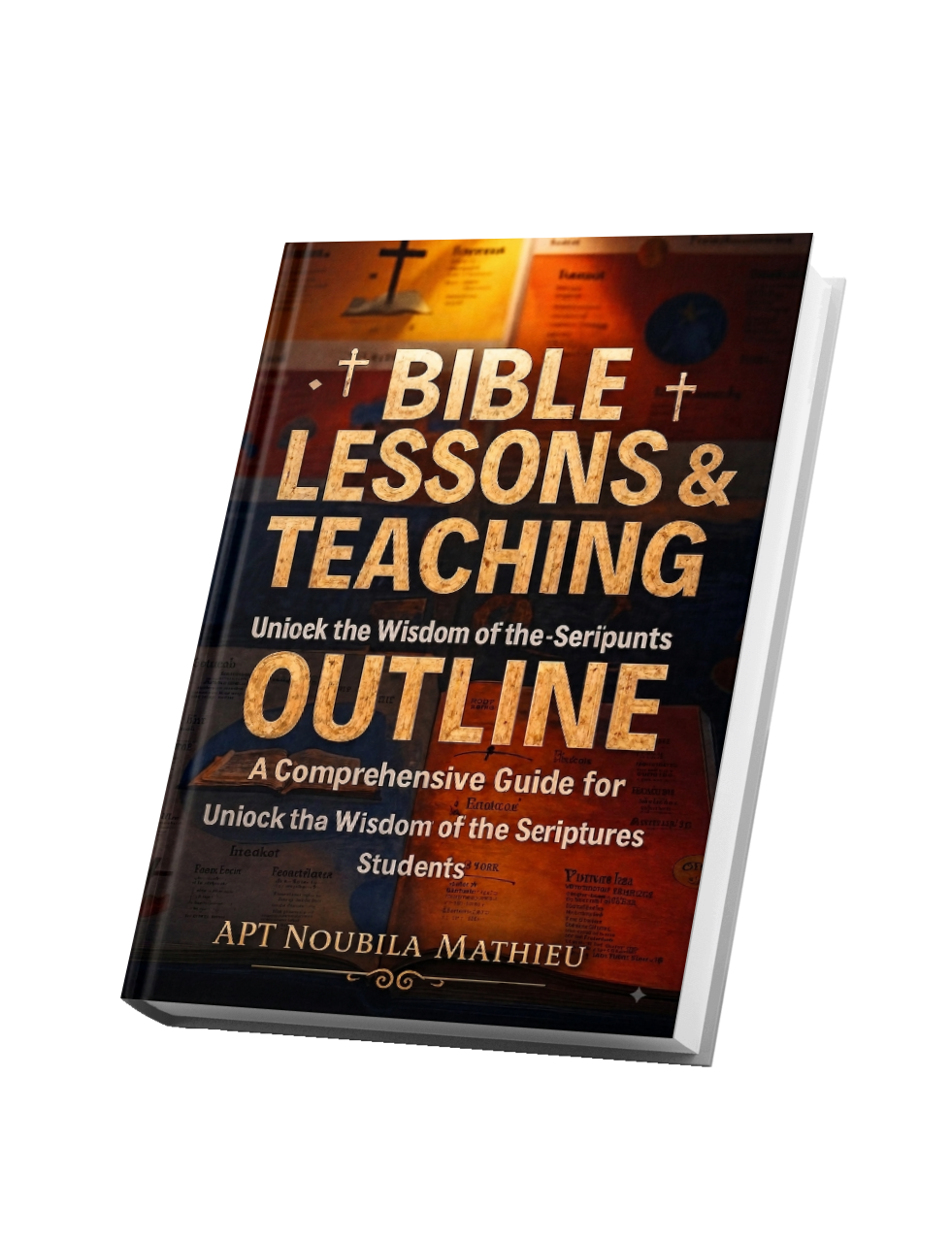
Bible lessons and teaching
BIBLE LESSONS AND TEACHING
From Brokenness to Grace — From Sadness to Joy, From Ignorance to Wisdom
There are moments in life when a person can love God and still feel tired.
You can pray and still have questions.
You can believe and still walk through a difficult season.
You can have a dream and yet experience disappointment.
But hear me carefully:
A difficult season is not necessarily a destroyed destiny.
Sometimes what looks like an ending is actually God teaching you how to begin again.
The Bible says in Isaiah 61:3 that God gives beauty for ashes, the oil of joy for mourning, and the garment of praise for the spirit of heaviness.
That means God does not only save people from sin.
He also knows how to rebuild what life has broken.
If you have experienced disappointment, rejection, failure, confusion, financial pressure, family struggles, or a season where you wondered, “God, where are You?”—this teaching is for you.
Today, we are going to discover how God's Word takes a person from brokenness to restoration, from sadness to joy, from confusion to wisdom, and from limitation into grace.
One of the greatest mistakes we make is judging our future by our present condition.
David was once a shepherd boy before he became king.
Joseph was in a pit before he entered the palace.
Ruth experienced loss before she entered a new chapter of favor.
Peter experienced failure before becoming a powerful witness of Christ.
So never allow one chapter to convince you that the whole book is finished.
Your current pain may be real, but it is not necessarily permanent.
Romans 8:28 tells us that God works all things together for good for those who love Him and are called according to His purpose.
Notice the Bible does not say that everything that happens is good.
Some things hurt.
Some things disappoint.
Some doors close.
Some people leave.
Some opportunities disappear.
But God is powerful enough to take even painful pieces and work them into His greater purpose.
That is grace.
Grace is God's ability to bring His purpose out of circumstances that should have destroyed you.
There are tears nobody sees.
There are battles you cannot explain.
There are nights when you smile before people but cry when you are alone.
But Psalm 56:8 gives us a remarkable picture: God is aware of our tears.
This means your tears are not evidence that God has abandoned you.
Sometimes tears are part of the process through which God brings healing.
Psalm 30:5 says:
“Weeping may endure for a night, but joy comes in the morning.”
The Scripture does not deny the night.
It promises that the night has a limit.
There is a morning attached to the process.
So don't make a permanent decision because of a temporary season.
Don't abandon your calling because of one disappointment.
Don't stop believing because one prayer has not yet received the answer you expected.
The night has an expiration date.
One of the greatest battles in life is not always what is happening around you.
Sometimes the greatest battle is how you interpret what is happening.
Two people can experience the same storm and respond differently.
One says, “This is the end.”
Another says, “God will teach me something through this.”
The difference is perspective.
Romans 12:2 teaches us about the renewing of the mind.
Why?
Because when God changes your thinking, He begins changing your decisions.
And when your decisions change consistently, your direction changes.
Your life will often move in the direction of your strongest beliefs.
If you constantly believe that you are finished, you may stop trying.
If you believe God can still work through your life, you will continue building.
This is why Bible teaching is so important.
The Word does not merely give you information.
The Word gives you a new interpretation of reality.
Knowledge tells you what something is.
Wisdom teaches you what to do with it.
You can know Scripture and still make destructive decisions.
You can know what is right and still choose what is wrong.
You can have opportunity and lack the wisdom to manage it.
That is why James 1:5 says that if anyone lacks wisdom, he should ask God.
This is powerful.
God does not shame you for lacking wisdom.
He invites you to ask.
So ask God:
“Lord, give me wisdom for my marriage.”
“Give me wisdom for my children.”
“Give me wisdom for my business.”
“Give me wisdom for my finances.”
“Give me wisdom concerning relationships.”
“Give me wisdom concerning my calling.”
“Give me wisdom to recognize the right door.”
Because sometimes the greatest miracle is not God opening a door.
Sometimes the greatest miracle is God giving you wisdom not to enter the wrong door.
This is where many people misunderstand grace.
Grace is not permission to remain careless.
Grace is empowerment to become what God has called you to become.
Titus 2:11–12 teaches that God's grace trains us to live differently.
So grace does not say:
“Do whatever you want.”
Grace says:
“God has given you another opportunity—now use it wisely.”
If God gives you another chance, don't return to the same destruction.
If God restores you, don't rebuild the same habits that broke you.
If God gives you increase, develop discipline.
If God gives you influence, develop character.
If God gives you money, develop stewardship.
If God gives you a family, develop responsibility.
If God gives you a platform, develop humility.
Grace gives you opportunity; wisdom teaches you how to steward it.
Joy is different from happiness.
Happiness can depend on circumstances.
Joy can be rooted in God.
You may lose something and still have God.
You may experience rejection and still have purpose.
You may enter a difficult season and still have hope.
Habakkuk 3:17–18 presents an extraordinary spiritual posture: even when circumstances fail, the prophet chooses to rejoice in God.
That is mature faith.
It means:
“I don't worship God only because of what He gives me.
I worship Him because of who He is.”
When your joy is connected only to circumstances, circumstances control your joy.
But when your joy is rooted in God, circumstances may shake you without completely destroying you.
You can cry and still have faith.
You can be tired and still have hope.
You can face difficulty and still believe that God is faithful.
Perhaps one of the most dangerous things a person can do is repeatedly speak a negative identity over themselves.
“I am a failure.”
“Nothing good will happen to me.”
“My life is finished.”
“I can never change.”
“I will always suffer.”
Be careful.
Your experience may describe what happened.
It does not have the authority to define who you are in Christ.
2 Corinthians 5:17 says that anyone in Christ is a new creation.
Your history is real.
But your history is not your highest identity.
Your mistakes are real.
But your mistakes are not your destiny.
Your scars may remain as reminders of what you survived.
But they do not have to become chains that control your future.
Sometimes we pray:
“God, give me back everything I lost.”
But sometimes God's plan is greater than simply returning you to where you were.
Restoration can mean becoming wiser than you were before the loss.
Stronger than you were before the battle.
More disciplined than you were before the failure.
More discerning than you were before the deception.
More compassionate because of what you experienced.
Joseph did not simply leave the pit.
He became the kind of person capable of managing the palace.
That is the deeper work of God.
God is not merely interested in changing your location.
He wants to develop your capacity.
Because if your location changes but your character does not, you may destroy the blessing you prayed for.
Jesus taught in Matthew 7 about the wise man who built his house upon the rock.
Notice something fascinating:
The storm came to the wise man too.
The difference was not the absence of storms.
The difference was the foundation.
This means Christianity does not promise a storm-free life.
It gives you a foundation strong enough to survive storms.
Build your marriage on the Word.
Build your decisions on the Word.
Build your business ethics on the Word.
Build your parenting on the Word.
Build your character on the Word.
Build your spiritual life on the Word.
Because when the storm comes, emotions may shake.
People may change.
Economies may change.
Opportunities may change.
But a life built on God's truth has something underneath it that circumstances cannot easily destroy.
If you want this teaching to become more than inspiration, begin practicing these five things.
FIRST: RETURN TO GOD
Don't run away from God because you are hurting.
Run toward Him.
Prayer is not only for people who have everything together.
Prayer is where broken people meet a faithful God.
Feed your mind with Scripture.
What repeatedly enters your mind eventually influences your beliefs, and your beliefs influence your choices.
THIRD: ACCEPT CORRECTION
Not every painful lesson is persecution.
Sometimes God uses correction to protect your future.
“Lord, what are You teaching me through this?”
FOURTH: BUILD DISCIPLINE
Don't pray for harvest while refusing to plant.
Don't pray for financial increase while refusing to learn stewardship.
Don't pray for a strong marriage while refusing to develop communication.
Don't pray for influence while refusing to develop character.
Prayer and responsibility must walk together.
You don't need to understand everything before taking the next faithful step.
Sometimes God gives light for the next step, not the entire journey.
Psalm 119:105 says God's Word is a lamp to our feet and a light to our path.
Maybe today you feel like your life has become a collection of broken pieces.
But I want you to remember this:
God is a specialist in restoration.
He can take ashes and produce beauty.
He can take mourning and produce joy.
He can take failure and produce wisdom.
He can take weakness and produce strength.
He can take confusion and produce direction.
He can take a wounded heart and teach it how to love again.
But don't only ask God:
“Lord, change my circumstances.”
Also ask:
“Lord, change me while You are changing my circumstances.”
Because the greatest testimony is not simply:
“Look what God gave me.”
It is:
“Look who I became through God's grace.”
Your past may explain you.
But it does not have to control you.
Your pain may have shaped part of your story.
But it does not have to write the final chapter.
There is still purpose.
There is still grace.
There is still wisdom.
There is still opportunity.
There is still a future.
And above everything else—
there is still God.
So rise again.
Pray again.
Learn again.
Build again.
Believe again.
Forgive again.
Work again.
Dream again.
And walk again.
Because sometimes the greatest evidence that grace is working in your life is not that you never fell.
It is that after everything you went through, God gave you the strength to stand again.
Father, in the name of Jesus, give wisdom to everyone listening.
Where there is sadness, bring Your comfort.
Where there is confusion, bring direction.
Where there is failure, bring understanding.
Where there is weakness, release strength.
Where there is brokenness, begin restoration.
Teach us not only to ask for blessings, but to develop the character necessary to carry them.
Give us wisdom to recognize opportunities, courage to obey Your Word, discipline to build, humility to learn, and faith to continue when we cannot yet see the outcome.
Let Your grace transform our minds, our families, our work, our relationships, and our purpose.
And let our lives become evidence that You can take a broken season and produce a beautiful testimony.
In Jesus' name.
Amen.
If this message has spoken to you, don't keep it to yourself.
Share it with someone who needs hope today.
And remember:
“The chapter may be painful, but God is not finished writing the story.”
Click on the link below or above