

The Agent-Wise Developer — Direct AI Coding Agents with a Repeatable Discipline (PDF Guide)
You have watched an agent take a task, edit a dozen files, run the tests, fix its own failures, and open a pull request — and you have also watched one confidently hand back work that did nothing you asked. The tools are capable now. The results are still uneven, and the difference is rarely the model. It is direction.
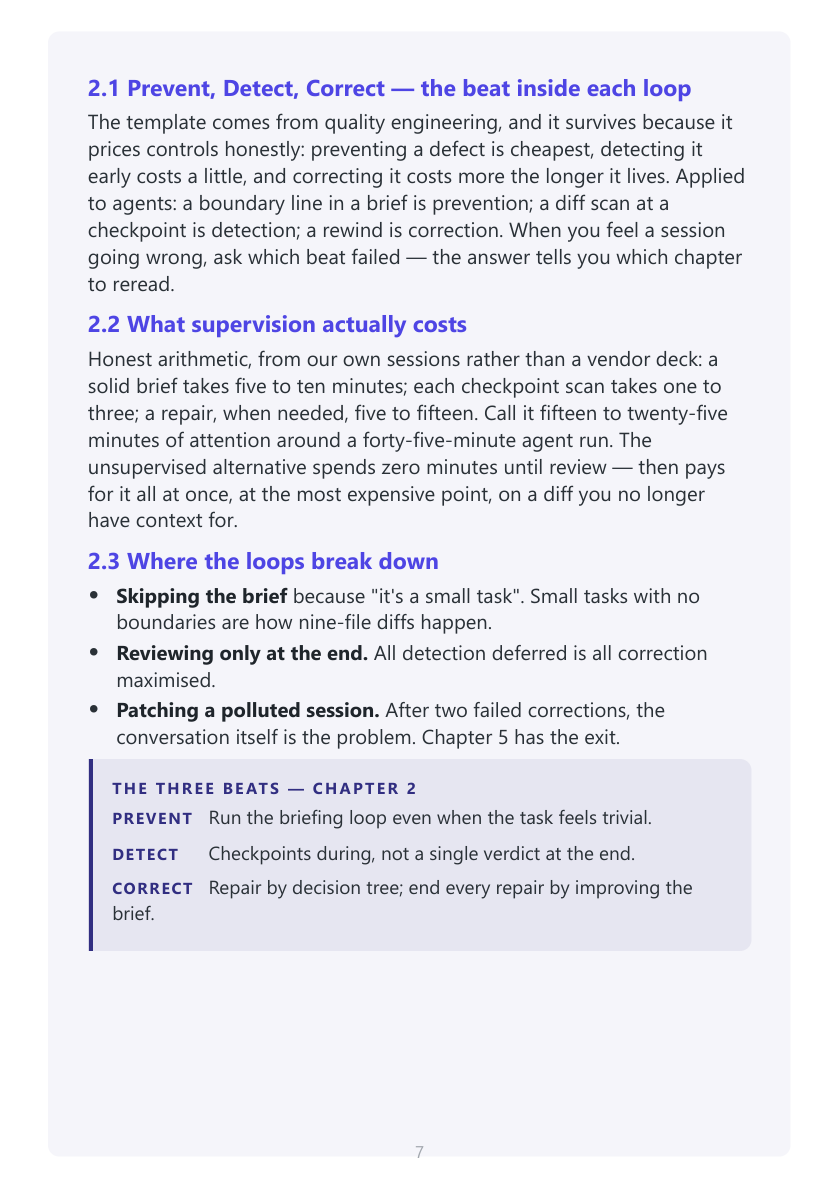
The Agent-Wise Developer is a 24-page field guide for developers who already build with a coding agent — Claude Code, Cursor, or Copilot's coding agent — and want their results to stop being a coin flip. It replaces prompt-and-hope with a repeatable discipline: brief, supervise, repair. You learn to write a task brief an agent can't misread, review plans and diffs at checkpoints instead of hovering over every token, and recover a session that has drifted without throwing away the afternoon. Every chapter runs the same Prevent/Detect/Correct beat on itself, so the book practises the method it teaches.
WHAT'S INSIDE
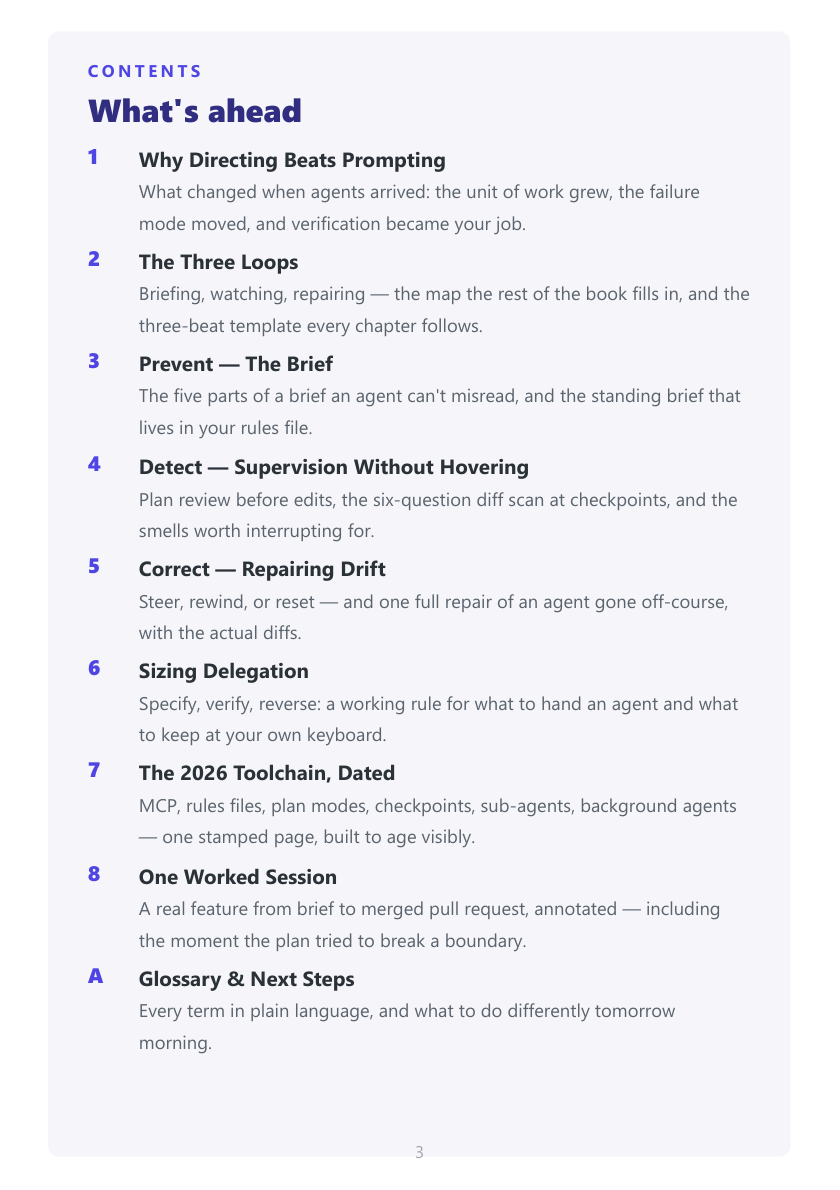
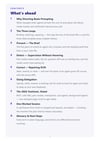
• Why directing beats prompting — what changed when agents went from suggesting a line to commissioning a task: the unit of work grew, the failure mode moved, and verification landed on your desk
• The three loops — briefing, watching, repairing — and the Prevent, Detect, Correct beat that every chapter is built on
• Prevent: the five-part brief an agent can't misread — goal, boundaries, context pointers, done-means, and a stop clause — plus the standing brief that lives in your rules file
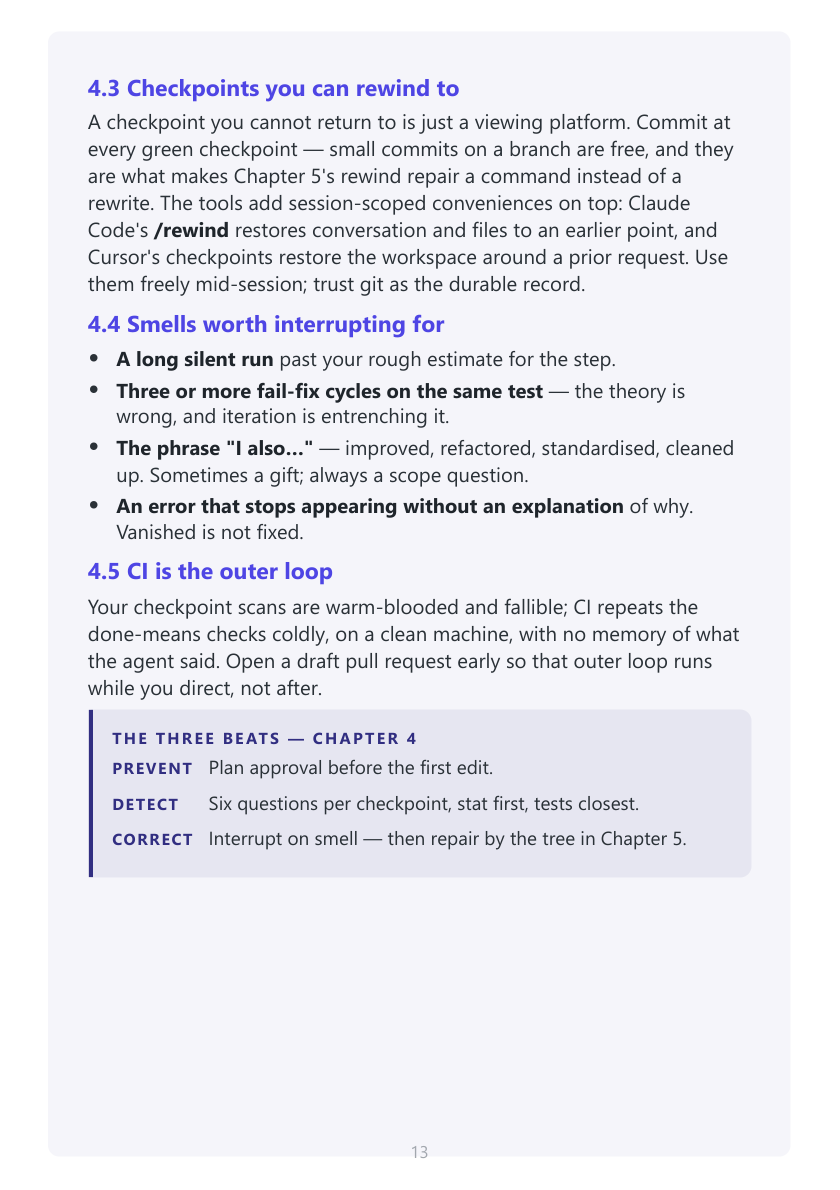
• Detect: supervising without hovering — plan review before the first edit, the six-question diff scan at each checkpoint, and the smells worth interrupting for
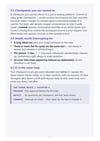
• Correct: repairing drift with steer, rewind, or reset — including one full repair of an agent gone off-course, with the actual diffs and the two-attempt rule
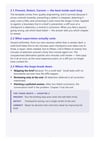
• Sizing delegation: specify, verify, reverse — a working rule for what to hand an agent and what to keep at your own keyboard, with a concrete two-column table
• The 2026 toolchain on one dated page: rules files, plan modes, checkpoints, MCP, sub-agents, and background agents — written to age visibly, not to pretend it won't
• One worked session: a real feature from brief to merged pull request, annotated — including the moment the plan tried to breach a boundary and how one message caught it
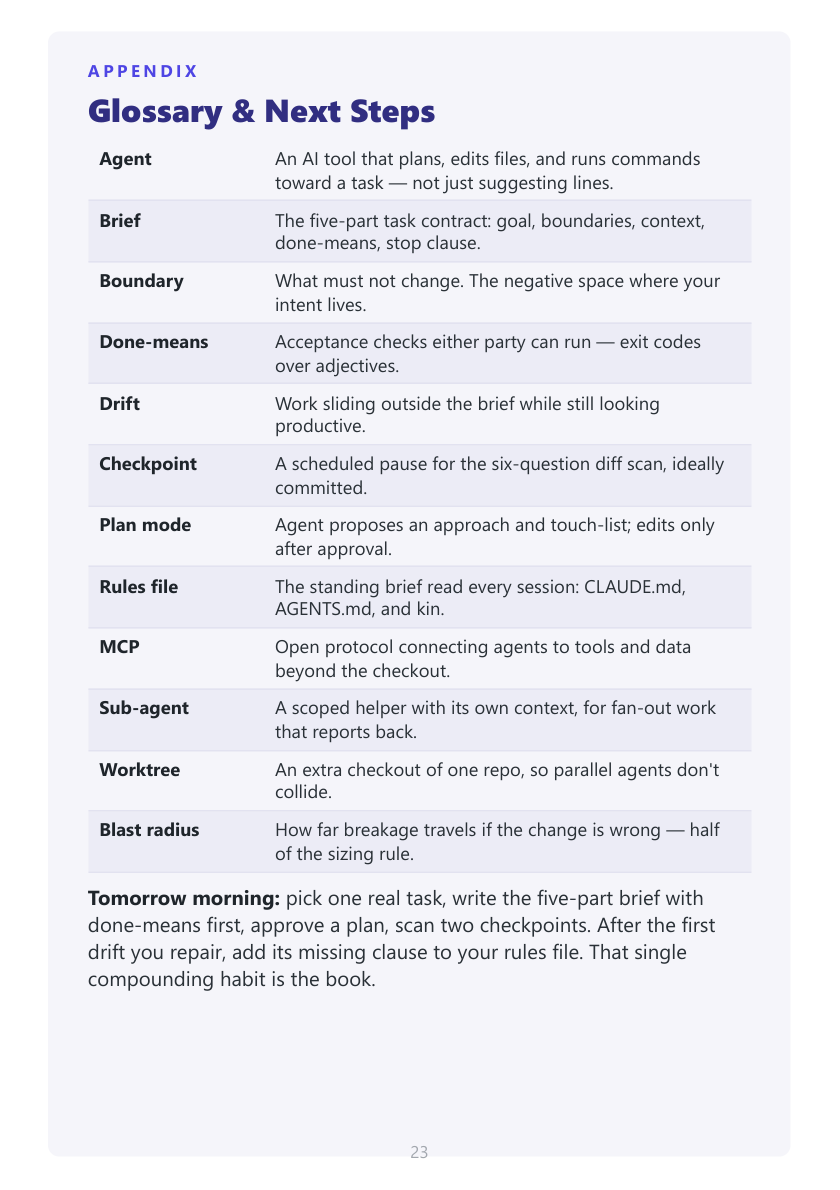
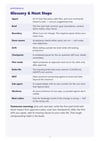
• A plain-language glossary of every term used, and one concrete thing to do differently tomorrow morning
HONEST NOTES
This book assumes you already build with a coding agent; it picks up where our beginner guide Ship Your First App leaves off, so if you have not yet shipped anything with an agent, start there and come back. It is one reader at one keyboard — team-rollout plans and org strategy are deliberately out of scope. The agents in the examples (Claude Code, Cursor, Copilot's coding agent) generally require a paid plan, roughly $20/month as of July 2026; keeping that bill sane is its own craft, and rather than half-cover it here the book hands it to a companion, The Token-Smart Developer. Tool names, keystrokes, and modes drift fast, so every tool-specific page carries a "last reviewed July 2026" stamp — where this book and a vendor's current documentation disagree, the documentation has moved on and wins. None of the tools named here sponsored, reviewed, or endorsed this book, and we have no affiliation with any of them. The worked examples in the repair and session chapters are representative sessions condensed for the page, with timings rounded — not benchmarks, and not a claim of typical results.
Guidance, not gospel — this is a practitioner's field guide, not professional advice, and its recommendations are directional, not promises.
Drafted with AI assistance and then reviewed and curated by a real person who directs coding agents this way every week.
Instant download. A5 pages, designed for screen reading; prints cleanly on A4 or US Letter. Personal use only.
First Edition — July 2026.
Questions? Reach us at calmkitco.com.