
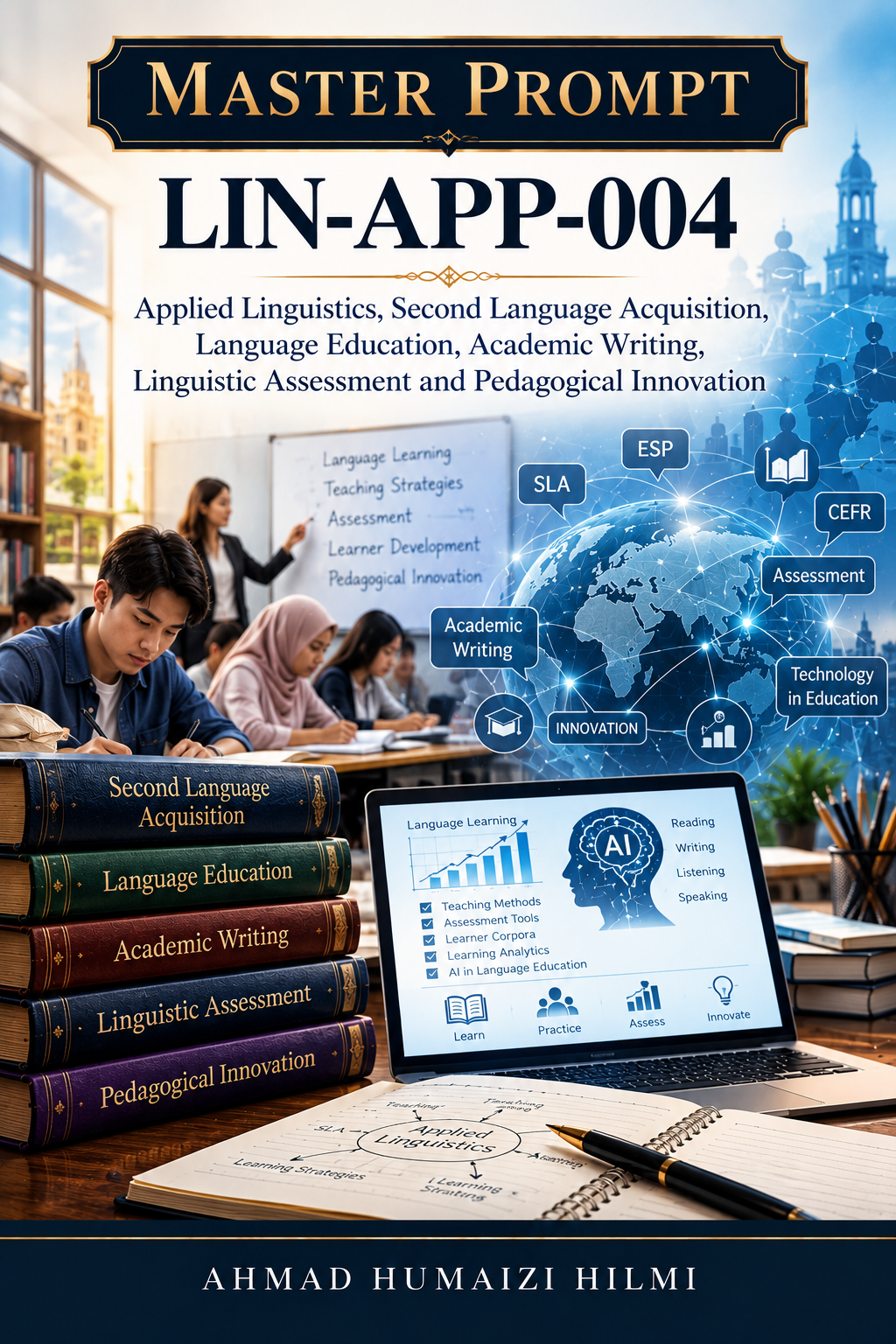
4. LIN-APP-004 — Applied Linguistics, Second Language Acquisition, Language Education, Academic Writing, Linguistic Assessment and Pedagogical Innovation
Description
This Master Prompt establishes a comprehensive research framework for investigating linguistic theories and methodologies in language teaching, learning, assessment, and educational practice. It examines first- and second-language acquisition, multilingual education, English as a foreign or second language, academic literacy, writing development, reading comprehension, vocabulary acquisition, linguistic complexity, fluency, accuracy, and language proficiency assessment. Particular attention is given to linguistic and cognitive factors affecting learner performance, language learning strategies, metalinguistic awareness, instructional feedback, writing revision, task-based language teaching, and the relationship between linguistic characteristics and educational achievement. The framework integrates second-language acquisition theories, sociocultural learning theory, cognitive approaches to language learning, genre-based pedagogy, assessment validity, and internationally recognized proficiency frameworks such as the Common European Framework of Reference for Languages (CEFR). It supports research involving learner corpora, classroom interventions, experimental and quasi-experimental designs, longitudinal studies, writing analytics, automated assessment, and teacher- and AI-generated feedback. Researchers are guided in developing linguistic assessment instruments, evaluating pedagogical effectiveness, measuring linguistic development, identifying educational inequalities, and proposing evidence-based instructional innovations. The Master Prompt also addresses inclusive education, linguistic accessibility, language-related learning difficulties, educational technologies, and responsible integration of artificial intelligence into language education.