
Brake Calculator Excel Tool by DP DESIGN
Vehicle Braking System Calculator | Excel Tool by DP DESIGN
Analyze Brake Torque, Brake Bias, Tyre Grip and Vehicle Deceleration
Optimize your vehicle braking calculations with this comprehensive Excel-based Braking System Calculator. Designed for automotive engineers, motorsport enthusiasts, Formula Student teams, Baja SAE teams, and engineering students, this tool combines brake system sizing, pedal mechanics, brake bias calculations, tyre grip modeling, and braking performance analysis.
The workbook includes multiple interconnected calculation sheets and graphs to help you understand how vehicle parameters, braking hardware, and tyre characteristics influence braking performance.
Key Features
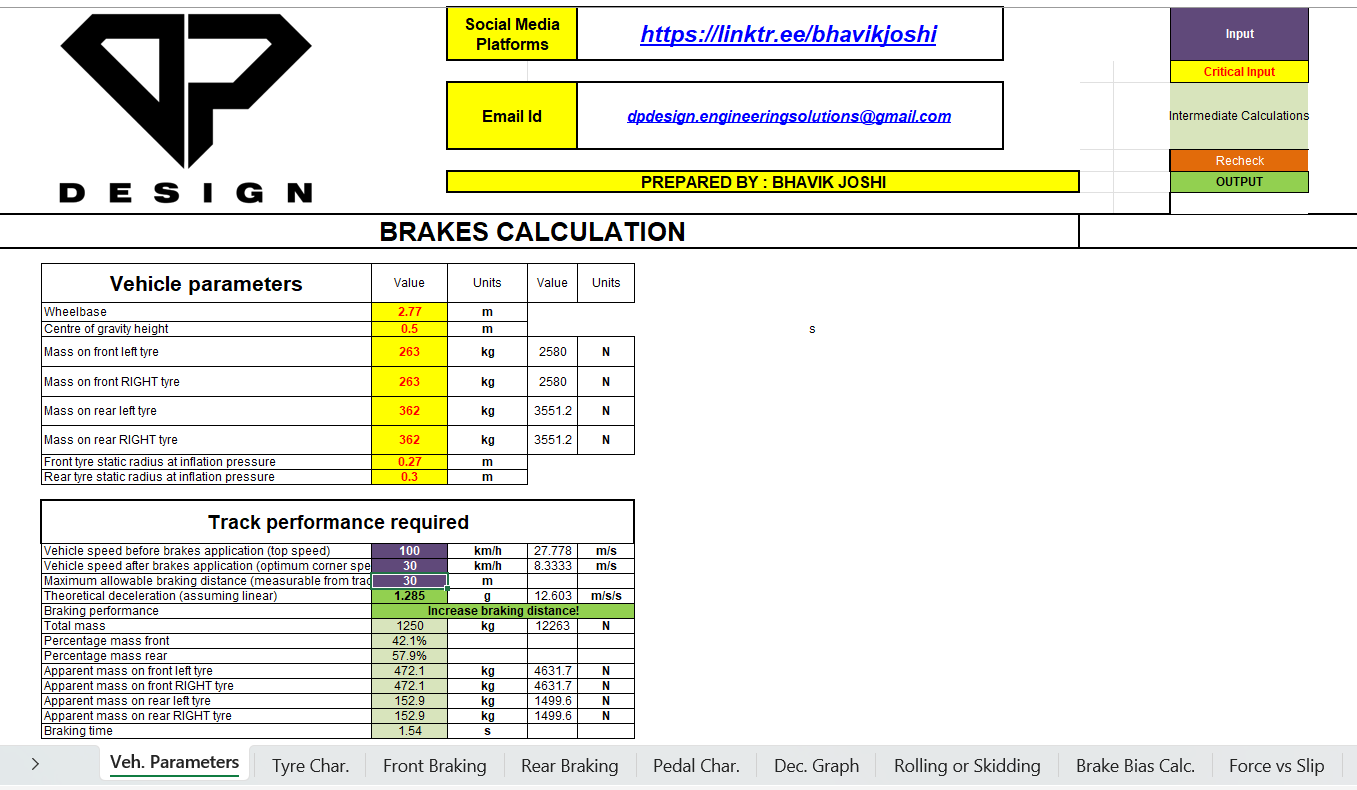
- Vehicle Parameters: Define vehicle mass distribution, wheelbase, centre of gravity height, tyre radius, and braking targets.
- Front Brake System: Calculate brake piston area, hydraulic pressure, pad forces, and brake torque.
- Rear Brake System: Evaluate rear brake hardware and braking torque using the same calculation framework.
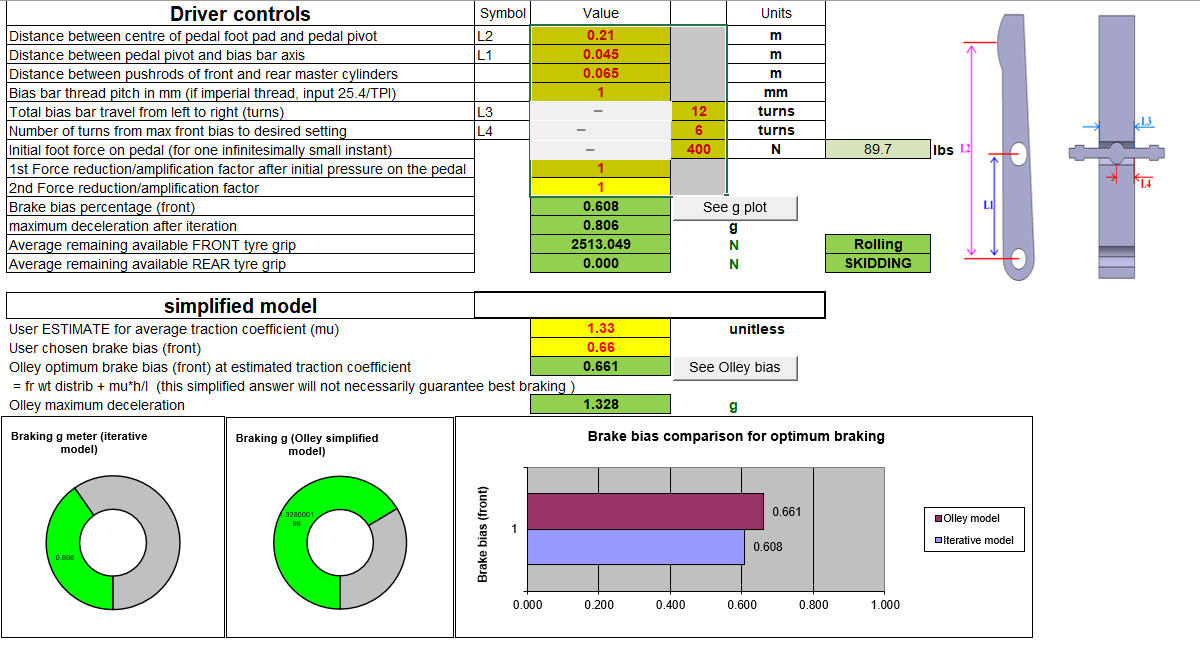
- Brake Pedal & Bias Bar: Analyze pedal leverage, master cylinder actuation, front/rear brake bias, and driver input force.
- Braking Performance: Estimate deceleration, braking time, stopping distance, and longitudinal load transfer.
- Tyre Characteristics: Adjust tyre grip parameters, road surface conditions, tyre compound, and friction characteristics.
- Pacejka Tyre Model: Calculate longitudinal tyre forces over different slip ratios using the workbook's tyre model.
- Rolling or Skidding Analysis: Evaluate tyre loading, available braking grip, wheel-lock tendencies, and remaining tyre grip.
- Graphs & Visualization: Review brake bias, tyre force versus slip, and other calculated relationships.
Required Inputs
Enter or modify the relevant parameters in the workbook to suit your vehicle and braking system.
Vehicle Parameters
- Wheelbase.
- Centre of gravity height.
- Individual front-left, front-right, rear-left, and rear-right static wheel loads.
- Front and rear tyre static radii.
- Initial vehicle speed before braking.
- Target speed after braking.
- Maximum allowable braking distance.
Front and Rear Brake Hardware
- Brake piston diameters for the applicable piston pairs.
- Brake disc outer diameter.
- Brake pad radial depth.
- Distance between disc outer diameter and pad outer diameter.
- Brake pad coefficient of friction.
- Front and rear master cylinder diameters.
- Tyre radius used for brake torque calculations.
Pedal and Brake Bias Parameters
- Pedal foot-pad distance from the pedal pivot.
- Bias bar axis distance from the pedal pivot.
- Distance between front and rear master cylinder pushrods.
- Bias bar thread pitch and adjustment range.
- Number of bias bar turns from the maximum-front-bias position.
- Initial driver foot force.
- Force amplification or reduction factors.
- Estimated tyre-road traction coefficient.
- User-selected front brake bias.
Tyre and Road Parameters
- Tyre compound and road surface selection.
- Static camber angle.
- Tyre model coefficients and weighting factors.
- Tyre grip correction factors.
- Relevant longitudinal slip-ratio and friction characteristics.
Calculated Outputs
Brake System Calculations
- Total brake piston area.
- Master cylinder force and area.
- Brake fluid pressure.
- Brake piston normal force.
- Brake pad tangential force.
- Brake torque.
- Braking force at the tyre contact patch.
Vehicle Braking Performance
- Total vehicle mass and weight.
- Front and rear axle loads during braking.
- Longitudinal weight transfer.
- Front and rear braking forces.
- Braking deceleration in g.
- Estimated braking time and distance.
- Front and rear wheel-lock tendencies.
- Maximum deceleration before skidding under the model assumptions.
Brake Bias Analysis
- Front and rear braking force distribution.
- Estimated optimum brake bias based on the simplified model.
- Front and rear wheel-lock deceleration comparisons.
- Brake bias relationships for different traction coefficients.
- Comparison of braking force demand against available tyre grip.
Tyre Force Analysis
- Tyre friction coefficient and available braking grip.
- Longitudinal tyre force versus slip ratio.
- Optimum and terminal slip-ratio characteristics represented in the workbook.
- Rolling versus skidding behavior.
- Remaining tyre grip and tyre load sensitivity.
- Calculated force curves for front and rear tyres.
Who Should Use This Tool?
- Formula Student and Baja SAE teams.
- Automotive and vehicle dynamics engineers.
- Brake system design engineers.
- Motorsport engineers and enthusiasts.
- Mechanical engineering students.
- Engineers learning vehicle braking calculations.
Why Choose This Calculator?
Reduce repetitive manual calculations and explore the relationship between brake hardware, pedal mechanics, brake bias, tyre grip, and vehicle deceleration in one integrated workbook.
Define Vehicle Parameters → Configure Brake Hardware → Calculate Brake Torque → Analyze Brake Bias → Evaluate Braking Performance
Product Details
- Format: Excel macro-enabled workbook (.xlsm).
- Content: Multiple calculation sheets, tyre models, and performance graphs.
- Delivery: Digital download; no physical product will be shipped.
Important: Results depend on input accuracy, modelling assumptions, tyre characteristics, and the equations implemented in the workbook. The calculations are intended for educational and preliminary engineering analysis. Independently validate all results before using them for actual brake system design or vehicle safety decisions.