
Finnish_East & Finnish_Southeast 23andme format
The eastern and southeastern Finns, most notably the Savonians, Karelians, and related groups developed in a frontier zone between the Baltic world and the forests and river systems of Eastern Europe. From the Viking Age onward, these regions were integrated into long-distance exchange networks linking Scandinavia, the Baltic Finns, and the East Slavic world. Savonian and Karelian communities interacted closely with Vikings traveling the river routes toward the Volga and Dnieper, as well as with Estonians across the Gulf of Finland. Through these networks, eastern Finns exchanged furs, wax, and forest products, gaining access to silver, weapons, and prestige goods.
Slavic influence became especially pronounced through contact with Kievan Rus’, which controlled key river corridors and urban centers like Novgorod. Eastern Finns were not passive subjects but active participants in this sphere, contributing manpower, tribute, and trade goods while maintaining their own language and customs. During the Swedish Third Crusade in 1293 and the founding of Viborg, Swedish chronicles imply organized resistance by Karelian leaders aligned with Novgorod. The Novgorod First Chronicle frequently mentions Karelians acting collectively in warfare and raids against Sweden and Tavastia, implying leadership by local elites. Again, personal names are absent, but Karelians are treated as political actors allied with Novgorod, not merely subjects.
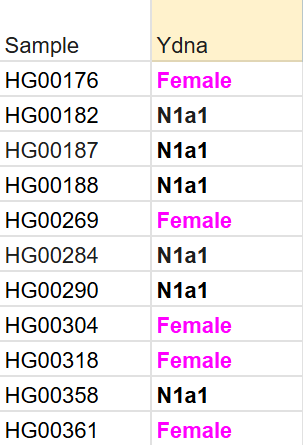
For this video, I gathered the raw genomes of 11 Eastern and Southeastern Finns from Harvard’s aadr + .HO v62 dataset. I used plink to convert the samples from eigenstrat format into microarray format. Then, I used AdmixTools 2, but also my Trait Predictor to analyze their genomes.