

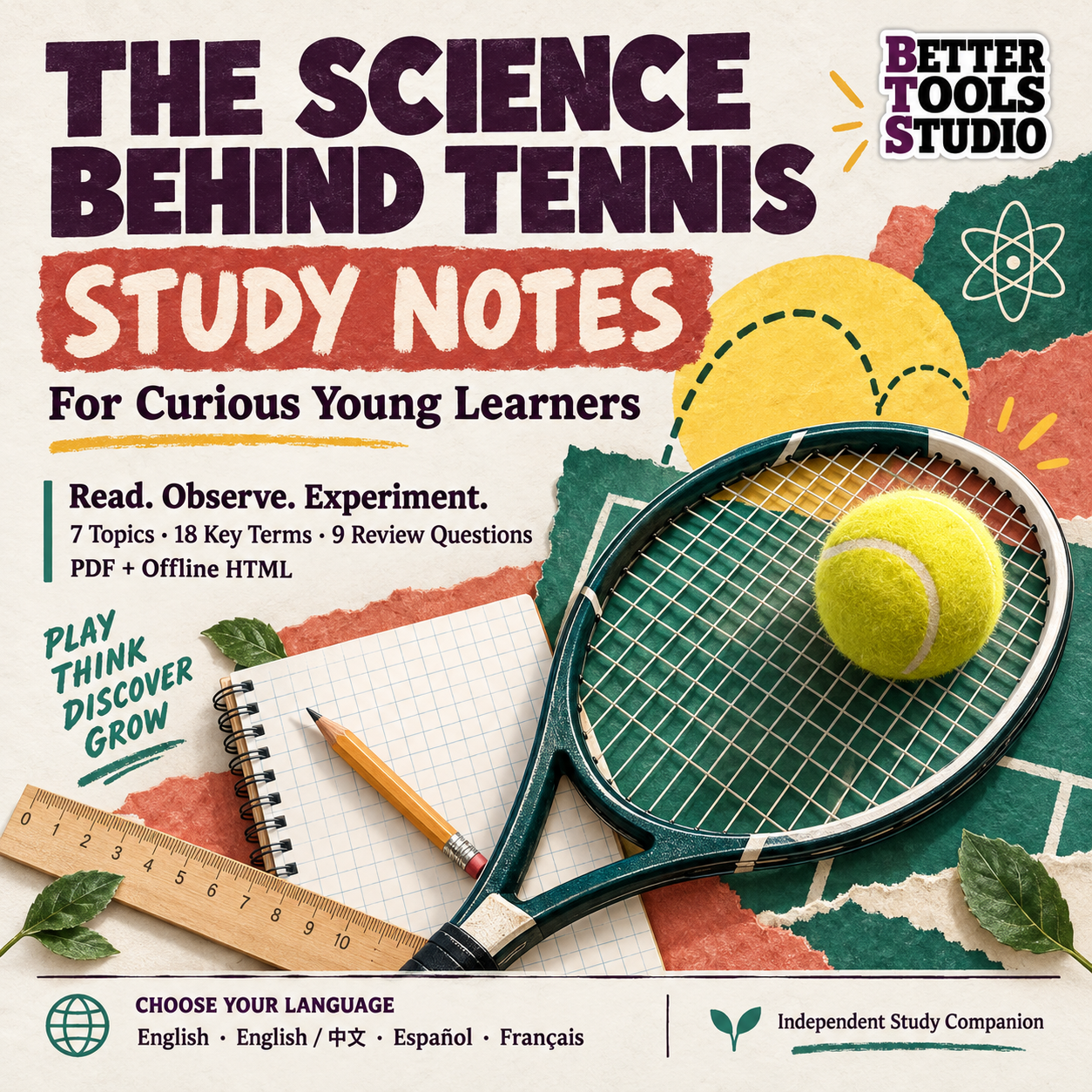

The Science Behind Tennis | Kids’ Study Notes & Bounce Experiment
Little tennis players. Big questions. 🎾
Why does a tennis ball bounce? What do racket strings do? How does spin change the ball’s flight?
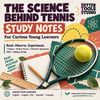
Help your child explore the science behind the sport with approachable study notes inspired by The Science Behind Tennis by Jenny Fretland VanVoorst.
Made for curious young tennis learners, this companion brings together reading, observation, discussion, and a simple experiment to try with an adult.
🎾 EXPLORE TENNIS THROUGH SCIENCE
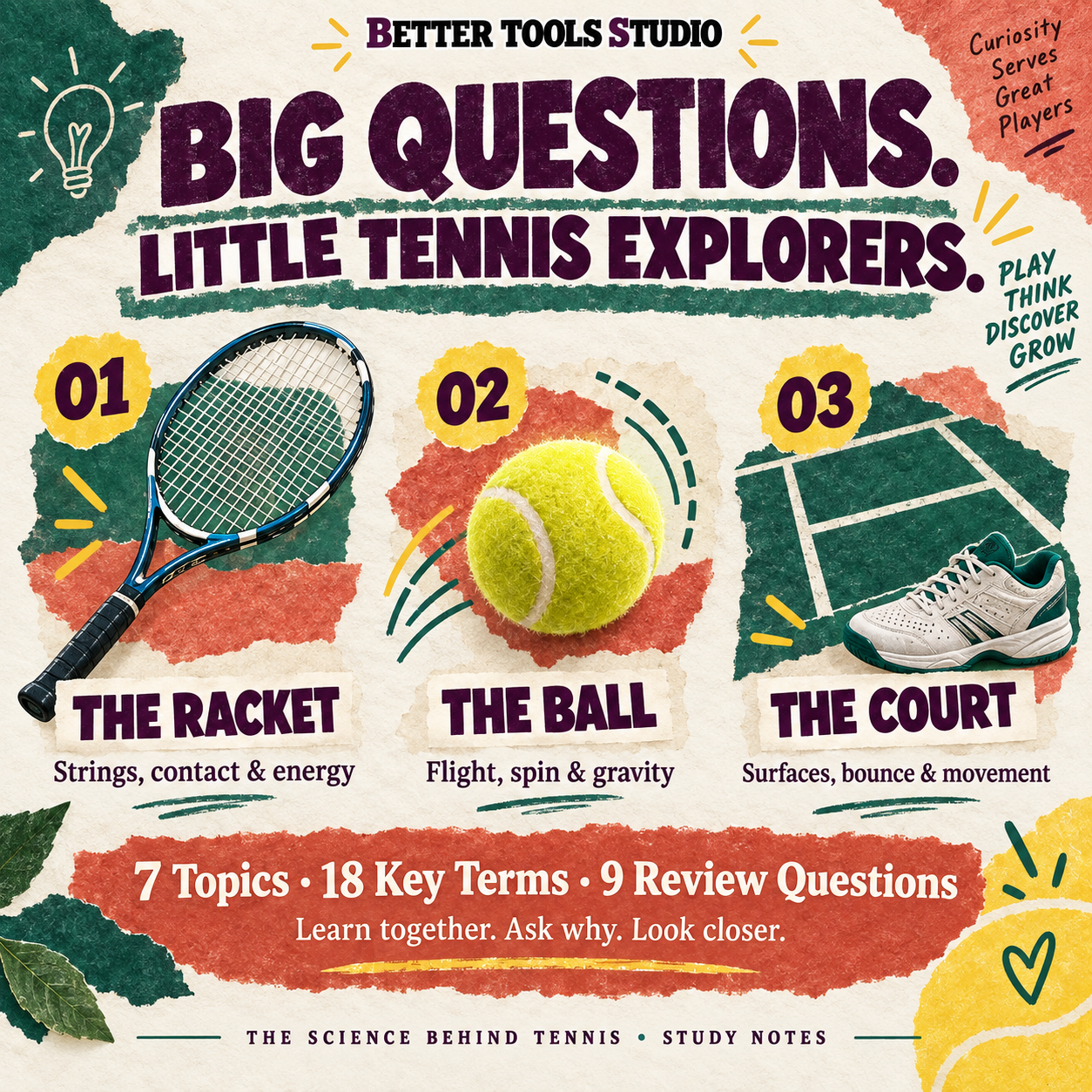
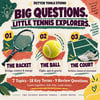
Follow three themes that connect what children see on court with ideas they can understand:
- The racket: Discover how the frame, strings, and contact point affect a hit.
- The ball: Explore air resistance, topspin, backspin, and gravity.
- The court: Learn about surfaces, bouncing, friction, and the forces involved in movement.
📖 WHAT’S INSIDE
- 7 focused topics with clear explanations and questions to discuss.
- 18 key terms with definitions and source-page references.
- 9 review questions with answers to help children explain ideas in their own words.
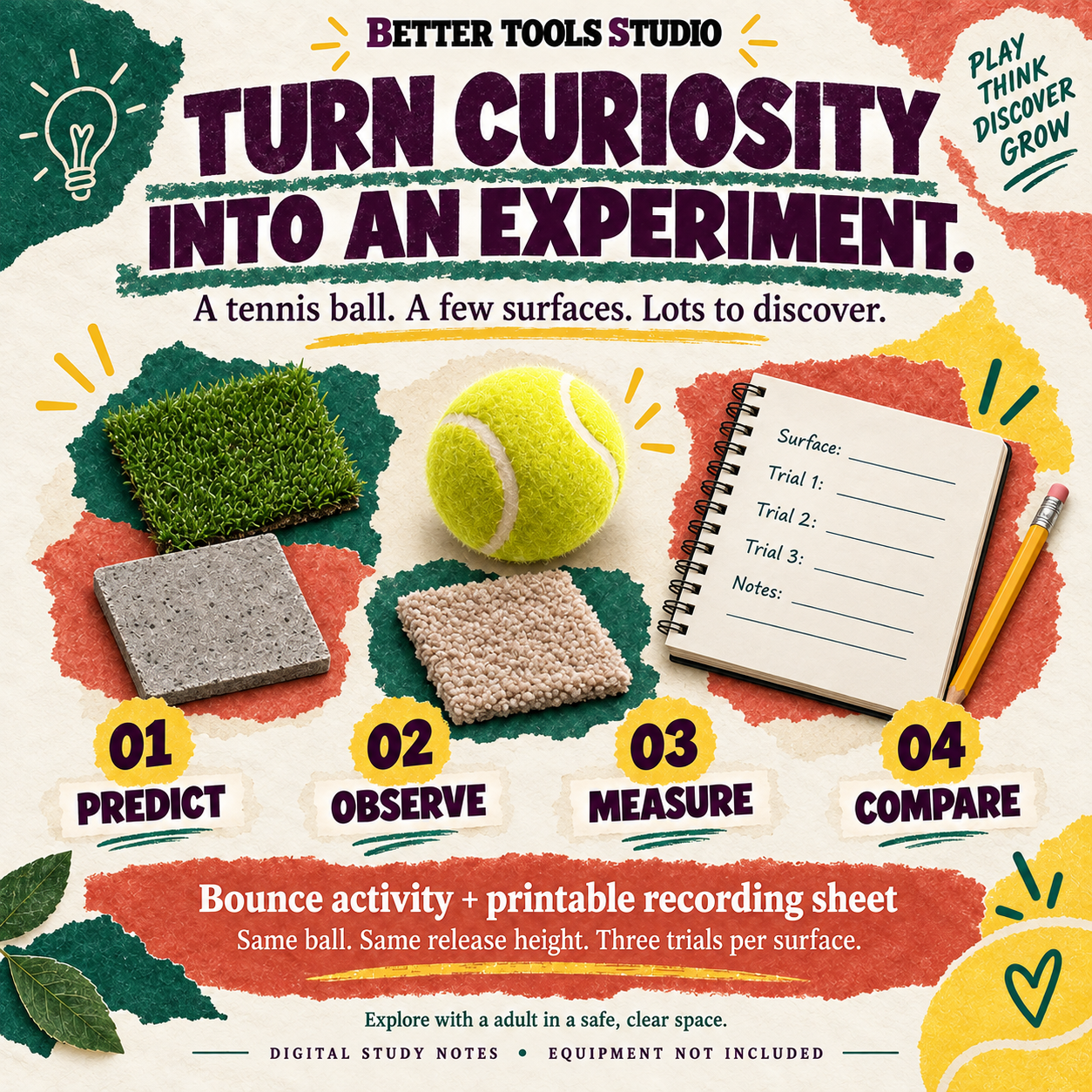
- A bounce experiment comparing the same ball on different surfaces.
- A printable experiment record sheet for predictions, measurements, and observations.
- Chapter summaries and additional explanations that clarify simplified statements in the source book.
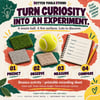
🔍 READ. OBSERVE. EXPERIMENT.
Read a short section together. Talk about something your child has noticed while playing. Then try the bounce activity: predict, measure, repeat, and compare.
The aim is to encourage curiosity about tennis and practise useful science skills—asking questions, making a fair comparison, and explaining what the results show.
👨👩👧 WHO IS IT FOR?
- Children exploring tennis and basic science, particularly ages 7–10 with adult support.
- Parents looking for an activity to enjoy between tennis sessions.
- Young readers who enjoy learning English tennis vocabulary alongside their preferred language.
Reading support will depend on the child’s language level. The more detailed explanations are useful for an adult to discuss with them.
📂 YOUR DOWNLOADS
Each selected language edition includes:
- Printable study-note PDF: Read, revisit, and print the experiment worksheet.
- Offline HTML companion: Open in a browser to navigate sections, search vocabulary, enlarge included images, and reveal review answers.
PDF length: 16 pages for English, Spanish, and French; 17 pages for the English–Chinese edition.
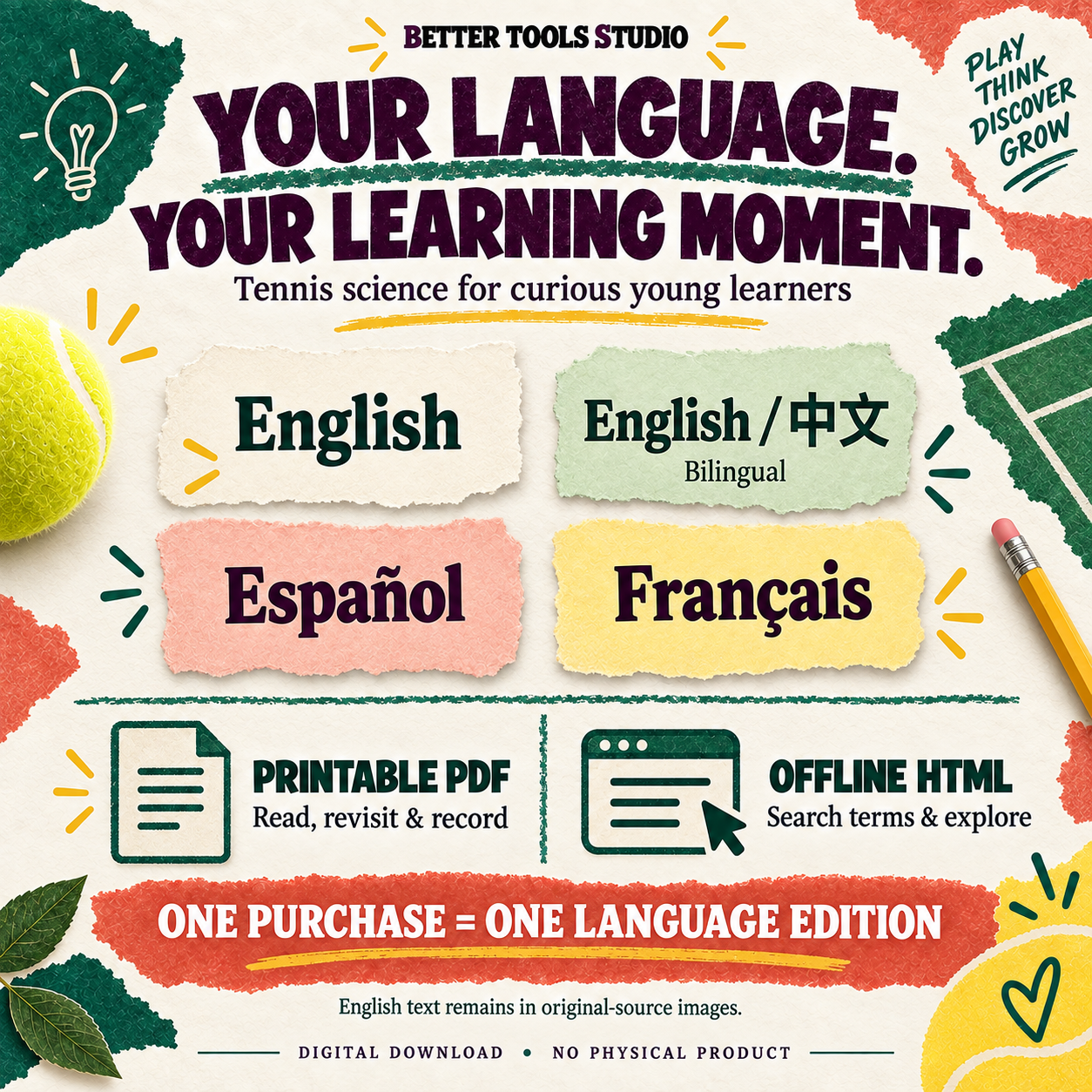
🌍 CHOOSE YOUR LANGUAGE
- English
- English / 中文 — Bilingual
- Español
- Français
One purchase includes one selected language edition. Important English terms are retained in the translated editions. Text within original-source images remains in English.
💻 HOW TO USE
Download the files after purchase. Open the PDF with a PDF reader and the HTML file with Chrome, Edge, or Safari. A desktop or laptop is recommended for the HTML edition.
Complete the experiment with adult supervision in a safe, clear space.
PLEASE NOTE
This is an independent educational study companion based on the 2020 book. It is not an official edition, a complete translation, or a tennis coaching programme.
Digital files only. No physical book, racket, or experiment equipment is included. The original book is not included.
PERSONAL & FAMILY USE
For the purchaser and children in their household to read and use together. Printing for household learning is permitted. Reselling, redistributing, publicly uploading, or repackaging the supplied study-note files is not permitted. No resale or private label rights are included. Third-party rights and uses permitted by applicable law remain unaffected.
Prepared by Better Tools Studio.