
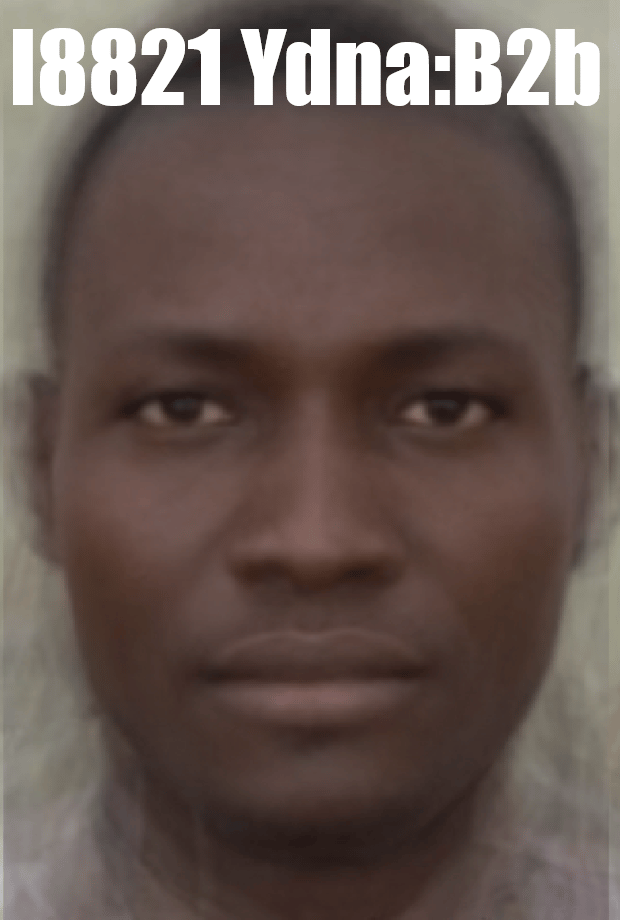
I8821 Mesolithic Tanzania 23andme format
I8821 comes from the Kisese Rockshelter, a site preserving over 45,000 years of human activity, from early modern humans to Holocene foragers. Dated to around 5120 BC, this man carried Y-haplogroup B2b, one of the deepest African paternal lineages, and mtDNA L5b2, a lineage strongly associated with ancient East African populations.
What makes this sample especially important is its position just before major demographic shifts, before pastoralism, farming, and later Bantu expansions reshaped East Africa. The Kondoa Rock Art Sites, where Kisese is located, show evidence of symbolic behavior like ochre use, microlithic tools, and ostrich eggshell beads - hallmarks of Later Stone Age cultures. Individuals like Tanzania_Kisese_LSA represent the kind of populations that formed the genetic backbone of later East African foragers. Their ancestry likely fed into groups such as the Hadza people and possibly the Sandawe, both of whom preserve traces of very ancient East African genetic structure and lifeways.
My andreimix tool modeled this sample as 53 percent Nilo Saharan, 31 percent South African Khomani Hunter Gatherer, and 13 percent Mota hunter gatherer, showing that this sample has not only East African but also south african affinities.
My andreimix deep ancestry breakdown determined that the dominant source of ancestry in this sample is actually South African hunter-gatherer, with sub-Saharan ancestry taking second place. This sample also scored non-negligible portions of West Eurasian admixture, likely acquired through basal Eurasians and ancestral North Africans, since this sample is dated to before the back-to-Africa migration from the Middle East. This is the map that my andreimix tool generated for this sample based on his genetic data. It shows the affinities between this sample and modern populations, with Hadza showing the strongest affinity to this sample.
I ran him through my trait predictor tool for DNA analysis.