
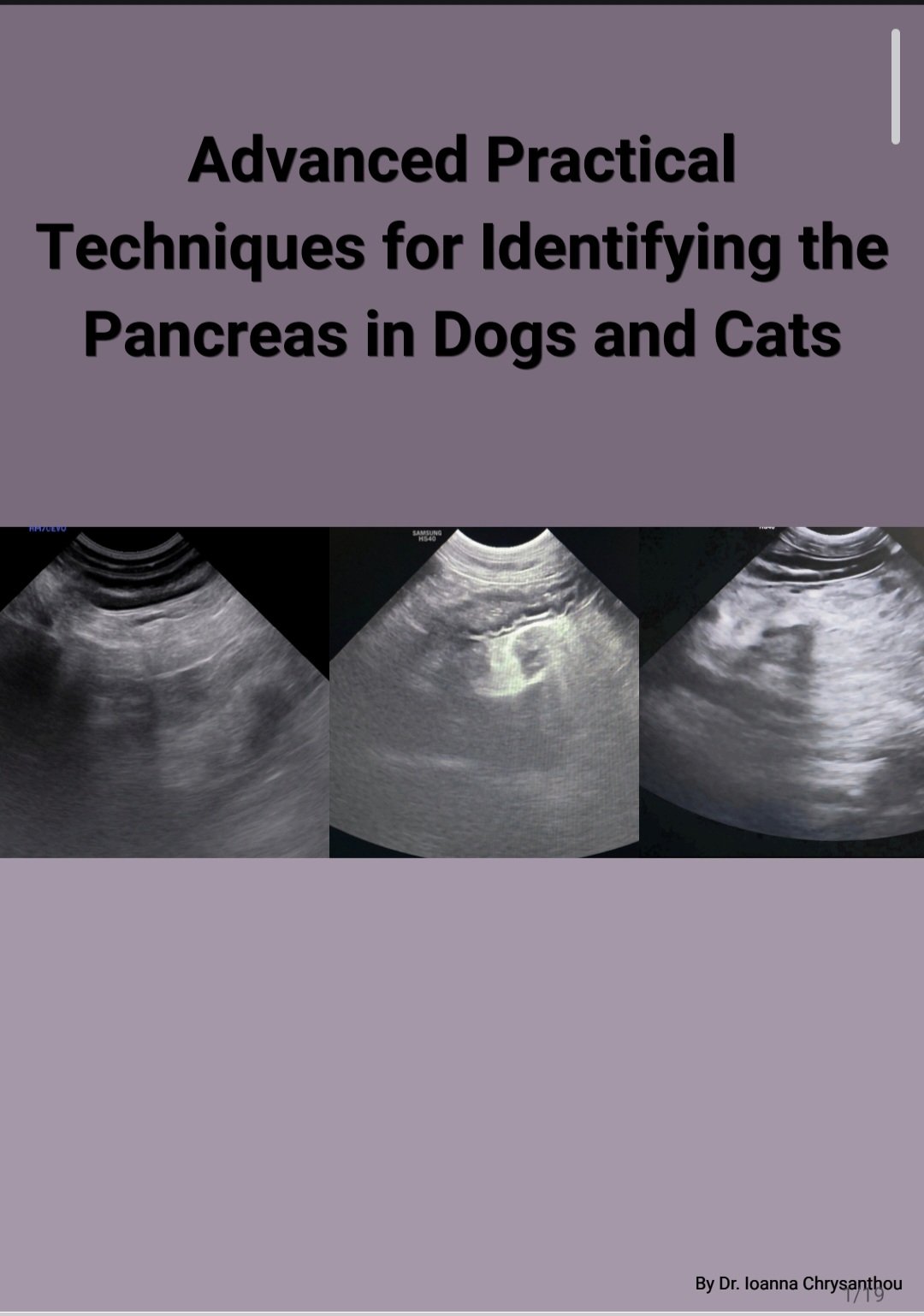

Advanced Practical Techniques for Identifying the Pancreas in Dogs and Cats
Advanced Practical Techniques for Identifying the Pancreas in Dogs and Cats
A practical ultrasound guide designed to help veterinary professionals confidently locate and evaluate the pancreas in both canine and feline patients.
Despite being one of the most important abdominal organs, the pancreas remains one of the most challenging structures to identify consistently during routine ultrasonographic examinations. This guide was created to bridge the gap between textbook anatomy and real-world scanning by providing practical, step-by-step techniques used in everyday clinical practice.
Rather than focusing solely on anatomy, this handbook teaches a systematic approach based on identifying the key vascular and gastrointestinal landmarks that lead directly to the pancreas. By learning how to use structures such as the descending duodenum, portal vein, splenic vein, and pancreaticoduodenal vessels as reliable guides, clinicians can improve both the speed and accuracy of pancreatic examinations.
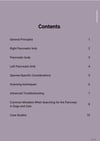
Inside this Guide
✔ Practical methods for locating the right pancreatic limb, pancreatic body, and left pancreatic limb
✔ Species-specific considerations for both dogs and cats
✔ Real-world scanning tips used in daily veterinary practice
✔ Troubleshooting techniques for difficult examinations
✔ Common mistakes that can lead to misidentification or missed lesions
✔ Video demonstrations of pancreatic ultrasonography in dogs and cats
✔ Ultrasound case examples including normal pancreatic appearance and common pathological findings
✔ A systematic approach designed to increase confidence during abdominal ultrasound examinations
Who Is This Guide For?
- General practice veterinarians
- Veterinary students
- Veterinary interns and residents
- Clinicians developing their abdominal ultrasound skills
- Veterinary professionals seeking a more structured approach to pancreatic imaging
What You'll Learn
By the end of this guide, you will be able to:
- Reliably identify the pancreas using surrounding anatomical landmarks
- Improve visualization of the pancreatic body and lobes
- Recognize common scanning pitfalls and avoid diagnostic errors
- Approach pancreatic examinations with greater efficiency and confidence
- Apply practical techniques that can be immediately incorporated into clinical practice
Format
📖 Digital PDF Guide
🎥 Includes access to ultrasound video demonstrations
📱 Instant download
Created By
Dr. Ioanna Chrysanthou Veterinarian – Diagnostic Ultrasonography
Drawing from practical clinical experience and a passion for veterinary ultrasound education, this guide was developed to help clinicians overcome one of the most common challenges encountered during abdominal ultrasonography.
Whether you are just beginning your ultrasound journey or looking to refine your pancreatic scanning technique, this guide provides practical, clinically applicable methods that can help make pancreatic identification more predictable, efficient, and rewarding.
Instant digital download. No physical product will be shipped.
Copyright & Terms of Use
© 2026 Dr. Ioanna Chrysanthou. All Rights Reserved.
This publication is protected by copyright law. No part of this guide may be reproduced, copied, distributed, transmitted, stored in a retrieval system, translated, resold, or shared in any form or by any means, whether electronic, mechanical, photocopying, recording, or otherwise, without prior written permission from the author.
This guide is intended solely for the personal educational use of the purchaser. Purchase of this guide does not grant permission to redistribute, resell, share, upload, reproduce, or commercially exploit any portion of its content.
The information contained within this guide is provided for educational purposes only and is not intended to replace professional veterinary judgment, formal training, or clinical decision-making. While every effort has been made to ensure the accuracy of the information presented, the author accepts no responsibility for any errors, omissions, or outcomes resulting from the use or interpretation of the material contained herein.
Ultrasonographic findings should always be interpreted in conjunction with the patient's history, clinical examination, laboratory results, and other diagnostic information.
Unauthorized reproduction or distribution of this material may result in legal action.
© 2026 Dr. Ioanna Chrysanthou. All Rights Reserved.